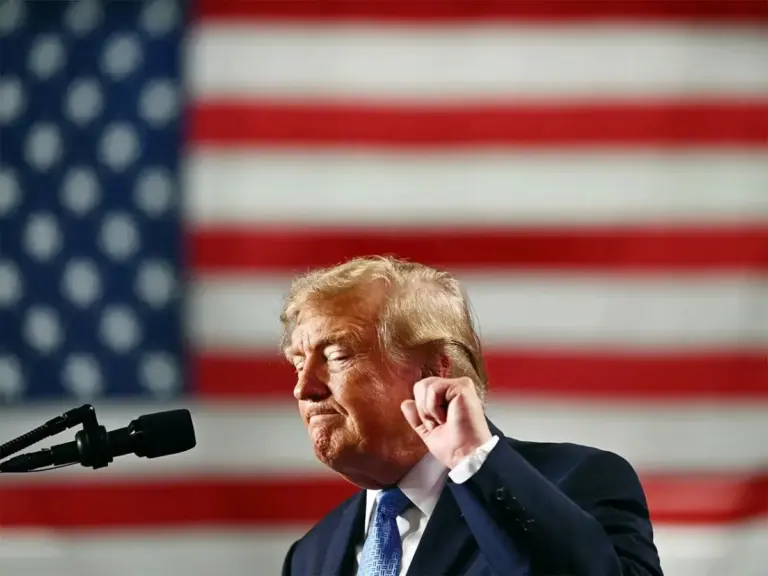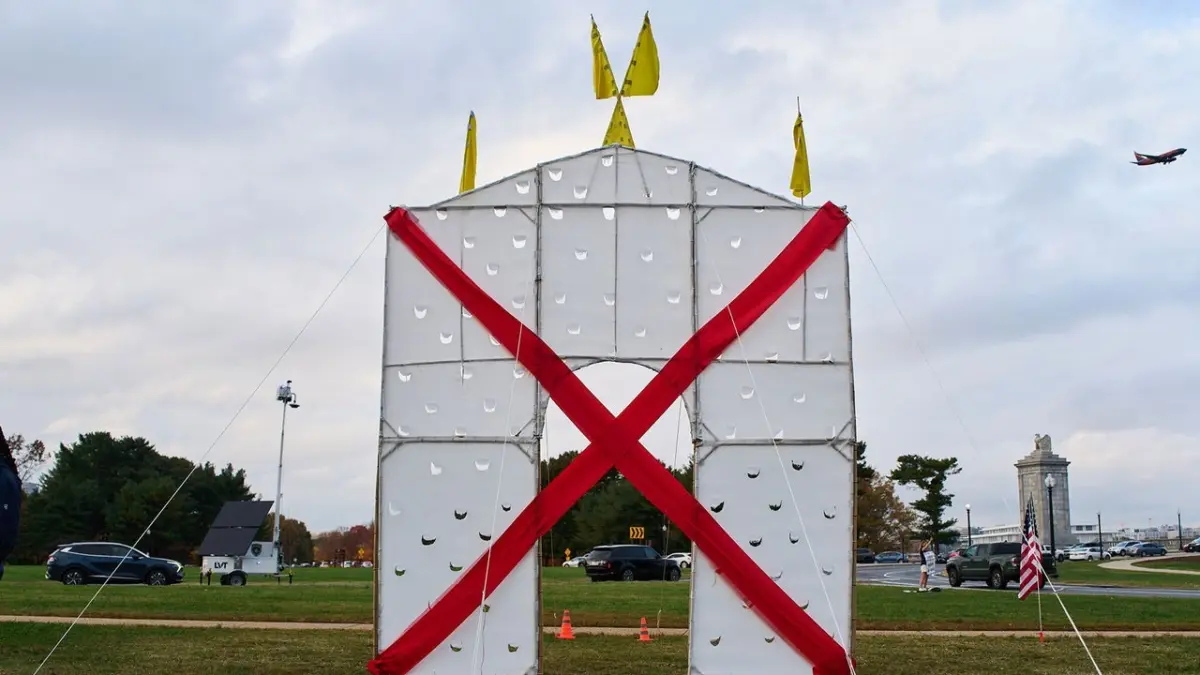
A federal judge late Thursday temporarily blocked the Trump administration from breaking ground on a towering memorial arch, halting a contentious project that has become a central flashpoint in President Donald Trump’s sweeping vision to reshape the nation’s capital.
The temporary restraining order issued by U.S. District Judge Tanya Chutkan pauses any construction work for 14 days, delivering a major legal setback to the administration. The decision arrived just over an hour after the National Capital Planning Commission voted 8-4 to grant final approval for the arch following a grueling, nine-and-a-half-hour public hearing characterized by widespread opposition and technical difficulties.
In her ruling, Judge Chutkan emphasized that the plaintiffs, represented by the state of Virginia and the District of Columbia, had successfully demonstrated that immediate construction would inflict genuine, unrecoverable harm.
“The harm is certain,” Judge Chutkan wrote in her ruling. “Defendants initially notified the court that construction could begin as early as November 5, 2026, if the NCPC approves the project at its meeting that day and the Department of the Interior authorizes construction.”
Ahead of the ruling, Virginia and D.C. officials warned the court that expedited construction would severely distort local traffic patterns and jeopardize public safety by disrupting mutual aid emergency responses. Furthermore, the court noted that the District and Virginia would face significant, unrecoverable financial burdens.
“Second, the District and Virginia will incur significant unrecoverable costs. As soon as construction begins, DDOT will need to expend staff time and operating resources to affirmatively and proactively manage temporary detours, crashes or disabled vehicles,” Chutkan wrote, ordering the federal government to provide a status report next Monday to verify full compliance with the restraining order.
The swift legal intervention came on the heels of a fiercely contested vote by the National Capital Planning Commission, a federal body that oversees construction on federal land in Washington. The panel’s decision fell strictly along federal and local lines. Commissioners who voted in favor of the project were administration officials or individuals directly tied to the president, who had strongly pushed for immediate commencement of work. Conversely, those who opposed the plan represented the local interests of Washington, D.C.
The remote, call-in public hearing was marred by technical disruptions, crashing repeatedly during its initial hours. It was accompanied by an overwhelmingly negative public comment section, with scores of witnesses offering impassioned testimony against the monument. Many argued that the towering structure would permanently alter and diminish the solemnity of nearby Arlington National Cemetery, the final resting place for hundreds of thousands of fallen service members and military veterans.
Despite the public outcry, the panel’s Trump-appointed chairman opened the proceedings by praising the monument and commending the president’s architectural ambitions.
“President Trump understands as president and a superb builder that it’s important to our national identity to display who we are through grand monuments,” said Mark Paoletta, the commission’s chairman, who also serves as general counsel for the White House Office of Management and Budget.
Echoing the administration’s rationale, Paoletta added, “As Trump has often remarked, ‘the great cities around the world have arches: Paris, Rome, London.’”
Other federal appointees on the panel defended the project in similar terms. Commissioner Paul Ingrassia, a lawyer for the General Services Administration, argued that the arch was “not about politics. It’s about remembrance. It’s about celebrating our history. It’s about commemorating veterans. And it’s really something that’s a noble tribute to our nation and something that we can all rally behind.”
However, local leaders strongly pushed back against both the timeline and the legal basis of the project. D.C. City Council Chairman Phil Mendelson, who sits on the planning panel, pointed out that the monument had neither received the mandatory authorization from Congress nor secured any appropriated federal funds. Mendelson also noted that the official site and building plans submitted to the commission failed to reference the military tributes frequently cited by the president and other administration officials.
“We cannot approve final site and building plans until we have the final site and building plans,” Mendelson asserted during the hearing.
The arch represents just one element of a broader federal push by the Republican administration to alter the physical landscape of Washington to match presidential preferences. Other recent initiatives have included renovating a storied public golf course in the city and issuing threats to close or demolish the John F. Kennedy Center for the Performing Arts. These contentious urban design and public property projects could soon face intense legislative scrutiny, particularly after Democrats captured control of Congress in the midterm elections earlier in the week.
Among the prominent congressional critics speaking out against the development was Rep. Jared Huffman, a California Democrat slated to chair the House Natural Resources Committee. Huffman delivered sharp testimony during the commission hearing, calling the project both ill-advised and illegal.
“This arch would dishonor America,” Huffman told the commission. He characterized the proposed monument as “a tribute to Donald Trump” rather than a genuine memorial for veterans, arguing that the administration was using military service members as a pretext to construct a personal monument reminiscent of those built for ancient emperors or kings.
A central legal dispute in the litigation centers on whether the administration possesses the independent authority to build the monument without express legislative consent. While critics and city officials maintain that the administration must secure congressional approval, the White House contends that a century-old statute passed in 1925 cleared the path for a memorial at Memorial Circle.
Several members of the Planning Commission invoked that decades-old legislation to justify their votes in favor of the project. Chairman Paoletta called it a “national disgrace” that a memorial arch had not been erected at the site decades ago under the 1925 designation.
Judge Chutkan decisively rejected that legal argument in her temporary restraining order.
“The sheer improbability that a 100-year-old statute would contain authority, unknown to every previous administration, to erect a 250-foot arch at a principal location in the Nation’s capital indicates how far defendants must stretch to justify this project,” she wrote.
The temporary restraining order remains in effect as the legal battle over the administration’s monumental ambitions continues to unfold in federal court.