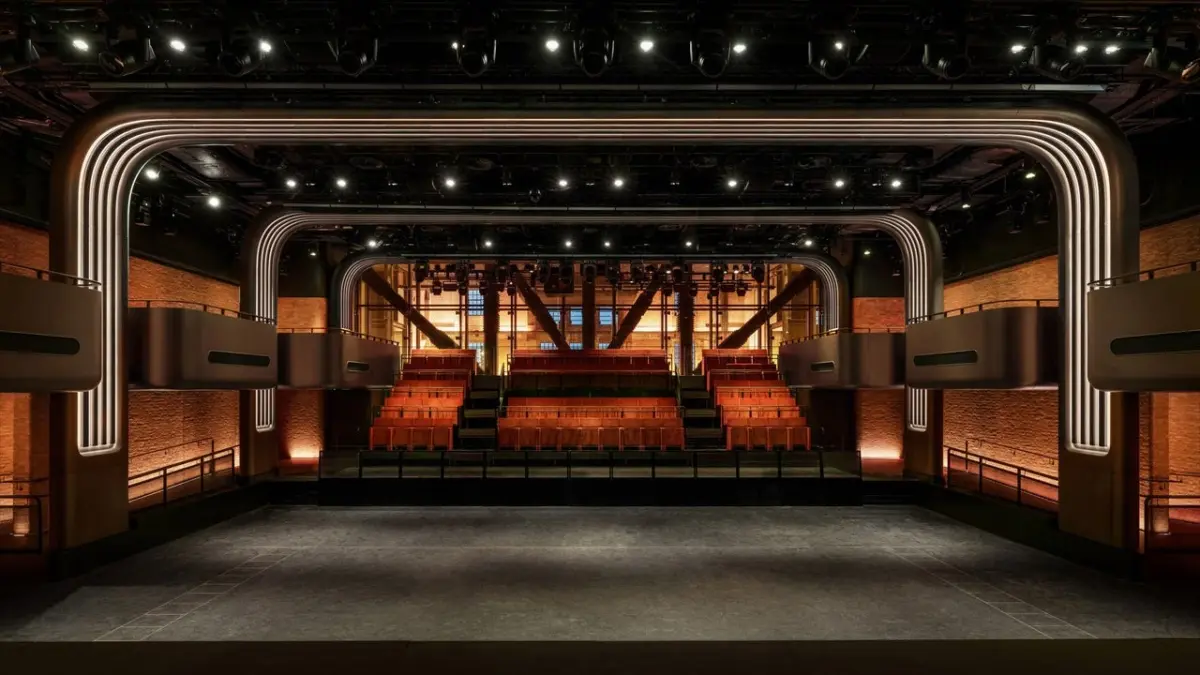
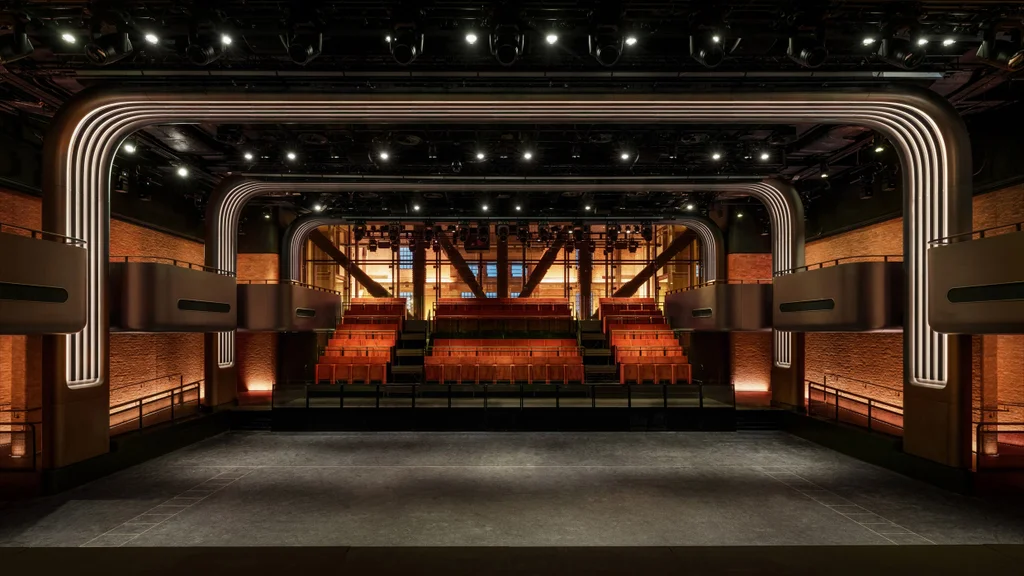
Nestled beneath its United Kingdom headquarters at London’s historic Battersea Power Station, Apple inaugurated its latest venture in late September: the Apple Music Hall. More than just a performance space, this intimate 600-person, 48-speaker hall is designed to showcase Apple’s cutting-edge Spatial Audio technology. By leveraging Dolby Atmos and dynamic head tracking, the venue turns flat stereo sound into a three-dimensional, 360-degree experience, immersing audiences in a completely reimagined acoustic environment.
To industry observers, the Music Hall is far from a standard listening room. Instead, it represents the opening salvo in an elaborate world-building exercise for Apple Music, carefully engineered to cultivate a passionate community of hardcore fans. Through this physical flagship, Apple aims to achieve several ambitious business objectives: boost streaming subscriptions, encourage artists to record using its proprietary technology, and ultimately challenge major competitors—from Google Home to Sonos—for absolute ownership of in-home sound delivery systems.
An uphill battle
The launch of the Apple Music Hall highlights a fascinating dichotomy in Apple’s media strategy. In just eight years since entering the television market, the tech giant has successfully transformed from a startup streamer into a formidable entertainment powerhouse. It has consistently delivered critical and commercial hits, including Severance, Slow Horses, Silo, Pluribus, Ted Lasso, and now Widow’s Bay. The rapid scaling of Apple TV+ into a cultural mecca has been nothing short of astounding.
In the music streaming sector, however, the landscape has proven considerably more challenging. Apple Music has historically played second fiddle to Spotify, which boasts roughly three times as many subscribers globally. Furthermore, Spotify has frequently maintained a first-mover advantage with innovative consumer features like its popular Year End Review, alongside the exclusive content that serious music enthusiasts crave most. The unveiling of the Music Hall signals that Apple is ready to turn up the volume and aggressively close the gap.
Yet, the risks associated with this physical, experiential approach are very real. While global spending on in-real-life (IRL) brand experiences grew by 8.3% to reach $138.9 billion, and is projected to rise by an additional 10.3%, the corporate graveyard of experiential marketing is littered with cautionary tales. The path of corporate brand spaces has often led to expensive miscalculations rather than tangible returns on investment.
Consider Samsung 837, the company’s former experiential flagship space in New York City’s Meatpacking District. While it successfully attracted mothers with young children looking for rainy-day distractions, it struggled to convert those visitors into actual technology customers. Similarly, major automotive brands such as Lexus, Genesis, and Cadillac have repeatedly tried their hand at luxury lounges and lifestyle hubs, only to be reminded by consumers that they are ultimately looking to them for cars, not coffee or curated cultural events.

Conversely, brands that remain true to their core operational roots while investing in physical spaces tend to hit all the right notes. A24, the acclaimed film and television production company, achieved a massive brand win with its acquisition of the historic Cherry Lane Theater in New York City’s West Village. The venue has served as a launchpad for new and experimental content, which in turn has generated greater visibility for the studio, fostered deeper fan engagement, and secured a lucrative two-year brand partnership with fashion house Dior. Similarly, Porsche’s Experience Centers consistently delight driving enthusiasts and attract new customer demographics through authentic, high-octane racing outings.
By seemingly sparing no expense to create a world-class, technologically advanced performance space like the Apple Music Hall, Apple is signaling to audiophiles, artists, and the broader entertainment industry that it is entirely serious about cementing the world of Apple Music into the physical fabric of culture. Whether this immersive acoustic bet will translate into subscriber growth and long-term ecosystem dominance remains to be seen, but the tech titan has made its opening chord loud and clear.