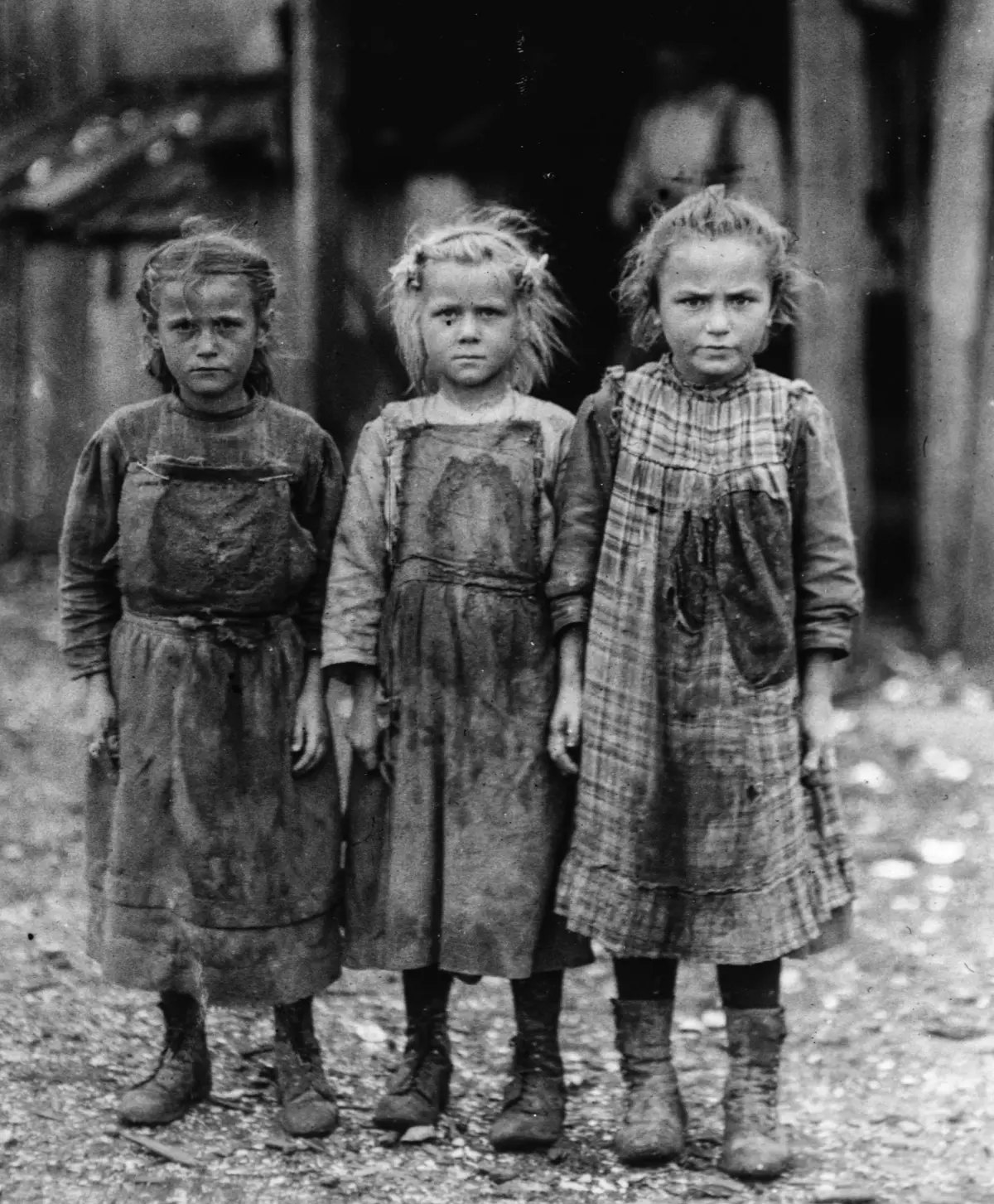
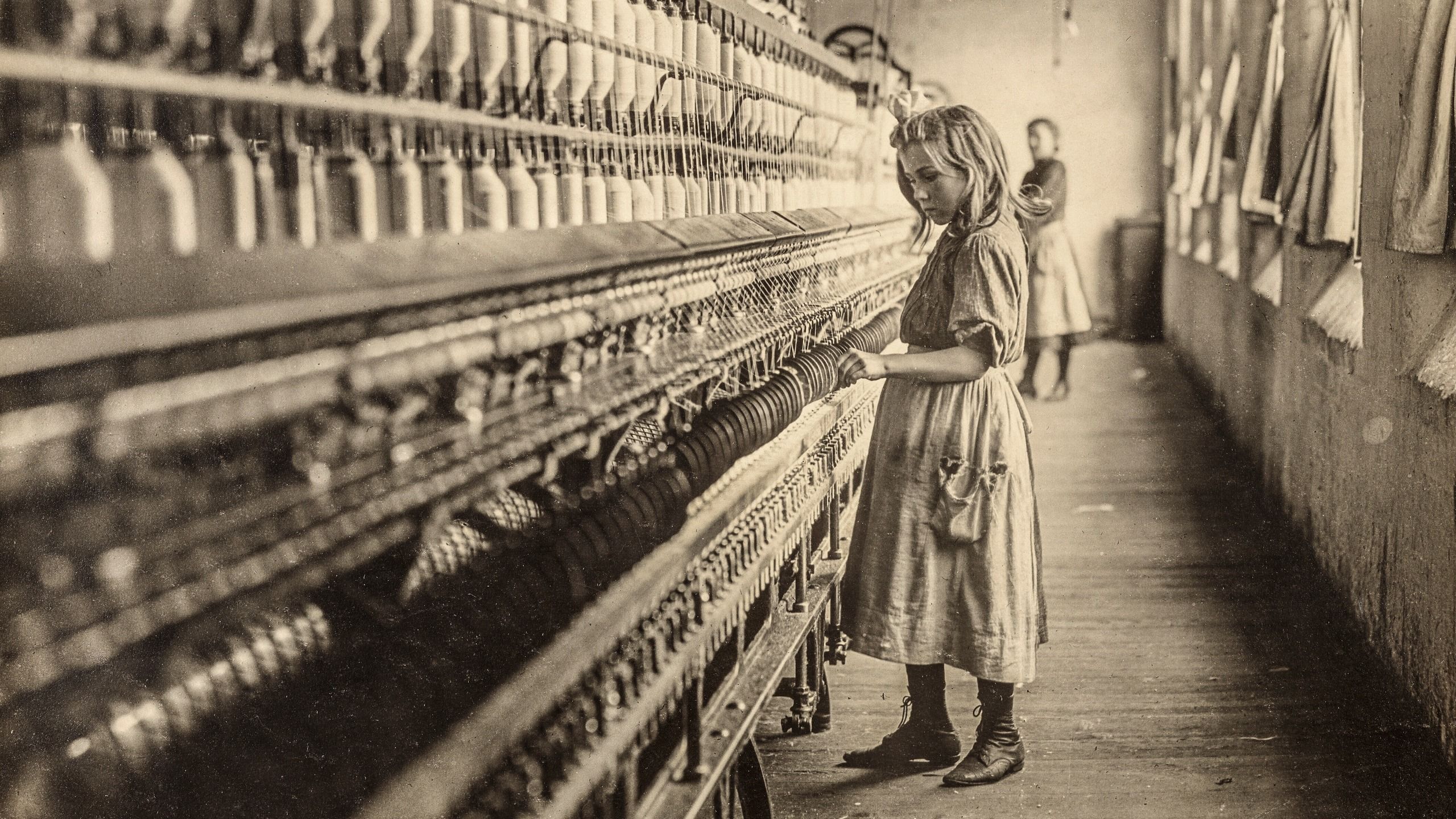
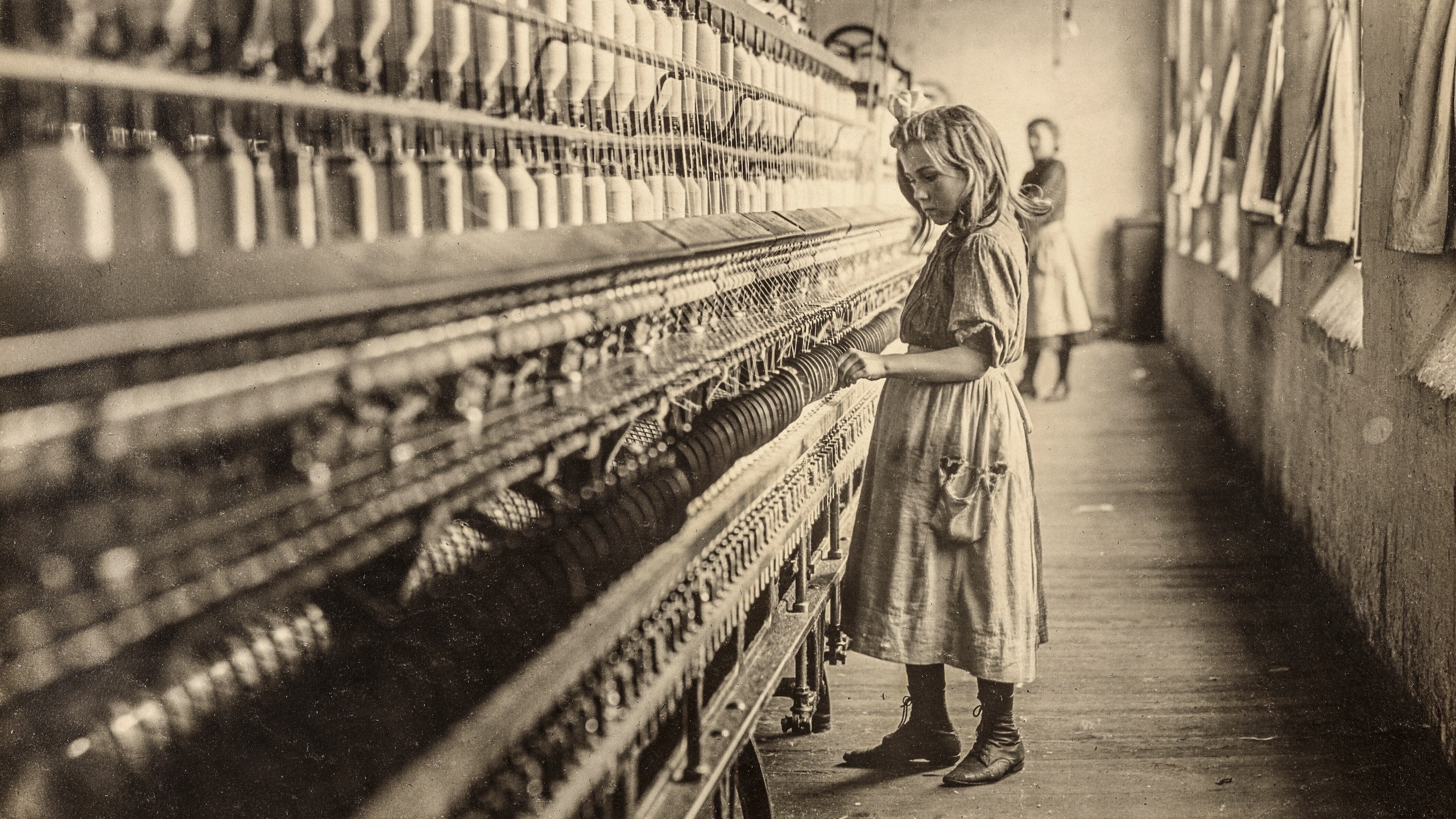
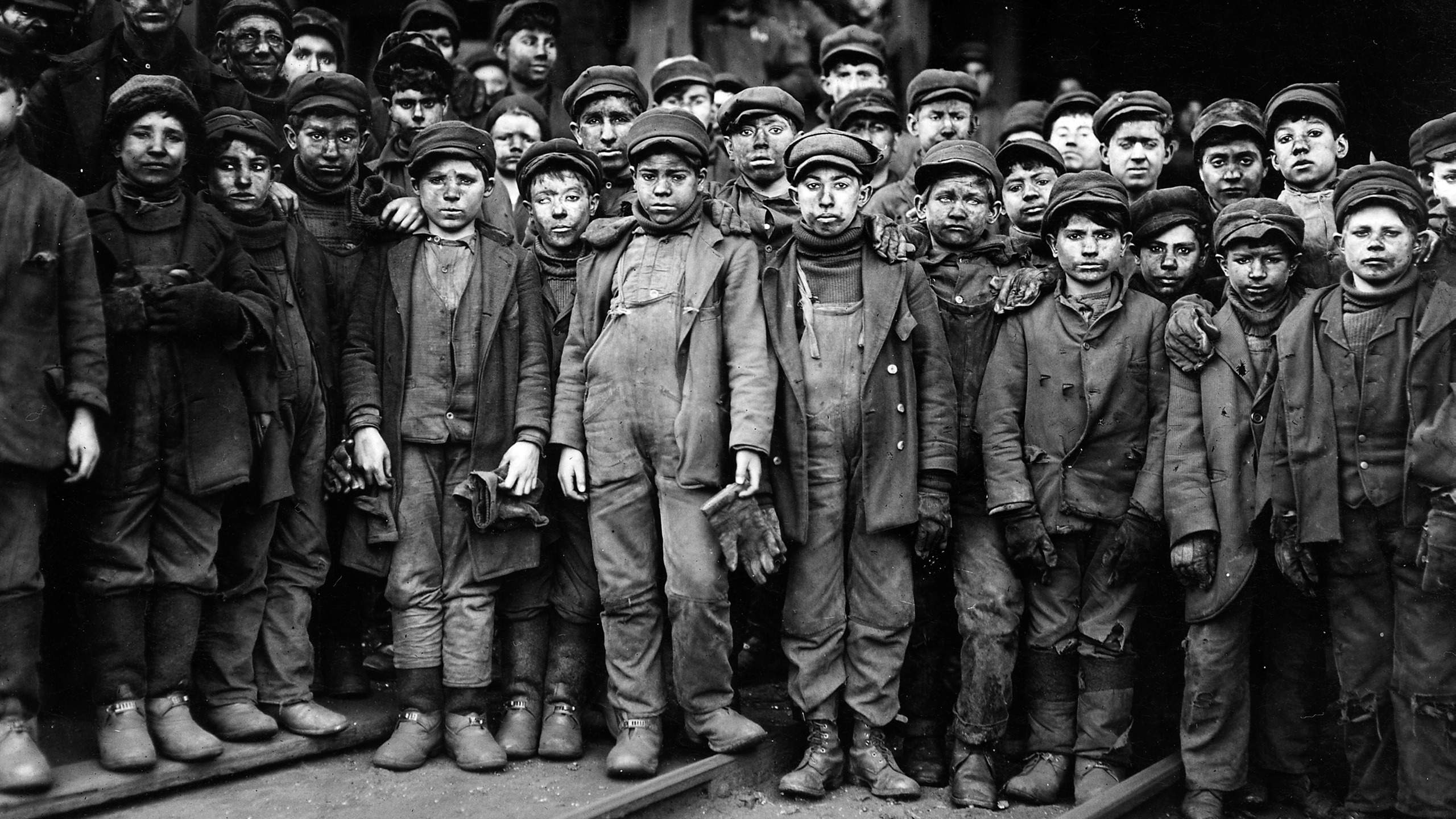
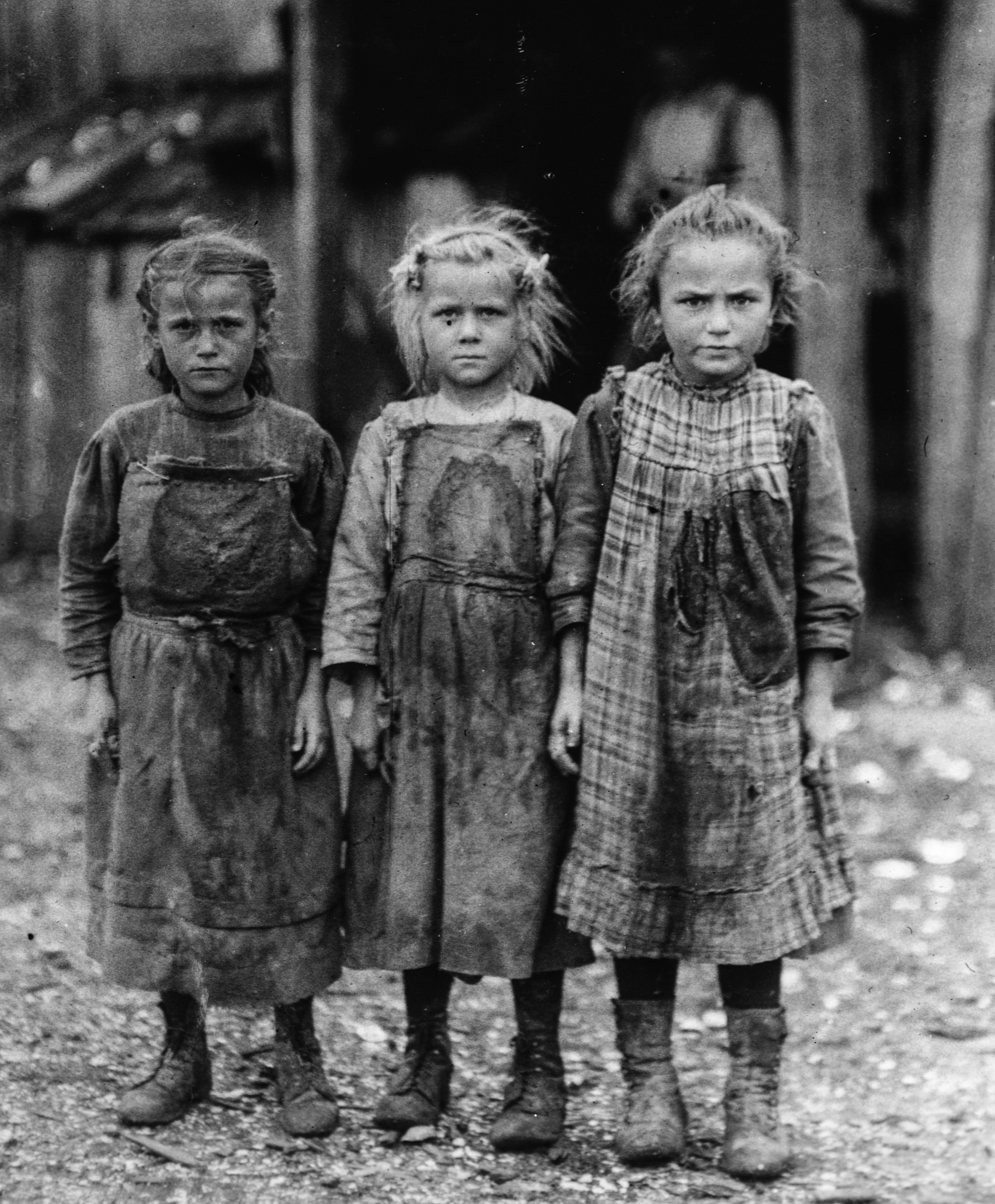
A young girl stands frozen between a towering row of industrial spinning frames, her tiny stature entirely dwarfed by the massive machinery of the American textile mill. Nearby, a gang of soot-stained boys, wearing the unmistakable dust-covered uniform of the coal miner, stare blankly and warily into the lens of a camera. Outside a bustling cannery, three grim-faced young girls pose after a grueling shift shucking oysters for a meager living.
These haunting, powerful images are among the most enduring works captured by Lewis Wickes Hine, a teacher-turned-photographer who spent more than a decade traveling the length and breadth of the United States between 1908 and 1924. Armed with his camera, Hine dedicated his life to documenting the grim reality of child labor, turning art and photography into an undeniable weapon for social justice.
The remarkable and sobering story of Hine’s life and mission has been brought back into the public spotlight this week by the Alliance for American Manufacturing. As part of its ongoing "Unsung Heroes" series, the organization highlighted Hine’s extraordinary contributions, offering a timely and compelling reminder of the profound impact documentary photography can achieve when wielded in service of a vital cause.
The Early Life and Awakening of a Pioneer
Born in Oshkosh, Wisconsin, in 1874, Lewis Wickes Hine experienced hardship firsthand during his formative years. While he was still a teenager, his father passed away, leaving the family in financial distress. To help support his relatives, Hine was forced to work grueling, long hours at a local upholstery shop. Despite the exhausting labor and the heavy burden placed upon his young shoulders, he remained deeply committed to his education.
His persistence paid off when he eventually moved to New York in 1901 to begin a career as a teacher. It was within the educational setting that Hine first picked up a camera, initially viewing it as nothing more than a practical teaching aid to enrich his classroom instruction. Eager to expand his students’ worldview, he organized field trips to Ellis Island, where he photographed the steady stream of newly arrived immigrants stepping onto American soil.
According to the Smithsonian Institution, Hine’s motivations went far beyond simple documentation. At a time of rising xenophobia and growing anti-immigrant sentiment across the United States, he sought to challenge negative public perceptions. Through his compassionate lens, he portrayed immigrants not as threats or burdens, but as brave, dignified pioneers embarking on a perilous journey to build a new life in a foreign land.
As he observed the power of these images to shift perspectives, Hine experienced a profound professional awakening. He realized that documentary photography could serve as an extraordinarily effective catalyst for social reform. Driven by this conviction, he made the pivotal decision to volunteer for a major, high-stakes reporting project organized by the National Child Labor Committee (NCLC), a prominent campaigning body dedicated to abolishing the widespread exploitation of minors.
Uncovering the Shadows of American Industry
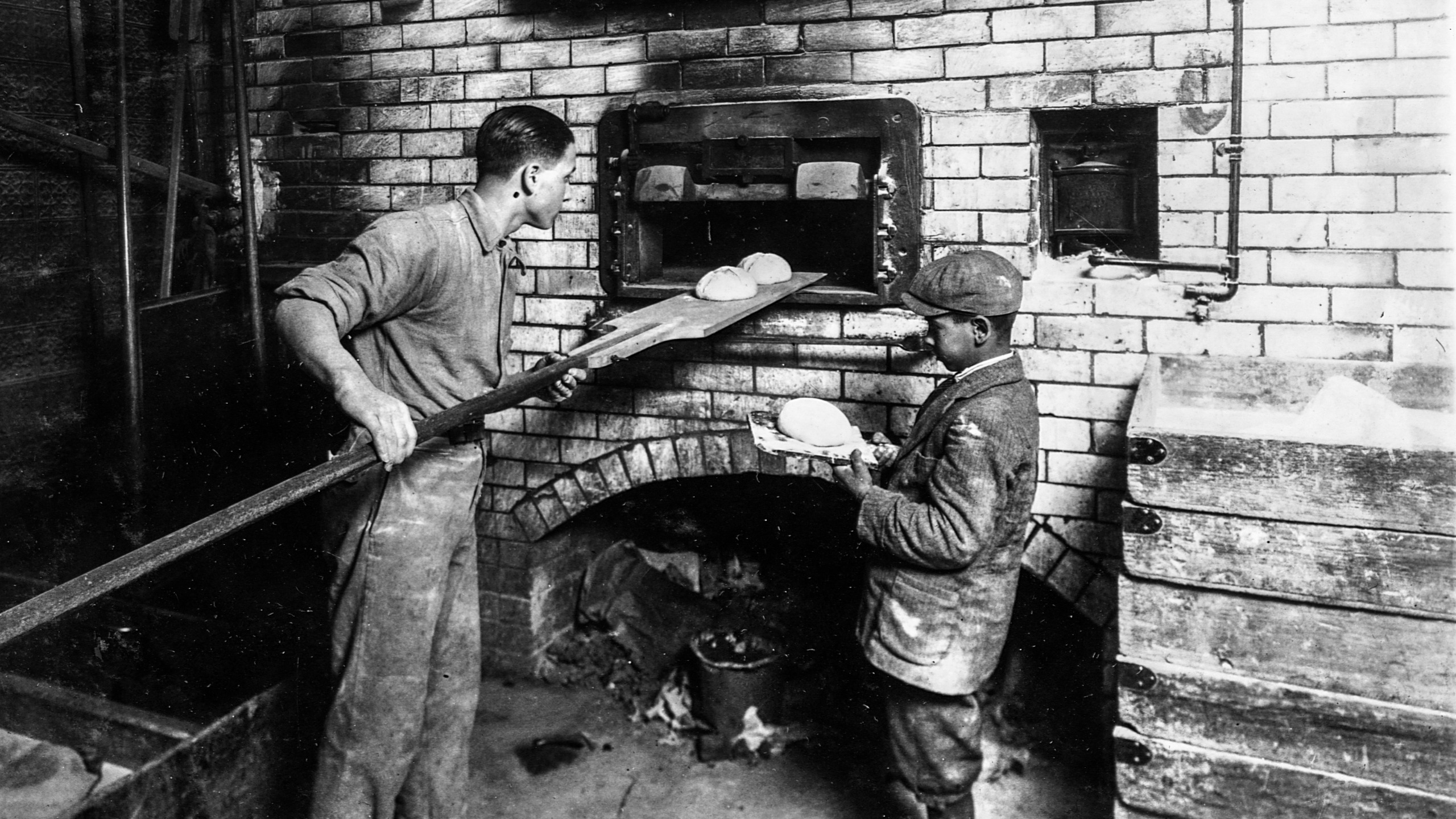
At the turn of the 20th century, the landscape of American labor was grim and unforgiving. Thousands of children across the country were routinely employed in dangerous, backbreaking environments, working long hours in textile mills, underground mines, hazardous factories, bustling canneries, and sprawling agricultural fields. Stripped of their childhoods, these young workers faced constant risks to their health, safety, and psychological well-being.
To expose these hidden abuses, Hine embarked on extensive travels across the United States, venturing deep into the industrial centers, remote mill towns, and rural outposts where child labor was most deeply entrenched. Gaining access to these heavily guarded industrial sites, however, was no easy task. Factory owners, mill managers, and corporate executives went to great lengths to keep outsiders, and especially investigators, away from their operations to prevent public backlash and legal scrutiny.
To bypass these strict barriers and secure the evidence he needed, Hine was forced to adopt a variety of clever disguises and deceptive tactics. Over the course of his investigations, he posed variously as a fire inspector checking safety compliance, a traveling postcard vendor, an earnest Bible salesman, or a commercial photographer who was ostensibly interested only in capturing the intricate mechanics of the factory machinery rather than the workers operating them.
This undercover work was fraught with danger. Hine was frequently threatened, harassed, and intimidated by aggressive foremen, plant supervisors, and armed factory police who suspected his true motives. Despite the constant physical risks, he pressed forward, meticulously recording not only the names and ages of the children he encountered, but also capturing their expressions of exhaustion and quiet resilience.
The National Child Labor Committee immediately put Hine’s damning visual evidence to work, deploying the photographs strategically in their aggressive nationwide lobbying and public awareness campaigns. The impact was profound. The public outcry fueled by Hine’s images helped pressure the federal government into action, leading directly to the establishment of the United States Children’s Bureau in 1912. Decades later, the momentum he helped generate culminated in the landmark Fair Labor Standards Act of 1938, which effectively brought the widespread practice of legal child labor in the United States to a definitive end.
Continuing to Crusade with a Camera
Even after his groundbreaking work with the NCLC, Hine’s commitment to documenting human dignity and suffering never wavered. During and immediately after the First World War, he traveled to Europe to photograph the extensive humanitarian relief efforts carried out by the American Red Cross, capturing the devastation left in the wake of the global conflict and the resilience of those rebuilding their lives.
Upon his return to the United States, Hine shifted his focus toward celebrating the dignity of adult laborers, producing a celebrated series of photographs he termed "work portraits." Rather than viewing industrial machinery as cold and alienating, he highlighted the skill, strength, and humanity of the people who operated the tools of the modern world.
His most famous and daring industrial assignment came in 1930, when he was hired to document the monumental construction of the Empire State Building in New York City. True to his fearless approach, Hine sought out unconventional perspectives to capture the sheer scale of the engineering feat. To achieve his desired angles, he was hoisted out into open space suspended in a specially designed metal basket, hanging precariously 1,000 feet above Fifth Avenue while snapping photographs of the ironworkers walking along narrow beams high in the sky.
Despite his immense contributions to the fields of photography, journalism, and social reform, Hine’s final years were marked by tragedy and hardship. As the Great Depression deepened, professional commissions dried up, public interest in his socially conscious work faded, and he struggled to find financial stability. Ultimately, he lost his home and was forced to apply for public welfare assistance. He passed away in 1940 at the age of 66, largely overlooked by the society he had fought so hard to improve.
Throughout his career, Hine deliberately rejected the notion of professional detachment, preferring to describe his powerful images as "photo-interpretations" to emphasize his deep personal involvement with his subjects. This empathetic, activist approach to the medium went on to profoundly influence generations of documentary photographers who followed in his footsteps. Today, more than a century after he first stepped onto a factory floor with a hidden camera in hand, Lewis Hine’s timeless photographs stand as a lasting testament to the fact that a camera, when placed in the right hands, possesses the power to help change the world.