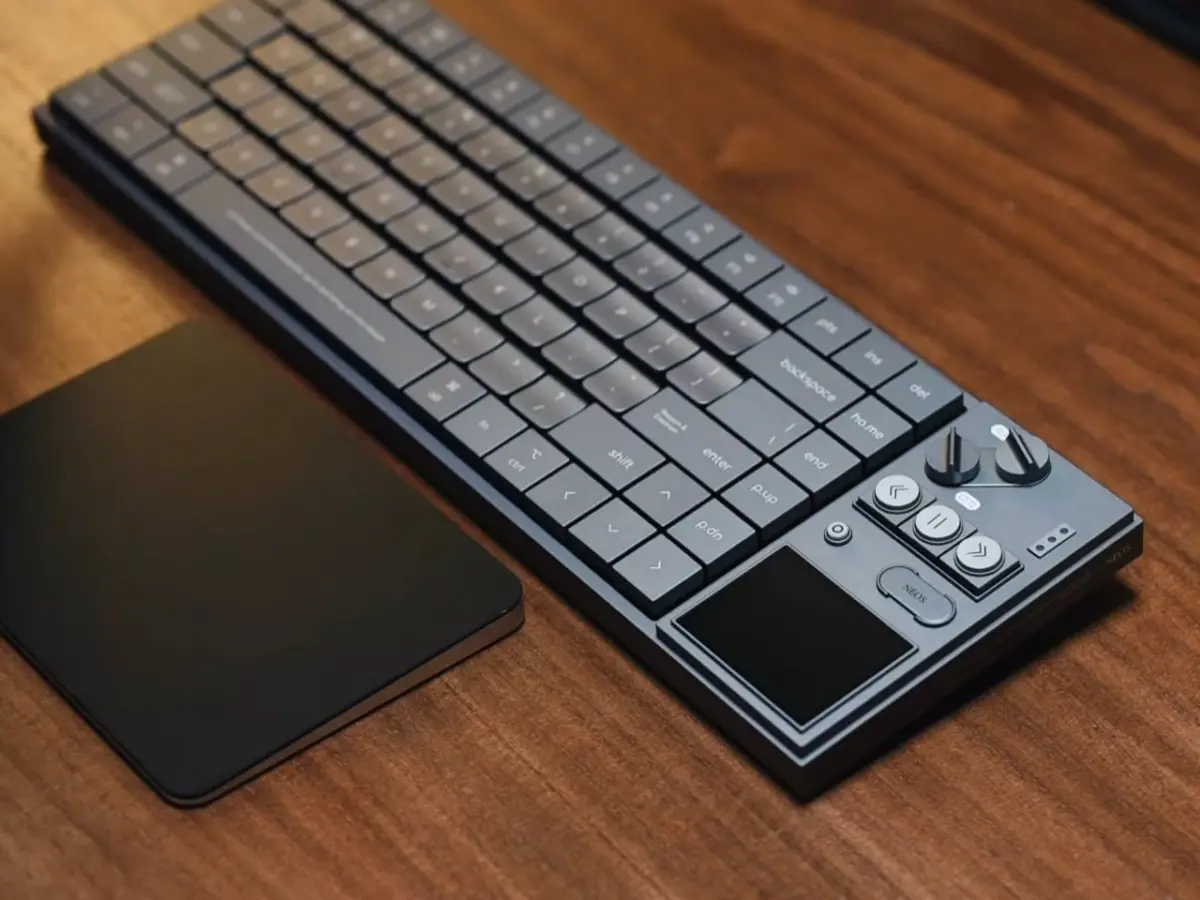
A company historically known for budget-friendly, RGB-soaked gaming peripherals has taken a radical detour into the world of high-end industrial design. AULA—whose Chinese name translates directly to tarantula, a nod that previously inspired a lineup of creepy-crawly branding and vibrant lighting effects—has launched an entirely new product line. Built by an in-house team of product designers, structural engineers, and mechanical keyboard enthusiasts operating under the banner of AULA.New Renaissance, the brand’s debut offering is a striking departure from its past. Named the Neos 75, this 75% low-profile mechanical keyboard pairs an all-aluminum body, matching metal keycaps, and a built-in color screen with an overarching design philosophy heavily influenced by European art history and mid-century audio equipment.
The Neos 75 represents a dramatic maturation for AULA, stepping away from the entry-level gaming market and into the realm of premium desktop hardware. The keyboard features an 84-key layout housed within a meticulously CNC-machined aluminum chassis. Connectivity is versatile, supporting wired connections, a 2.4GHz wireless link, and Bluetooth. Powering the wireless capabilities is a substantial 4,200mAh battery neatly tucked into its own dedicated compartment within the frame. Preorders for the Neos 75 officially opened in China on October 23, with a broader global release scheduled for the near future, marking a significant milestone as the brand enters four-figure RMB pricing territory.
A Tiny Hi-Fi Deck Lives on the Right Side
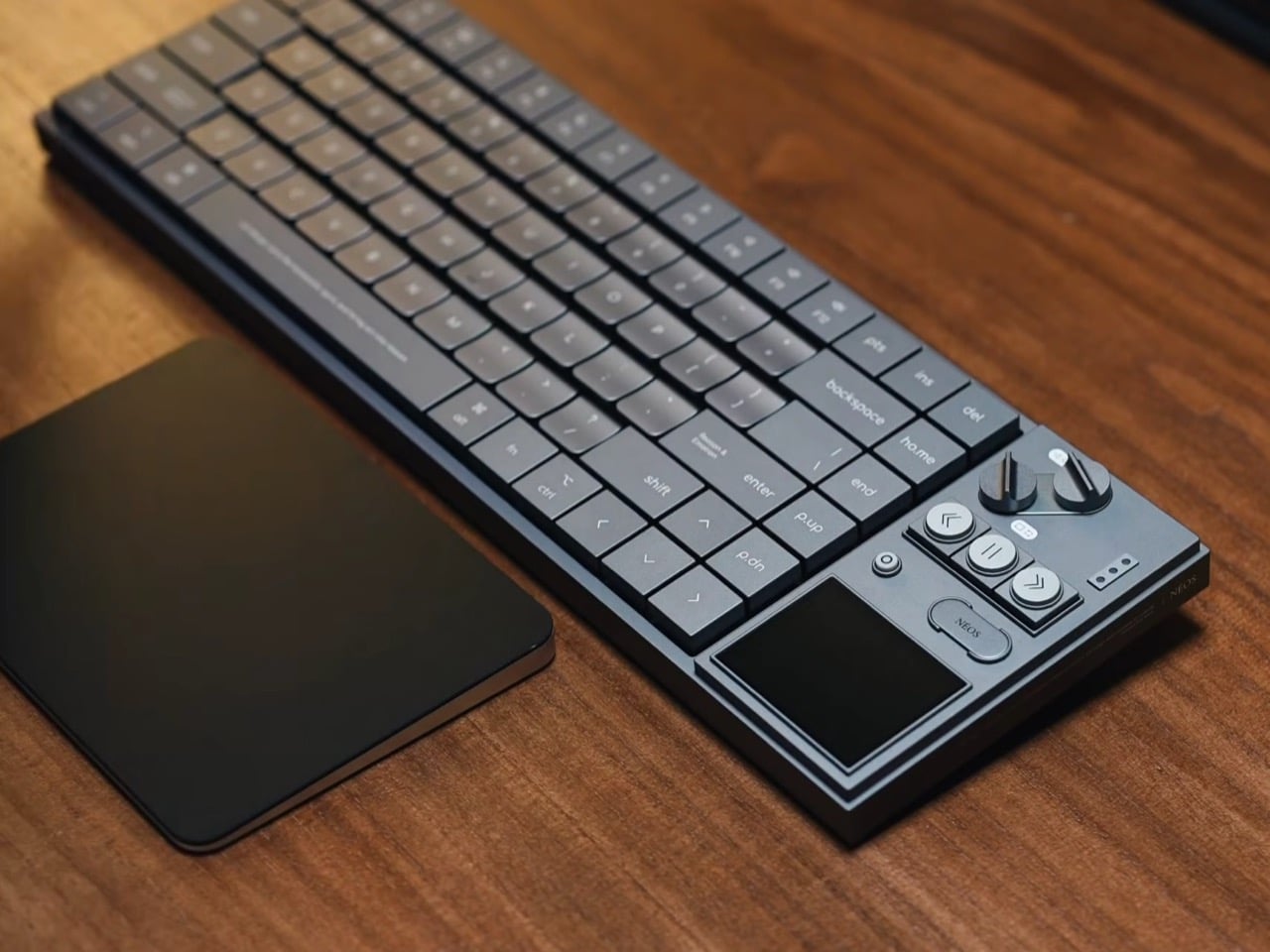
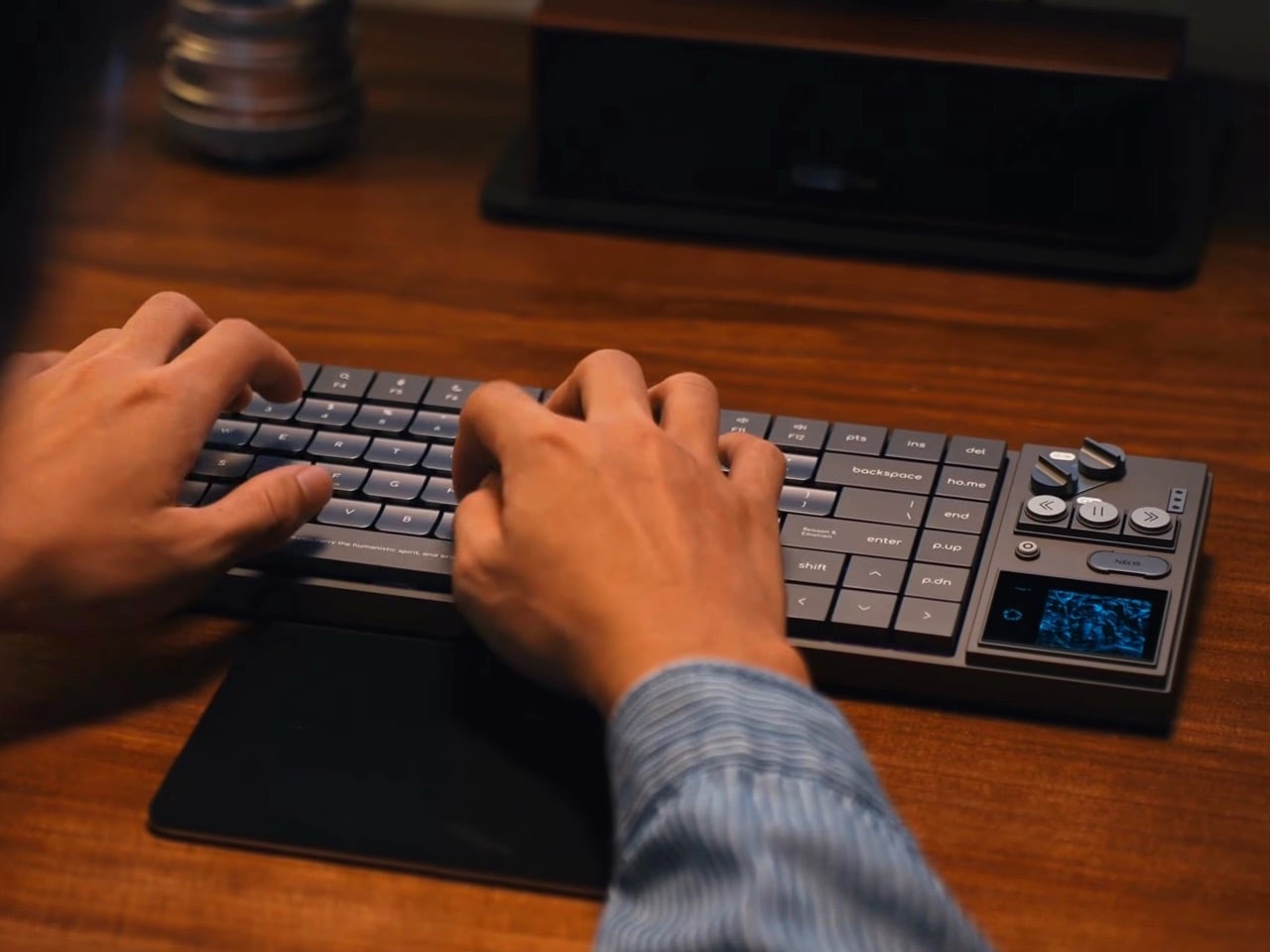
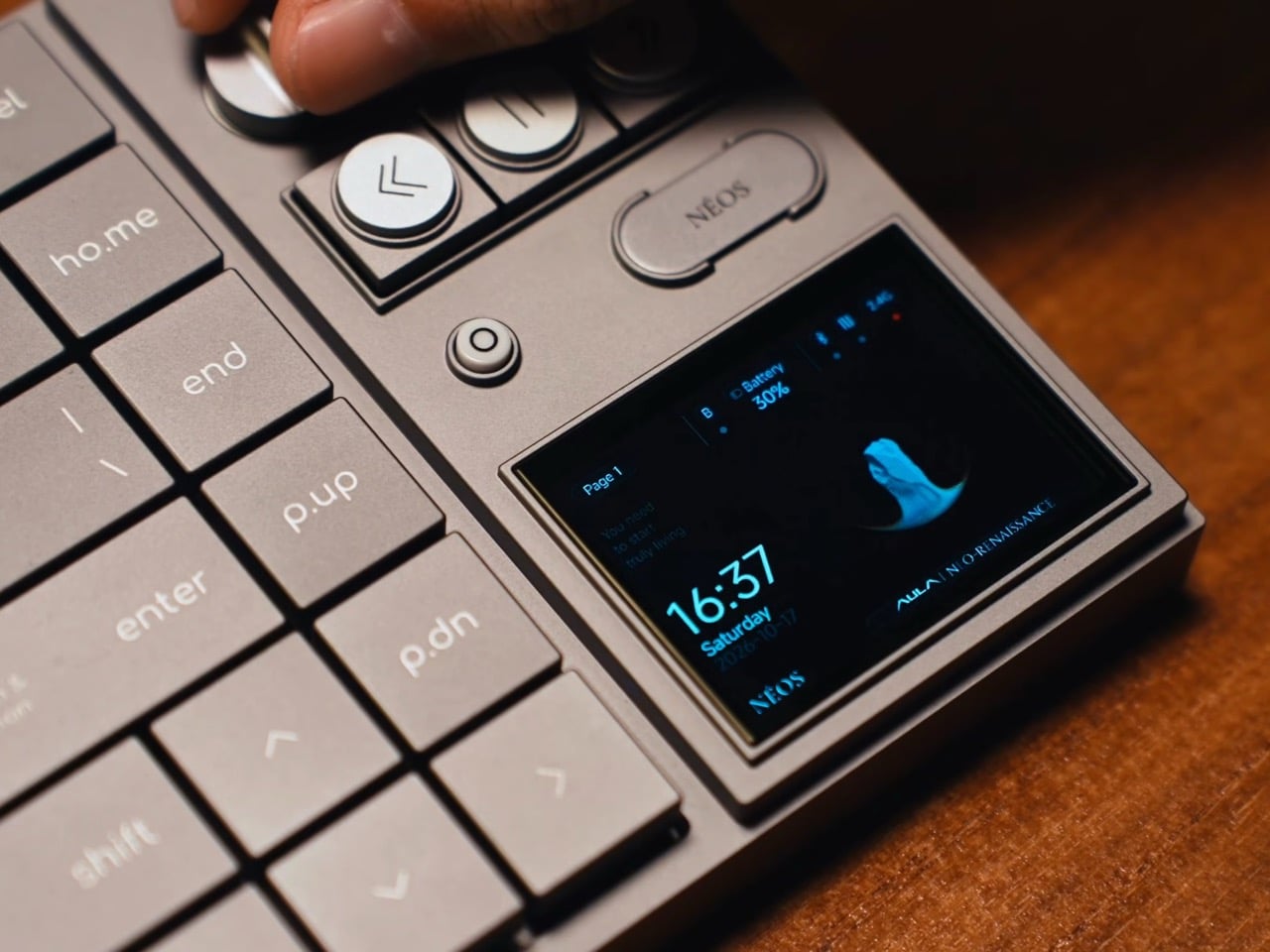
The most visually arresting element of the Neos 75 sits tucked away on the right side of the chassis, where a specialized control console commands immediate attention. This dedicated module features a 2.3-inch color display boasting a 480 by 360-pixel resolution, capable of showcasing essential information such as the current time, battery levels, and custom album artwork or graphics. Flanking the screen is an array of physical controls that immediately evokes the aesthetic of vintage audio gear, specifically drawing comparisons to Dieter Rams’ iconic Braun radios and record players from the 1950s and 1960s, as well as the design ethos behind Teenage Engineering’s celebrated synthesizers like the OP-1, OP-1 Field, and the all-black OP-XY.
Crowニング the console are two slotted metal knobs designed with oversized screw-head aesthetics that give the impression they could be manually adjusted with a coin. The upper knob is fully removable and features a damped rotation mechanism dedicated to system volume and mute controls. The lower knob functions as a page-flipper for the integrated display, and it even pulls up a fully functional built-in calculator—a practical inclusion that spreadsheet users will likely find invaluable. Positioned directly beneath these knobs are three round metal buttons dedicated to media playback functions, including rewind, pause, and fast-forward. These are joined by a pill-shaped NÉOS button and a smaller auxiliary round key, all of which can be fully customized and remapped using AULA’s accompanying software drivers. While some online commentators on Chinese forums have playfully critiqued the module as an unconventional lump on the side of the board, it unquestionably serves as the core personality of the device.
Dressed Like a Museum Piece, Named Like a Pantheon
AULA’s manufacturing process for the Neos 75 centers around a one-piece aluminum chassis that is precision-machined via CNC before receiving one of four distinct finishes. Eschewing standard colorways, the brand has named each finish after a mythological deity. Venus is rendered in an anodized silver, Hades takes on a brooding anodized black, Selene features an anodized gray, and Athena is coated in a clean electrophoretic white. In a playful nod to classical mythology, Venus breaks the strict Greek naming convention as a Roman deity, yet fits seamlessly into the overarching theme.
Complementing the metallic chassis are matching aluminum keycaps, a feature that remains exceptionally rare in mass-produced mechanical keyboards. These keycaps are engineered with flat outer edges and a subtle, ergonomic curve centered on the top surface. When placed upon a wooden desk, particularly one crafted from walnut, the entire hardware assembly takes on the appearance of a sophisticated artifact found in a museum gift shop.
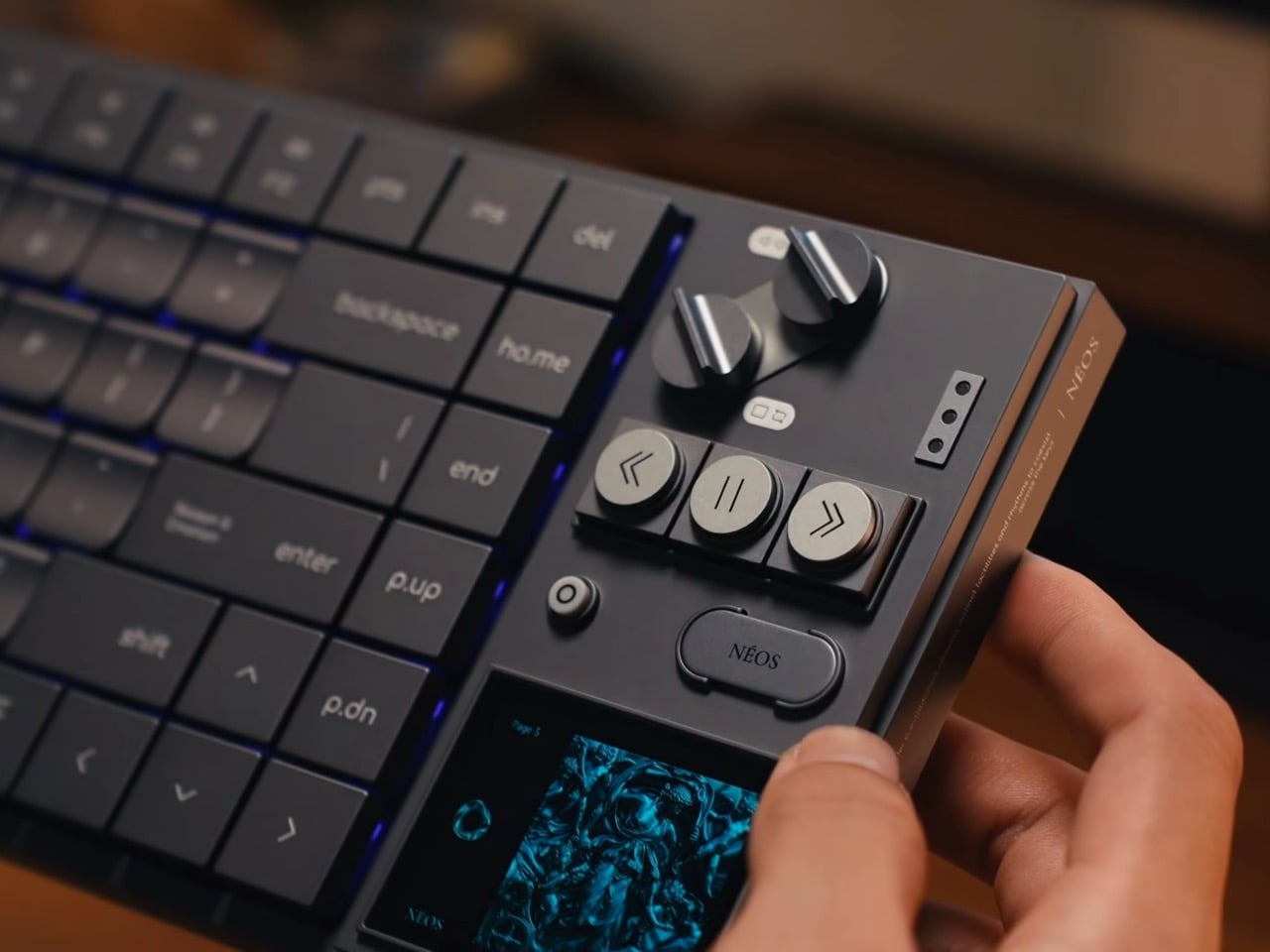
The design philosophy extends down to the smallest typographic details. The key legends utilize a distinctive lowercase font, featuring charmingly casual stylistic choices like "ho.me" and "p.up" to give the typing surface a unique voice. The Enter key proudly bears the printed inscription "Reason & Emotion," while a subtle line of text runs horizontally across the spacebar. By default, the integrated color display pairs a digital clock face with a glowing classical statue, reinforcing the artistic narrative set forth by the design team. Teardowns of the unit further reveal a carefully engineered custom curve across the primary letter cluster alongside functional fold-out feet to optimize typing angles.
Gasket Guts and a Price Tag Worth Talking About
Beneath its artistic exterior, the Neos 75 is built to meet the rigorous standards expected by modern mechanical keyboard enthusiasts. The typing assembly is cushioned by a gasket-mount system designed to provide a comfortable, cushioned bottom-out experience. This internal structure is reinforced by multiple layers of dampening material, including PORON foam, an IXPE switch pad, and a specialized PET sheet, all carefully chosen to refine and shape the acoustic profile of every keystroke.
The board utilizes custom low-profile switches developed in partnership with Kailh, housed within hot-swappable sockets that accommodate both linear and tactile preferences depending on user choice. Software customization is supported through VIA compatibility alongside AULA’s A HUB 3.0 software, allowing for comprehensive macro recording and key remapping across both Windows and macOS operating systems. Including the extra control console, the keyboard measures approximately 14.7 by 4.8 by 1.2 inches.
When preorders opened in the Chinese domestic market, the Neos 75 was listed at an introductory price of 1,299.1 RMB, which translates to roughly $180 USD, down from its standard retail list price of 1,599.1 RMB, or approximately $225 USD. Official pricing and availability for the international and US markets have not yet been finalized by the manufacturer. With this release, AULA has positioned itself to compete directly with established low-profile favorites such as the NuPhy Air75 and the Lofree Flow, introducing a distinct combination of integrated screen technology, physical metal knobs, and aluminum keycaps that sets it apart in the current peripheral landscape.