For many enthusiasts and professionals alike, wildlife photography serves as a profound form of personal therapy—a way to step back from the frantic pace of modern life and connect with the natural world. But for those who cannot constantly venture into the field with a telephoto lens, admiring the breathtaking work of global photographers is the next best thing.
Over the past week, a fresh wave of striking imagery has captured the attention of nature lovers worldwide. From lightning-fast avian strikes in Florida wetlands to a momentous, historic milestone for a rescued circus elephant in Europe, this week’s top wildlife photography highlights the incredible patience, technical precision, and deep empathy required to document the animal kingdom.
A Great Egret Mid-Catch
Capturing fluid motion in wildlife photography demands an extraordinary amount of patience, acute anticipation, and frequently, a healthy stroke of luck. Wildlife behavior happens in fractions of a second, leaving zero room for hesitation. A remarkable photograph captured by Ronen Tivony at the Arthur R. Marshall Loxahatchee National Wildlife Refuge in Boynton Beach, Florida, perfectly illustrates this delicate intersection of timing and technical mastery.
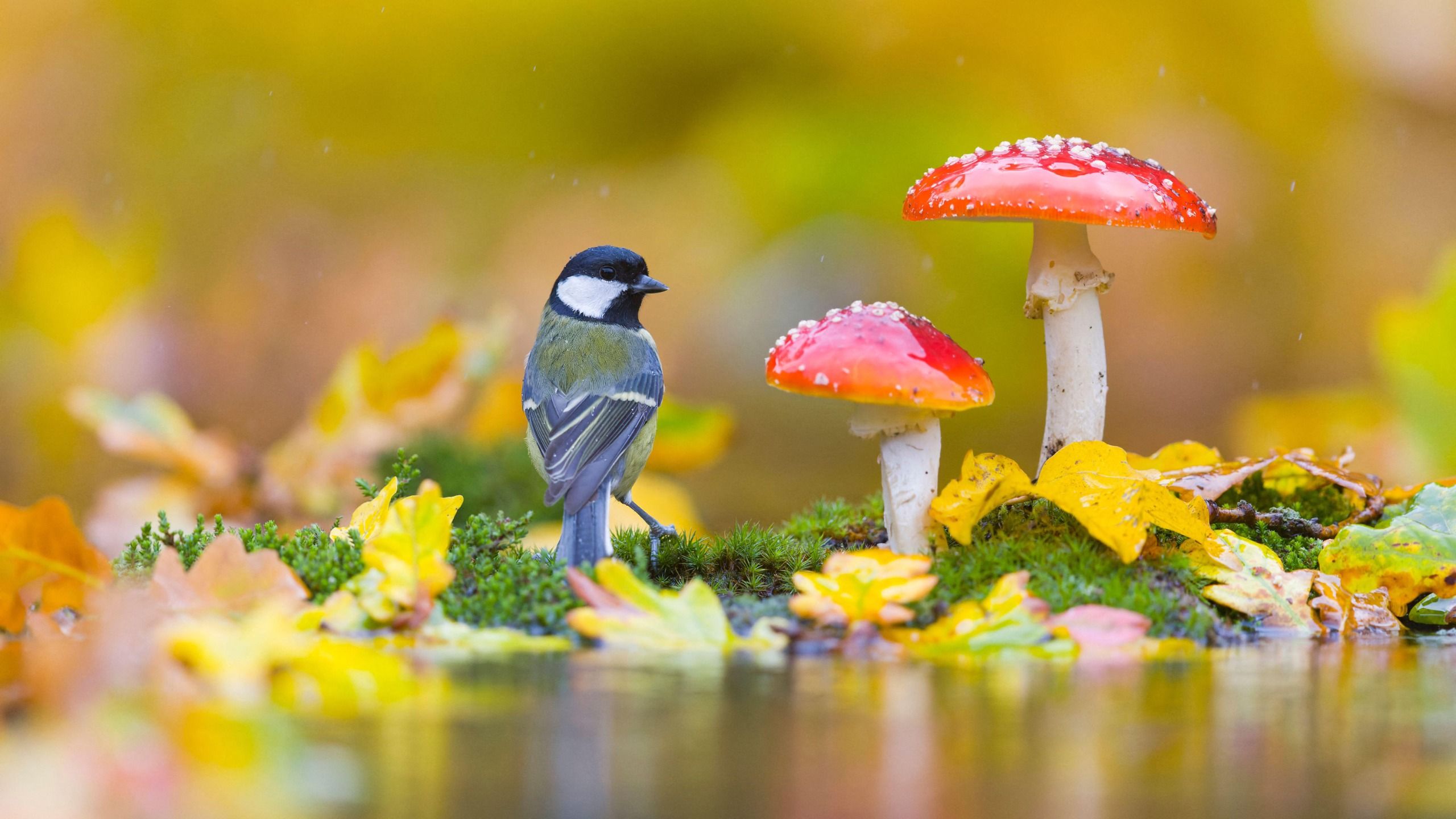
Tivony managed to capture the exact millisecond a great egret tossed a freshly caught fish into its open bill. The precision of the frame is so acute that individual water droplets splashing from the disturbance are completely frozen in mid-air, glistening against the natural backdrop of the refuge.
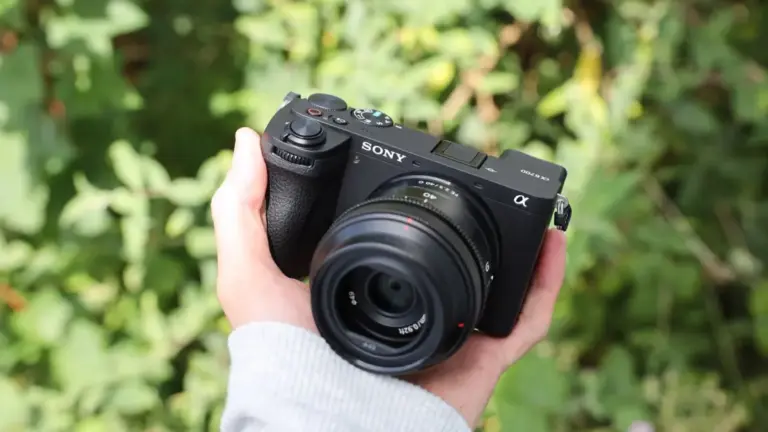
Achieving this level of clarity requires cutting-edge camera engineering. Tivony utilized a high-end flagship mirrorless camera, the Sony A9 II, paired with a substantial 400mm telephoto lens. By dialing in a lightning-fast shutter speed of 1/1600 of a second, the setup completely eradicated any motion blur, preserving the dramatic climax of the egret’s hunt in crisp, immaculate detail.
A Bird-Filled Tree with a Rainbow
In Delray Beach, Florida, photographer Bruce Bennett encountered a scene that seemed almost too picturesque to be real. A dense tree populated by a collection of dark-colored waterbirds was positioned perfectly against a brilliant, sweeping rainbow arching across the sky at the Wakodahatchee Wetlands.
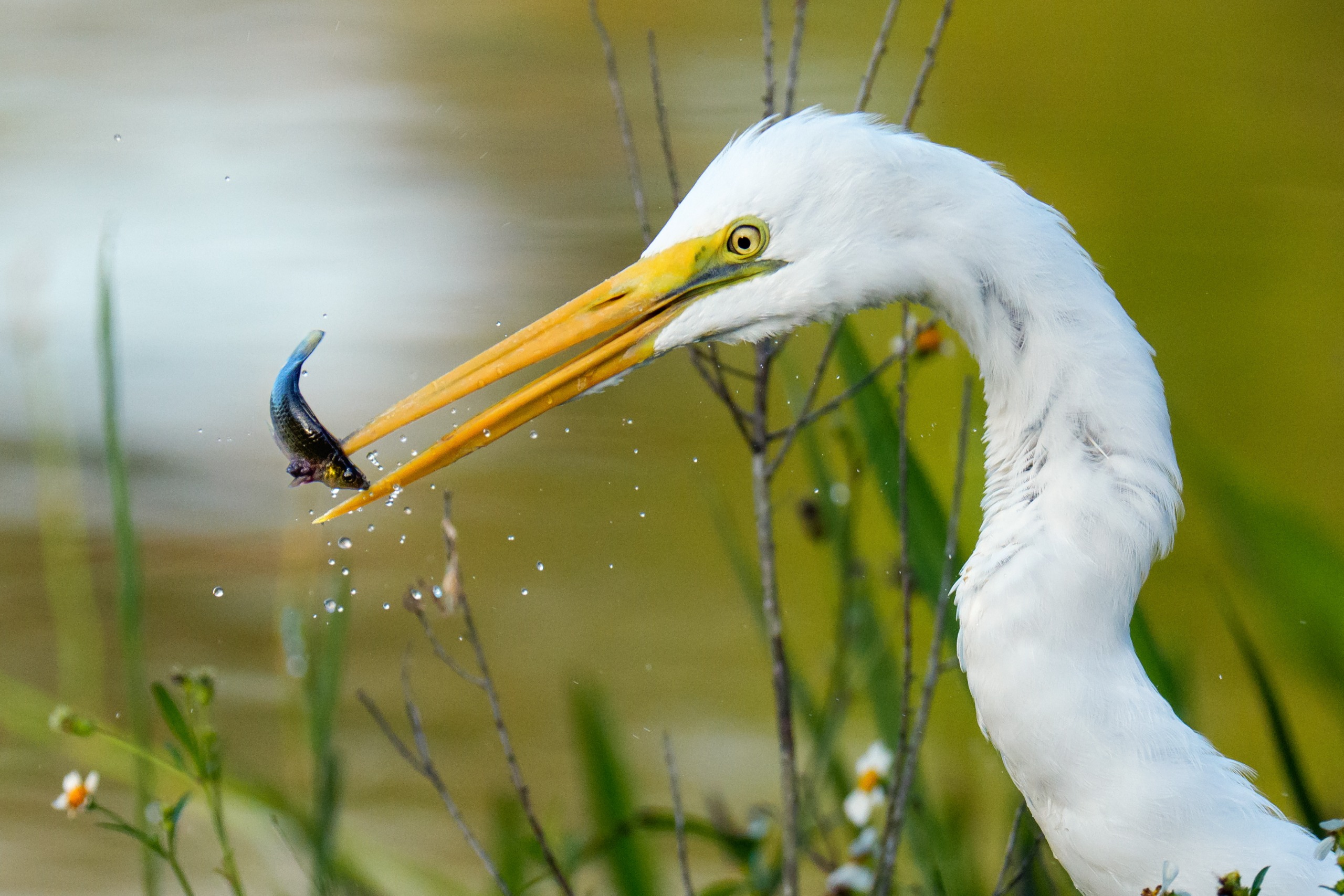
The vibrant optical phenomenon provides a striking, colorful contrast to the stark silhouettes of the wildlife occupying the branches. Upon closer inspection, the composition reveals a diverse gathering of avian residents, including three distinct Anhinga birds sharing canopy space with a sleek Boat-tailed Grackle.
To bring this vibrant, atmospheric scene to life, Bennett relied on modern mirrorless technology, shooting with the Canon EOS R5 Mark II. The camera was paired with the versatile RF 100-500mm f/4.5-7.1 L IS USM lens, allowing the photographer to seamlessly adjust his reach and frame the distant birds and meteorological wonder with exceptional tonal range and sharpness.
A Camouflaged Owl Tucked in a Tree Trunk
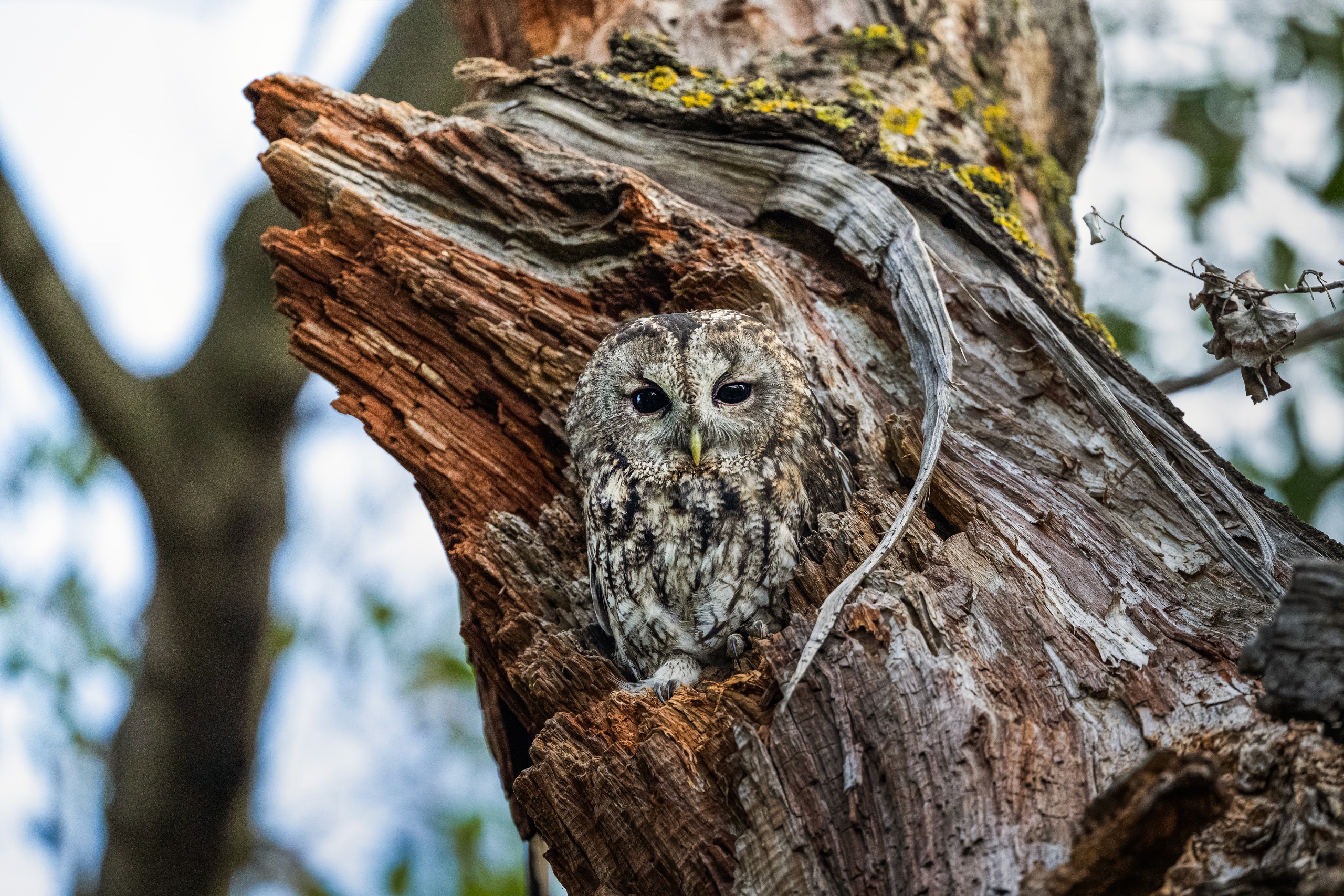
Nature often provides its own forms of disguise, and few creatures utilize camouflage quite as effectively as owls. In Bursa, Türkiye, photographer Alper Tuydes captured a breathtaking image of a long-eared owl sheltering inside the hollowed trunk of a tree that had been violently toppled by a severe storm within the Karacabey Longoz Forests.
The resulting photograph is a masterclass in natural camouflage. The intricate patterns, barred feather designs, and earthy brown tones of the long-eared owl match the jagged, weathered grain of the fallen wood with astonishing precision. The bird sits securely and almost invisibly within its makeshift shelter, demonstrating how wildlife adapts to environmental disruptions like severe weather events. The seamless blend of animal and habitat highlights the keen observational skills required of wildlife photographers who must spot subjects that are intentionally hiding in plain sight.
A Songbird Amid Colorful Leaves and Mushrooms
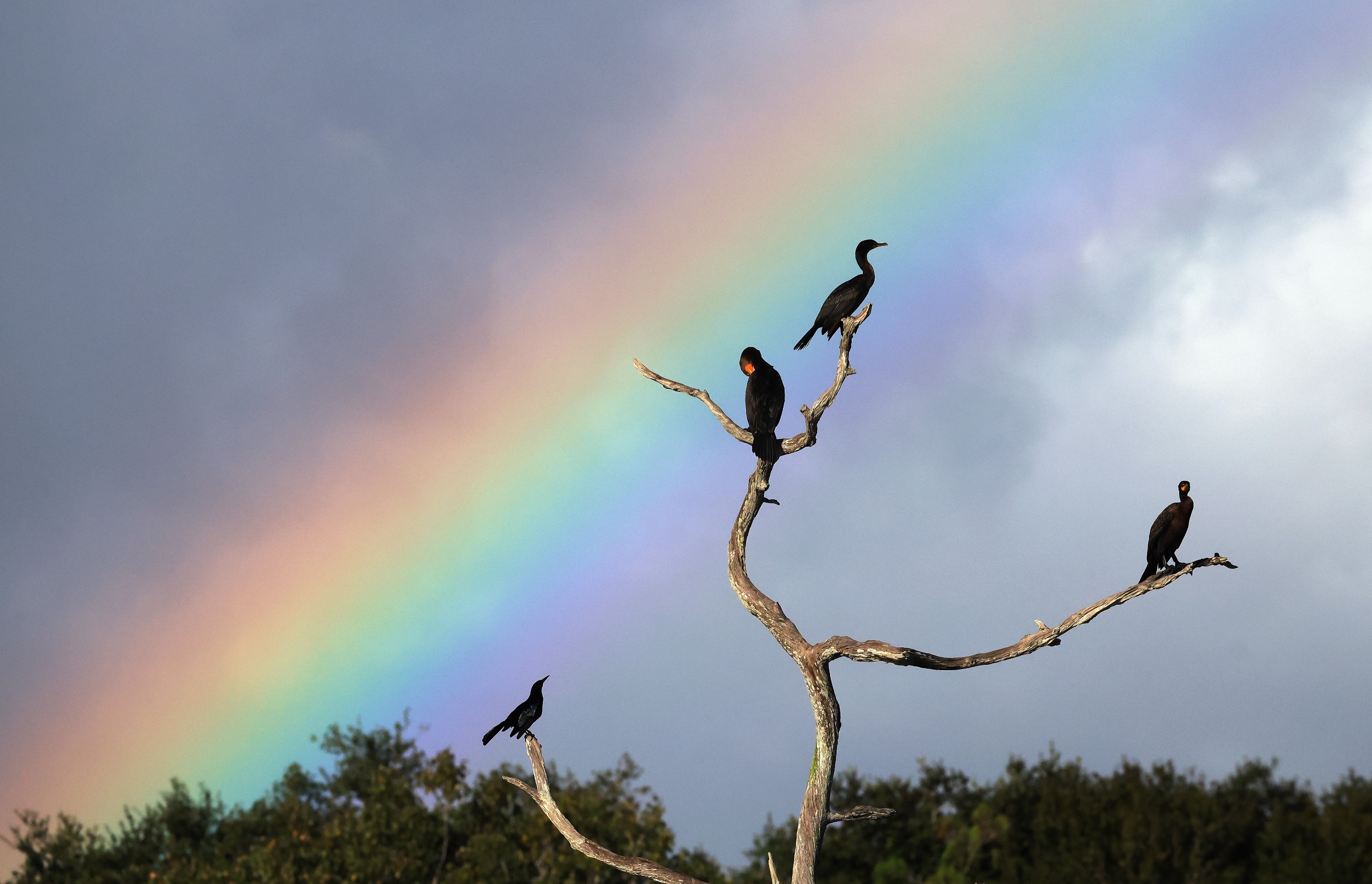
As autumn deepens across various parts of the Northern Hemisphere, woodland floors transform into vibrant carpets of color, offering unique foregrounds for wildlife photographers. In Suffolk, England, photographer Paul Sawyer captured a serene moment featuring a great tit (Parus major) standing alert near the water’s edge.
Captured this October, the image benefits immensely from its seasonal surroundings. The adult songbird is dramatically framed by a rich tapestry of autumn leaves and the unmistakable, vibrant red-and-white caps of Fly agaric (Amanita muscaria) mushrooms sprouting from the damp soil. The inclusion of these classic woodland fungi immediately anchors the photograph in a specific season and place, elevating a simple portrait of a common garden bird into an artistic narrative about the changing rhythms of the European countryside.
A Rescued Elephant at a New Sanctuary
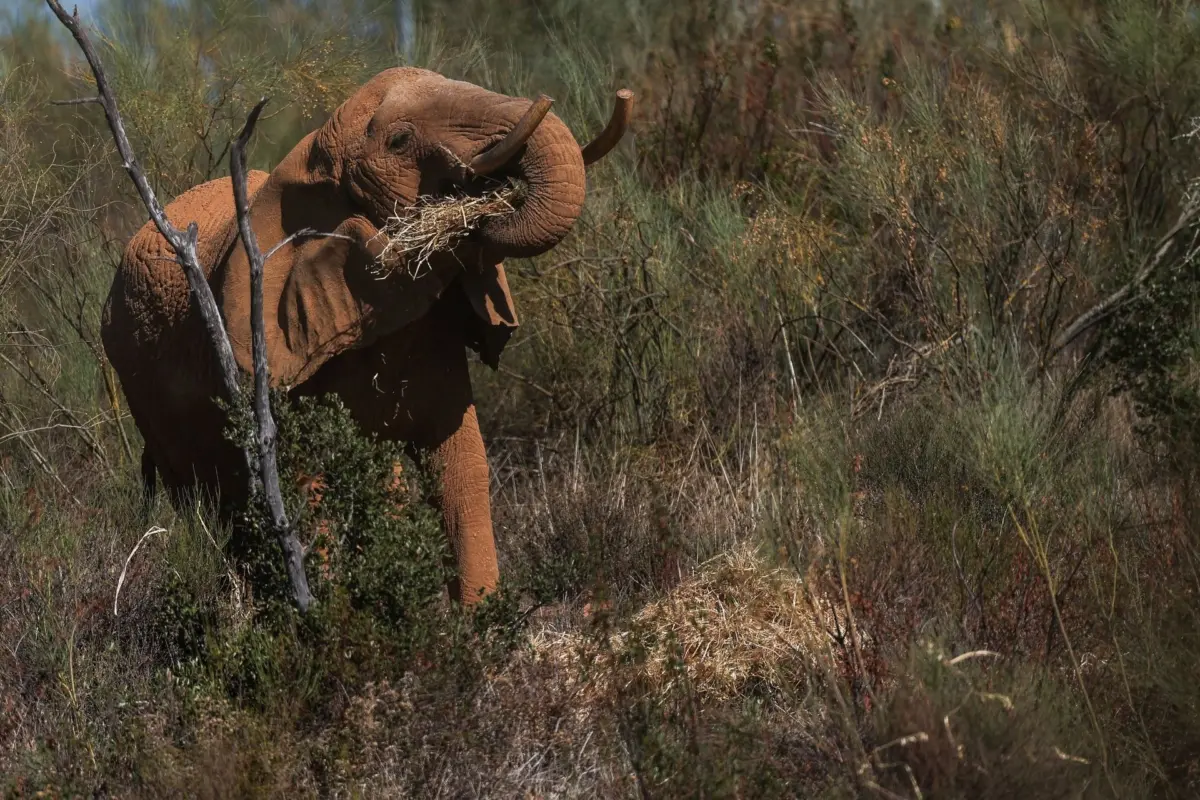
While technical mastery and artistic composition define much of wildlife photography, some of the most impactful images carry profound conservation and welfare milestones. A poignant photograph captured by Patricia De Melo Moreira features Julie, a 45-year-old female elephant, marking a historic chapter for animal welfare in Portugal.
Julie holds the distinction of being the very last wild animal to have performed as part of any circus in Portugal. Following decades of life spent traveling and performing under difficult conditions, she has officially retired to a drastically different reality. Julie now resides at the newly established Pangea sanctuary, located in Vila Viçosa within the Alentejo region.
Captured on October 22, the image documents Julie exploring her expansive new home. The Pangea sanctuary represents a massive leap forward for animal protection in the region, standing as the first large-scale elephant sanctuary in all of Europe. Spanning an impressive 400 hectares, the vast protected landscape allows Julie and future rescued pachyderms the freedom to roam, forage, and socialize in an environment tailored to their natural instincts and emotional needs. Moreira’s sensitive documentation of Julie’s arrival serves as a powerful reminder of how photography can chronicle not only the wild wonders of nature, but also the vital journey toward rehabilitation and sanctuary for animals transitioning out of captivity.