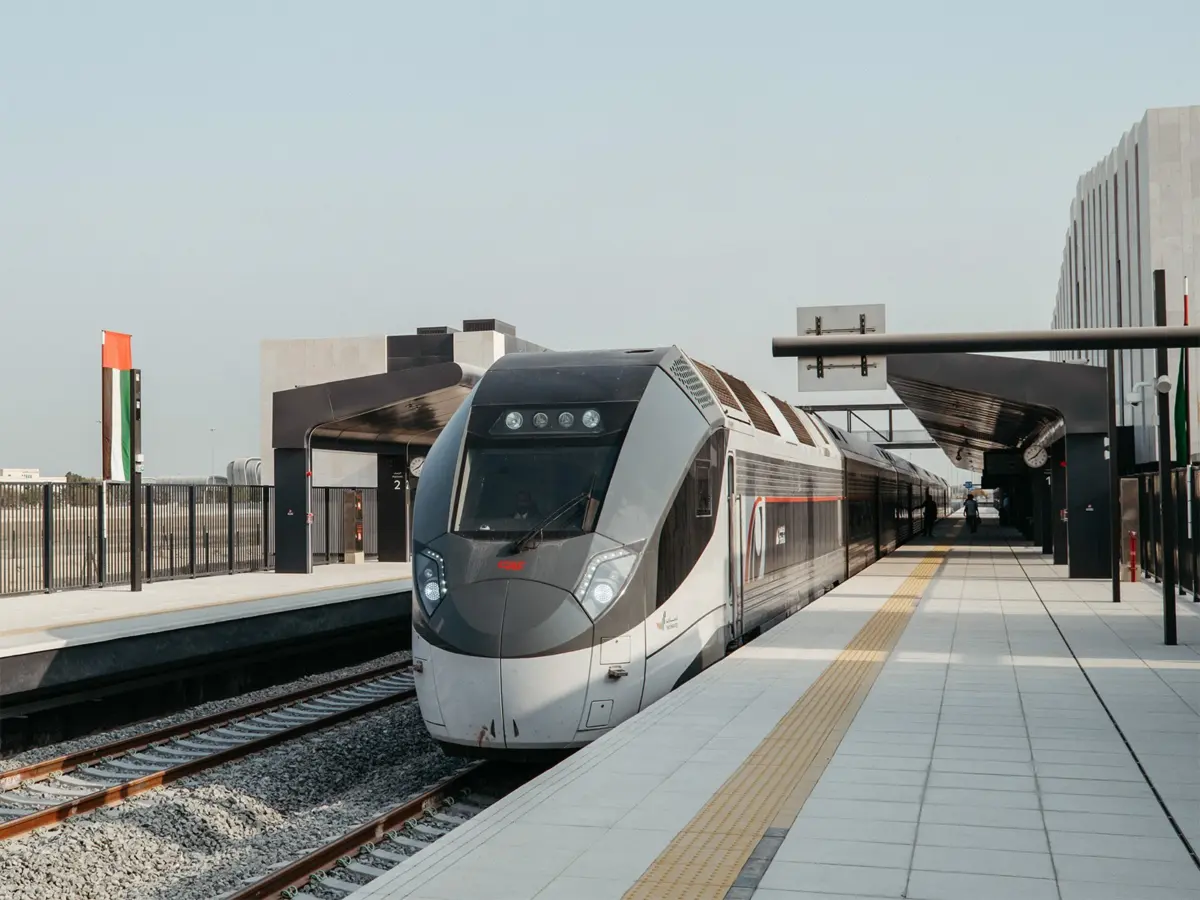
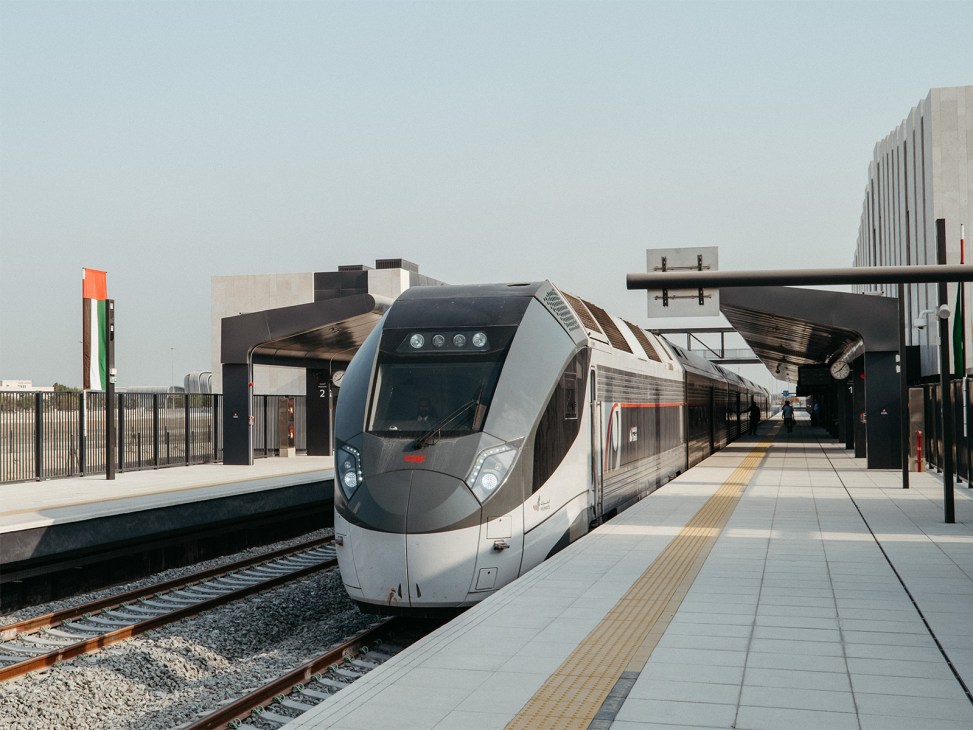
From the window of the 08.19 service bound for Fujairah, passengers watch a familiar modern scene unfold at Abu Dhabi’s Mohamed bin Zayed City Passenger Train Station: a late-running commuter sprints the length of the platform, a hot cup of coffee clutched firmly in hand. While a mad dash for an intercity train is a quintessential commuter ritual in many parts of the world, it remains a novel sight across the Gulf. Residents in the region have long enjoyed the unhindered freedom of car ownership and sprawling highways, meaning that consulting a railway timetable has historically been an unfamiliar consideration for day-to-day life.
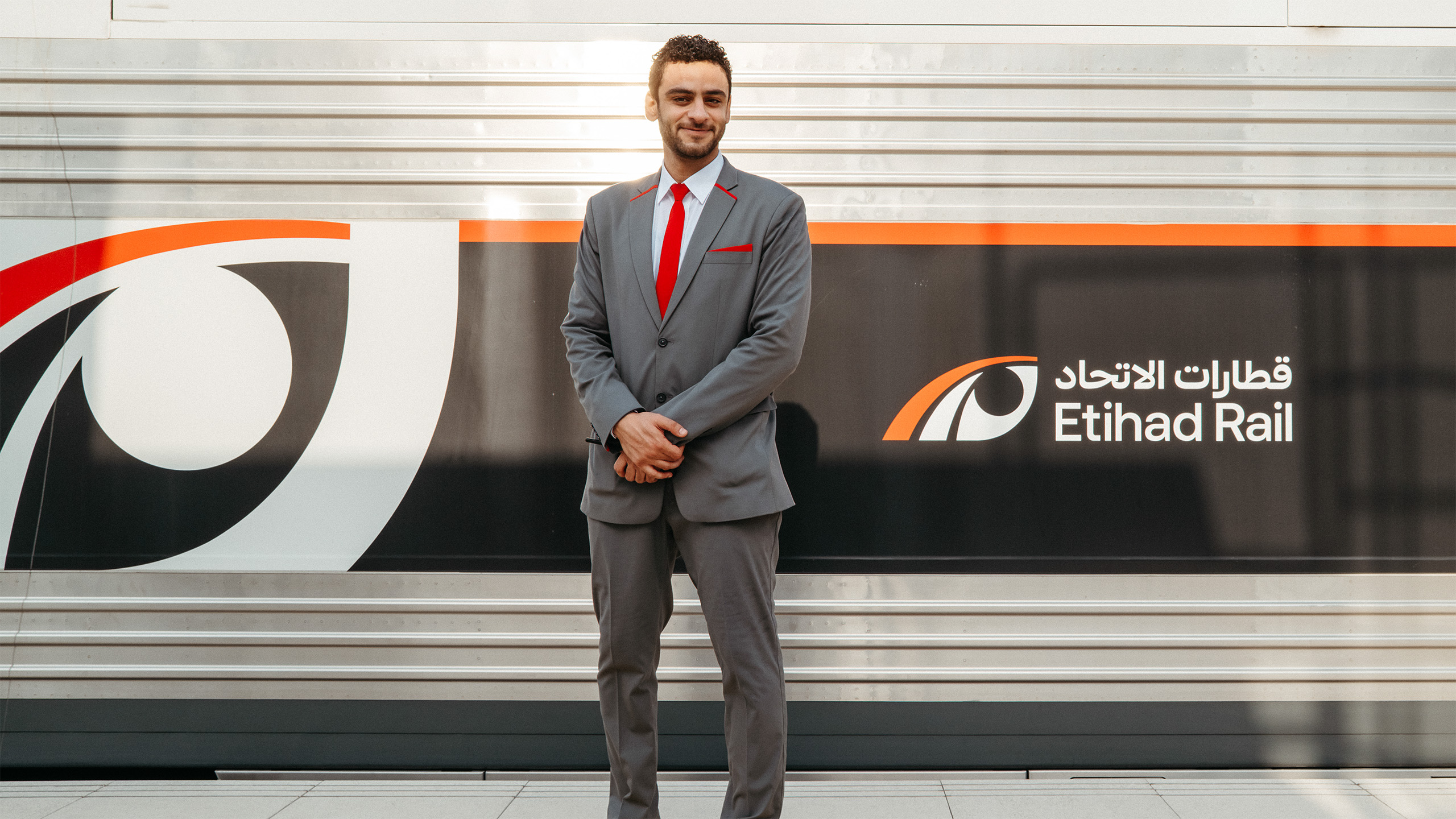
Yet, this dynamic is shifting rapidly. Step on board one of Etihad Rail’s newly launched passenger services, and the atmosphere immediately signals that a significant cultural and infrastructural transition is underway. Impeccably uniformed hostesses welcome travelers with offerings of fresh coffee and fine chocolates, ensuring that the journey feels less like a mundane commute and more like a special occasion.
The grand challenge for Etihad Rail, which formally began operating its expanded passenger network this summer, is to translate this sense of luxury and novelty into routine, everyday utility. In June, the operator rolled out passenger services utilizing an existing 900-kilometer freight network, initially connecting Abu Dhabi and Fujairah. Engineered to reach top speeds of 200 kilometers per hour, the modern trains complete this cross-country journey in a swift 111 minutes. The network grew significantly larger at the end of September with the integration of Dubai and Al Dhaid into the line, headlined by the crucial economic corridor linking Dubai directly to Abu Dhabi in approximately one hour.
These developments—linking the nation’s two principal economic powerhouses and offering travelers a reliable way to bypass the perpetually car-clogged Sheikh Zayed Road—promise to fundamentally revolutionize how people move across the Emirates. Inside a typical carriage, the passenger demographic is predominantly Khaleeji, reflecting the local Gulf population. Many travelers spend the journey quietly reading the Qur’an or browsing news updates on their smartphones as dense urban apartment blocks smoothly give way to utility pylons, desert scrub, and rugged mountain horizons. A mobile refreshment trolley regularly passes through the aisle, serving cups of traditional tea and spiced milk tea. As the train nears its eastern terminus in Fujairah, passengers frequently press their faces to the glass, gazing out at the dramatic evolution of the regional landscape.
For residents, the implementation of a dependable national railway carries transformative potential. A reliable intercity service makes accepting employment opportunities in another emirate vastly more practical, eliminating the exhausting prospect of daily long-distance driving. Furthermore, it affords newfound independence to demographic segments who do not drive or prefer not to navigate the nation’s high-speed multi-lane highways. Beyond the direct benefits to rail passengers, any meaningful reduction in highway automobile traffic offers secondary environmental and congestion relief advantages to those who never step foot on a train.
"Every great piece of national infrastructure has two beginnings: the day it’s built and the day people begin making it their own," Azza Al Suwaidi, Etihad Rail’s Chief Operating Officer, tells Monocle.
Early indicators suggest a healthy appetite for the service. Ticket sales have proven encouraging, with approximately 150,000 tickets purchased by mid-September. However, the long-term success of the venture depends heavily on whether daily commuters are ultimately persuaded to break deeply ingrained driving habits. A firsthand journey reveals that while the hardware is impressive, certain experiential tweaks remain necessary. Passengers notice a persistent low-frequency rumble rising from the carriage floor, and onboard Wi-Fi connectivity remains patchy at best.
Furthermore, travelers bound for the primary hubs in Dubai or Abu Dhabi must carefully coordinate their logistics at either end of the journey. During recent observations, departure boards at the Mohamed bin Zayed City Passenger Train Station listed just three daily departures heading toward Fujairah, highlighting that scheduling frequency is still in its infancy. Pricing, meanwhile, remains accessible; a comfort-class ticket between Abu Dhabi and Dubai is reasonably priced at AED39 (approximately €9.50). However, when calculated as a recurring daily expense—particularly when combined with necessary local taxi fares at both departure and arrival points—the overall financial equation requires careful consideration for regular workers.
The geographic footprint of the network is scheduled to expand substantially in the near future, which will directly address some connectivity and utility concerns. Planned station openings in Liwa and Madinat Zayed are slated for November, followed by three additional stations across the Al Dhafra region in December, and Sharjah’s University City station scheduled to open in March 2027. International ambitions are also advancing, with Hafeet Rail actively constructing a vital cross-border connection into neighboring Oman. Looking further ahead, a separate, fully electrified high-speed rail line is currently proposed, designed to slash travel times between Dubai and Abu Dhabi to a mere 30 minutes by operating at blistering speeds of up to 350 kilometers per hour.
Approaching Abu Dhabi on a return trip, female passengers can be observed casually touching up their makeup in the reflection of the train windows—a simple, everyday grooming routine that would be impossible or dangerously distracting behind the wheel of a speeding automobile. It is precisely these small, unheralded perks of rail travel, reclaimed time, and lowered stress levels that may ultimately make the railway an indispensable fixture of modern life in the United Arab Emirates.
Only Connect
The broader viability of the rail network relies heavily on seamless intermodal integration. Dubai’s main station features direct connections to the city’s established Metro system, while Abu Dhabi’s station in Mohamed bin Zayed City and the Fujairah terminal currently rely on dedicated connecting bus services. The convenience, frequency, and reliability of these final-leg transit links will ultimately determine just how useful the national railway proves to be for everyday life in the UAE.