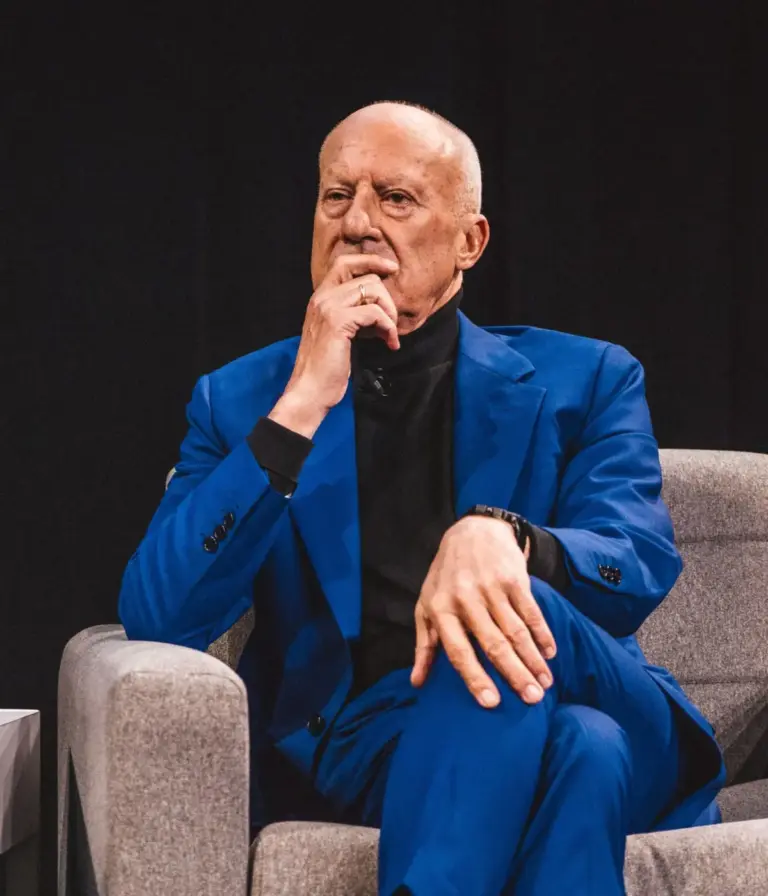
"We try to ask as frequently as possible, ‘What can only happen here?’" says John Cary, the founding president and chief executive officer of the institute, capturing the core ethos guiding the development of the new cultural destination.
The institute itself operates as a nonprofit charity founded in 2019 specifically to advance and preserve the multifaceted legacy of Ray and Charles Eames. In doing so, it joins an existing constellation of established entities dedicated to studying, protecting, and promoting the couple’s prolific body of work. This network includes the Eames Foundation, which was established in 2004 to care for the iconic Eames House in Pacific Palisades, and the Eames Office, which continues to oversee the commercial furniture line and historical archives.
The design for the new museum involves the adaptive reuse of an expansive 88.5-acre site located in Novato, California. Rather than constructing a sprawling facility entirely from scratch, the project will thoughtfully transform a warehouse and office building originally constructed in 1964, aligning with sustainability and historical continuity.
The architectural concept represents just one prominent example of how the Eames Institute continually seeks to channel the ideals and forward-thinking vision of the legendary couple. This includes honoring their famous guiding axiom, "the best for the most for the least," which encapsulates a deeply democratic approach to industrial design. Furthermore, the project reflects a sharp focus on mid-century aesthetics and the innovative repurposing of industrial materials, principles that defined the Eameses’ revolutionary approach to architecture, furniture, and graphic design throughout their decades-long career.

However, the public unveiling of the architectural renderings has simultaneously surfaced a series of uncomfortable and ongoing dialogues within the design community and the public sphere. These discussions center around how individuals within the institute’s immediate orbit have—or perhaps have not—reflected what many historians, designers, and critics consider the most vital and foundational values associated with the Eames name: anti-elitist, democratic design intended for everyone, paired with a steadfast fostering of international dialogue and multiculturalism.
In particular, public scrutiny and debate have increasingly focused on Joe Gebbia, the multibillionaire cofounder of Airbnb and an early founding donor of the Eames Institute of Infinite Curiosity. Gebbia’s heavy financial and vocal involvement with the institute has placed him squarely at the center of discussions regarding modern wealth, philanthropy, and the translation of mid-century democratic ideals into the twenty-first-century tech landscape.
When discussing his significant philanthropic donation and his personal relationship with the enduring legacy of the Eameses during a 2022 interview with Fast Company, Gebbia spoke with deep admiration about what the pioneering couple stood for and how their professional philosophy fundamentally shaped his own entrepreneurial worldview and approach to design.
"I became enamored with their values, with their ethos: Create the best design for the most people for the least price. Democratize design for the masses," Gebbia remarked during the interview, reflecting on the profound impact the designers had on his professional trajectory. "They really left a gift for us, for the world. And the whole notion of starting the Eames Institute was to share that gift with everyone."