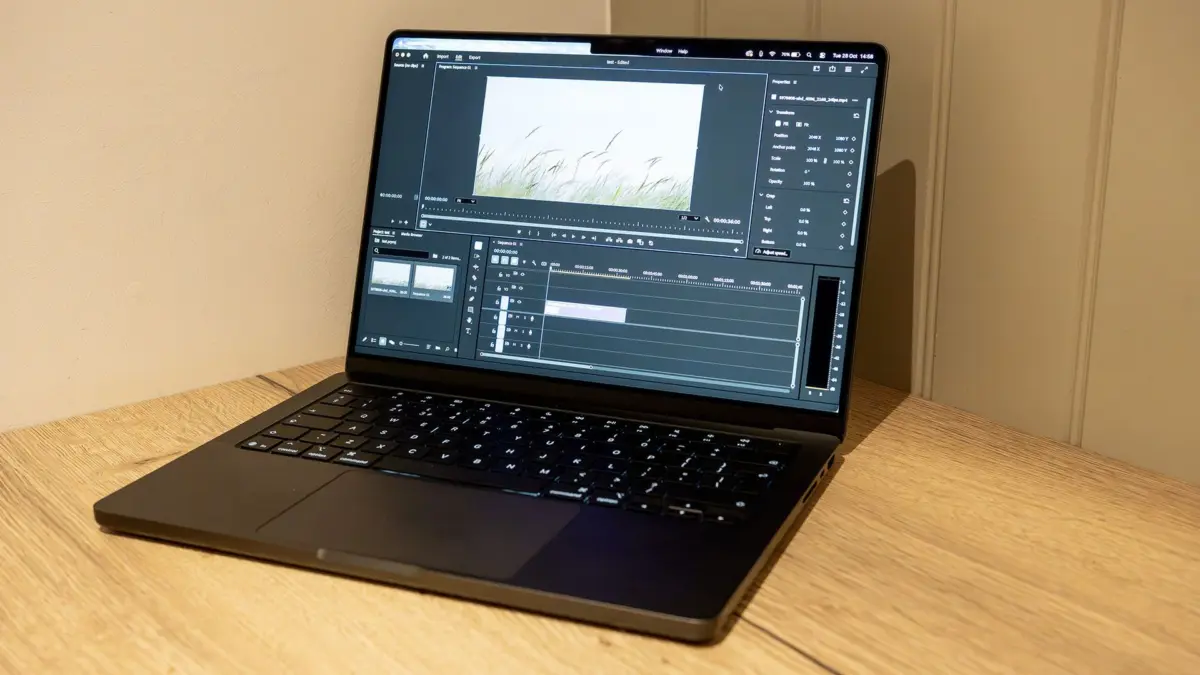
Creative professionals keeping a close eye on high-performance hardware deals have a compelling new reason to consider an ecosystem upgrade. Amazon has officially dropped the price on the 14-inch Apple MacBook Pro featuring the next-generation M5 processor, trimming the standard retail cost down from its original price point of $1,999 to a reduced $1,839. This notable $160 discount represents a significant opportunity for visual artists, designers, and media creators who have been holding off on upgrading their older laptops due to the premium cost often associated with Apple’s high-end silicon.
The 14-inch MacBook Pro powered by the M5 chip currently holds the top position across industry benchmarks for graphic design hardware. In rigorous technical evaluations and standard studio testing routines, the machine established itself at the absolute pinnacle of Adobe Photoshop performance benchmarks, outperforming competing systems by a wide margin. Beyond synthetic measurements, real-world evaluations confirm that the laptop delivers an exceptionally fluid and pleasurable user experience, solidifying its place as a premier choice for demanding digital creative work.
While high-tier Apple hardware rarely sees immediate price reductions following its release, the current cost adjustment makes the M5 configuration far more accessible to freelancers, studio designers, and visual content creators. For professionals operating on older Intel-based MacBooks or earlier generations of Apple Silicon, a price cut of $160 provides a practical incentive to transition to updated architecture capable of accelerating complex design projects.
At the heart of the system’s performance is the M5 processor, which serves as the central driver for its substantial speed improvements. During standardized processor testing, the M5 chip claimed the highest single-core scores recorded in Geekbench tests. Single-core performance remains a critical metric for visual design applications, as many core features within creative software suites rely heavily on single-thread efficiency for execution speed. Tasks such as applying complex image filters, calculating precise vector geometry, rendering brush strokes, and manipulating high-resolution canvas layouts respond directly to these single-core processing capabilities.
Alongside its CPU achievements, the M5 chip incorporates a major leap in graphics processing power when evaluated against the previous-generation M4 architecture. The updated GPU architecture allows the machine to handle heavy graphical workloads with markedly improved responsiveness. Creative applications that utilize hardware acceleration benefit from faster real-time rendering, smoother dynamic zooming, and responsive canvas rotation, making the laptop well-suited for users running multiple resource-heavy applications simultaneously.
System storage performance has also received a substantial upgrade in this generation. The internal Solid State Drive (SSD) operates at read and write speeds exceeding 6,000 MB/s, effectively doubling the data transfer performance achieved by the prior generation’s storage components. In practical visual production environments, high-speed storage acts as a vital foundation for everyday tasks. High throughput minimizes file transfer bottlenecks when working with massive multi-gigabyte project files, uncompressed graphics libraries, and high-resolution asset collections.
Furthermore, high-speed storage plays a critical role in application responsiveness when creative software utilizes the internal drive as temporary scratch space. When working with complex multi-layered image files in Adobe Photoshop or handling large vector projects that exceed available system memory, an SSD capable of pushing past 6,000 MB/s prevents slowdowns and maintains system fluidity. Project loading times are reduced to mere seconds, enabling creators to initiate complex workflows without waiting for asset caches to populate.
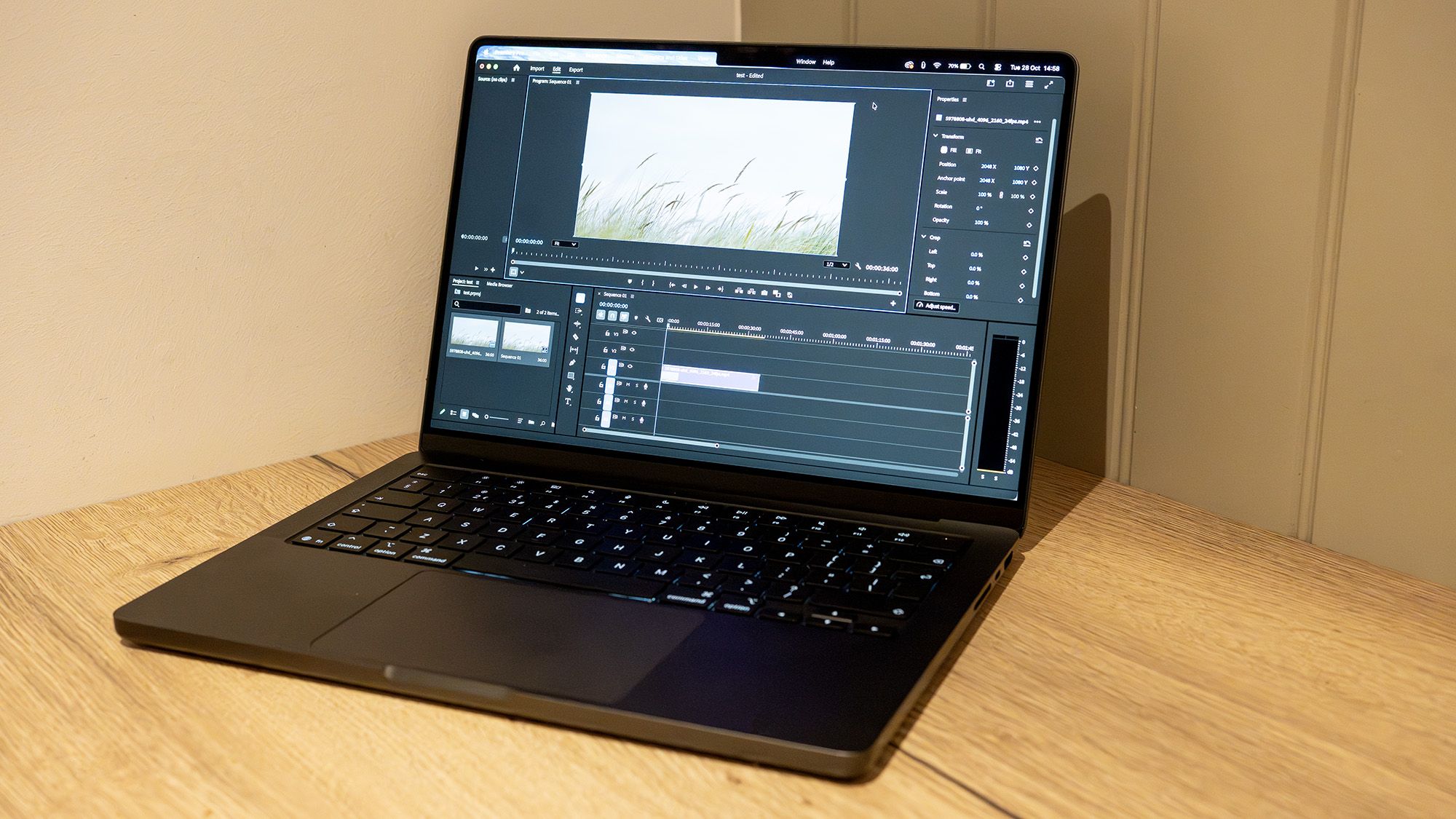
Visual presentation remains central to the MacBook Pro experience, and the 14-inch display continues to meet the exacting standards required for professional artwork and commercial design. The display features a high 120Hz refresh rate, providing exceptionally smooth interface navigation, fluid scrolling, and immediate visual feedback during fine visual manipulations. For artists working with drawing tablets or precision pointer tools, the high refresh rate creates an ultra-responsive visual link between input commands and display output.
Color reproduction on the 14-inch panel is equally fine-tuned for visual output accuracy. Independent testing shows that the display covers 93% of the wide DCI-P3 color gamut. This broad color range ensures that visual media, photographic edits, and graphic assets are rendered with rich saturation, accurate tonal gradations, and precise color loyalty. For print designers, digital painters, and commercial photographers who depend on predictable color representation across print and digital media, this level of color coverage provides the consistency necessary for professional print pre-flighting and digital publishing.
Despite its impressive array of computational and visual capabilities, the 14-inch M5 MacBook Pro does present a few hardware considerations that potential buyers should weigh before making a purchase. One technical aspect worth noting is the inclusion of Thunderbolt 4 connectivity rather than the newer Thunderbolt 5 standard. While Thunderbolt 4 provides high-speed data transfers, peripheral connectivity, and multi-monitor output suitable for the vast majority of visual workflows, users seeking the absolute maximum bandwidth available in emerging external storage solutions may find this distinction relevant.
Additionally, platform requirements vary depending on the specific creative discipline involved. While the M5 chip excels at handling graphic design, photo manipulation, vector artwork, and digital illustration, professionals who concentrate primarily on high-end 3D animation, complex spatial rendering, or heavy video post-production pipelines may find alternative value in Windows-based workstations equipped with dedicated Nvidia graphics cards. Discrete Nvidia GPUs continue to hold key advantages in specialized CUDA acceleration and real-time ray-tracing environments, which remain crucial for heavy three-dimensional production pipelines.
However, for its core target demographic—graphic designers, brand identity creators, digital illustrators, and visual photographers—the M5 MacBook Pro delivers a fine balance of raw speed, power efficiency, screen fidelity, and system quietness. The integration of Apple’s silicon hardware with macOS allows the system to sustain high performance levels without excessive thermal throttling or intrusive fan noise, making it a reliable workstation for both studio environments and mobile creative work.
The current discount on Amazon represents a strategic purchasing window for creative professionals who have deferred hardware upgrades. Given that high-performance Apple hardware retains strong resale value over time, securing a $160 discount on a current-generation flagship model lowers the barrier to acquiring top-tier design tools. As visual software continues to incorporate more sophisticated processing features, hardware capable of pushing high single-core metrics, rapid graphics rendering, and SSD speeds over 6,000 MB/s ensures that creative professionals remain equipped to handle modern design demands.
Ultimately, the discounted $1,839 price tag positions the 14-inch M5 MacBook Pro as an attractive option within the professional creative laptop market. Combining benchmark-topping Photoshop scores, exceptional DCI-P3 display accuracy, fast graphics processing, and a discounted entry price, the system offers visual creators a high-value platform engineered for demanding workloads.