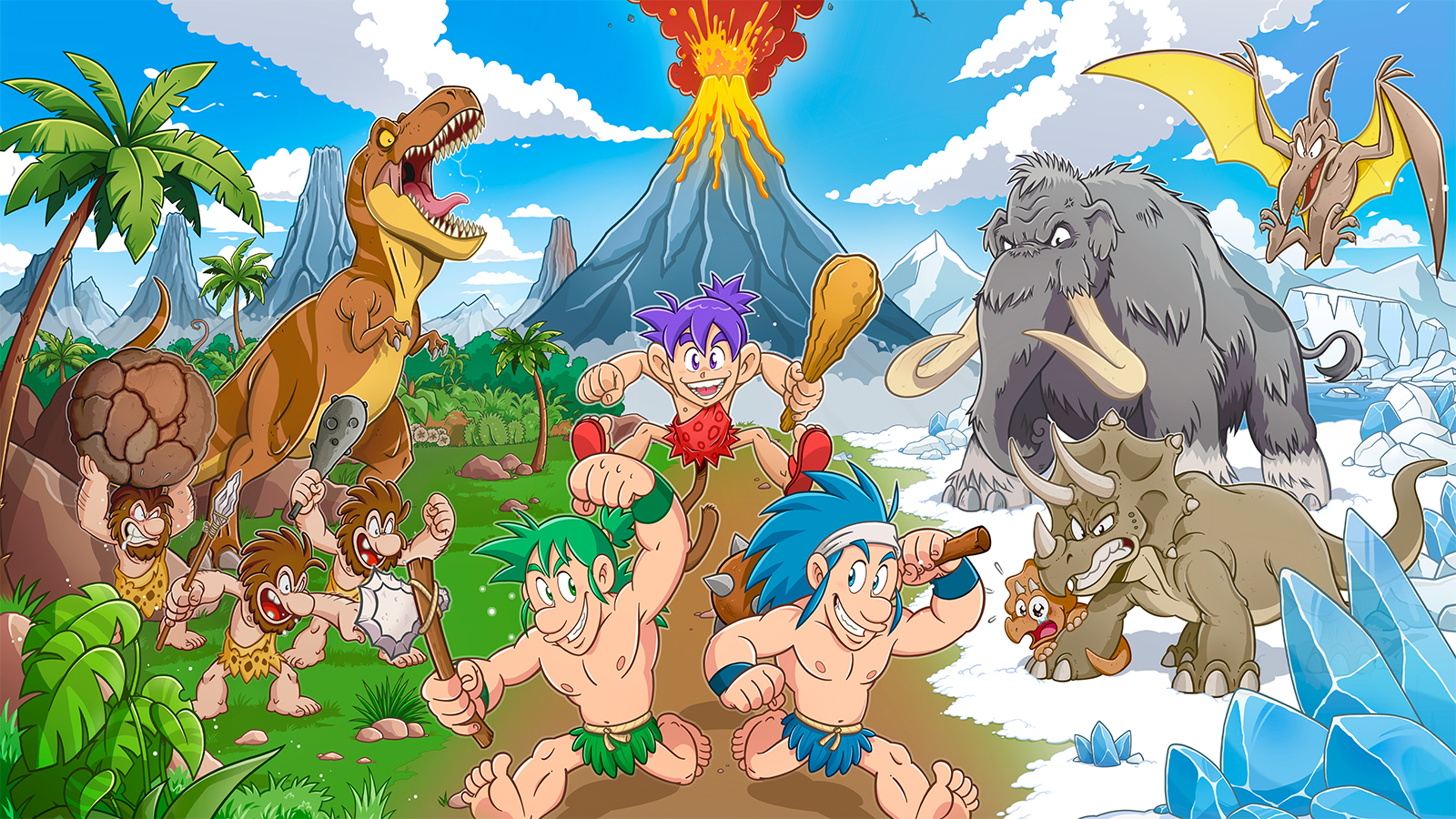
During the early 1990s, the 16-bit home console landscape was defined by vibrant platformers, eccentric character mascots, and a distinct arcade flair. Among the most recognizable icons of that era were Data East’s caveman ninjas, Joe and Mac. While competing titles like Hudson Soft’s Bonk! series offered oddball platforming and arcade hits like Toki delivered tighter, shooter-adjacent design, Data East’s prehistoric adventures carved out a permanent place in Super Nintendo Entertainment System (SNES) history. With their bold color palettes, massive cartoon dinosaurs, and slapstick visual humor, the games were an unavoidable staple of early ’90s CRT television screens.
Now, publisher Red Art Games and emulation developer Red Art Studios are bringing this 16-bit legacy back to modern hardware with the release of the Joe & Mac Retro Collection. Priced at $19.99 / £19.99 digitally, with a physical edition slated to follow in 2027, the compilation lands on Nintendo Switch, Nintendo Switch 2, PlayStation 5, Xbox Series X/S, and PC.
Rather than relying purely on nostalgia for its main title, the collection serves as a fascinating chronicle of how 16-bit game design evolved. Bundling three distinct Data East Super Nintendo titles—Joe & Mac: Caveman Ninja, Congo’s Caper, and Joe & Mac 2: Lost in the Tropics (known as Joe & Mac 3 in Japan)—the compilation captures three unique approaches to the prehistoric platforming genre. Enhanced by modern quality-of-life additions including rewind options, save states, custom screen borders, a CRT filter, and a dedicated Boss Rush mode, the package provides an accessible gateway into a classic era of gaming.

Three Caveman Games, Three Distinct Approaches to Platforming
The three titles included in the Joe & Mac Retro Collection demonstrate a clear transition from straightforward arcade conversions to fully realized home console adventures. Playing through the games in sequence reveals how Data East experimented with level structure, character mobility, and interactive mechanics during the SNES era.
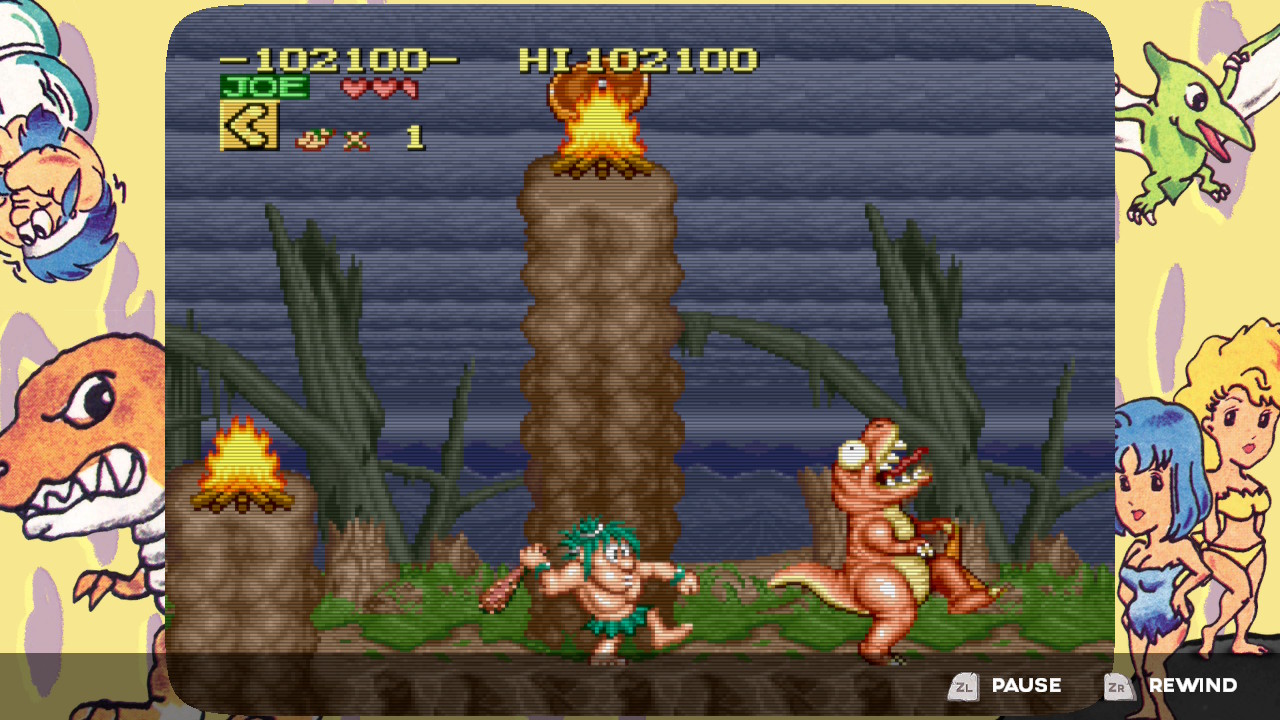
The original Joe & Mac: Caveman Ninja represents the simplest and most direct experience in the bundle. Rooted heavily in its arcade origins, the game centers on side-scrolling action where players run, jump, and fling a variety of primitive weapons—including axes, boomerangs, and cumbersome stone wheels—at opposing cavemen and prehistoric creatures. The gameplay follows a linear path from stage to stage, culminating in screen-filling boss encounters.
While Caveman Ninja retains its vintage charm and expressively animated characters, it also carries the inherent design quirks and frustrations of early 1990s arcade conversions. Players face sudden character deaths, off-screen enemy respawns, and forced weapon pick-ups that can accidentally downgrade an optimal attack setup. The bosses themselves, while visually striking, offer relatively simple attack patterns that fail to deliver a significant mechanical challenge. Despite these age-related limitations, the game’s expressive sprite art—featuring bulging dinosaur eyes and comical recoil animations—keeps the action entertaining.
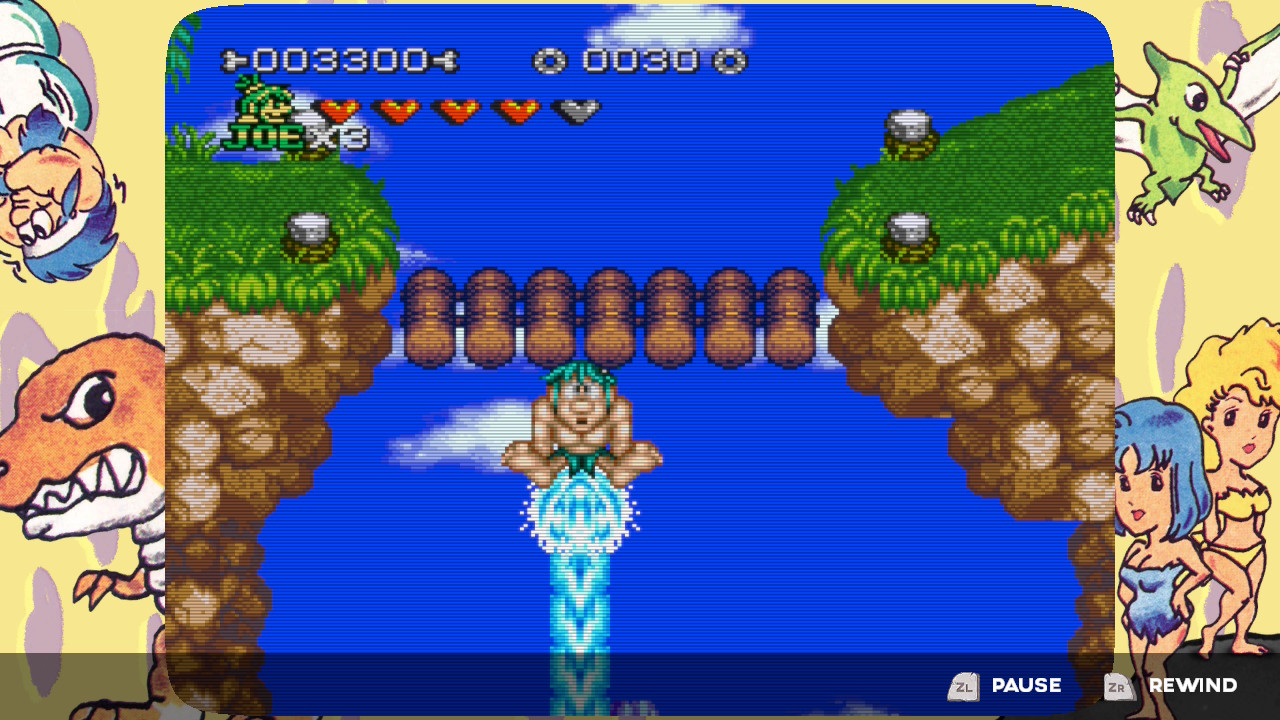
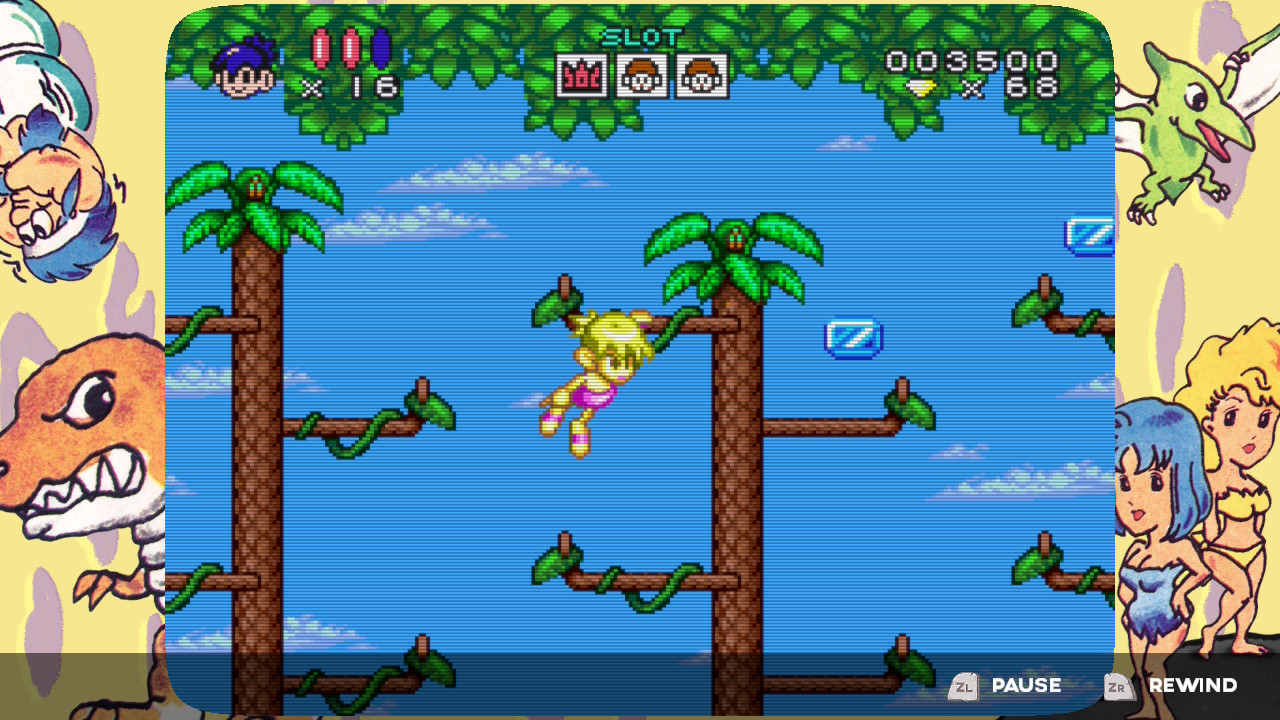
The collection takes a noticeable step forward in mechanical complexity with Congo’s Caper. Positioned as a dedicated console platformer rather than a direct arcade port, the game draws design inspiration from contemporaries like Sonic the Hedgehog and Kid Chameleon. Instead of forcing players along a narrow linear path, Congo’s Caper emphasizes verticality, exploration, and environmental interaction.
Stages in Congo’s Caper are filled with hidden rooms, collectibles, and secret offshoots that reward inquisitive players. A standout design touch involves climbable vines that extend up the screen as time passes. Players are presented with a tactical choice: push forward immediately along the standard lower route, or wait for the vines to reach full height to access higher platforms, hidden power-ups, and alternative pathways.
The trilogy reaches its design peak with Joe & Mac 2: Lost in the Tropics. Combining the combat-focused action of the original game with expanded console-oriented systems, Lost in the Tropics expands the scope of the series. The game introduces an overworld map that lets players select their path through levels, alongside an expanded economy and light social management systems. Between levels, players can use collected stone coins to upgrade a base camp or buy flowers to woo local cave girls.
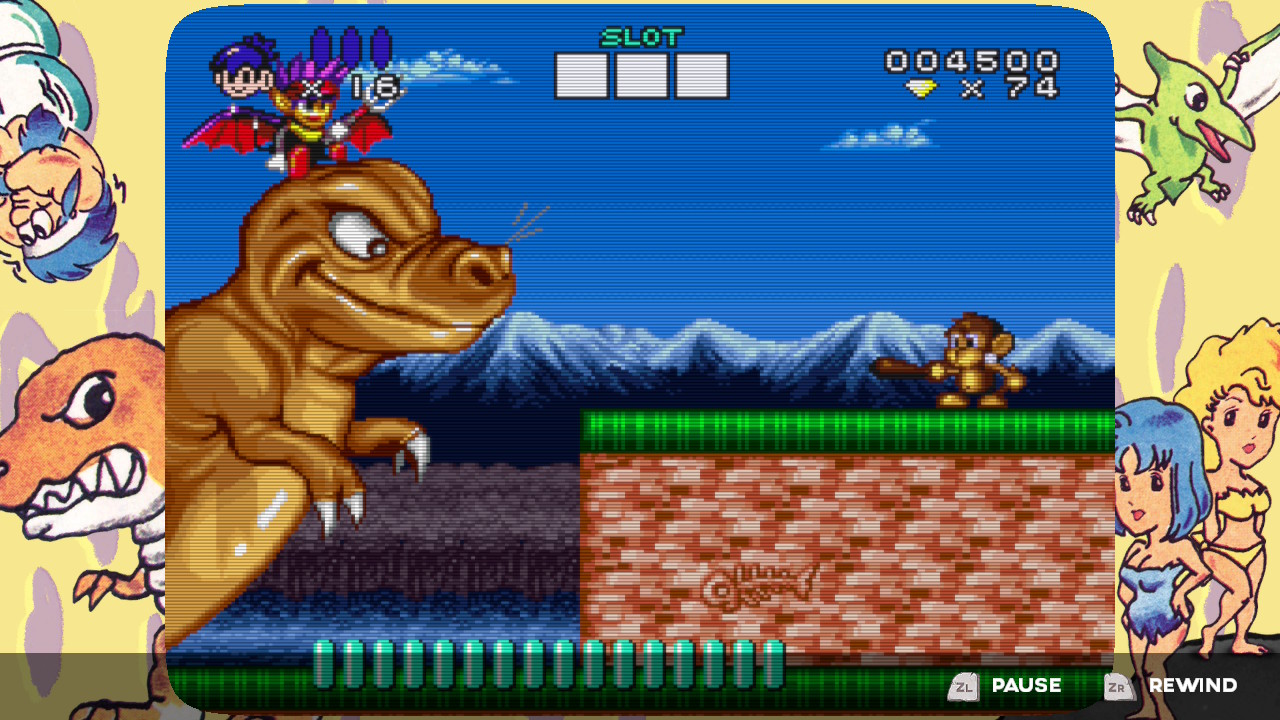
Joe & Mac 2 also reflects the influence of other period platformers, particularly Toki. Featuring larger pixel sprites and a seed-spitting attack mechanic, the game blends projectile combat with dynamic environmental traversal. Terrain shifts under the character’s feet, icy surfaces cause momentum-driven sliding, and stages incorporate varied objectives beyond merely walking from left to right. The result is a richer, more engaging platformer that holds up remarkably well for modern audiences.
Boss Battles, Expressive Animation, and Quality-of-Life Enhancements
Throughout all three games, the primary constant is Data East’s vibrant art direction and exaggerated character animation. The 16-bit visual design relies on bright primary colors, oversized character proportions, and physical comedy. Dinosaurs react dynamically to damage, exhibiting boggle-eyed expressions and clumsy wobbles when hit, giving combat a lighthearted, cartoonish sensibility.
Boss encounters serve as the primary showcase for this visual craft. Battles feature creative character designs and theatrical presentations, such as a massive Tyrannosaurus Rex that regurgitates defeated cavemen during combat, or a giant diplodocus that launches pressurized water jets at the player. In Joe & Mac 2: Lost in the Tropics, boss fights are given extra cinematic build-up; for instance, a Triceratops dramatically shatters a massive ice wall piece by piece before initiating combat.
To highlight these encounters, Red Art Studios has included a standalone Boss Rush mode. This feature allows players to face every boss across all three games in continuous succession. Beyond offering a quick gameplay challenge, Boss Rush provides an easy way to appreciate the evolution of the series’ visual craft without needing to replay full stages.
The collection also incorporates a suite of modern emulation conveniences designed to mitigate vintage difficulty spikes:
- Rewind Functionality: Allows players to instantly undo misjudged jumps, unexpected enemy spawns, or fatal hazards.
- Save States: Enables instant progress saving at any moment, eliminating the reliance on traditional password systems or limited continues.
- Visual Filters: Includes an optional CRT display filter designed to simulate the scanlines and soft color blending of vintage television monitors.
- Custom Display Borders: Offers a selection of decorative side panels to fill modern widescreen displays while preserving the original 4:3 aspect ratio.
More Than a Simple ROM Package: Archival Extras and Preservation
Beyond emulation tools, the Joe & Mac Retro Collection includes several archival features aimed at retro gaming enthusiasts and preservationists. The compilation provides access to both the Western regional releases and the original Japanese versions of each title. This includes the Japanese release of Caveman Ninja, allowing players to examine localized art changes and regional censorship adjustments made during the 16-bit era.
The interface features a "virtual unboxing" gallery that lets users inspect high-resolution 3D renders of the original Super Nintendo packaging, game cartridges, and complete instruction manuals. Players can digitally flip through the pages of the original booklets, viewing vintage illustrations, story overviews, and control diagrams. Complementing the manual viewer is a dedicated gallery containing concept art, early character sketches, and production illustrations from Data East’s archives.
While these historical extras offer valuable insight into the design process, the archival presentation leaves room for growth. Unlike recent interactive historical collections—such as Digital Eclipse’s Toy Story: Retro Roundup! + Toy Story 3 Complete Edition—the Joe & Mac Retro Collection lacks contextual developer interviews, documentary features, or written oral histories detailing the background of Data East’s development teams. The inclusion of rough sketches provides a window into the visual design, but the absence of developer perspectives leaves wider questions about the production history of these titles unanswered.
A Welcome Return for 16-Bit Platforming Fans
The Joe & Mac Retro Collection successfully preserves a distinct chapter of 16-bit gaming history. While the original Joe & Mac: Caveman Ninja serves primarily as an entertaining but simple relic of early ’90s arcade design, its follow-ups—Congo’s Caper and Joe & Mac 2: Lost in the Tropics—deliver inventive mechanics, deeper exploration, and enduring platforming gameplay.
Supported by robust emulation features, regional ROM variants, and interactive packaging galleries, Red Art Games has crafted a package that offers genuine value for both long-time fans of Data East and modern players curious about retro platforming history.