When my first daughter was born in 2015, navigating the world of postpartum infant feeding meant accepting a reality defined by clinical machinery. There simply weren’t many options available when it came to breast pumps, and the choices that did exist were far from user-friendly. Upon leaving the hospital, I was sent home with a standard device made by Medela—the undisputed industry leader at the time. It was a complex apparatus involving a tangle of plastic tubing, funnel-shaped breast shields, and a heavy, loud motor that had to be tethered directly to an electrical outlet. Back then, bonding with other new mothers often involved a shared ritual of complaining about how awful, restrictive, and exhausting the pumping experience truly was. It felt less like a tool for modern parenting and more like a medical chore that trapped women in place for hours on end.
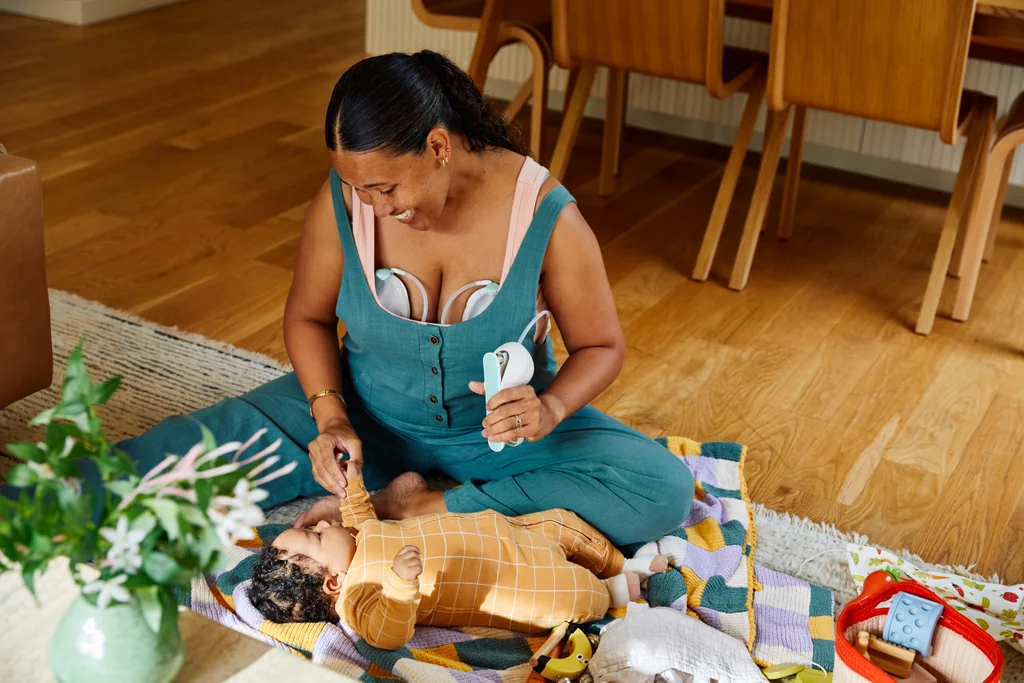
By the time my second daughter was born in 2022, the landscape had shifted dramatically, thanks to a newfangled device that had successfully broken into the consumer market: a wearable breast pump designed to be slipped discreetly into a nursing bra to express milk quietly and hands-free. This modern marvel allowed me to pump while actively making dinner, folding laundry, or taking a phone call while pacing around the room. Given that new mothers can spend up to three excruciating hours a day pumping milk to feed their infants, the arrival of the wearable device was nothing short of transformative. It offered a return to mobility and a restoration of dignity during a physically demanding phase of early motherhood.
Now, the company that helped pioneer that very revolution is setting its sights on a much broader horizon. Willow, which famously debuted its pioneering wearable pump back in 2017, wants to become far more than just a high-tech gadget maker. Last year, the company made waves across the industry by purchasing Elvie, one of its biggest and most formidable rivals, which had launched its own in-bra pump in 2018. And in a major strategic expansion, the company announced its intention to move far beyond the sphere of standalone hardware devices. Willow has officially acquired Swehl, a specialized breastfeeding education and community platform, as well as Momtech, the innovative maker of Mëmi bottles, whose specialized nipples are ingeniously designed to closely mimic the natural experience of breastfeeding.

The ultimate goal of this aggressive acquisition spree, according to Willow CEO Carolin Archibald, is to evolve the business into a comprehensive, powerhouse maternal care brand that supports parents through every step of their feeding journey. Archibald officially took on the top leadership role this month after spending an impressive 18 years deeply entrenched in the infant feeding industry. Her extensive background includes prior high-level leadership roles at both Medela and Ameda—two deeply entrenched incumbent brands whose heavy, traditional devices have anchored hospital maternity wards and lactation consultant offices for decades. By bringing her extensive industry experience to Willow, Archibald is guiding the brand through its next major phase of corporate growth and market influence.
The Evolution of the Pump
The path to modern infant feeding technology has been a long one, with inventors trying to solve the complex physical challenges of breastfeeding for nearly two centuries. Historical records show that the first U.S. patent for a breast pump was filed all the way back in 1854. However, for many decades following that early invention, pumps remained largely industrial or clinical machines. They were mostly large, heavy hospital devices designed primarily to assist postpartum mothers who faced medical challenges that prevented them from nursing their newborns directly.
A monumental shift occurred in 1991, when Medela introduced a groundbreaking electric breast pump specifically engineered for home use. That device was genuinely transformative for its era, as it meant women could successfully maintain their milk supply and breastfeed for much longer periods, even when they had to return to an outside office, travel for work, or spend extended hours away from their baby. It represented a major milestone in women’s independence and workforce participation, establishing electric pumping as a viable routine practice for working mothers.
Yet, another major turning point arrived in 2012, which fundamentally altered the economics and accessibility of these devices. According to Archibald, the passage of the Affordable Care Act required new health insurance plans to cover breast pumps at no out-of-pocket cost to patients. That sweeping policy change effectively opened up access to a breast pump for every single pregnant mother across the country. Market data from that period clearly shows that pumping quickly evolved from a specialized medical accommodation into a routine, everyday part of the postpartum experience for the vast majority of American families.
That vital policy shift and the resulting surge in market demand successfully paved the way for disruptive startups like Willow and Elvie. The two companies unveiled their revolutionary in-bra pumps just 20 months apart, in 2017 and 2018 respectively. Both brands captured the public imagination—and the wallets of exhausted mothers—by introducing a smooth, compact, teardrop-shaped device that completely eliminated external cords, dangling tubes, and awkward bottles hanging off the chest. Instead of collecting milk in an open container, expressed milk flowed directly into a secure, spill-proof internal bag.
For modern mothers, the impact of these engineering feats was profound. Mothers were no longer tethered to a loud electrical cord or forced to sit immobilized next to a wall outlet for hours every single day. The arrival of these cord-free devices injected a much-needed sense of freedom, autonomy, and normalcy back into the postpartum period, proving that maternal technology was finally starting to catch up with the realities of modern women’s lives. Now, with its recent acquisitions of community platforms, feeding education tools, and specialized bottle technology, Willow is positioning itself to capture every facet of that experience as it transitions from a single-product innovator into a holistic leader in maternal health and care.