In the second half of the 17th century, as early American colonists firmly established their own domestic production of furniture, makers naturally drew upon the visual motifs and woodworking techniques deeply common in England. During this formative era, chests and cabinets were constructed with a chunky, robust aesthetic, while chairs and tables frequently incorporated distinct spool-like legs. In Boston, a particular and highly localized interpretation of the high-backed Windsor chair emerged, capturing a distinct regional flavor. Centuries later, this regional design lineage has inspired contemporary furniture-maker and artist Aspen Golann to create uniquely sculptural, contemporary iterations that serve as a direct nod to this rich historical heritage.
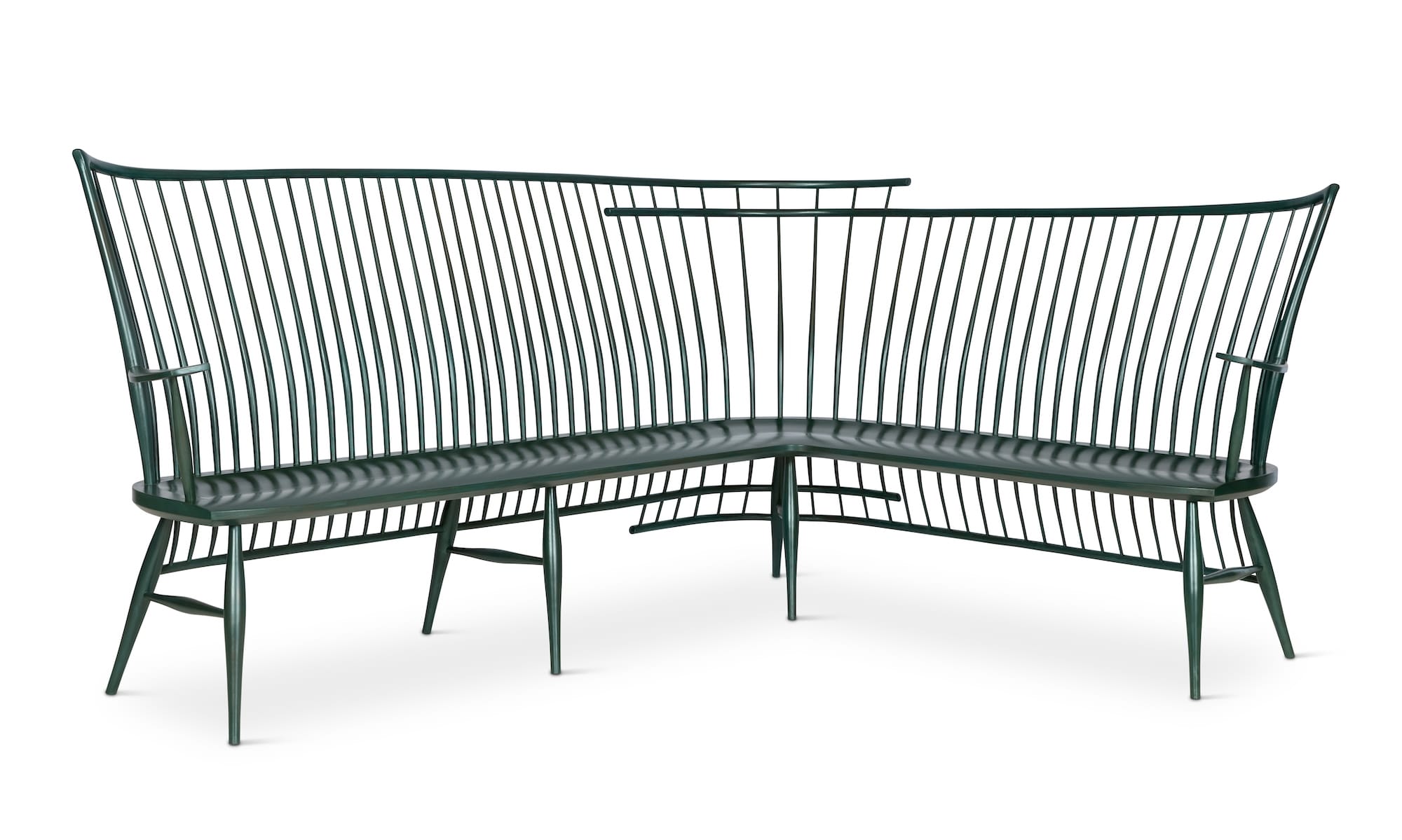
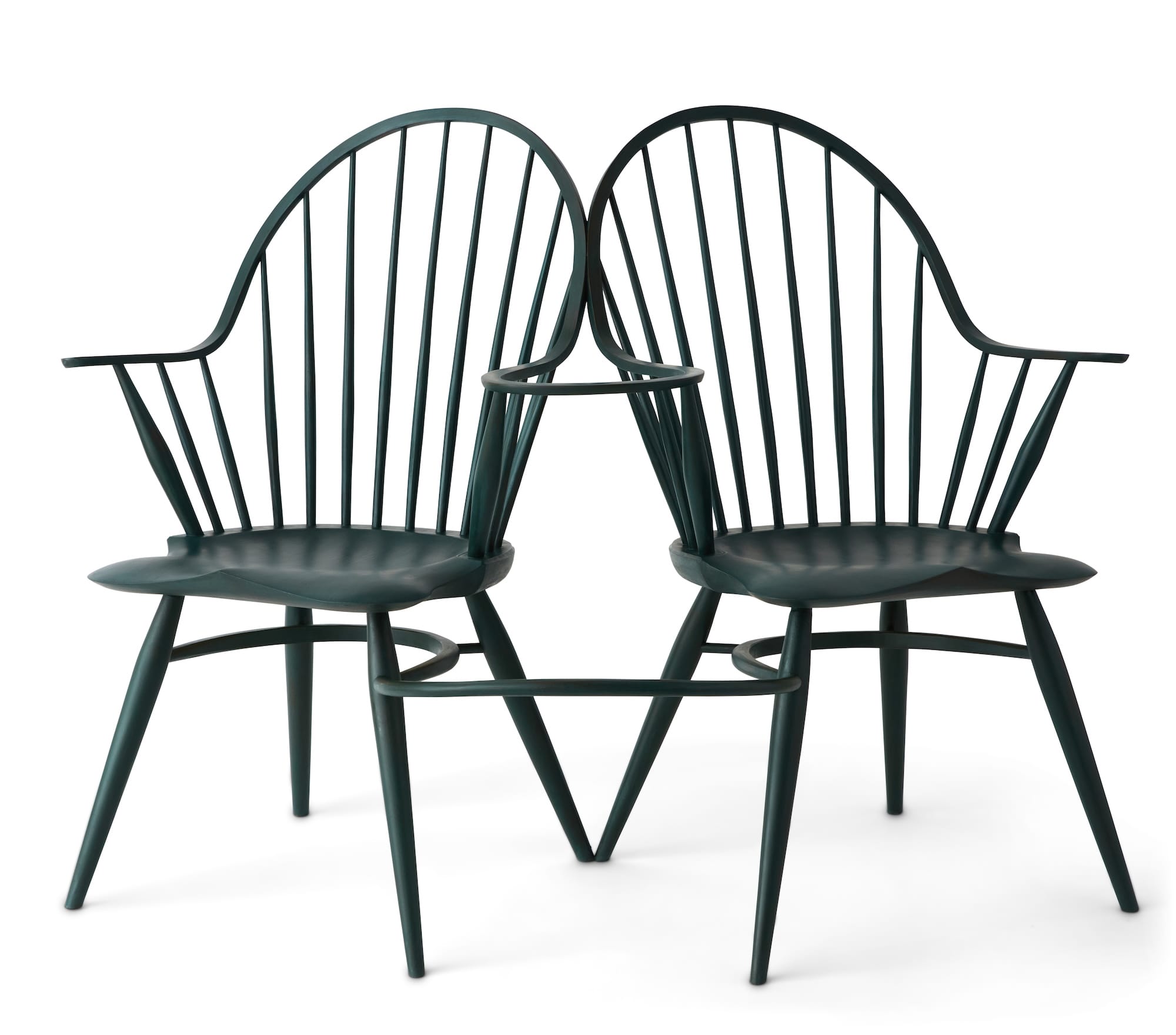
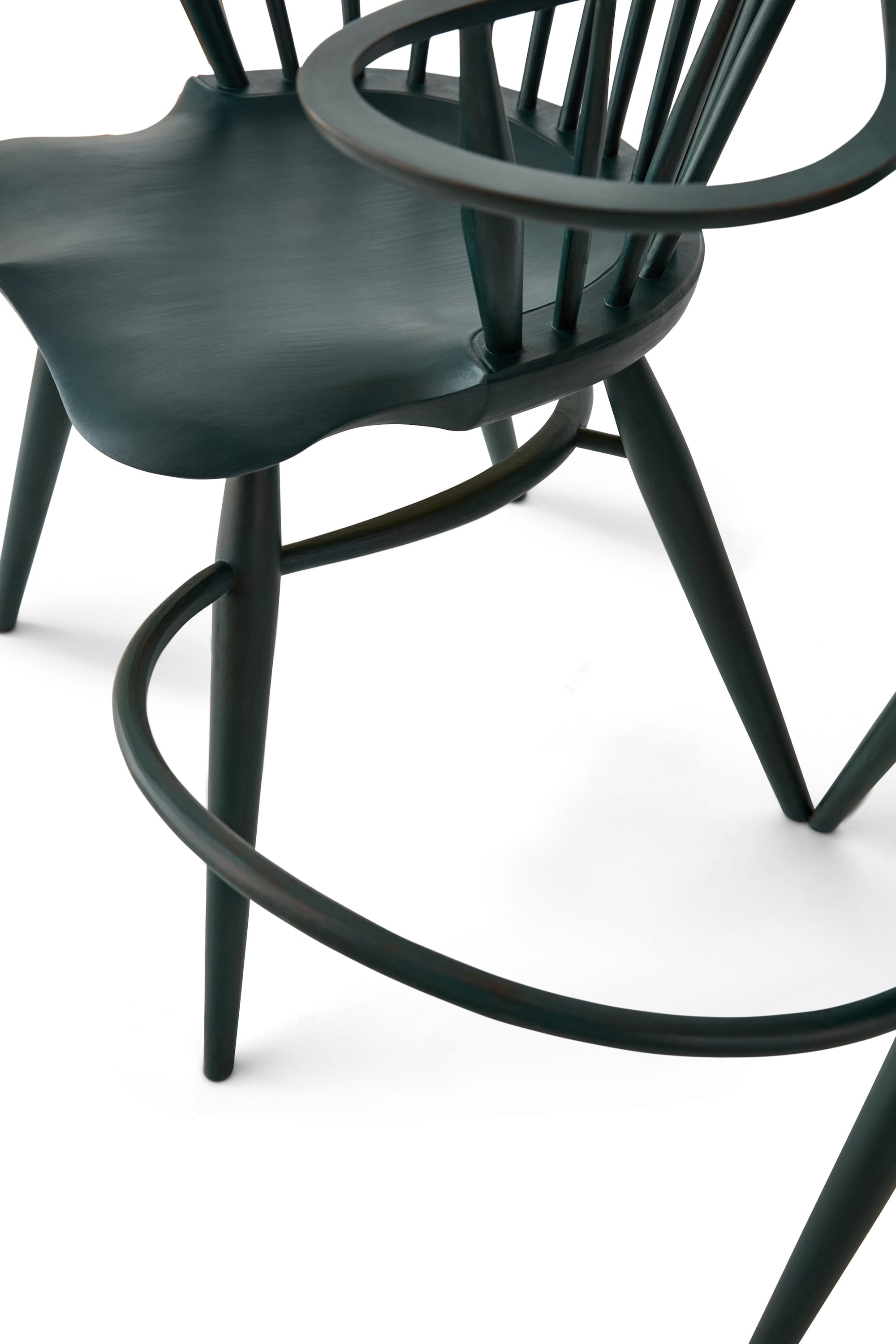
Golann’s recent work bridges the gap between historical preservation and modern artistic expression. Pieces such as the "Meeting Bench," made in meticulous collaboration with fellow chairmaker Peter Galbert, alongside the "Union Settee," pay profound tribute to early American style while simultaneously celebrating the fundamental role that furniture plays in how human beings convene, communicate, and share space. Golann has long harbored a deep intellectual and artistic interest in exploring the intricate relationships between form and function, as well as the subtle, meaningful connections that form between people and the everyday objects they use. She continues to probe these themes through a series of imaginative and unconventional brushes and brooms, challenging preconceived notions of utilitarian design.
This profound interest in early American furniture eventually led the artist down the path of another centuries-old craft tradition: historical embroidery. Her rigorous research into early needlework—an activity that was historically pursued almost exclusively by women within the confines of domestic life—inspired an ongoing series of wooden vessels. Golann began crafting these pieces as part of her prestigious tenure in The Metropolitan Museum of Art and Vacheron Constantin Artisan Residency. The program, which spans 18 months, places a heavy emphasis on the vital preservation, study, and creative reinterpretation of traditional craft techniques. During her time in the residency, Golann worked alongside a diverse cohort of fellow creators, including ceramicist Ibrahim Said and jeweler Joy Harvey.
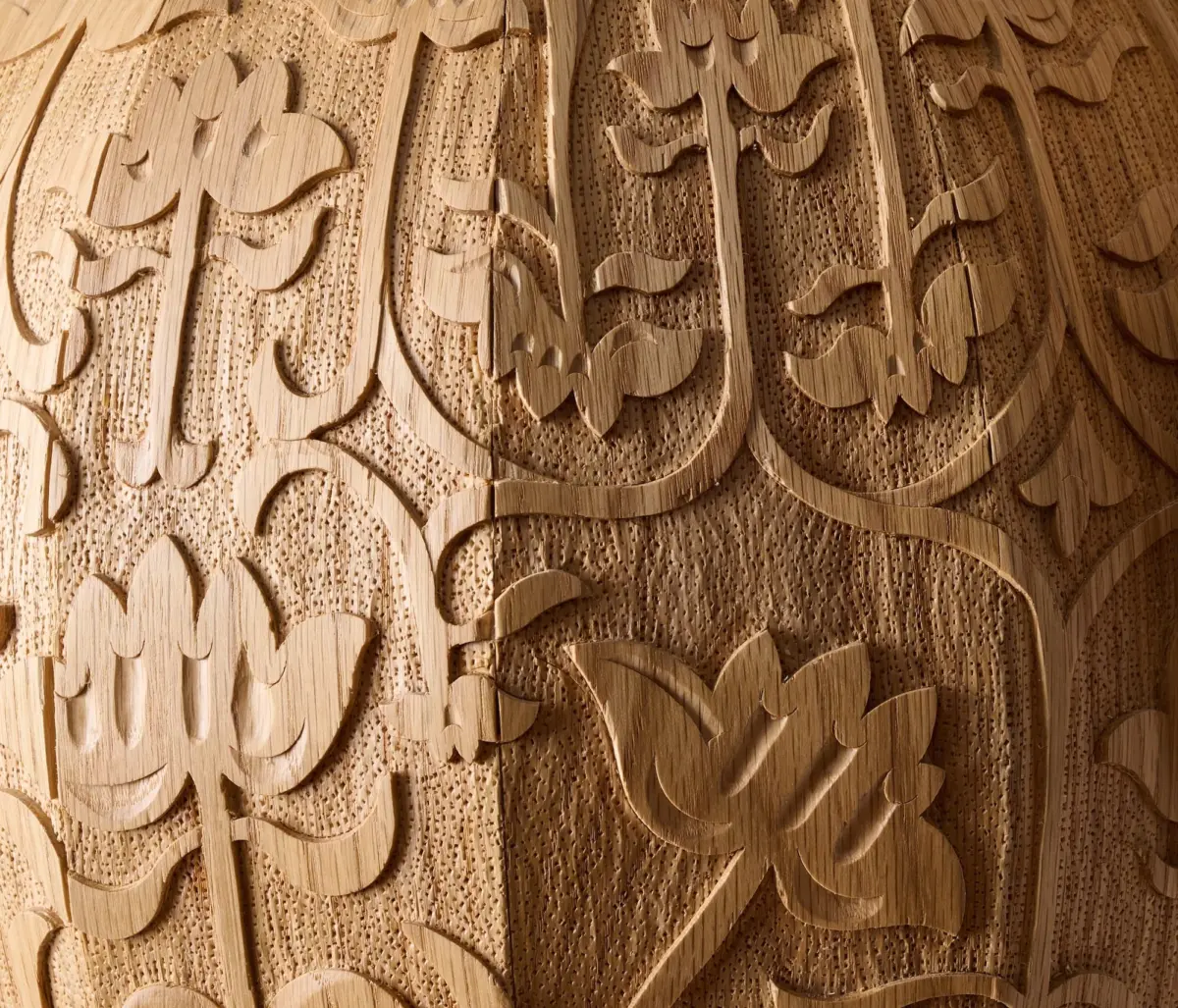
Vessels are utilitarian at their most essential level, designed for holding, pouring, or storing, but they are also frequently displayed for strictly decorative purposes. Golann has become increasingly interested in intentionally nudging the boundary between pure functionality and high aesthetic appeal. Works like "Pouring Vessel" cleverly interpret traditional needlework motifs onto solid wood surfaces using a specialized strapworking technique. Even the distinctively flattened, pancaked "Strap-Carved Vessel" remains entirely hollow, ensuring that it never completely foregoes its fundamental utilitarian condition. Instead, its whimsical flatness purposefully draws the viewer’s attention away from conventional volume and directly toward its ornate, narrative design, which remains the central conceptual point of the piece.
Historically, the intricate sewn compositions created by young girls in colonial times have not received extensive scholarly attention or prominent display, at least not within the prestigious context of major art institutions and museums. Golann notes the stark reality of this oversight, pointing out that historical embroidery is heavily under-researched, under-displayed, and inherently fragile. Because these textile works are rare, delicate, and easily stowable, they have largely remained hidden away in archives or private collections. The artist sought to change this narrative through her own physical labor, stating that she wanted to make a version of this historical craft that simply could not be put away or easily concealed.
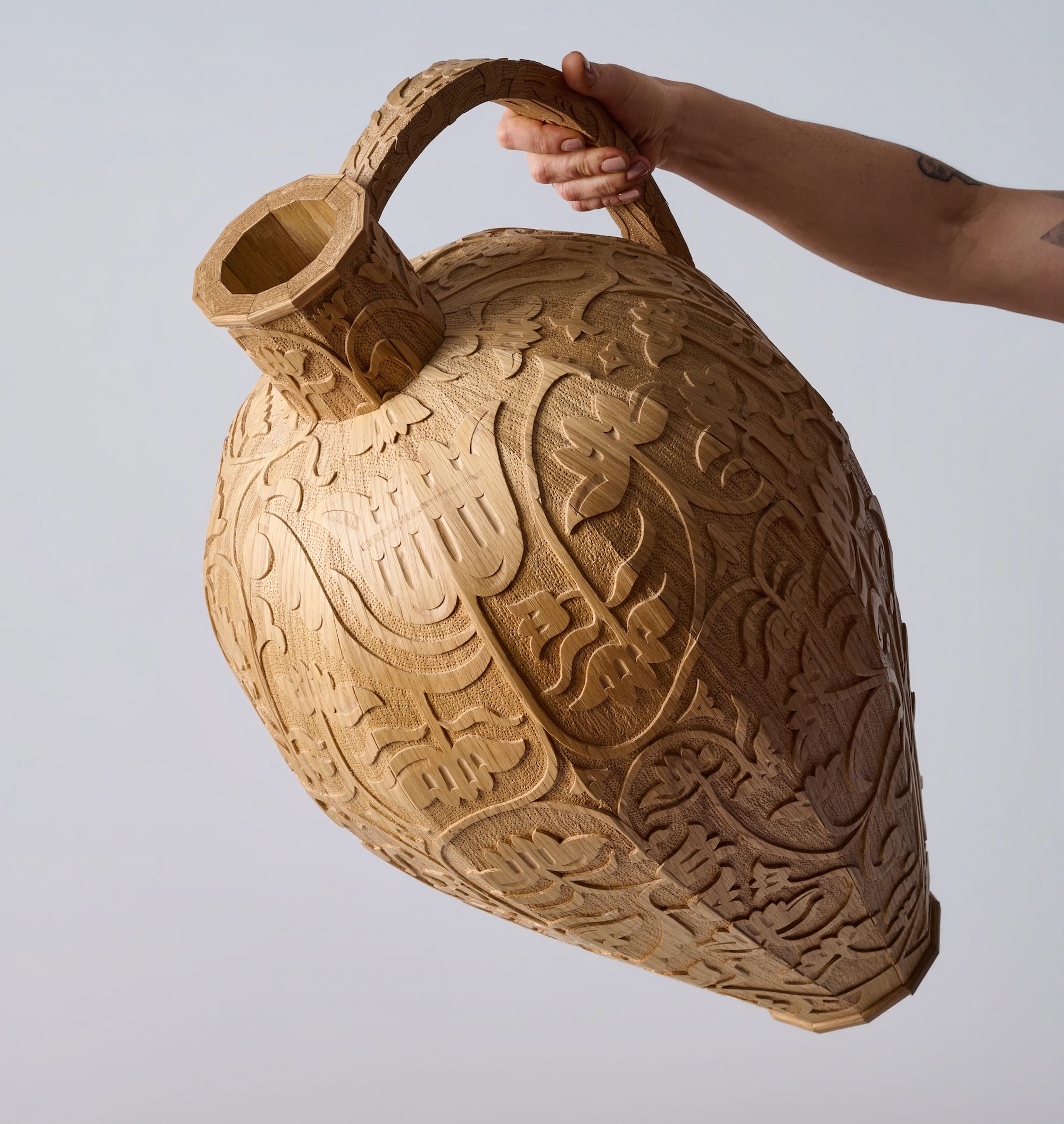
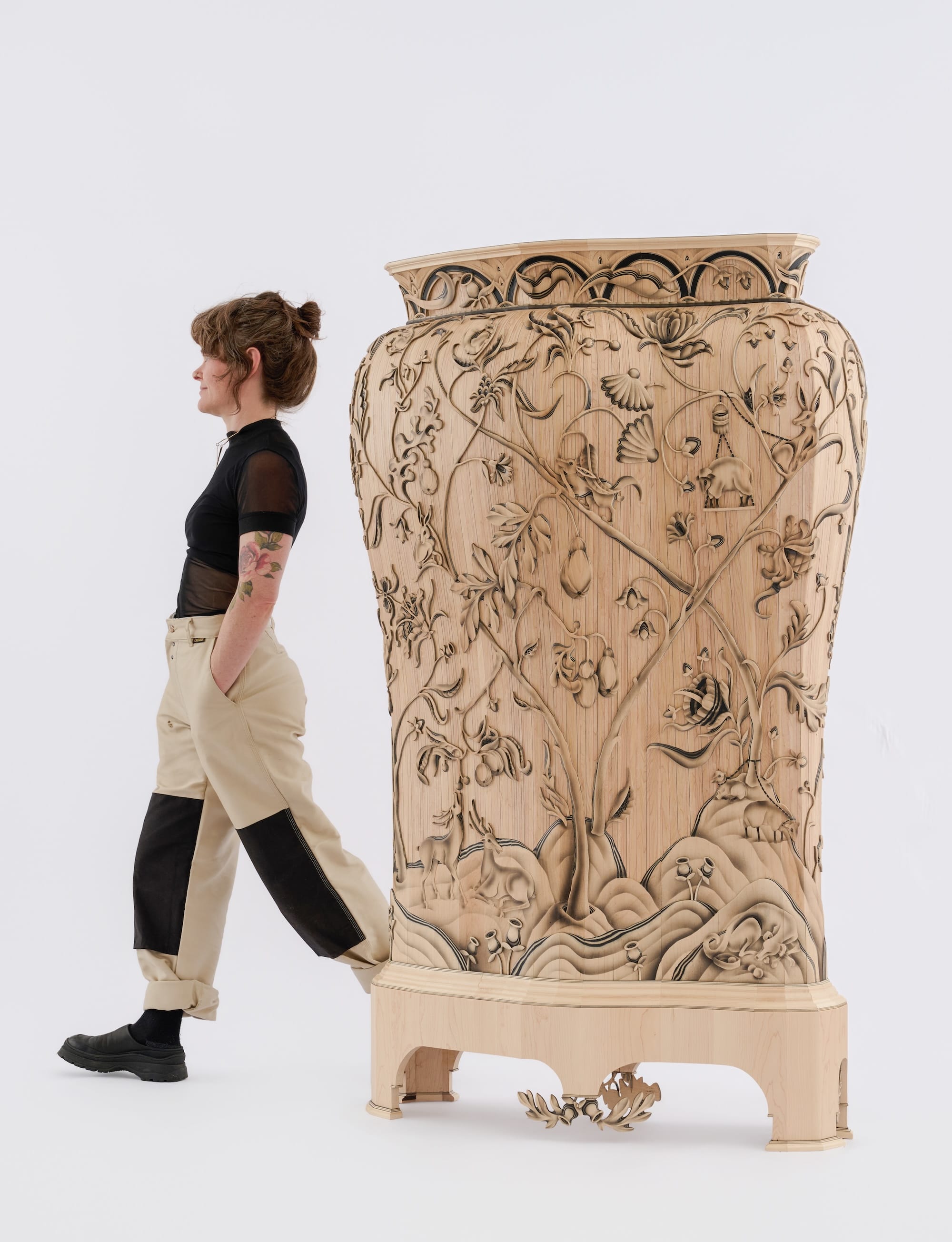
Among the masterworks completed during her residency is "Crewel Cabinet," a striking piece that stands five feet, four inches tall—roughly the average height of an American woman. To construct this imposing yet intimate sculpture, the artist composed the cabinet using 37 distinct staves, which are thin strips of wood that connect edge-to-edge to create a sweeping, rounded form. Each individual stave was meticulously built from 14 distinct colored layers of wood. By carving deeply into these layered surfaces, Golann revealed intricate depictions of plants, rabbits, dogs, and other natural elements, where the shifting, multi-colored strata vividly evoke the vibrant threads found within colonial-era crewel embroidery.
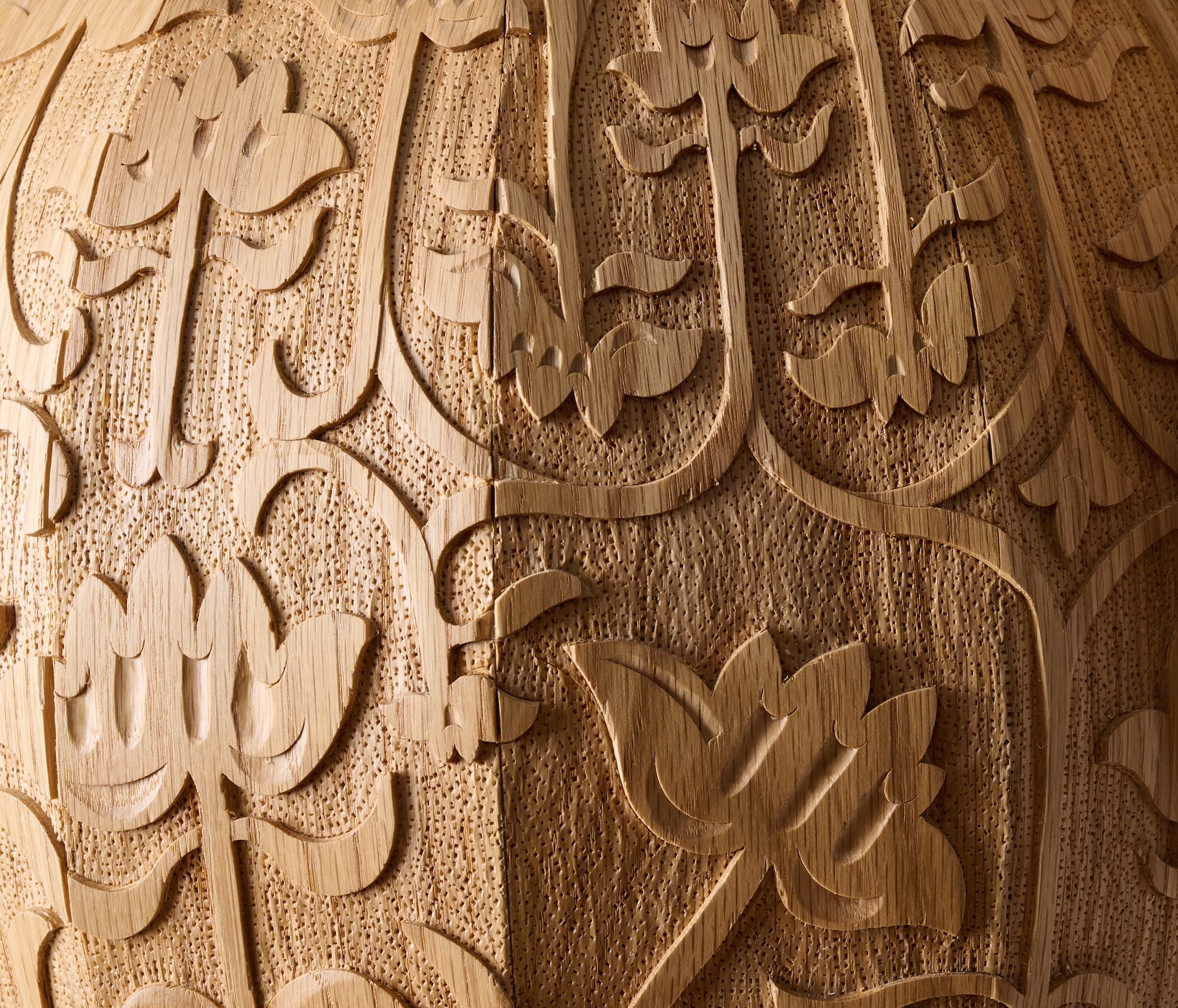
Reflecting on the cultural and personal significance of these historical artifacts, Golann offers deep insight into the lives of their original creators. These historical embroideries were frequently created as dowry objects, crafted under heavily restrictive societal expectations that governed the boundaries of women’s lives. Despite these tight constraints, Golann emphasizes that the compositions and themes found within the needlework serve as profound material evidence of the young girls’ internal lives, psychological depths, and unsuppressed creative expressions. She notes that the historic pieces are overflowing with genuine sensitivity, affection, and a keen, observant interest in the natural world, while simultaneously remaining bizarre, strange, and wildly imaginative. Golann describes her artistic process as an ongoing attempt to tune her creative sensitivity to the frequency of those historic imaginations and lived experiences, and then splash that resonance over a much larger, more expressive canvas.
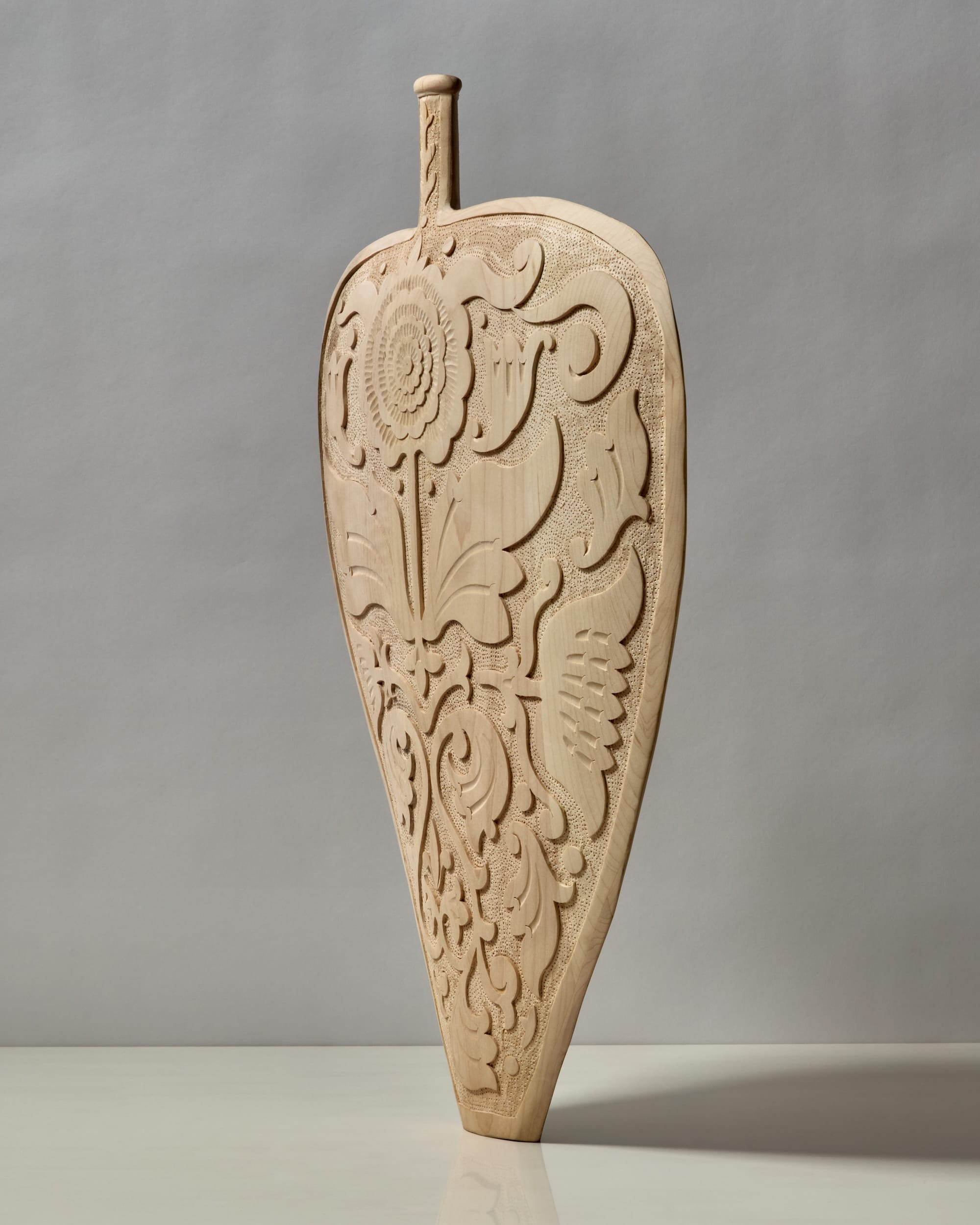
Looking ahead, Golann’s next major creative endeavor is slated for the U.S. Treasury, an institution that traditionally commissions a monumental piece of furniture for its official collection only once every 50 years. Discussing the upcoming project, the artist explains that she is utilizing different tones of precious metals, applied in a deliberate paint-by-numbers methodology, to construct an abstracted and intentionally bizarre landscape directly inspired by early American embroidery. The ambitious work will incorporate highly reflective surfaces so that viewers will inevitably see themselves mirrored within the fantastical scene. In addition to the Treasury commission, Golann is currently preparing for a major solo exhibition scheduled to open next November at the Fuller Craft Museum.
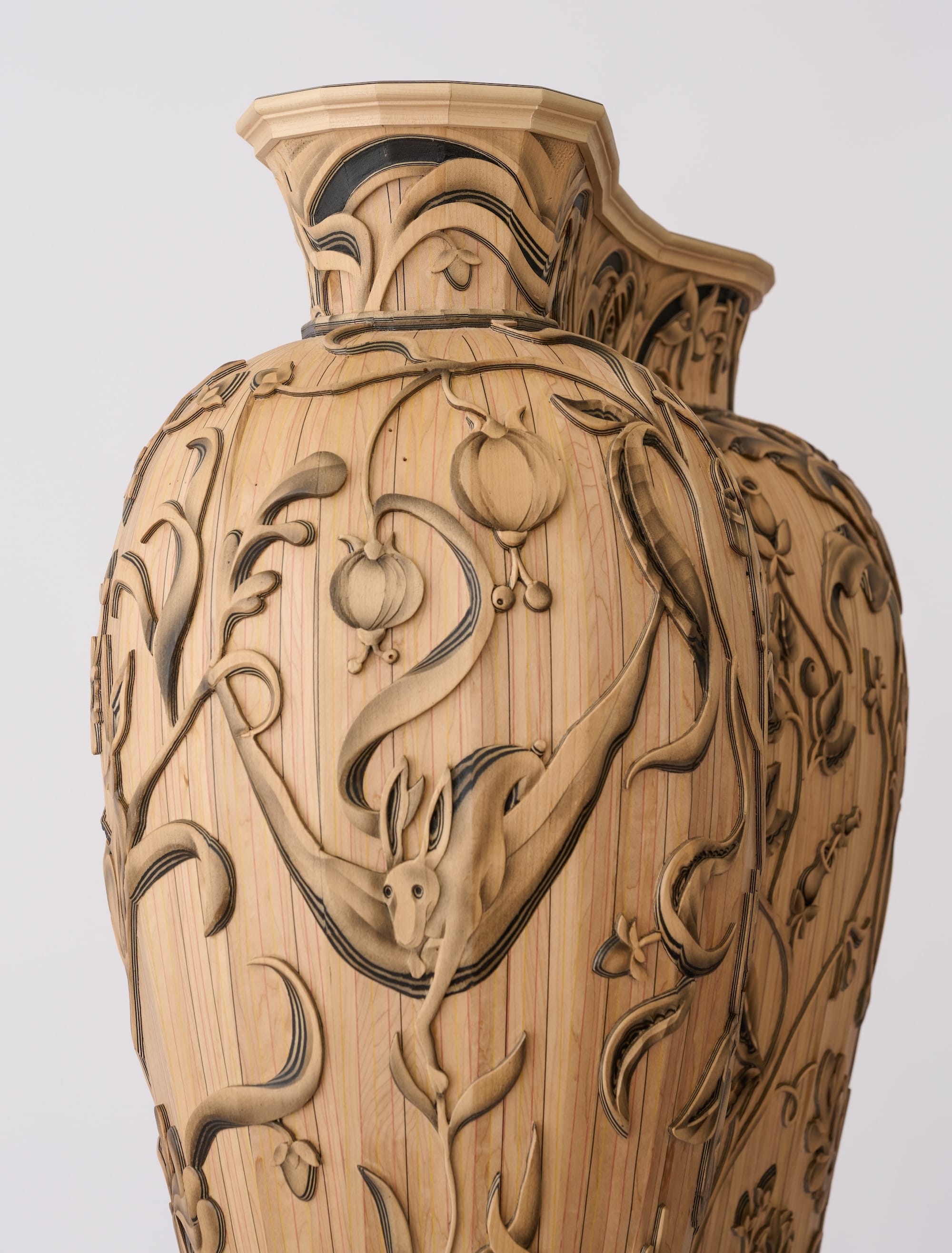
For those eager to view her current work in person, "Crewel Cabinet" will be on public display as a prominent feature of the group exhibition Pattern Recognition: Superhouse at Five. The exhibition opens on November 6 and runs through December 19 at Superhouse in New York City. Art enthusiasts and craft historians can continue to follow Golann’s ongoing sculptural explorations and behind-the-scenes studio processes through her active updates on Instagram.