Astrophotography can be a notoriously difficult discipline to master, requiring meticulous planning, precise timing, and specialized equipment to capture the celestial bodies in sharp detail. However, the second half of October is offering a remarkable string of opportunities for photographers looking to turn their lenses toward the night sky.
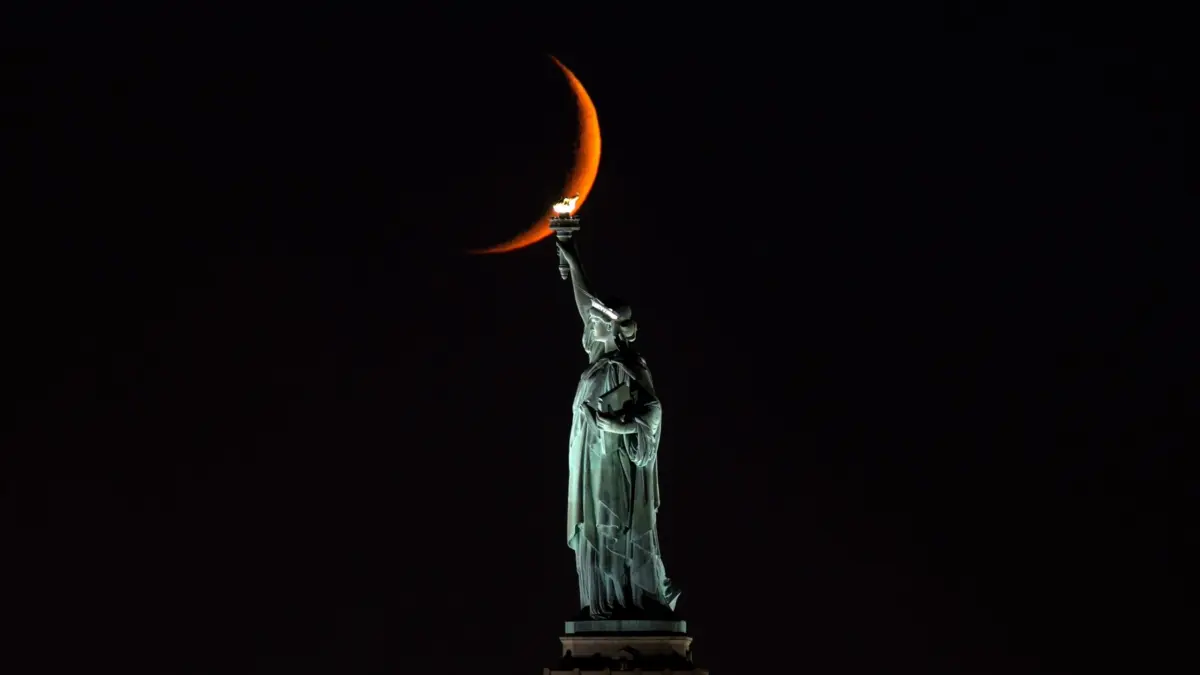
Recent news photography has already highlighted the extraordinary potential of this month’s lunar cycles. Among the standout images making waves across the media landscape is a striking photograph captured by renowned photographer Gary Hershorn. Known for his ability to align historic architecture with celestial events, Hershorn shared a breathtaking shot featuring a waxing crescent moon positioned directly behind the illuminated torch of New York City’s iconic Statue of Liberty.
In the photograph, taken on October 13, the moon appears only ten percent illuminated, casting a distinct, warm orange glow that creates the visual illusion of being an extension of Lady Liberty’s famous torch. To achieve this dramatic perspective and make the moon appear massive relative to the foreground subject, Hershorn utilized a 300mm telephoto lens mounted on a Canon EOS R7 body.
While Hershorn’s image showcases the artistic potential of a slender crescent moon, astrophotographers know that October holds even greater spectacles. The calendar is packed with prominent lunar events, and one of the month’s premier astrophotography highlights is rapidly approaching.
October’s full moon officially arrives on October 25, but the prime window for dramatic landscape photography occurs the following evening, on October 26, when the moon sits closest to the horizon as it rises. When the moon is low on the horizon, its reflected light is forced to travel through the thickest density of the Earth’s atmosphere. This atmospheric filtration scatters shorter wavelengths of light, resulting in the rich, warm amber, orange, and yellow hues that frequently captivate observers and photographers alike.
This atmospheric effect explains the vibrant color observed in the sliver of the moon during Hershorn’s recent New York shoot. However, the upcoming full moon—traditionally known as the Hunter’s Moon—presents an entirely new canvas for photographers aiming to capture that same warm, cinematic glow against terrestrial landscapes.
While an orange moon is far from a rare phenomenon, October’s full moon holds a special status among professionals and hobbyists because of its unique timing. The Hunter’s Moon tends to rise very close to the exact time of sunset. This creates a fleeting but invaluable window of ambient twilight illumination, providing enough leftover sunlight to properly expose foreground elements, natural landscapes, or urban skylines without relying entirely on artificial light sources or enduring the pitch-black conditions of deep night.
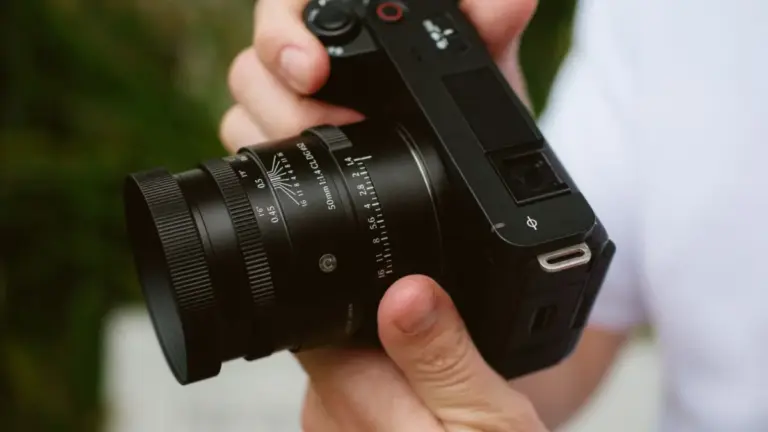
Digital Camera World’s astrophotography expert Jamie Carter notes that capturing this month’s Hunter’s Moon on October 26 requires careful gear selection and technical adjustments. Carter recommends deploying a telephoto lens, ideally within the 200mm to 600mm range, to adequately compress the perspective and magnify the lunar disk against the horizon.
Because this particular full moon coincides with a supermoon classification—albeit a comparatively smaller one in the cycle—its surface will appear notably bright to the camera sensor. Consequently, photographers are advised to dial in a lower ISO setting and utilize a faster shutter speed than they might typically use for nightscapes. These adjustments are essential to prevent overexposure, ensuring that the delicate crater details, textural shadows, and rich surface features of the moon remain crisp and well-defined rather than washing out into a flat, blinding orb of white light.
As the nights grow noticeably longer and the autumn chill settles in across the Northern Hemisphere, October continues to deliver exceptional conditions for night sky documentation. Whether reviewing the final weeks of Milky Way visibility or preparing to photograph the rising Hunter’s Moon, practitioners of the craft have ample incentive to dust off their telephoto lenses, monitor local weather patterns, and ready their equipment for one of the most visually rewarding periods on the astrophotography calendar.