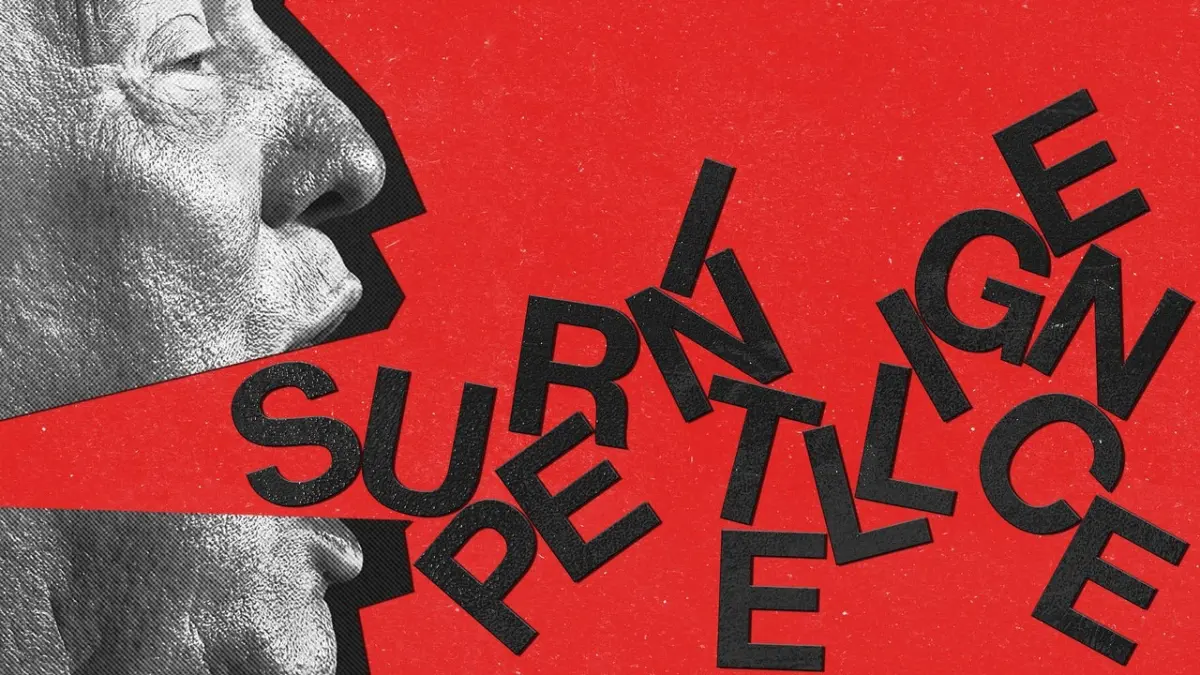
When President Donald Trump took the stage at the United Nations in late September, he delivered a linguistic critique that would quickly ripple far beyond the halls of international diplomacy. The president argued that the word "artificial" in "artificial intelligence" made the rapidly advancing technology sound fake, cheap, or diminished. To correct this, he announced that his administration would begin referring to the technology exclusively as "superintelligence," adopting the abbreviation "SI."
What began as a speech at the global forum swiftly transitioned into binding federal policy. Not long after those remarks, the president signed an executive order instructing federal agencies to drop "AI" from their official communications and replace it with his preferred terminology. True to form, the mandate has been enforced aggressively across the government. The Department of Justice promptly directed its internal staff to follow suit, and other federal departments are expected to adopt the new nomenclature swiftly. The pressure to comply is not merely administrative; President Trump has since branded anyone who continues to use the legacy term "AI" as "THE ENEMY" in public statements, effectively turning a semantic preference into a litmus test of alignment with his administration’s vision for the tech sector.
The private sector has not remained immune to the shockwave. Major technology figures and companies have begun grappling with the new presidential vernacular. Elon Musk was among the first major tech leaders to react, announcing on October 4 that he would rename SpaceXAI to SpaceXSI, signaling how quickly high-profile industry players are adjusting to the shifting political and regulatory winds under the new mandate.
While the sudden rebrand might easily be dismissed as vintage political branding, it arrives at a critical juncture for the technology itself. The capabilities of advanced computing systems have improved exponentially far beyond their previous operational limits since the public debut of ChatGPT in November 2022. Today’s systems are rapidly approaching the threshold of true superintelligence—a concept that has long held a specific definition within academic and technical circles. In technical contexts, superintelligence refers to the theoretical tipping point at which artificial systems can systematically outperform human beings across virtually all economically valuable and cognitive tasks.
However, imposing the "superintelligence" label across the board carries significant risks. Critics and industry observers point out that applying a term denoting ultimate capability to a technology whose various components and applications certainly do not meet that exalted standard yet could easily backfire. Doing so risks giving the general public a false sense of confidence in systems that are still prone to error, hallucinations, and limitations, while simultaneously sowing deeper confusion about what the technology actually is and what it can do.
Industry leaders are divided on the practical wisdom of the shift. OpenAI CEO Sam Altman weighed in on the rebranding effort, noting that he believes "superintelligence" is arguably a more accurate descriptive term than the current branding of AI, particularly given the trajectory of the latest models. At the same time, Altman acknowledged that the new terminology is unlikely to make the technology feel any "less scary" to the average person navigating the rapidly changing digital landscape.
An exclusive survey conducted for Fast Company by market research firm Early Studies validates Altman’s cautious perspective, revealing a distinct disconnect between the White House’s linguistic ambitions and public sentiment. The poll, which surveyed approximately 1,000 people across the United States using a methodology designed to yield a statistically representative sample of the population, found that only 1 in 9 Americans believe the official rebrand will have a positive effect on the country. Furthermore, 53% of respondents indicated that the people they know would feel uncomfortable referring to the technology by the grander, more intimidating title of "superintelligence."
Trump Kinda Has a Point
Despite the widespread skepticism and the coercive nature of the federal mandate, Trump’s unilateral action inadvertently highlights a genuinely valid and long-standing question regarding the terminology the world has relied upon for decades: Is "artificial intelligence" actually a suitable phrase in the first place?
In truth, "AI" has always been a remarkably clumsy and imprecise way to describe a broad, disparate spectrum of computational technologies. The phrase traces its origins back to a seminal 1955 proposal drafted by math professor John McCarthy and a small group of fellow academics in preparation for a summer workshop held at Dartmouth College the following year. During that historic event, researchers who were working from various angles to replicate aspects of the human brain in silico—meaning inside or on a computer—agreed upon "artificial intelligence" as a convenient umbrella term to encompass the full scope of their divergent efforts.
Now, nearly seven decades later, the term fits the reality of advanced computing better than it did in the rudimentary days of the 1950s, yet it remains a heavily disputed and philosophically loaded label. Whether replacing it with a government-mandated decree and a politically charged acronym will bring clarity or merely add to the confusion remains to be seen as federal agencies, tech giants, and everyday citizens adjust to the era of superintelligence.