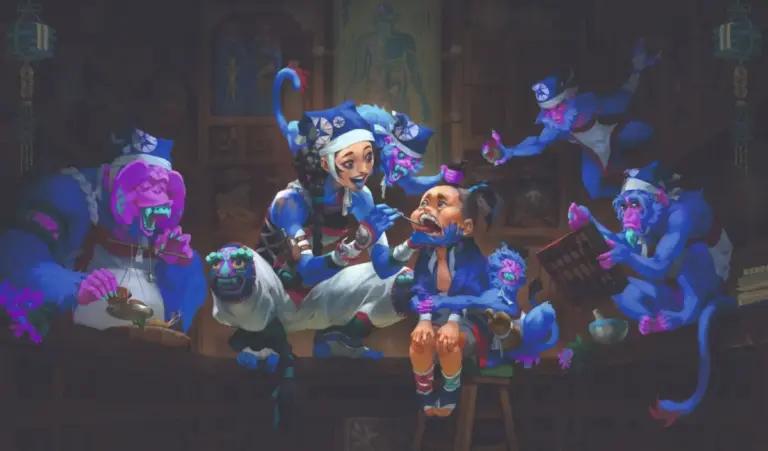
Only a short while ago, if you used the phrase "AI slop" in conversation, your listener would have immediately understood your meaning, even if they had never heard the term before. It was an incredibly intuitive piece of modern jargon. Anyone with a social media feed—particularly Facebook—had experienced the phenomenon firsthand: feeds clogged with bizarre, low-effort imagery ranging from zombie Santas and surreal, multi-limbed depictions of Jesus to viral videos of dogs performing geometrically impossible, physics-defying backflips.
The term "AI slop" was a stroke of linguistic genius. In just two concise syllables, it perfectly captured a highly specific cultural moment, distilling the collective exhaustion of internet users navigating a deluge of cheap, automated content. Its cultural resonance was so profound that by 2025, "AI slop" was officially crowned Word of the Year by both Merriam-Webster and the American Dialect Society.
However, the term did far more than simply label a digital nuisance; it served as a powerful organizing tool for public resistance. By giving the public a shared shorthand for their disapproval, "AI slop" empowered consumers to push back against corporate reliance on cheap generative technology.
Major brands quickly felt the sting of this vocabulary-driven backlash. Coca-Cola faced severe public criticism when it opted to remake its iconic, heartwarming Christmas commercial using artificial intelligence, a move widely decried as a hollow imitation of human creativity. Similarly, McDonald’s Netherlands was forced to pull a major promotional campaign after its brazen use of generative AI was called out by disappointed consumers. In the gaming industry, Activision faced a massive wave of criticism for incorporating AI-generated elements into its promotional materials for mobile titles.
For critics of unchecked automation, this era of public pushback has been highly encouraging. Yet, only a few years into this technological shift, there is a growing concern that the term "AI slop" has already outlived its usefulness.
The issue lies in the definition of the word "slop" itself. It describes a very specific kind of failure: content that is rushed, cheap, poorly rendered, and visibly terrible. But as generative technology advances at an exponential rate, that era of clumsy, easily identifiable AI failures is rapidly drawing to a close. In its place, a new wave of highly polished, natural-looking synthetic content is emerging—and it presents a far more complex challenge.
Not slop, still problematic
To understand this shift, consider a telling example from a few weeks ago. While busy ironing, I had YouTube running on my television in the background. Only half-attentive to the screen, I let the platform’s algorithm automatically queue up the next video after my chosen program ended.

What appeared on screen looked like a scrappy but deeply earnest, feature-length Doctor Who fan film, centering on a narrative about a secret military installation situated on the rugged Scottish coast. Initially, I reached for the remote to turn it off, but I was stopped in my tracks by just how visually impressive the production was.
This was clearly a massive step up from the typical fan project shot on an iPhone by a group of enthusiastic teenagers. The video boasted remarkably high production values. It bore all the hallmarks of a project crafted by industry professionals utilizing a healthy budget for high-quality stock footage. Intrigued by the sheer scale of the endeavor, I kept watching as I continued my chores, remaining engaged for the entire 55-minute runtime.
To be sure, there were occasional, subtle anomalies—a slightly unnatural pause in dialogue here, an abrupt edit there. However, I easily dismissed these minor quirks as the typical limitations of passionate, independent creators working without the multi-million-dollar budget of the BBC.
It was only after the credits rolled, when I began scrolling through the comment section, that I discovered the shocking truth: the entire 55-minute film had been generated using artificial intelligence.
This was not a traditional human-made film merely touched up with AI visual effects. It was built entirely from the ground up by generative models, including the very "actor" portraying the Doctor. Throughout the entire viewing experience, I had been entirely convinced that I was watching a real, physical human being. While I had perceived the performance as slightly stilted and amateurish, I never once doubted the actor’s basic humanity. The comment section revealed that I was far from alone in this assumption; hundreds of other viewers had been similarly misled.
The project, titled The Unmade Season, has since been removed from YouTube by its creator and hosted on his personal website. But whatever label one might apply to this piece of media, "slop" is entirely inaccurate.
The character movements and physical gestures felt remarkably organic. The dialogue flowed convincingly, and the visual rendering was flawless—there were no telltale signs of AI generation, such as characters with extra fingers or shifting backgrounds. Crucially, the narrative structure and the script—which were penned by a human writer—were genuinely compelling. The strength of the storytelling was undoubtedly the reason the algorithm had picked up the video and shared it so widely in the first place. Indeed, the human writer behind the project demonstrated a level of talent that should make them a prime target for professional television production rooms.

In short, the content was not bad. In fact, it was highly competent—so competent that it successfully fooled an experienced viewer into believing they were watching real human actors.
And that is precisely where the danger lies.
When Netflix released the Black Mirror episode "Joan Is Awful" in 2023—a dark satire depicting a world where television dramas are routinely and instantly generated by AI using the likenesses of real people—it felt like a cautionary tale about a reality that was still at least a decade away. Yet, just a few years later, that hypothetical future has already arrived.
If AI-generated video becomes indistinguishable from human-made media, it poses a far greater threat than "AI slop." Low-quality slop is self-policing because its poor quality makes it easy to identify and reject. High-quality, competent synthetic media, on the other hand, raises profound and unsettling questions that cannot be easily dismissed.
Even when the end product is visually impressive, it still carries the same heavy ethical baggage: questions regarding creative consent, the displacement of human labor, the loss of cultural authenticity, massive environmental and computational costs, and the terrifying potential for highly convincing misinformation.
As we enter this next phase of the generative era, the public urgently needs a new vocabulary. We must find a term to describe AI-generated content that is competent, polished, and genuinely impressive, yet remains deeply problematic. Without a shared shorthand to identify and critique this high-fidelity synthetic media, we risk losing the ability to organize against it before we even realize we are being deceived.