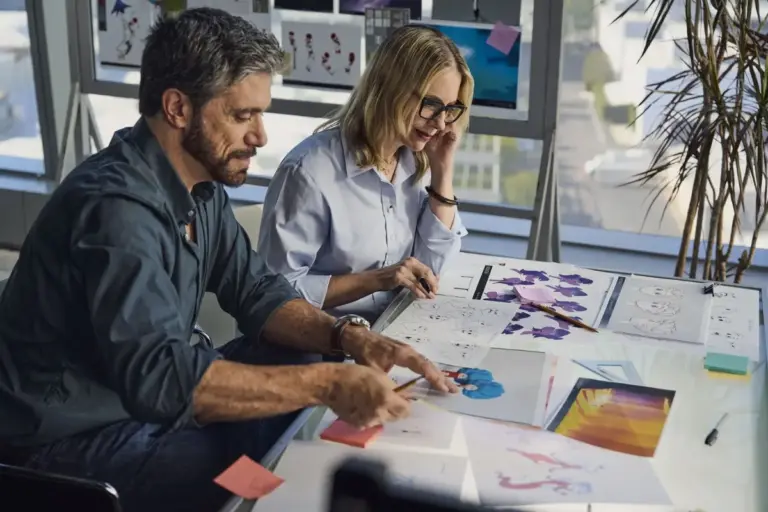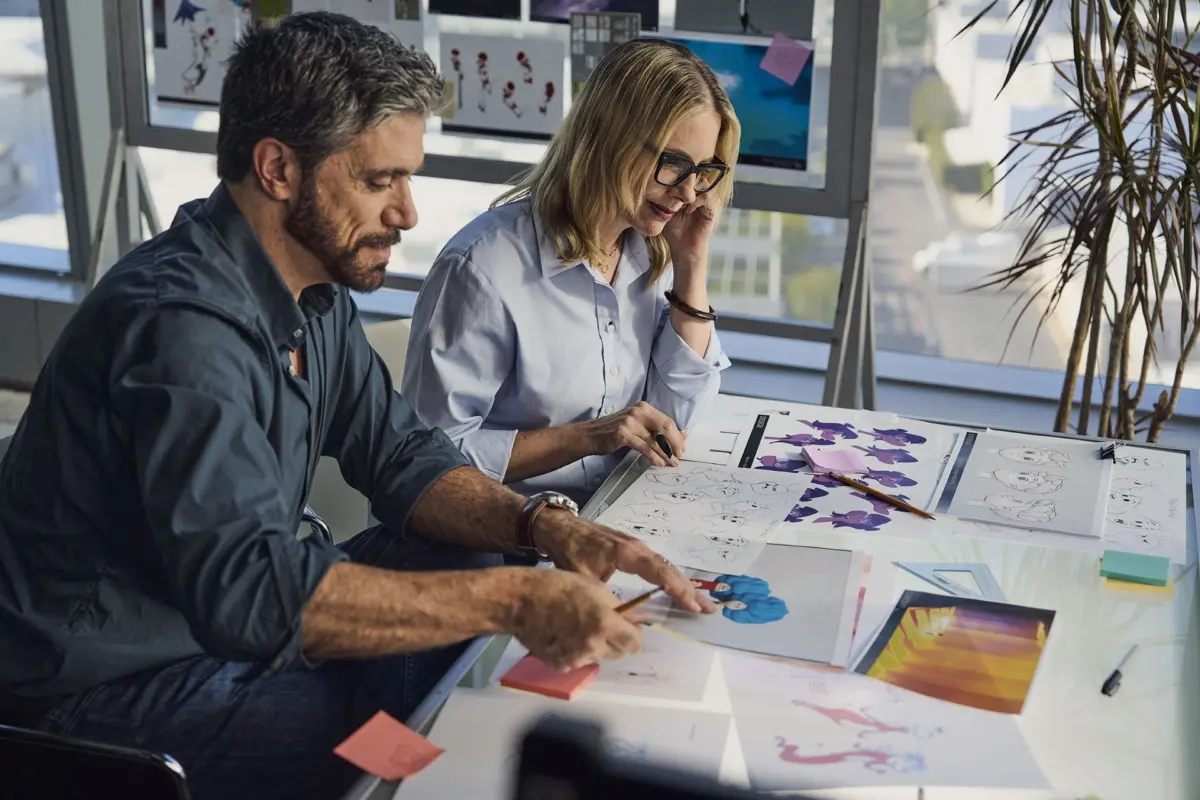
“In a way, our job is to come up with something absurd, entertaining, and crazy, and then discover: can we make it happen with technology?”
That balance between creative audacity and technical execution is how writer-director Alessandro Carloni captures the process behind Warner Bros. Pictures Animation’s upcoming feature film, The Cat in the Hat. Carloni’s perspective is showcased in the premiere episode of Made to Make, a new branded digital series launched on YouTube by software company Autodesk.
Designed to pull back the curtain on complex creative endeavors, Made to Make explores the intersection of artistic vision, mechanical ingenuity, and modern digital software. The docuseries examines how designers, visual effects specialists, directors, visual artists, and engineers overcome intricate production challenges to transform unconventional ideas into completed works. Throughout the series, Autodesk positions its technology ecosystem as an essential structural backbone that helps turn ambitious artistic concepts into reality.
The inaugural season of Made to Make is hosted by internationally recognized chef, humanitarian, and entrepreneur José Andrés. While widely known for his culinary leadership and global relief efforts, Andrés also brings a long-standing personal involvement in the world of storytelling, visual media, and animation. Over his career, Andrés has expanded his artistic endeavors beyond the culinary arts, taking on voice roles in high-profile animated projects such as Disney’s Firebuds and Netflix’s Green Eggs & Ham. His engagement with narrative art also extends into the comic book industry, where he has collaborated with major publishers including Marvel and DC.
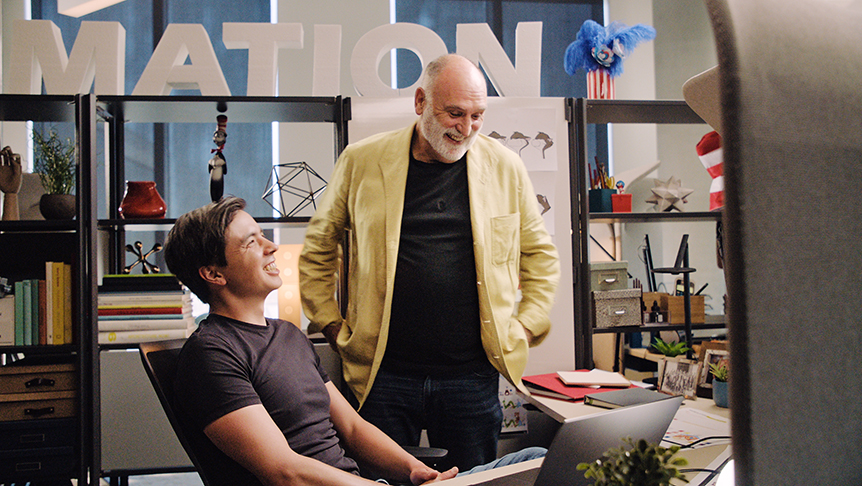
In Made to Make, Andrés serves as an inquisitive host, guiding viewers through behind-the-scenes environments to meet the specialized craftspeople responsible for modern visual culture. The premiere episode, titled The Making of The Cat in the Hat, brings together a key group of creative leaders and technical heads who oversaw the production of the feature. Alongside co-director Carloni, the episode features co-writer and director Erica Rivinoja, animator Marek Kochout, central supervisor Jessica Killiam, visual effects supervisor Matt Waters, and production designer Aidan Sugano. Together, they outline how an iconic piece of children’s literature was reimagined for modern cinema under extraordinary production parameters.
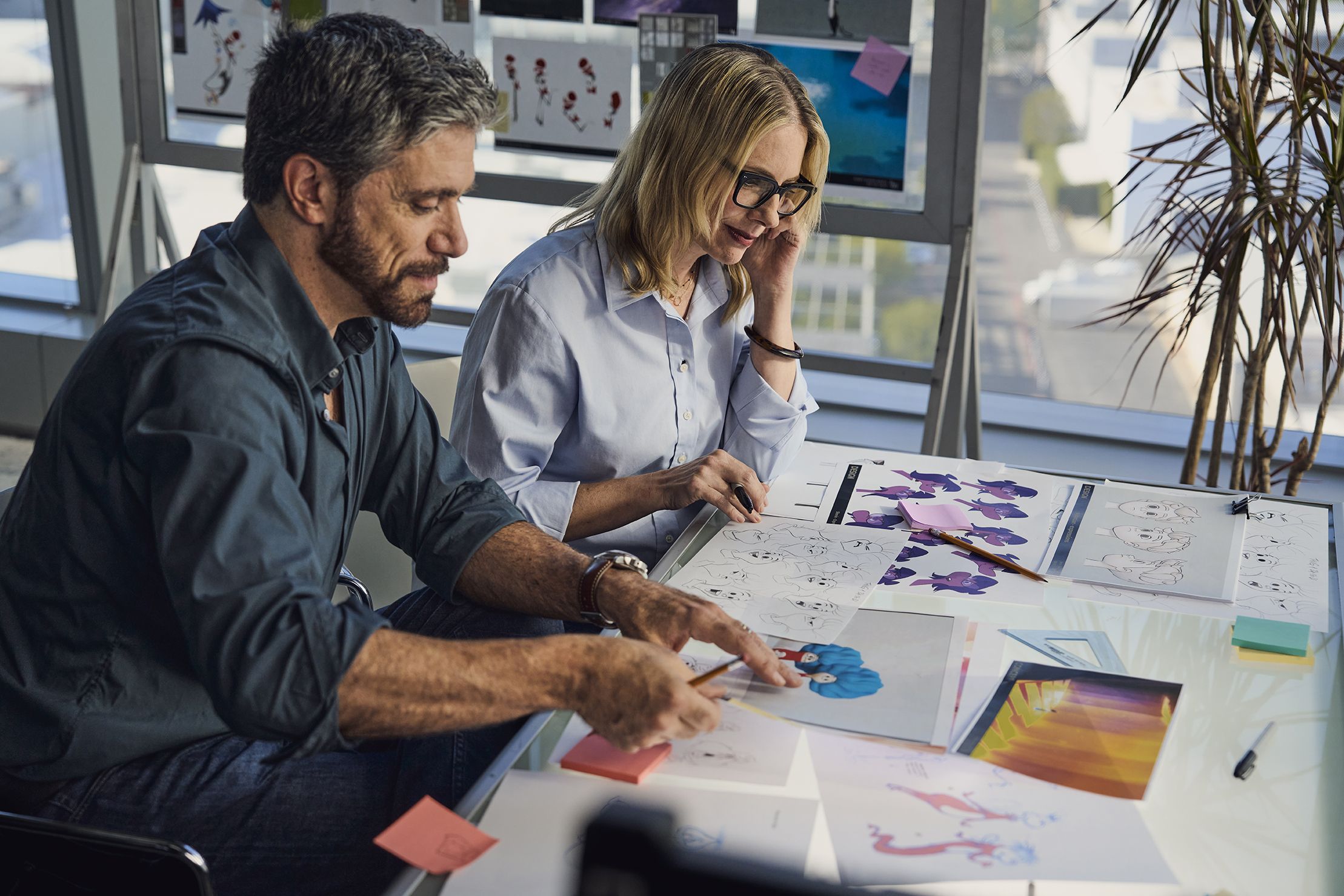
How was The Cat in the Hat made in just two years?
One of the most remarkable technical feats highlighted in the episode is the rapid speed with which Warner Bros. Pictures Animation produced the film. The studio completed its first full-length feature within an accelerated two-year timeline—a remarkably condensed schedule for a major 3D animated feature of this visual complexity and scale. Standard theatrical animated projects routinely spend four to six years in active development and execution due to the painstaking demands of asset building, character rigging, lighting, texturing, and rendering.
To achieve this ambitious timeframe without compromising artistic quality, the production relied on a globally distributed workforce operating across multiple geographic regions simultaneously. Studio teams were dispersed across major creative hubs, including Los Angeles, Montreal, London, and several cities across India. Coordinating assets, shots, and artistic revisions across multiple international studios and time zones required absolute clarity in pipeline architecture and tool selection.
From a narrative and visual standpoint, the filmmakers set out to expand significantly upon Theodor Geisel’s classic 1957 book. Rather than limiting the story strictly to the familiar confines of a rainy house, the cinematic adaptation ventures into unchartered territory, exploring what happens after the original book ends and discovering where the Cat ventures once he departs the children’s home.
To support this expanded narrative scope, the artistic teams developed five distinct, stylistically differentiated visual environments:
- The mundane real world inhabited by the human characters.
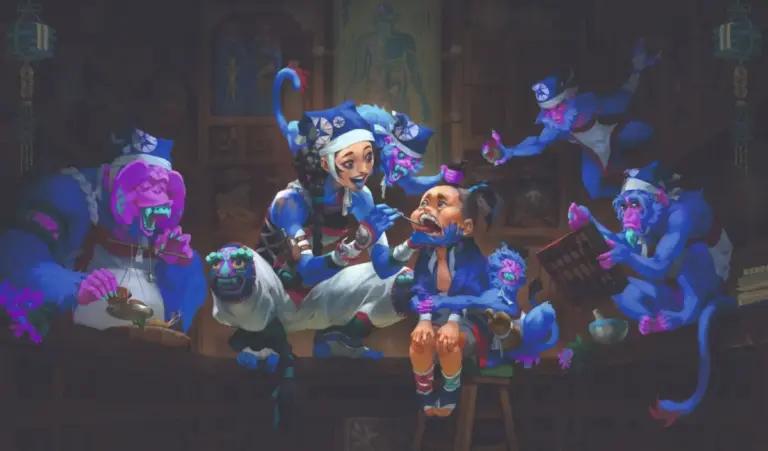
- The whimsical, instantly recognizable universe inspired by Dr. Seuss’s original aesthetic.
- Three additional, fully realized worlds specifically tied to the distinct personalities and narratives of the film’s supporting characters.
Balancing these vastly different aesthetic styles required software tools that could handle intricate artistic experimentation while maintaining structural stability. Reflecting on the freedom afforded by modern animation, co-director Erica Rivinoja notes, “The exciting thing about animation is that it can do so much more than other types of filmmaking.”
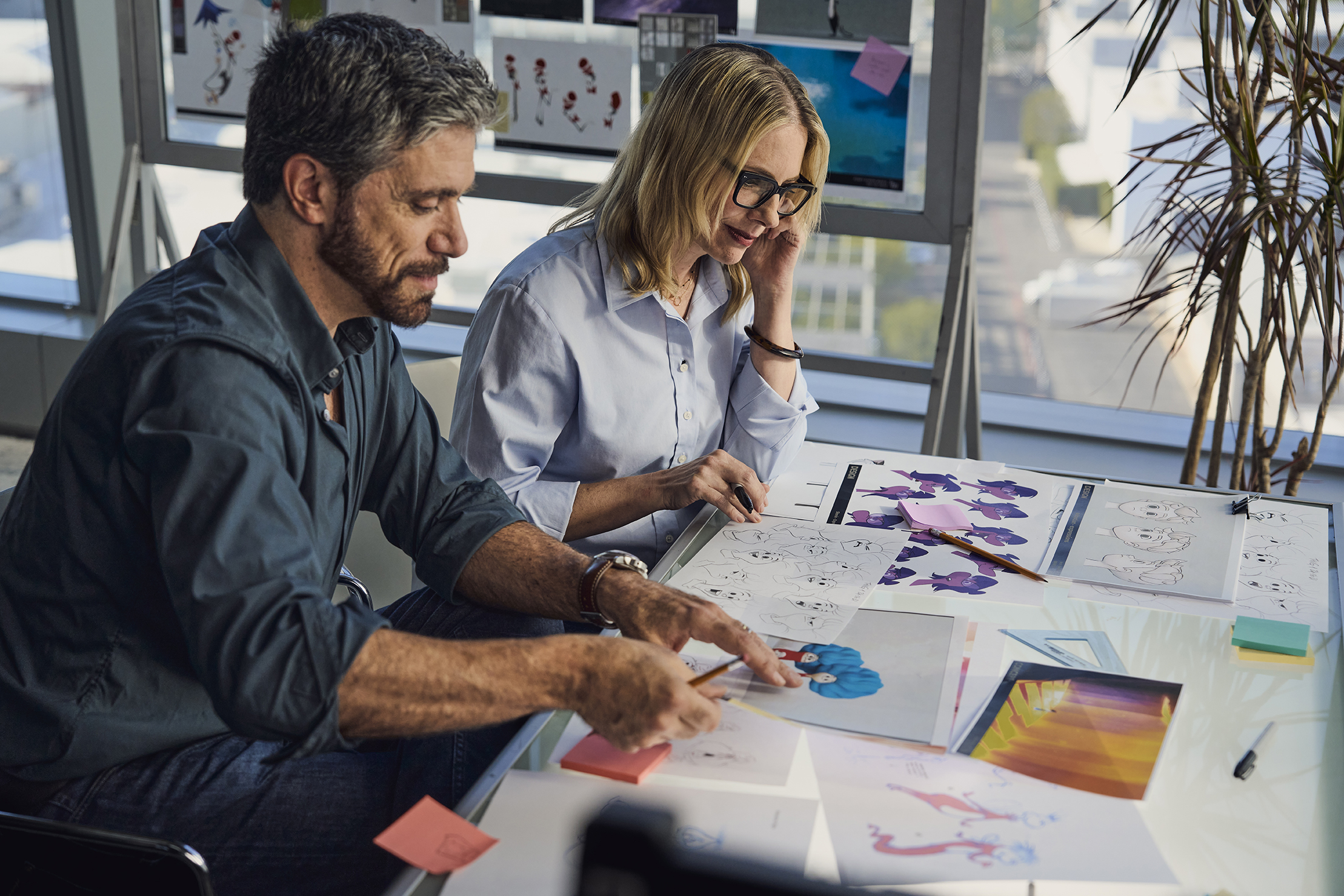
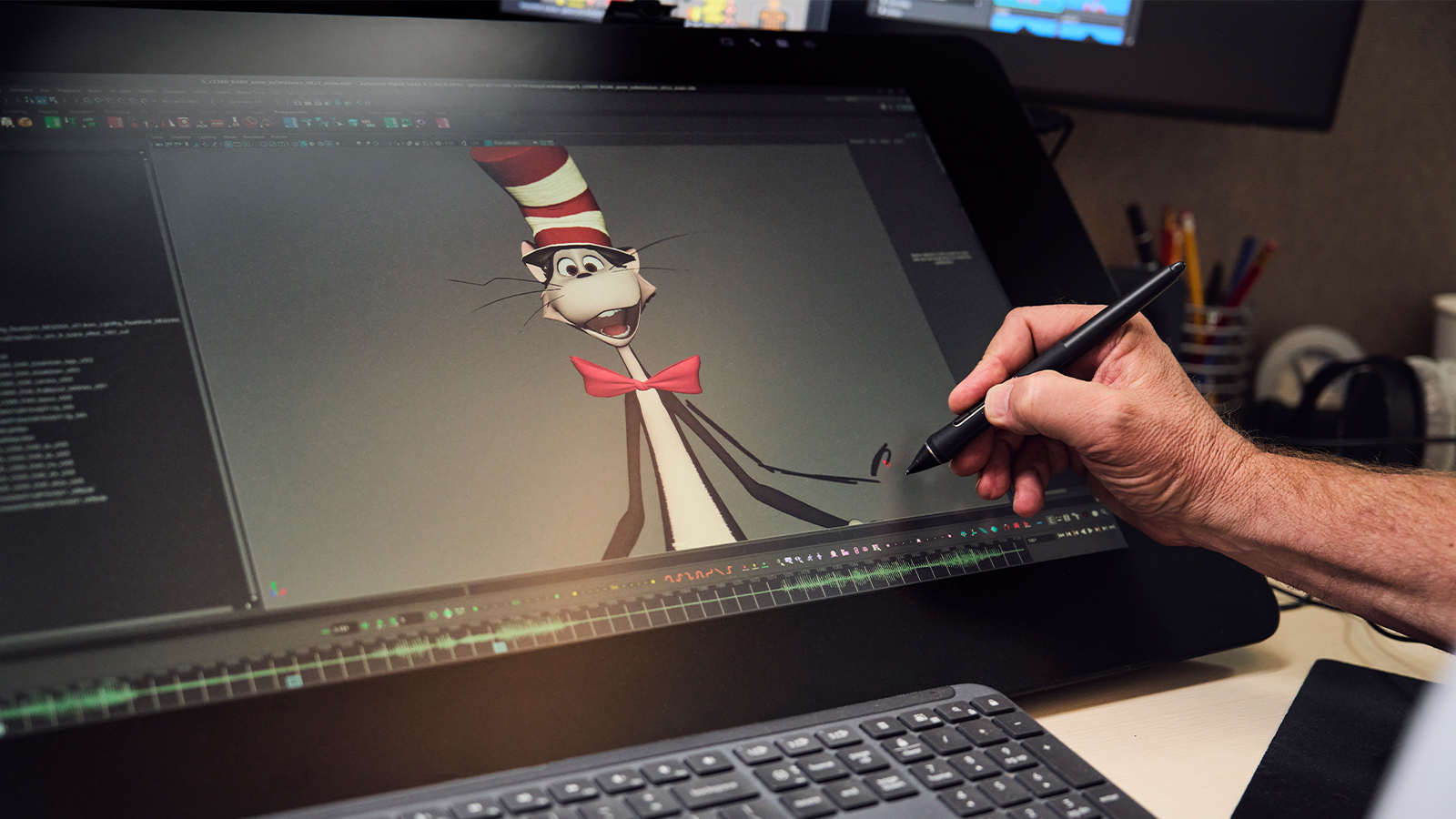
At the heart of this creative process was Autodesk Maya, which has long served as an industry-standard software tool for 3D animation, modeling, simulation, and rendering. Within the production pipeline of The Cat in the Hat, Maya acted as the primary digital studio hub. Artists utilized the platform for every stage of asset creation—from sculpting environments and modeling complex props to building character rigs and animating nuanced, expressive performances. The software provided the structural flexibility needed for artists to experiment with varied stylistic choices, helping them bridge the gap between traditional illustrative hand-drawn art and three-dimensional digital cinema.
For key animators on the project, the software became an indispensable medium through which performance was generated. Animator Marek Kochout explains how central Maya was to his daily workflow with the film’s cast of characters: “It’s essential. I have no other way of touching these characters other than through Maya. It’s my porthole into the marionette. This is my tool.”
How Flow Production Tracking kept teams on track
Navigating a two-year production cycle across four countries required rigorous organizational oversight to ensure thousands of digital assets were tracked, updated, and delivered seamlessly. To maintain synchronization across international creative teams, Warner Bros. Pictures Animation deployed Autodesk Flow Production Tracking (formerly known as ShotGrid) as the operational infrastructure for the entire feature.
Flow Production Tracking served as the definitive, centralized source of truth for every department, managing the movement of assets from initial concept sketches through final visual effects integration. Central supervisor Jessica Killiam emphasized the critical role the software played in holding the multi-studio effort together across continents.
“We use Flow Production Tracking to track the entire movie, so you can find a variety of different things in here,” Killiam explains. “We have our assets, all of the characters, the environments, the props.”
Because the animation pipeline required constant asset iteration across disparate cities, the studio integrated RV—the media review software built directly into the Flow Production Tracking ecosystem. RV permitted supervisors, directors, and artists located in Los Angeles, Montreal, London, and India to conduct high-resolution, frame-accurate reviews of shots and 3D models in real time or asynchronously. This capability allowed leads to mark up frames, iterate on visual iterations, and provide immediate feedback, dramatically reducing approval delays that typically slow down international productions.
Furthermore, the production utilized PIX, a secure cloud-based media management system that is now integrated as part of Autodesk Flow Capture. PIX allowed the production team to share edit assemblies, sequence cuts, and shot updates quickly and securely across departments and with external reviewers. By unifying digital asset management, shot tracking, media review, and cloud delivery into a cohesive system, the team maintained momentum across all production phases, fulfilling the accelerated two-year mandate without sacrificing artistic oversight.
The Cat in the Hat cast, plot and release date
The film features a star-studded voice cast led by actor and comedian Bill Hader, who voices the titular character of the Cat in the Hat. Joining Hader is an ensemble of comedic and dramatic talent, including Matt Berry, Quinta Brunson, Xochitl Gomez, Giancarlo Esposito, and America Ferrera.
Co-directed by Rivinoja and Carloni, the feature introduces a fresh storyline that places the iconic character within a broader, imaginative framework. In this version, the Cat operates as an agent for a whimsical entity known as the I.I.I.I.—the Institute for the Institution of Imagination and Inspiration, LLC. The Cat receives what is described as his most challenging assignment to date: visiting and cheering up two young siblings, Gabby and Sebastian, who are struggling to cope with the emotional distress and disruption of moving to an unfamiliar new town.
Visual previews and trailers released for the film highlight a vibrant visual identity that pays homage to the distinct, line-driven artwork of Dr. Seuss while translating those original motifs into a dynamic, modern 3D spectacle. The animation style balances stylized, non-photorealistic textures with fluid character movement, reflecting the directors’ goal of honoring Geisel’s legacy while presenting a fresh, contemporary cinematic experience.
Audiences will be able to view the completed feature when it hits theaters worldwide in late 2026. The film is scheduled to open in international cinema markets beginning on November 4, 2026, followed by its wide theatrical and IMAX release across North America on November 6, 2026.
With the launch episode of Made to Make now streaming live on YouTube, Autodesk plans to release subsequent episodes throughout the season. Future installments will continue to explore diverse industries, highlighting the artists, builders, and innovators who leverage cutting-edge technology to solve complex visual, industrial, and creative challenges.