
Apple’s high-end monitor strategy has long focused on marrying uncompromising visual quality with tight hardware integration, and the Apple Studio Display XDR represents the absolute peak of that design philosophy. Positioned firmly at the top of Apple’s streamlined monitor lineup, this 27-inch professional screen brings dramatic technological upgrades over the standard model. Featuring an advanced mini-LED backlighting system, dynamic 120Hz ProMotion refresh rates, astonishing peak brightness levels, and internal processing power courtesy of Apple silicon, it is engineered specifically to meet the rigorous demands of video editors, animators, colorists, and digital artists.
However, that elite performance comes at an undeniably heavy cost. Starting at £2,999 in the UK and $3,299 in the US, the Studio Display XDR is a serious financial investment that will push many creative studios to carefully evaluate their budgets. Furthermore, its deep integration into the Apple ecosystem means its standout capabilities are almost exclusively reserved for users with modern Mac hardware. For creative professionals already embedded in the Mac ecosystem who demand reference-grade visual performance, the Studio Display XDR represents an extraordinary companion—provided their budget can accommodate it.
Design, Build, and Hardware Integration
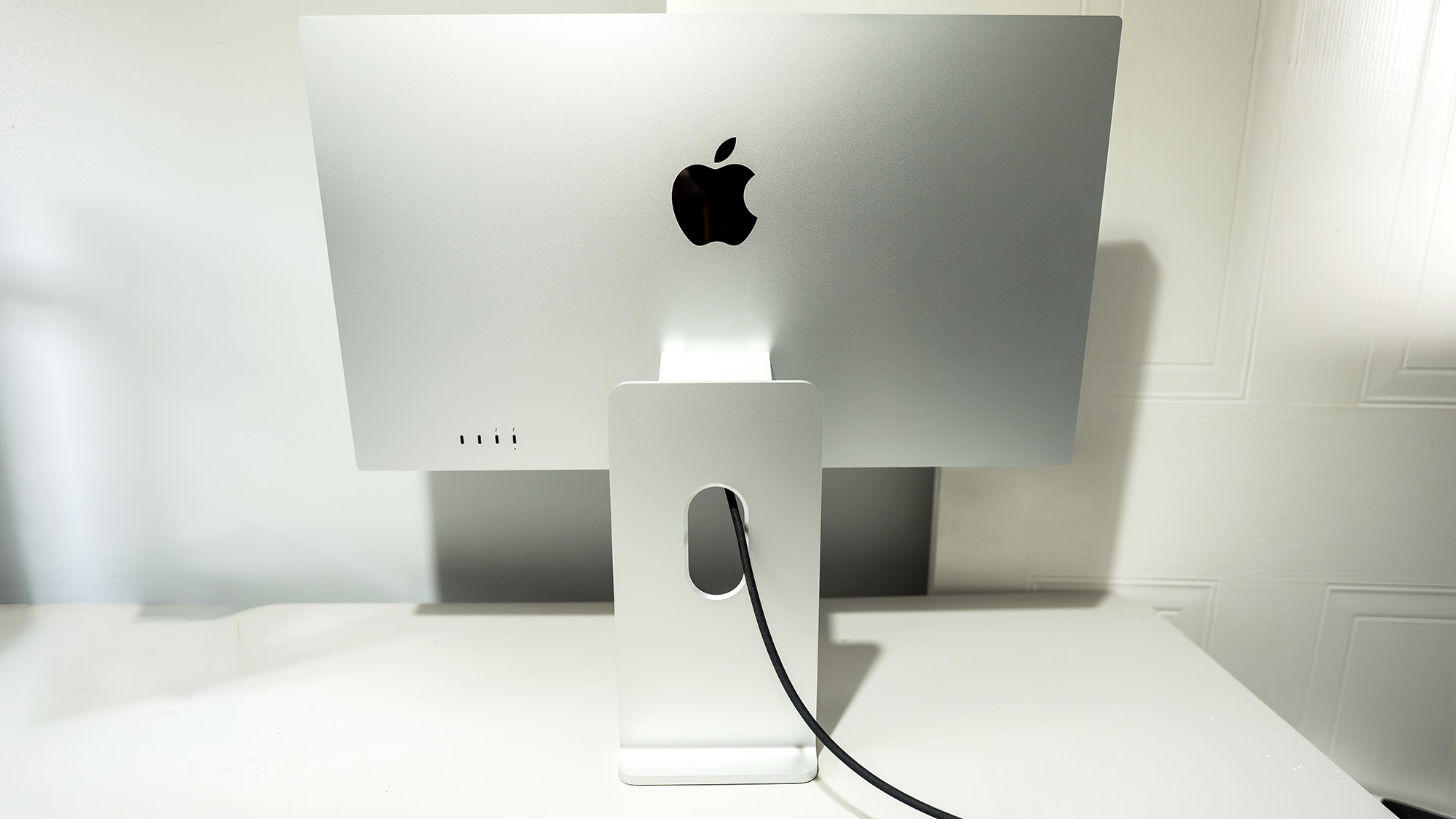
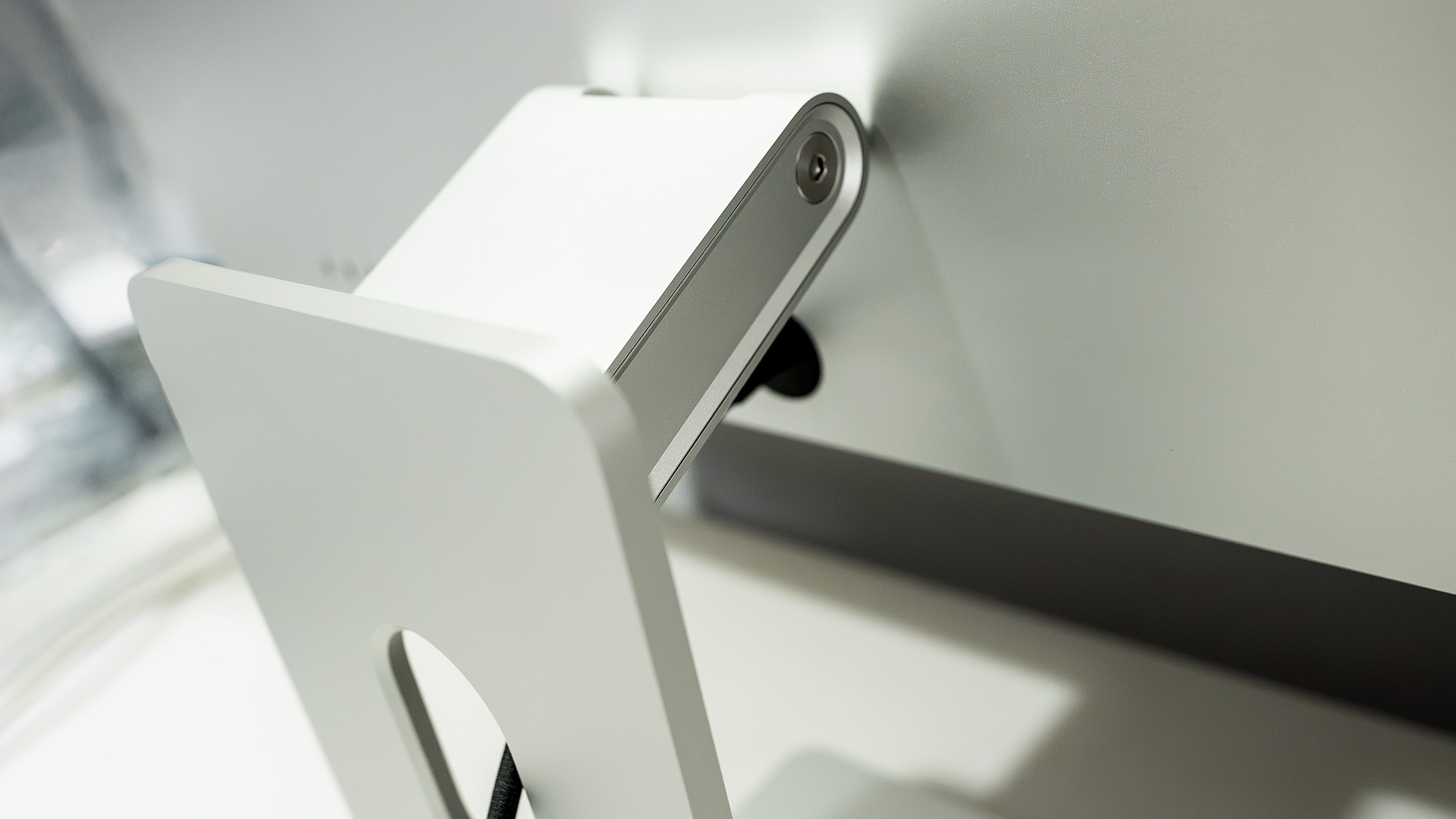
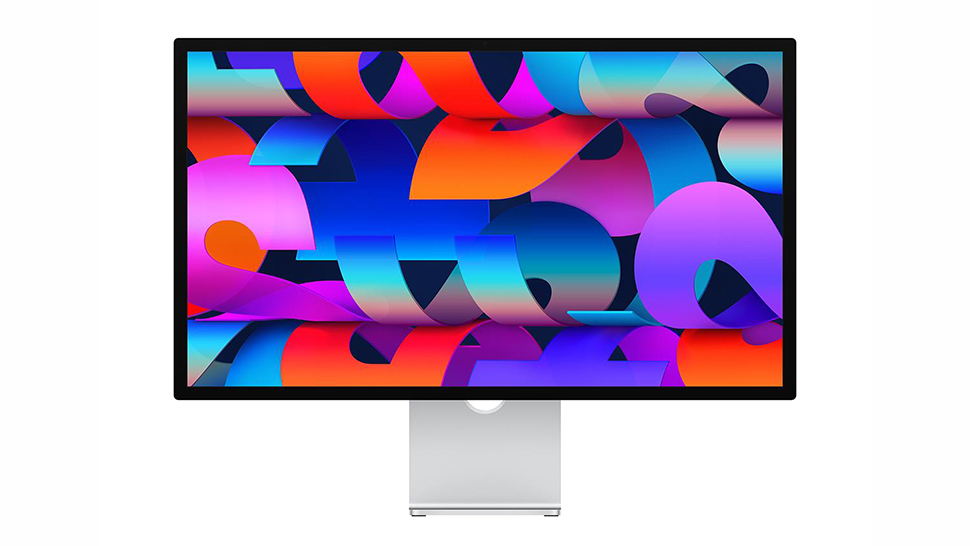
Visually, the Studio Display XDR retains the iconic aesthetic signature that Apple has refined over generations of desktop hardware. Housed in a clean, precision-engineered silvery aluminum chassis with minimal black bezels framing the 27-inch glass, the monitor commands an effortless, premium presence on any desk. Across its exterior, the build quality feels exceptionally rigid and refined, reflecting its position as an enterprise-grade professional tool. Including its standard stand, the system measures 623 x 583 x 214 mm and weighs 8.5 kg, giving it a reassuringly solid footprint.
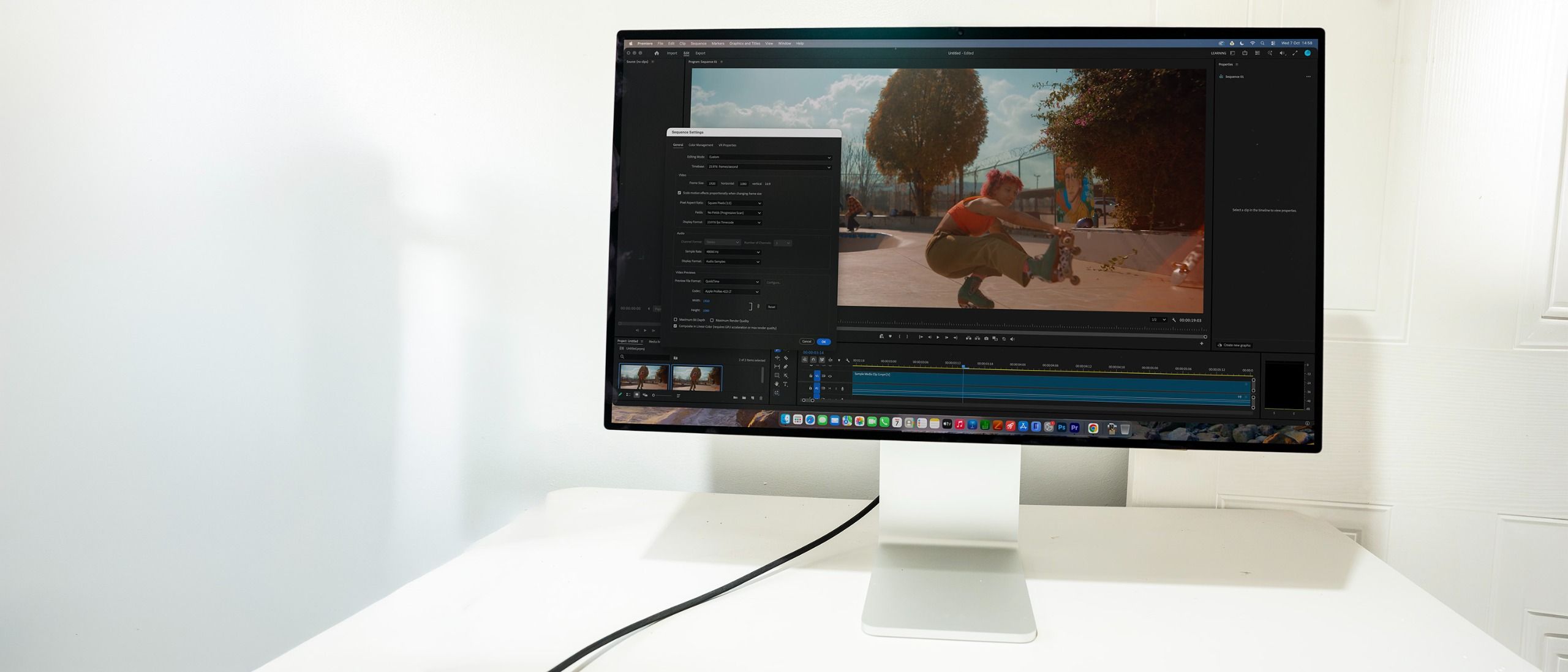
Underneath the aluminum shell, Apple has taken an unconventional approach to internal architecture by embedding an A19 Pro chip—the same processor architecture featured in the iPhone 17 Pro—directly inside the monitor. This onboard processor manages background display management, camera features, dynamic ambient lighting adjustments, and spatial audio processing without offloading computational overhead onto the host machine. Because of the extreme thermal demands associated with driving a high-density mini-LED panel at high brightness levels, Apple has also built an active cooling fan into the enclosure. The fan runs continuously whenever the display is powered on. While the acoustic profile is kept quiet enough to easily blend into standard office background ambiance, the faint hum remains noticeable during moments of total silence.
Physical adjustability is standard on the core model, which includes a counterbalanced stand capable of smooth tilt adjustment from -5° to +25° as well as up to 105mm of height adjustment. On previous non-XDR display models, this dual tilt-and-height arrangement was treated as an expensive add-on, but Apple includes it out of the box here. Alternatively, buyers seeking to mount the screen onto arm assemblies or studio walls can select a VESA-mount configuration, which actually lowers the entry price slightly compared to the stand-equipped configuration.
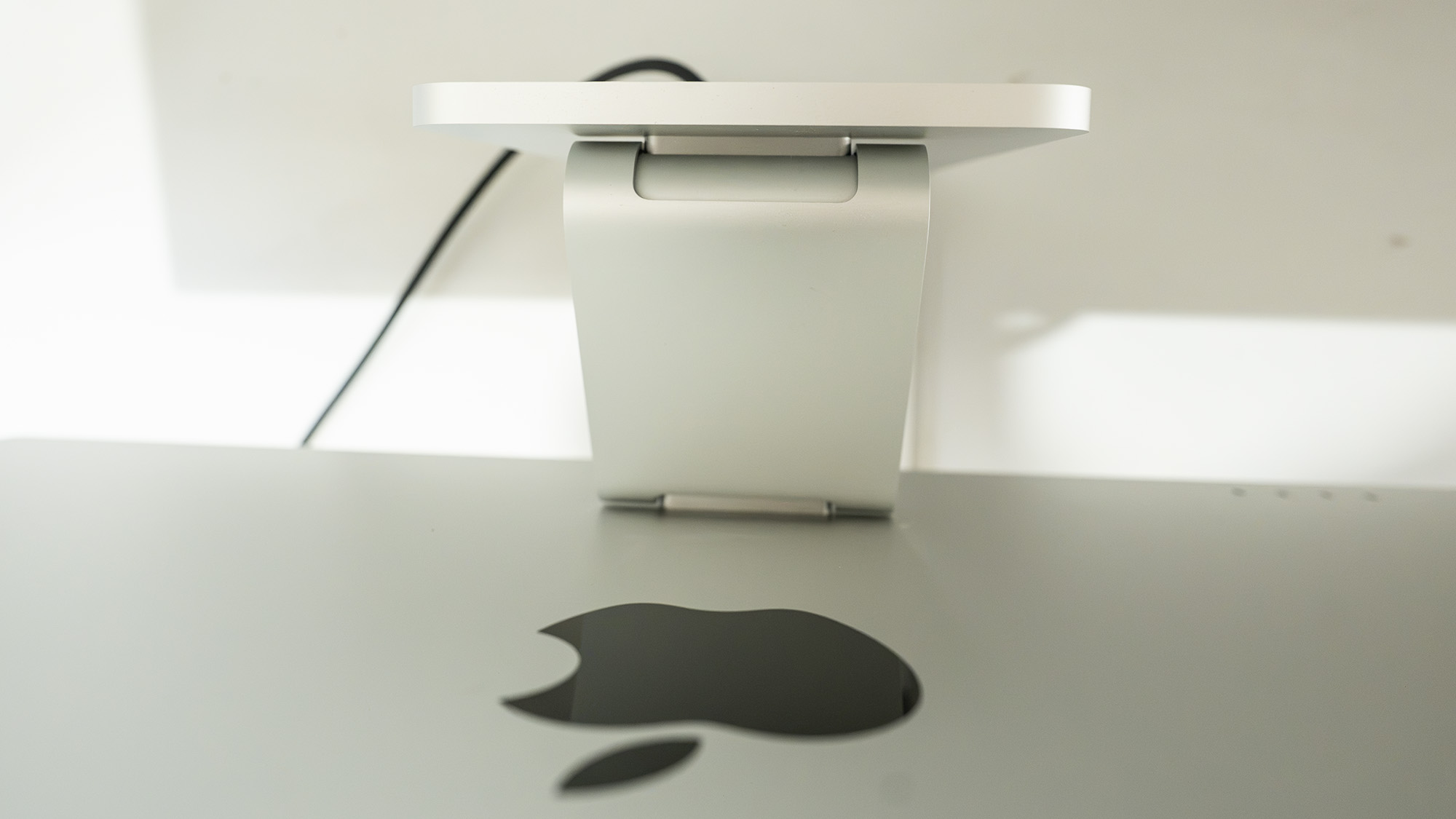
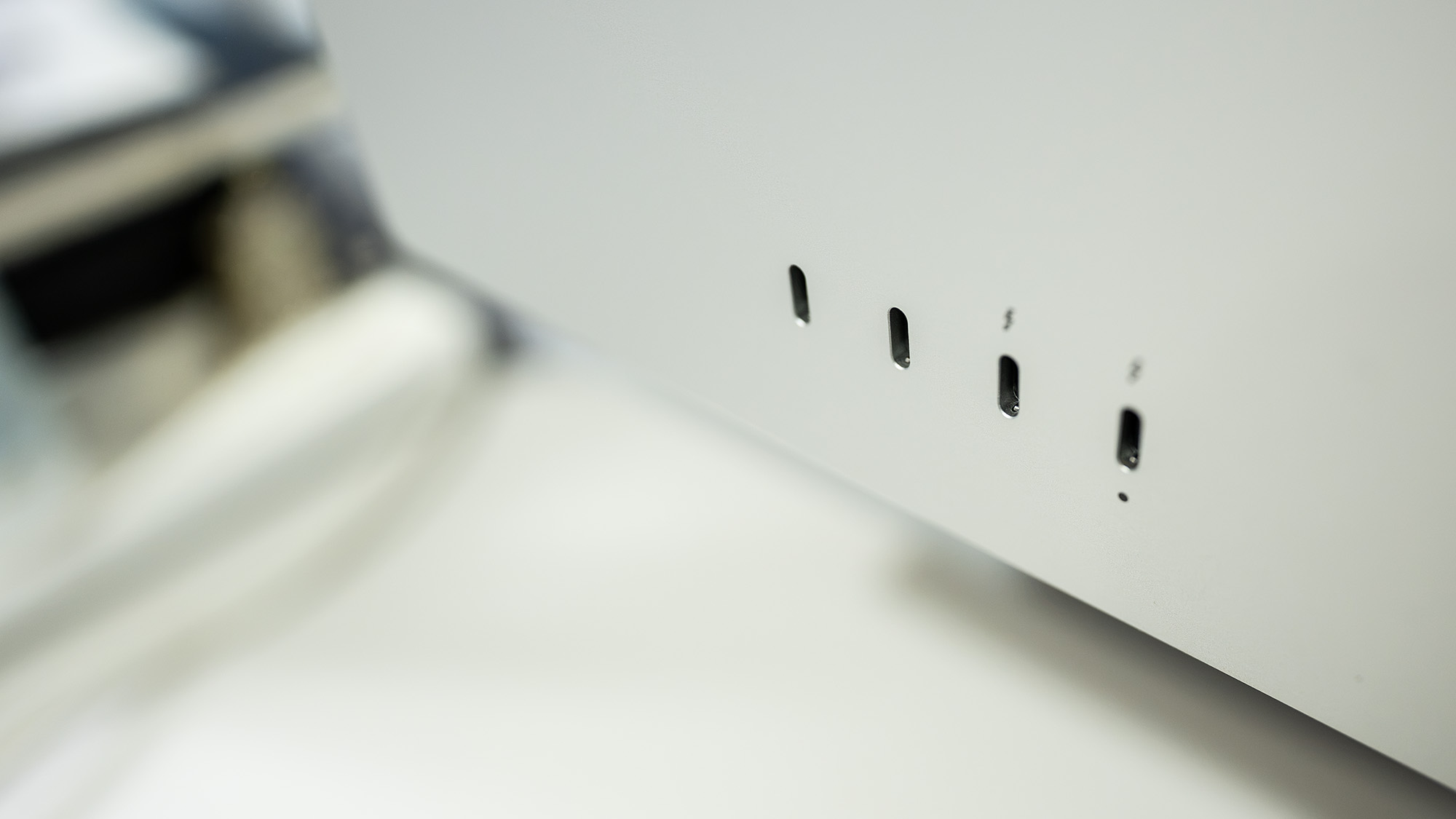
In terms of physical inputs and outputs, Apple keeps the rear interface strictly modern and streamlined. The back panel features two USB 3.2 Type-C ports alongside two high-bandwidth, powered Thunderbolt 5 ports. One of these Thunderbolt 5 connections serves as the main display input, offering enough bandwidth to handle uncompressed 5K video streams, high-speed data transfer, and pass-through laptop charging over a single cable. The secondary Thunderbolt 5 port allows users to daisy-chain multiple high-resolution displays together.
However, legacy video connectivity is entirely absent. The monitor features no HDMI or DisplayPort connections, severely limiting universal compatibility. Connecting the display to a Windows PC provides only basic visual output, with brightness adjustments proving difficult and key ecosystem features unavailable. Furthermore, without standard HDMI ports, modern gaming consoles cannot be connected directly to the display, reinforcing its strict identity as a Mac-centric professional workstation monitor.
Key Specifications
- Screen Size: 27-inch diagonal
- Panel Type: Mini-LED IPS with 2,304 local dimming zones
- Native Resolution: 5120 x 2880 (5K)
- Refresh Rate: Up to 120Hz adaptive ProMotion
- Color Gamut: Measured at 97% DCI-P3 and 94% Adobe RGB (configured mode)
- SDR Brightness: 500 nits sustained full-screen
- HDR Brightness: 1,000 nits sustained full-screen; up to 2,000 nits peak
- Ports: 2x Thunderbolt 5, 2x USB 3.2 Type-C
- Adjustability: -5° to +25° tilt; 105mm height adjustment (stand model)
- Audio System: Six-speaker high-fidelity array with force-cancelling woofers; three-microphone array
- Webcam: 12MP ultra-wide sensor supporting Center Stage
- Dimensions & Weight: 623 x 583 x 214 mm; 8.5 kg with stand
Display Quality and Performance
The primary motivation for upgrading to the XDR variant lies in its radical panel enhancements. Moving away from standard edge-lit LED configurations, the Studio Display XDR incorporates a dense mini-LED backlighting matrix equipped with 2,304 individual local dimming zones. This granular control over backlighting allows the display to render deep, true blacks right alongside piercingly bright highlights without producing distracting halo effects or light bloom around high-contrast edges.
For standard dynamic range (SDR) everyday tasks, the panel easily delivers a comfortable, uniform full-screen brightness of 500 nits. However, feed the monitor high dynamic range (HDR) footage, and the display demonstrates its true capabilities. The panel sustains 1,000 nits across full-screen HDR content and can burst to a blinding 2,000 nits peak brightness for pinpoint specularity. This massive dynamic range makes viewing and grading HDR video files, high-resolution photography, and 3D renders remarkably vivid and life-like.
Color reproduction is equally impressive out of the box, as each unit undergoes rigorous factory calibration across several industry-standard color spaces. In laboratory testing under default preset modes, such as the standard XDR-P3 profile, the panel delivered 91% coverage of the DCI-P3 color gamut and 83% of the Adobe RGB space. Adjusting the display profile to the combined XDR-P3 + Adobe preset bumped those color coverage numbers up significantly to 97% P3 and 94% Adobe RGB. For critical visual tasks like commercial print work, video post-production, or medical imaging, Apple allows users to perform custom in-depth calibrations and offers a wide array of built-in reference presets tailored to specific broadcasting and cinema standards.
The display also incorporates Apple’s ambient True Tone technology, which dynamically samples ambient room lighting to adjust the screen’s white balance on the fly, reducing visual fatigue during long working sessions. In testing, switching between presets initially results in a noticeably cooler, dimmer picture before True Tone automatically warms and brightens the output to match ambient conditions. For production environments where precise color fidelity is paramount, both True Tone and automatic brightness matching can be toggled off instantly.
Another transformative upgrade is the inclusion of Apple’s ProMotion technology, enabling adaptive refresh rates reaching up to 120Hz. Motion across the operating system feels incredibly smooth, with cursor movements, window dragging, and timeline scrolling responding with zero perceptible lag. The panel intelligently modulates its refresh rate to match incoming video frames, ensuring smooth media playback, or can be locked manually to fixed frame frequencies like 24Hz, 25Hz, or 50Hz for specialized cinematic workflows.
Integrated Audio, Camera, and Smart Features
Beyond its display capabilities, the Studio Display XDR acts as an all-in-one media workstation center thanks to its robust built-in peripherals and onboard silicon processing. At the top of the upper bezel sits a 12MP ultra-wide camera powered by Apple’s Center Stage feature. Utilizing computational vision, the camera automatically tracks, crops, and frames subjects as they move around their room during video calls, ensuring remote collaborators remain comfortably positioned in the center of the frame.
Audio capabilities are equally well engineered. The monitor houses a studio-quality three-microphone array designed with directional beamforming, effectively filtering out ambient office noise so voices remain clear during virtual meetings or voiceover recordings. Outputting audio is a built-in six-speaker sound system comprising four force-cancelling woofers and two high-performance tweeters. The arrangement delivers shockingly rich, wide sound with deep bass response and wide spatial audio separation, allowing content creators to monitor audio mixes without immediately needing external desktop speakers.
Price and Value Assessment
There is no dancing around the issue: the Apple Studio Display XDR carries a exceptionally high price tag. At £2,999 / $3,299 for the standard glass model with the tilt- and height-adjustable stand, it sits far above typical consumer or mainstream professional screens. Upgrading the front glass to Apple’s specialized matte nano-texture finish pushes the price higher still, though choosing the VESA mount adapter configuration offers a minor cost reduction.
When evaluating pure economic value, the Studio Display XDR lands at a modest score. Competing high-end monitors designed for creative work—such as the 27-inch 4K BenQ PD2732U—can be acquired for approximately one-third of the Apple display’s retail price. What buyers are paying for here is the rare combination of 5K pixel density, mini-LED peak brightness reaching 2,000 nits, smooth 120Hz ProMotion performance, and flawless integration with Apple software and hardware.
It is also vital for prospective buyers to consider their current computer hardware before making a purchase. Achieving the panel’s full native 5K resolution at 120Hz requires a Mac equipped with an Apple M4 generation processor or newer (or an M5 generation chip if pairing with an iPad Pro). Devices like the entry-level MacBook Neo can only drive the panel at a reduced 4K resolution, effectively limiting the display’s core advantages.
Who Is It For?
The Apple Studio Display XDR is tailored specifically for well-funded creative professionals, commercial studios, post-production houses, and high-end agency artists who are deeply invested in modern Mac hardware. Film editors, colorists, high-end animators, and digital photographers who require reference-grade HDR brightness, exact color space targeting, and high-refresh-rate timeline fluidity will find immense practical utility in what this panel offers.
Conversely, general office workers, casual creators, PC users, or cross-platform power users will find little reason to pay the monumental price premium. For those operating outside high-end visual production, the severe ecosystem lock-in, lack of standard display inputs, and high entry cost make alternative displays far more practical solutions.
Score Card Summary
- Design: 4 / 5 — Exceptional metal build quality, integrated adjustable stand, and smooth aesthetics, though docked slightly for relying exclusively on Thunderbolt inputs and lacking legacy video ports.
- Features and Performance: 4 / 5 — Outstanding 2,000-nit HDR peak brightness, excellent 5K clarity, accurate color reproduction, responsive 120Hz refresh rates, and stellar integrated audio and camera systems.
- Value: 3 / 5 — Undeniably expensive with a niche target market, representing a significant financial stretch for anyone outside high-end professional production houses.
Also Consider
For professionals exploring alternative options before committing to the Studio Display XDR, several notable competitors fulfill distinct creative needs:
- Apple Studio Display (Standard non-XDR): Retaining the exact same external design, 5K resolution, speaker setup, and camera as its premium sibling, the standard Studio Display offers exceptional daylight usability and crisp visual sharpness for general creative work at a much lower cost, though it lacks mini-LED dimming, HDR brightness, and ProMotion.
- BenQ PD2732U: A highly respected 27-inch 4K monitor created for graphic designers and visual artists. While it cannot rival the peak HDR brightness or 5K resolution of Apple’s flagship screen, it offers outstanding factory color accuracy, flexible connectivity, and an exceptionally attractive price point roughly a third of the XDR’s cost.
- Asus ProArt Display PA32KCX: Designed for top-tier master grading and cinematic production, this massive 32-inch mini-LED display crams an astounding 8K resolution across 32 million pixels. Delivering extreme color fidelity, massive brightness capabilities, and professional calibration tools, it serves as a formidable competitor for high-end studio installations.