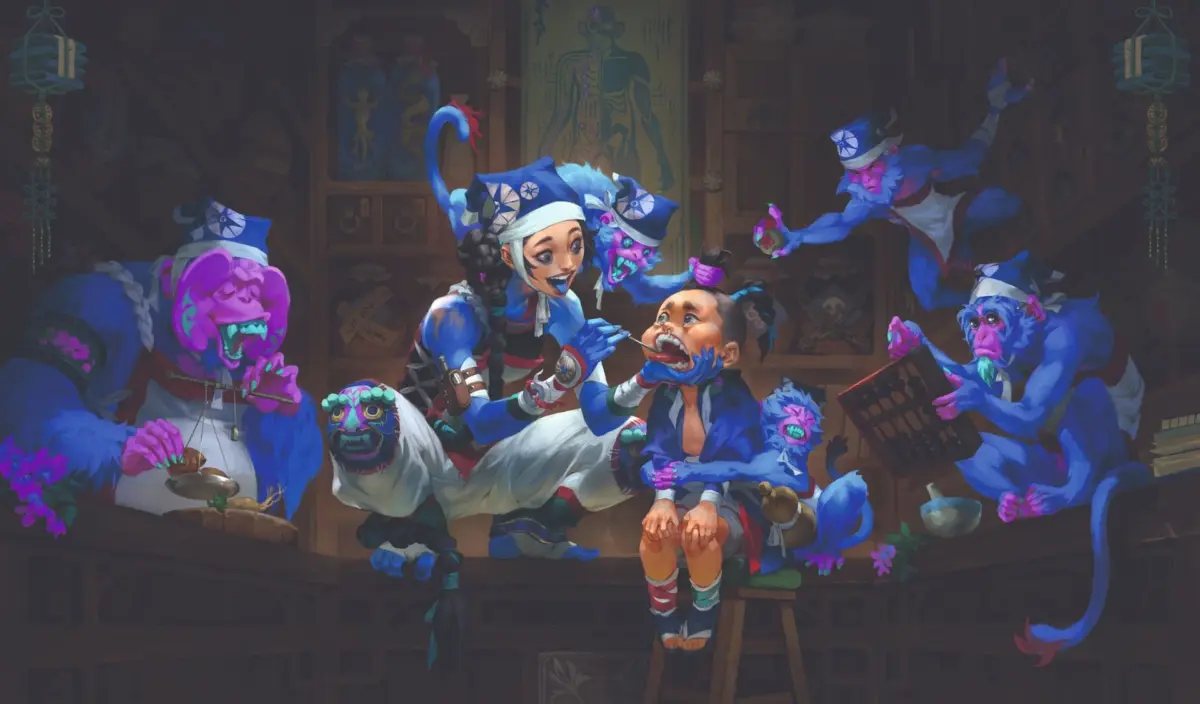
In the realm of digital art and visual world-building, creating an immersive fantasy universe requires a subtle balance between thematic invention, character storytelling, and rigorous technical execution. Digital artist Eilene Huang demonstrates this delicate balance in her personal project, Blue Stained—a concept art series set in a world where mysterious blue plants serve as everyday ingredients and dictate the cultural rhythms of local tribes.
At the heart of one of her latest illustrations is a look into the world’s medical and botanical practices: a scene depicting a kind yet eccentric doctor endlessly experimenting with these magical blue flora inside a traditional apothecary setup. By blending traditional Asian architectural motifs with comedic character interactions, Huang crafts a visual narrative that contrasts serious environment design with lively character dynamics.
Originally featured in ImagineFX, the world’s leading digital art magazine, Huang’s breakdown offers an in-depth look at her creative process. From initial compositional sketches to strategic color choices and focal point rendering, her step-by-step methodology reveals how illustrative storytelling can turn a static image into a living, breathing moment.
The Concept and Narrative of ‘Blue Stained’
The foundation of Blue Stained revolves around the symbiotic relationship between a fantastical civilization and its natural environment. In this universe, blue vegetation is not merely decorative; it is a primary resource, infused into daily meals, remedies, and cultural rituals. The central environment of Huang’s scene takes inspiration from historical Asian apothecaries, featuring dark wood, intricate shelving, and traditional preparation tools.
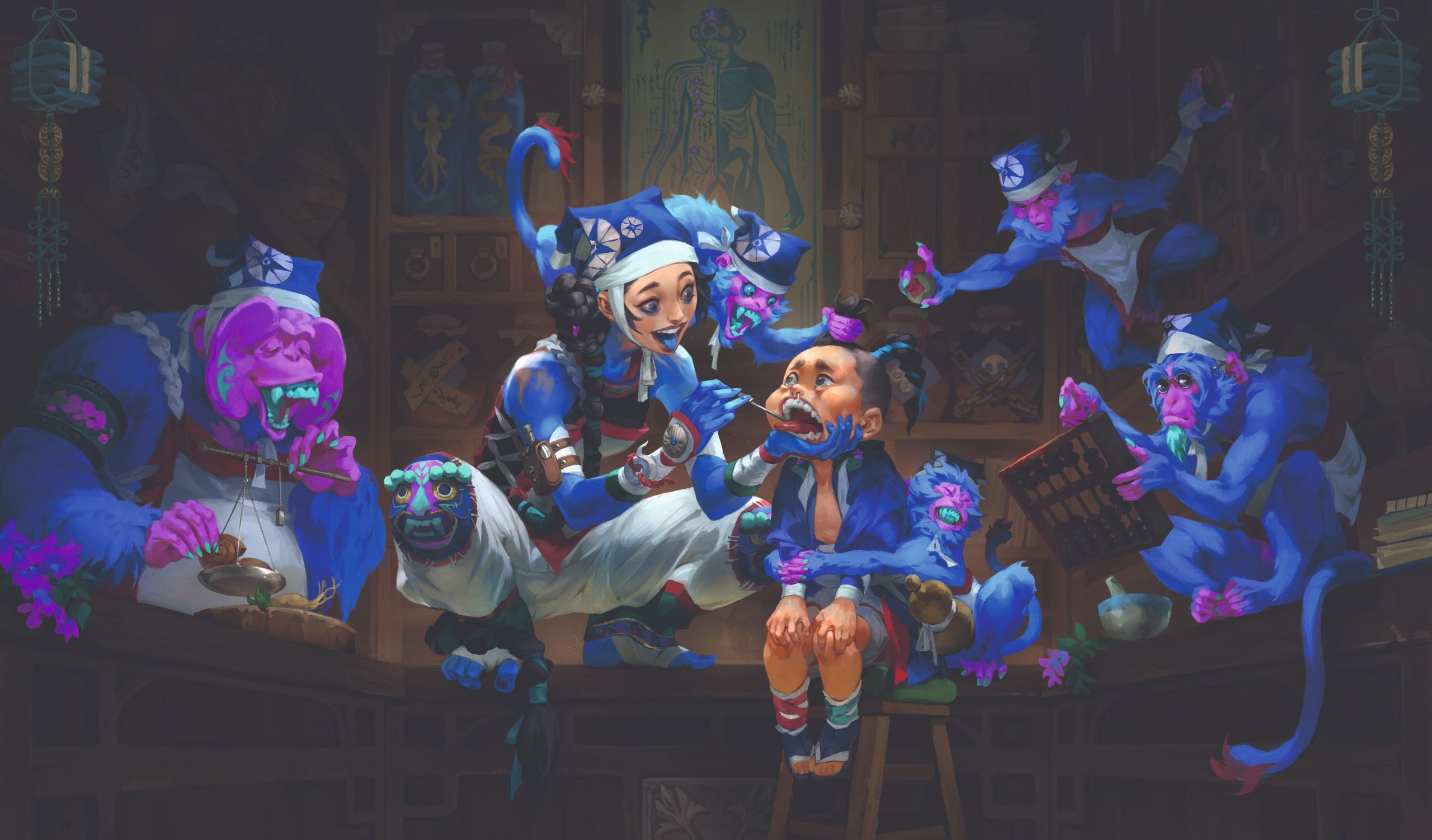
To avoid the overly grim or somber atmosphere often associated with traditional, shadowy apothecary settings, Huang intentionally introduced high contrast—not only in light and color, but in narrative tone. While the backdrop is dark, monochromatic, and heavy with history, the characters inhabiting the space bring energy, humor, and vibrant light to the canvas.
A key narrative anchor in the scene is the interaction between the patient and the apothecary staff. Huang infuses comedic storytelling into the scene through a nervous child being physically restrained by a monkey assistant during a doctor’s visit. This lighthearted moment grounds the fantastical elements in relatable human experience, immediately signaling to the viewer the personality of the characters and the chaotic charm of the doctor’s workshop.
01. Draft the composition
Every complex visual narrative begins with a foundational phase dedicated to exploration and structural planning. For Huang, the creation of a piece starts with rough preliminary sketches aimed at solving spatial and compositional challenges before committing to fine details. During this stage, the artist explores perspective, lighting arrangements, and character placements to establish a natural and intentional flow.
[Composition Sketch: Establishing spatial perspective, light placement, and initial character poses]In visual storytelling, composition serves as the invisible framework that directs the viewer’s eye across the image. Huang carefully arranges each element within the apothecary to ensure the environment feels lived-in while remaining readable. The positioning of furniture, hanging herbs, and laboratory apparatuses are mapped out to frame the central action rather than distract from it.
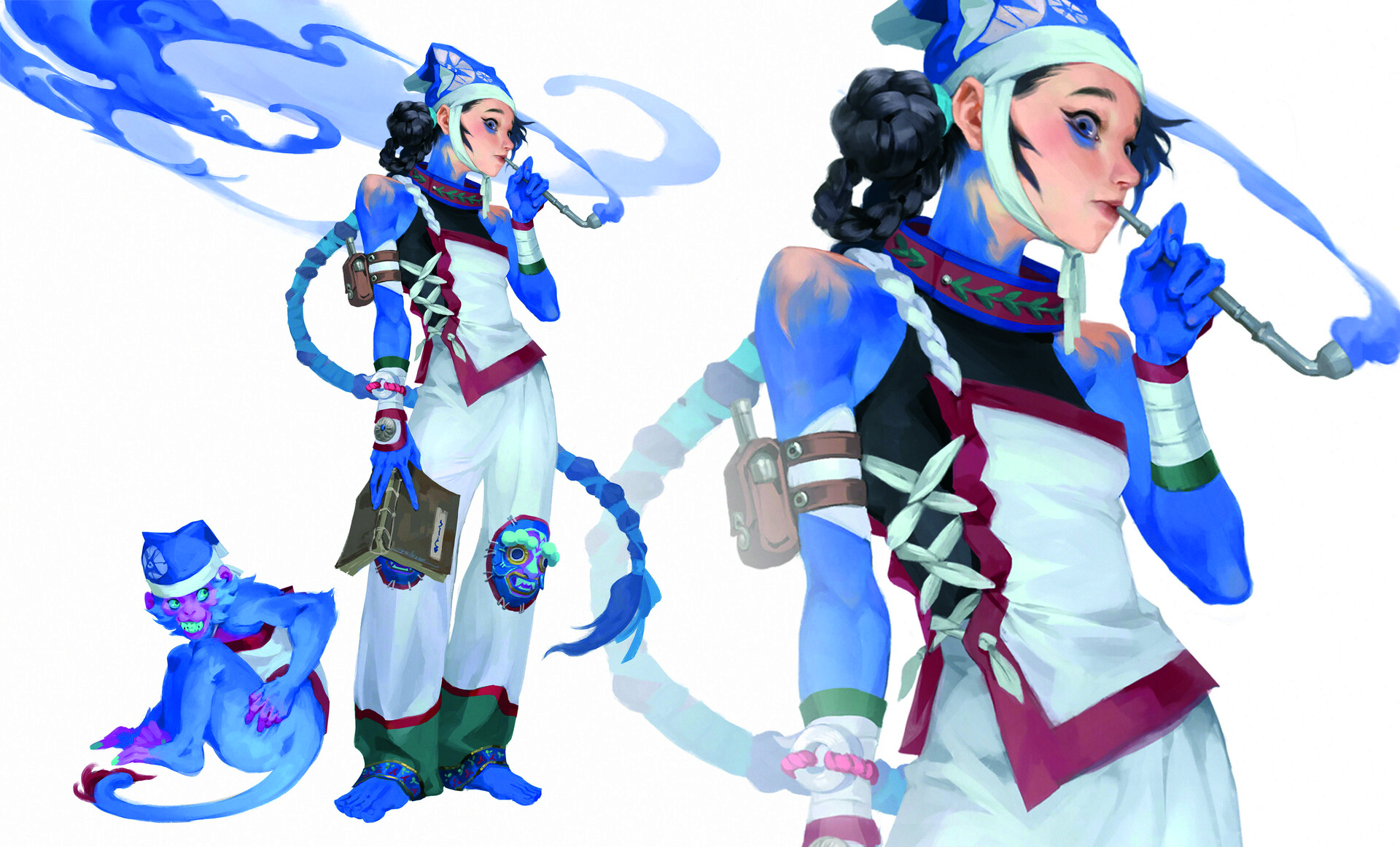
Storytelling relies heavily on clear gestures and expressive character posing. Huang places immense importance on capturing authentic body language, aiming to make the finished image feel like a captured frame from a film. The tension in the child’s posture, the assertive grip of the monkey nurse, and the absorbed, erratic focus of the doctor all work together to communicate the scene’s underlying narrative without requiring explanatory text.
02. Guide with colour
Once the structural composition is settled, color becomes the primary tool for directing narrative focus and establishing mood. In Blue Stained, color choices are made with strict discipline to prevent visual clutter and maintain clarity across a busy scene.
[Color Pass: Establishing color temperature, background tones, and focal light points]Huang employs a limited color palette that relies heavily on temperature and value contrasts. The environment is dominated by dark, warm brown tones derived from the wooden architecture and traditional apothecary drawers. Against this muted, earth-toned background, the artist introduces a striking, saturated blue—the defining signature element of the Blue Stained universe.
Color also establishes a clear visual hierarchy among the characters:
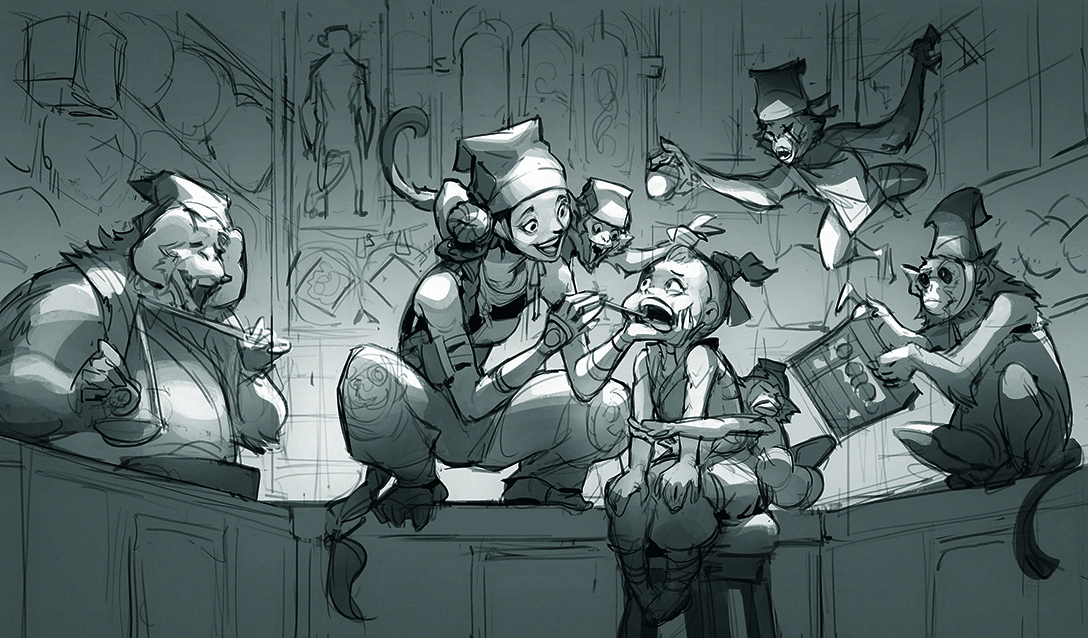
- Primary Focal Point: The doctor commands the highest visual priority. Huang assigns him brighter values and dresses him in dominant white fabrics, ensuring that he immediately catches the viewer’s eye even amidst complex surroundings.
- Secondary Focal Points: The frightened child patient and the monkey assistants serve as the supporting ensemble. They are tied together visually using a consistent secondary palette of blues and soft pinks, which group them into a cohesive narrative unit separate from the main doctor while reinforcing their shared interaction.
By limiting the overall palette and strategically distributing bright values, Huang ensures that the viewer’s eye moves naturally from the main protagonist to the secondary characters, and finally outward to the surrounding environmental details.
03. Balancing detail
The final phase of Huang’s workflow involves rendering, a stage where precision and restraint must work in tandem. A common pitfall in detailed concept art is over-rendering, which can flatten an image and overwhelm the viewer. To maintain structural balance, Huang regulates the density of detail across the canvas.
[Render Stage: Polishing central characters while simplifying environmental silhouettes]During rendering, Huang routinely converts the image to greyscale to evaluate its value structure. Checking the artwork without color allows the artist to verify that the lighting contrast remains strong, ensuring the figures stand out clearly from the background regardless of hue.
Detail is concentrated intentionally:
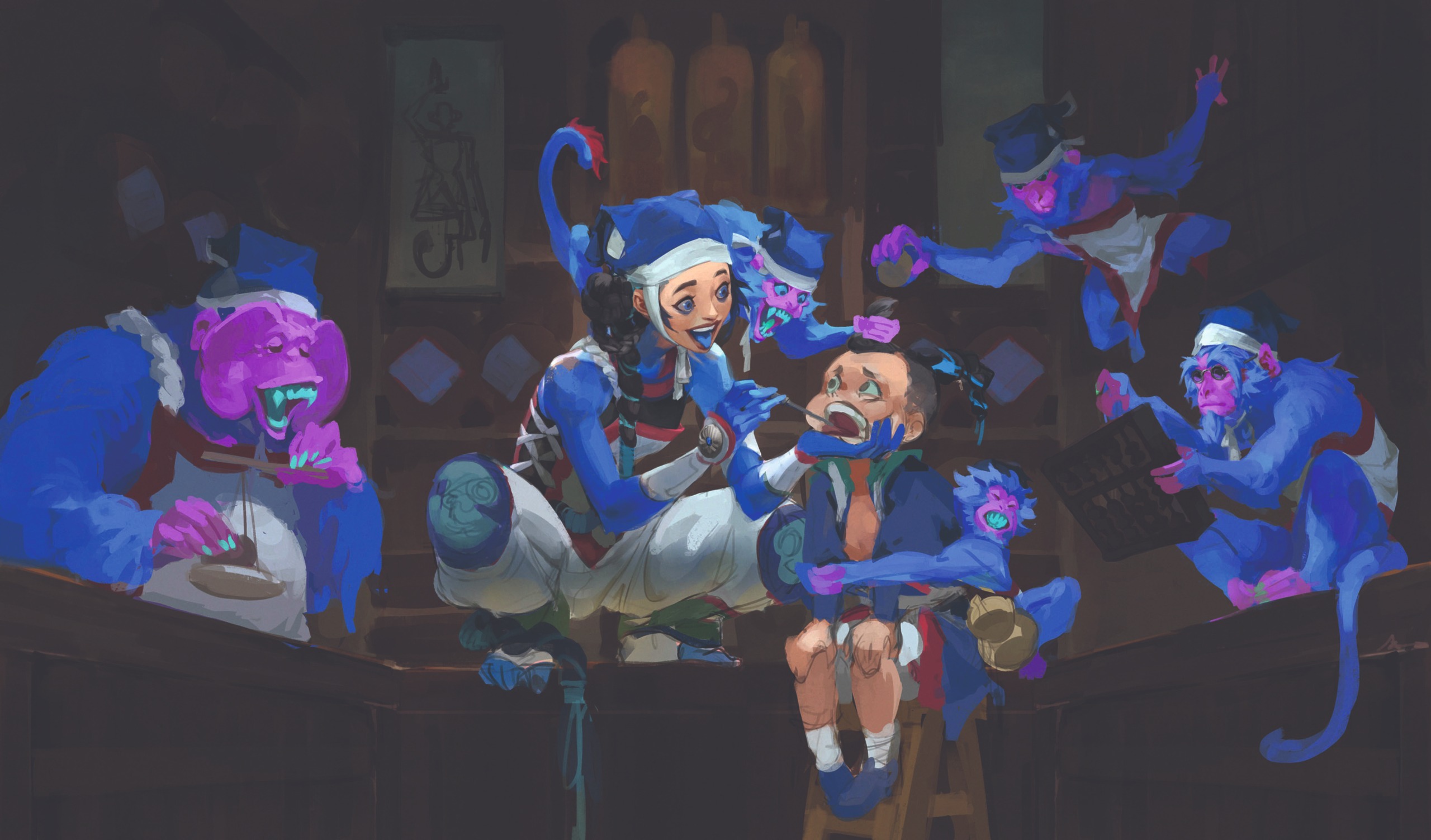
- Focal Character Density: The highest level of edge clarity, texture, and intricate detail is reserved for the main characters located at the center of the frame. The textures of the clothing, character expressions, and immediate props receive the fine polishing work.
- Background Simplification: Surrounding background elements, such as distant shelves, background vessels, and peripheral architecture, are systematically simplified. By turning distant props into softer shapes and silhouetted forms, Huang creates essential "breathing space" for the eyes, preserving the dominance of the main characters.
Tools and Industry Context
Huang’s structured methodology highlights the technical rigor underlying contemporary digital illustration and visual development work. Personal projects like Blue Stained serve as vital testing grounds where artists refine world-building concepts, test lighting techniques, and hone character design strategies for application in animation, games, and publishing.
Professional digital concept workflows rely heavily on dedicated hardware setups. Artists frequently utilize specialized drawing tablets and high-performance laptops designed for digital painting to handle high-resolution files, complex brush engines, and multi-layered visual files seamlessly.
The breakdown of Huang’s artistic methodology was originally published in ImagineFX, a publication dedicated to providing digital artists with detailed tutorials, professional insight, and creative inspiration. For digital creators seeking to expand their art toolkits, resources and updates are accessible through the Creative Bloq app available on iOS and Android platforms, alongside specialized buying guides for modern art hardware and digital painting accessories.
By combining structured compositional planning, controlled color theory, and intentional rendering restraint, Eilene Huang turns a simple concept—a mad doctor experimenting with magical blue plants—into a rich, believable snippet of a much larger world.