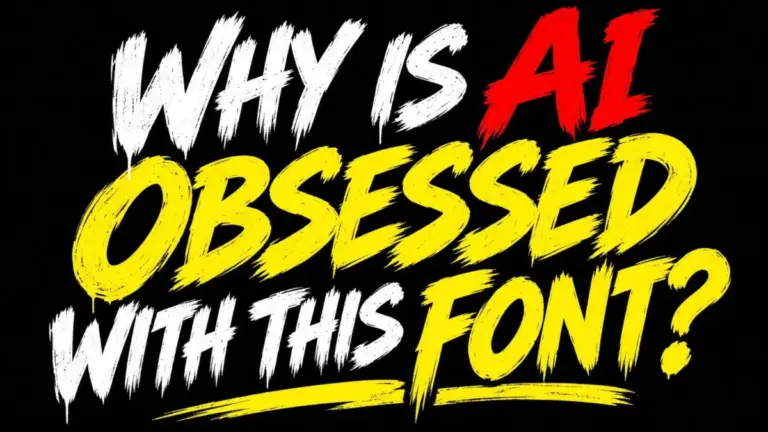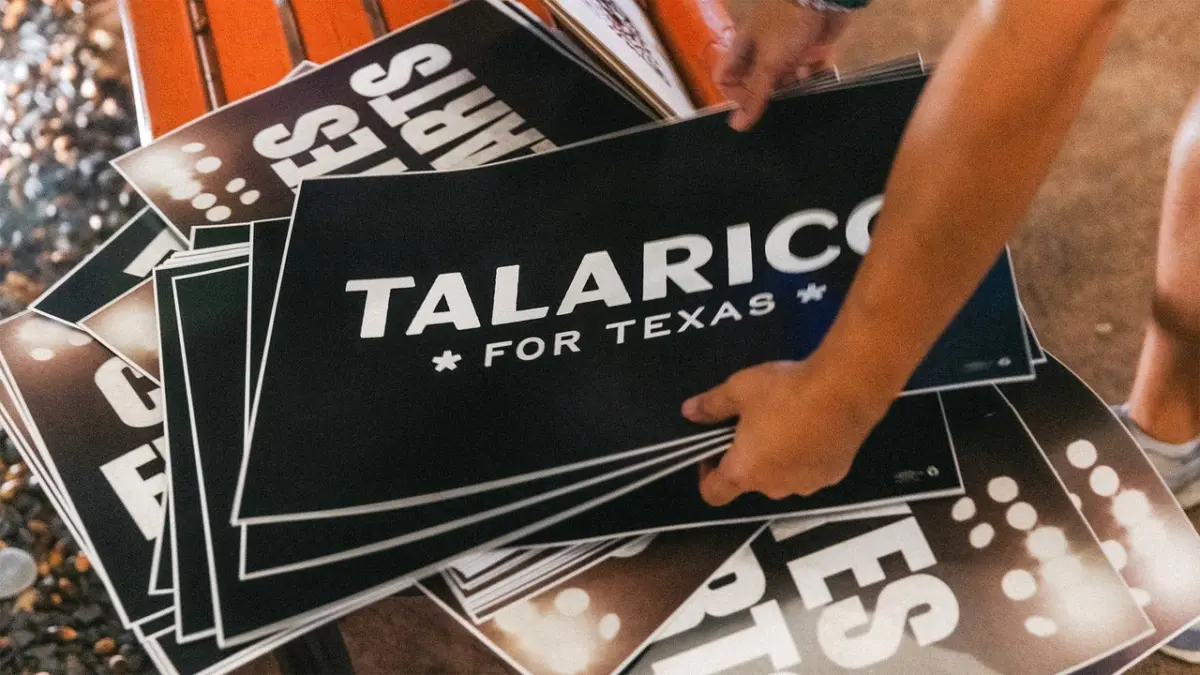
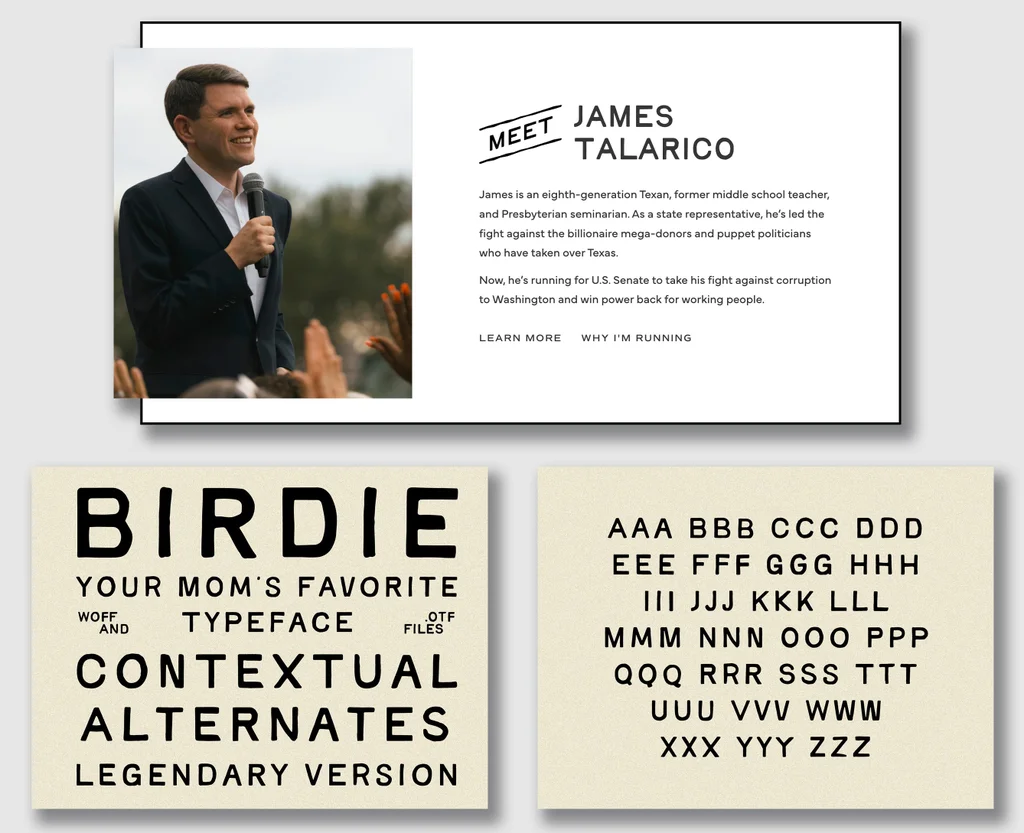
"A lot of what they were looking for was something that felt different," Glaze tells Fast Company. To meet this brief, the North Carolina-based designer drew inspiration from an unexpected source: the hand-painted signage traditionally found at Baptist churches. She deliberately engineered texture and imperfection into the typography, while substituting traditional patriotic symbols with asterisks styled to resemble decorative Texas stars. Although her team experimented with a variety of color palettes during the development phase, they continually returned to a stark black-and-white scheme. The reasoning was simple: it avoided any visual tether to the primary political parties.
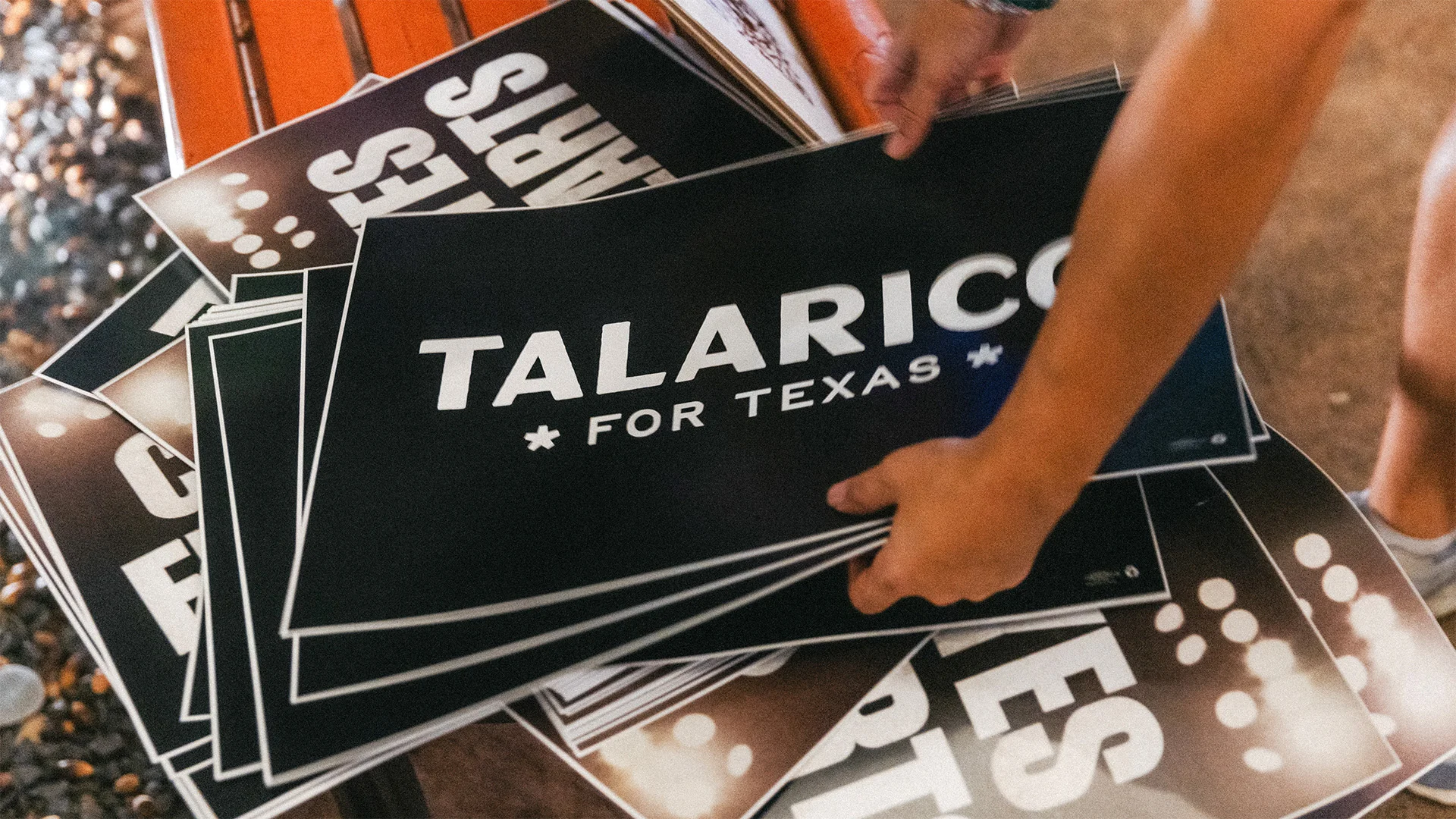
"I think for him, it was really about finding something that could be healing, more of a bridge builder, that when people saw it, they weren’t immediately jumping to a specific party," Glaze says.
While Talarico is a Democrat, his strategy is far from an isolated incident in contemporary American politics. Across midterm election cycles, candidates from across the political spectrum are increasingly turning to branding strategies that play down or actively obscure their party affiliations. There is good strategic reason for this shift. Recent polling from Gallup indicates that a record-high 45% of U.S. adults now self-identify as political independents. In an electoral climate defined by widespread public dissatisfaction with both major political parties and the executive branch, many candidates prefer to distance themselves from traditional party apparatuses. This discontent is manifesting visibly in modern political design, bleeding directly into logos, mailers, campaign websites, and broadcast advertisements.
For candidates who are actually running unaffiliated or as formal third-party independents, this broader cultural shift toward less partisan aesthetics has naturally led designers to integrate words like "independent" directly into campaign logos to signal authenticity. However, mainstream Democratic and Republican candidates are also finding creative ways to signal a break from their party labels.
This phenomenon is perhaps most starkly illustrated in the fiercely contested race for Iowa governor. Neither candidate’s official campaign website mentions their respective political party or President Donald Trump. Instead, both campaigns have converged on using green as their primary campaign color, accompanied by logos specifically designed to project a visual message of unity. The logo for Zach Lahn, a Republican candidate, prominently features the phrase "Iowa First." Meanwhile, his Democratic opponent, Rob Sand, utilizes a logo featuring a depiction of shaking hands positioned directly above the unifying tagline "Governor for All."