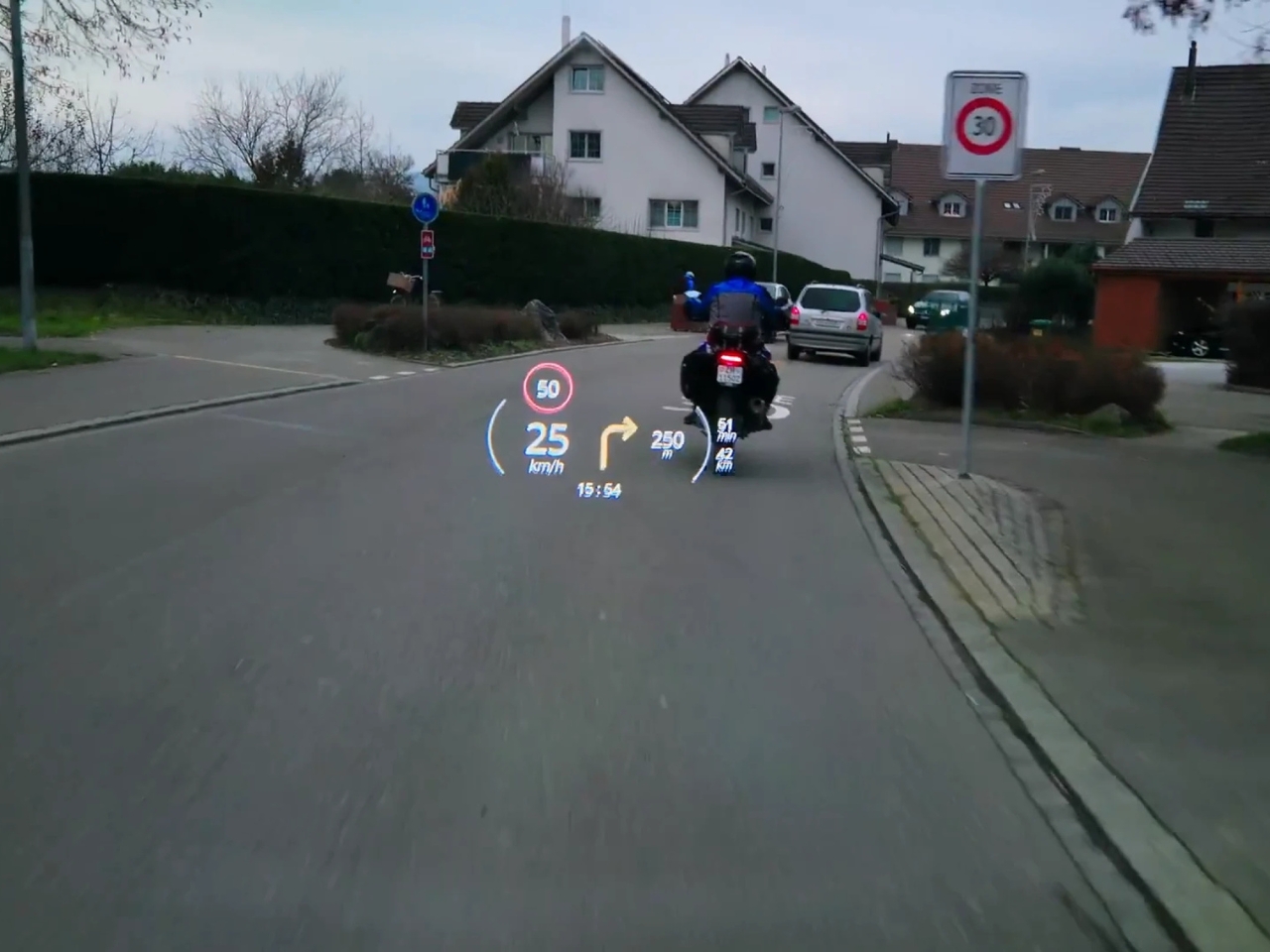
Moving speed limits, turn-by-turn directions, and critical navigation telemetry directly into the rider’s forward field of view is a sensible problem to tackle, and the company has officially moved past the conceptual stage. Consumer units of the Aegis Rider Vision helmet began shipping in supported markets, bringing advanced head-up display technology out of science fiction and onto real-world asphalt. However, the most fascinating engineering choice behind the Vision is not merely the inclusion of a transparent screen inside a helmet, but rather how that digital information behaves. Instead of acting like a traditional heads-up display that stays locked dead-center in front of the rider’s eyes no matter where they look, the projected information remains spatially anchored relative to the motorcycle itself. When a rider turns their head to check a blind spot or scan a scenic view, the interface gracefully moves out of their line of sight, ensuring that technology never actively obstructs the primary task of operating the motorcycle.

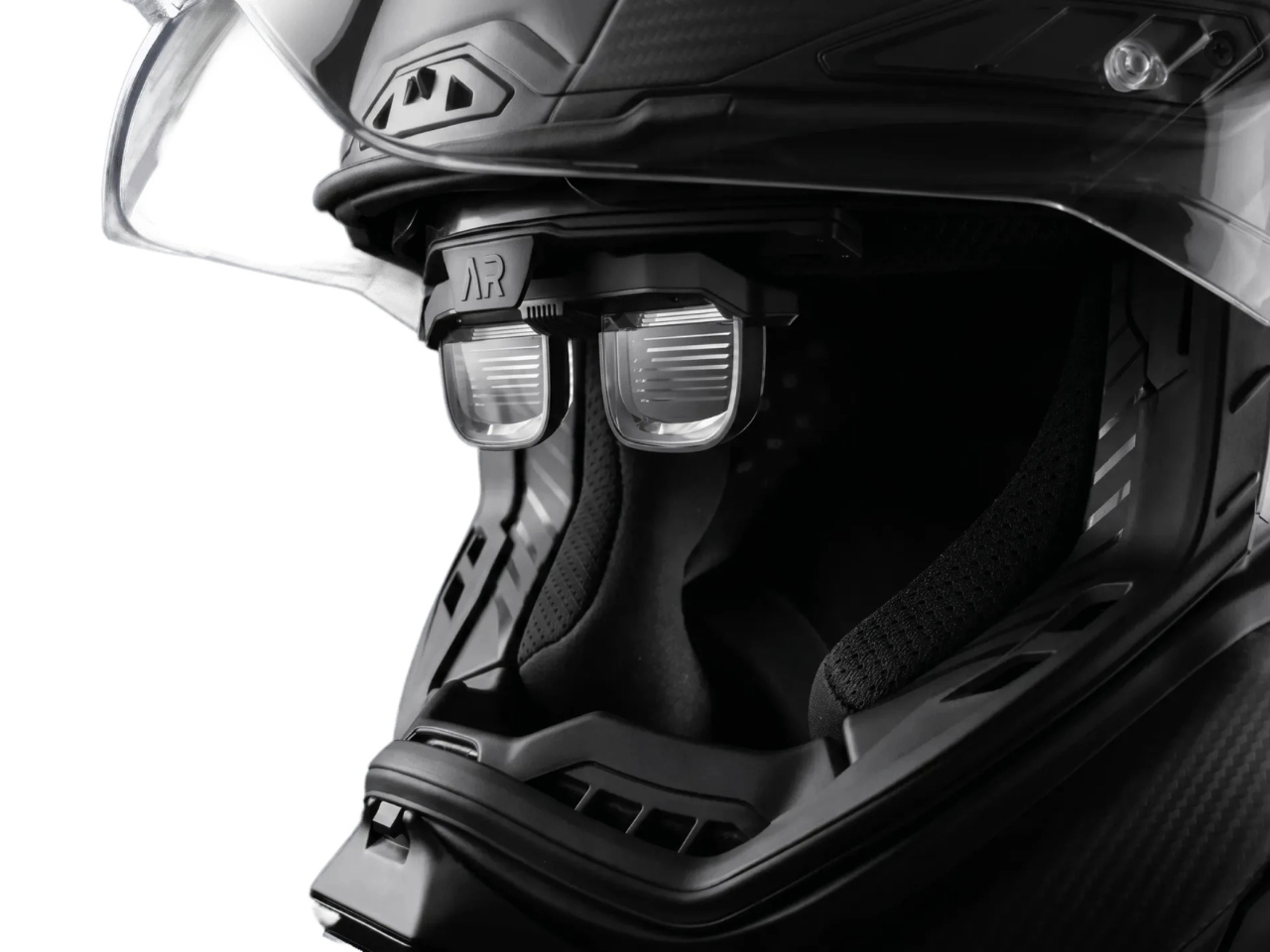
Physically, the Vision is built upon the robust carbon-shell Nexx X.WST3 platform, with all the complex internal electronics installed directly at Nexx’s manufacturing facility in Portugal. Inside the helmet, the display mechanism sits neatly behind the primary visor, presented in the form of a glasses-like module officially designated as AR Optics. In product showcases and official imagery, this module looks conspicuously similar to a second pair of lightweight spectacles nestled within the helmet interior. It attaches magnetically to the frame and delivers a crisp, see-through, 1080p high-definition image to each individual eye. According to specifications from Aegis Rider, most standard prescription glasses fit comfortably underneath the optics, though individuals with particularly bulky or thick frames may occasionally experience interference or fit issues.
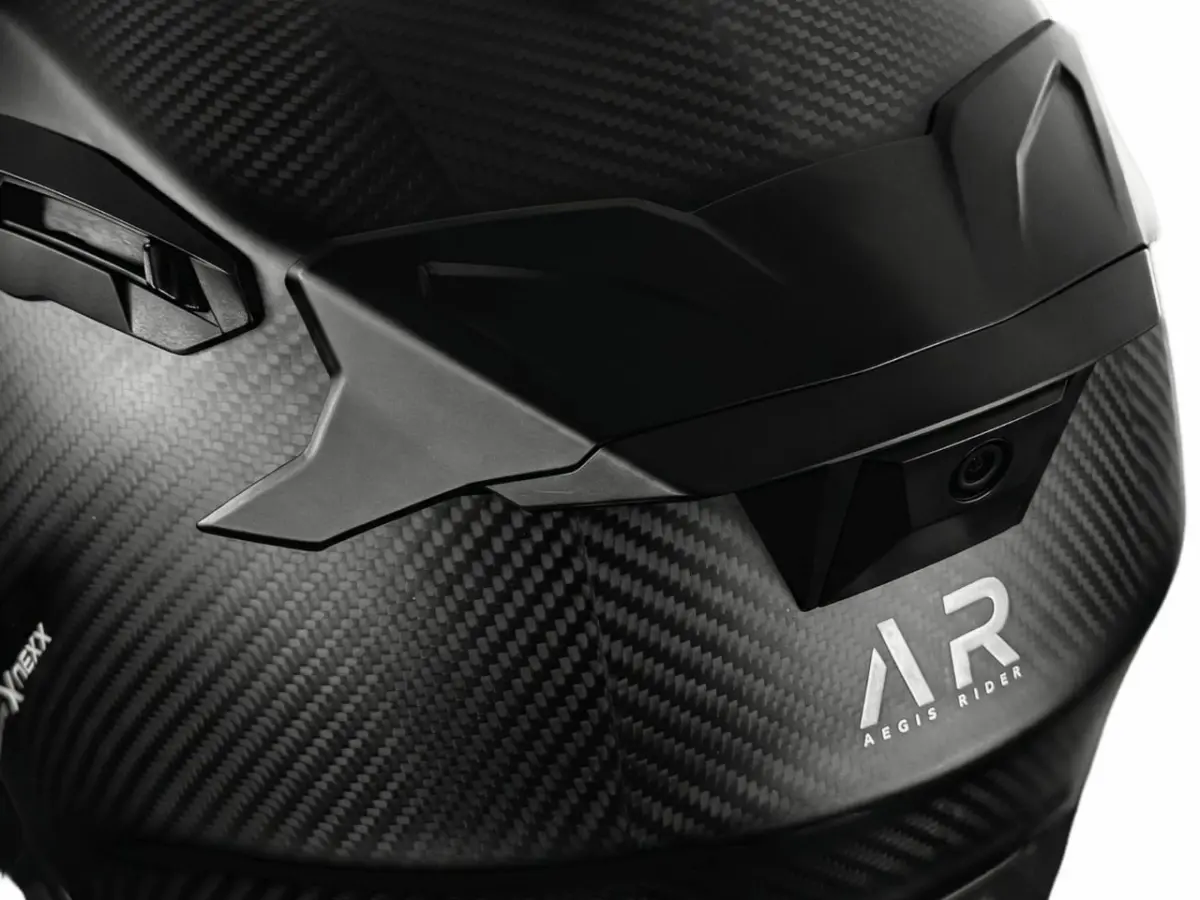
Achieving this level of sophisticated spatial tracking requires significantly more computational power and hardware than a standard GPS connection can provide. To make digital graphics stay precisely anchored in three-dimensional space while the vehicle moves, the Vision relies on a specialized tracking camera mounted discreetly in the chin area of the helmet. This camera constantly watches the body of the motorcycle, while internal sensors measure the independent movement and rotation of the helmet itself. Furthermore, a rigidly mounted smartphone supplies vital telemetry regarding the bike’s motion, speed, and exact position, though riders also have the option of utilizing an alternative, dedicated Pro-Box module to handle those intensive computing tasks. Together, these combined inputs allow the intelligent system to seamlessly distinguish between a rider casually turning their head to look at the scenery and the entire motorcycle leaning into a sweeping corner.
This distinction represents one of the most thoughtful design decisions in the entire product ecosystem. Rather than carrying a distracting, floating dashboard everywhere the rider casts their gaze, Aegis Rider restricts information to appear only when and where it is contextually relevant, such as a directional arrow popping up precisely at the upcoming corner. The system also gives riders the freedom to manually adjust the displayed information, tailoring the size, exact positioning, and apparent optical distance of the holographic display to suit personal preferences. For many riders, the initial instinct would understandably be to minimize clutter, keeping extraneous elements like incoming caller information and smartphone media controls well away from the crucial visual space directly ahead.
Yet, this seamless illusion reveals just how much intricate engineering goes into making the technology work behind the scenes. Each individual motorcycle requires a dedicated calibration ride lasting roughly ten minutes, followed by a subsequent data processing phase that can take up to two hours to complete. More importantly, the foundational spatial anchoring relies entirely on the chin-mounted camera having sufficient visibility of the motorcycle body. In conditions of very low ambient light or total darkness, Aegis Rider instructs riders to switch over to a designated Static Mode, which temporarily bypasses spatial tracking and fixes the information in a stationary position within their view. Consequently, the helmet’s signature augmented reality feature carries a meaningful and practical limitation during nighttime riding conditions.
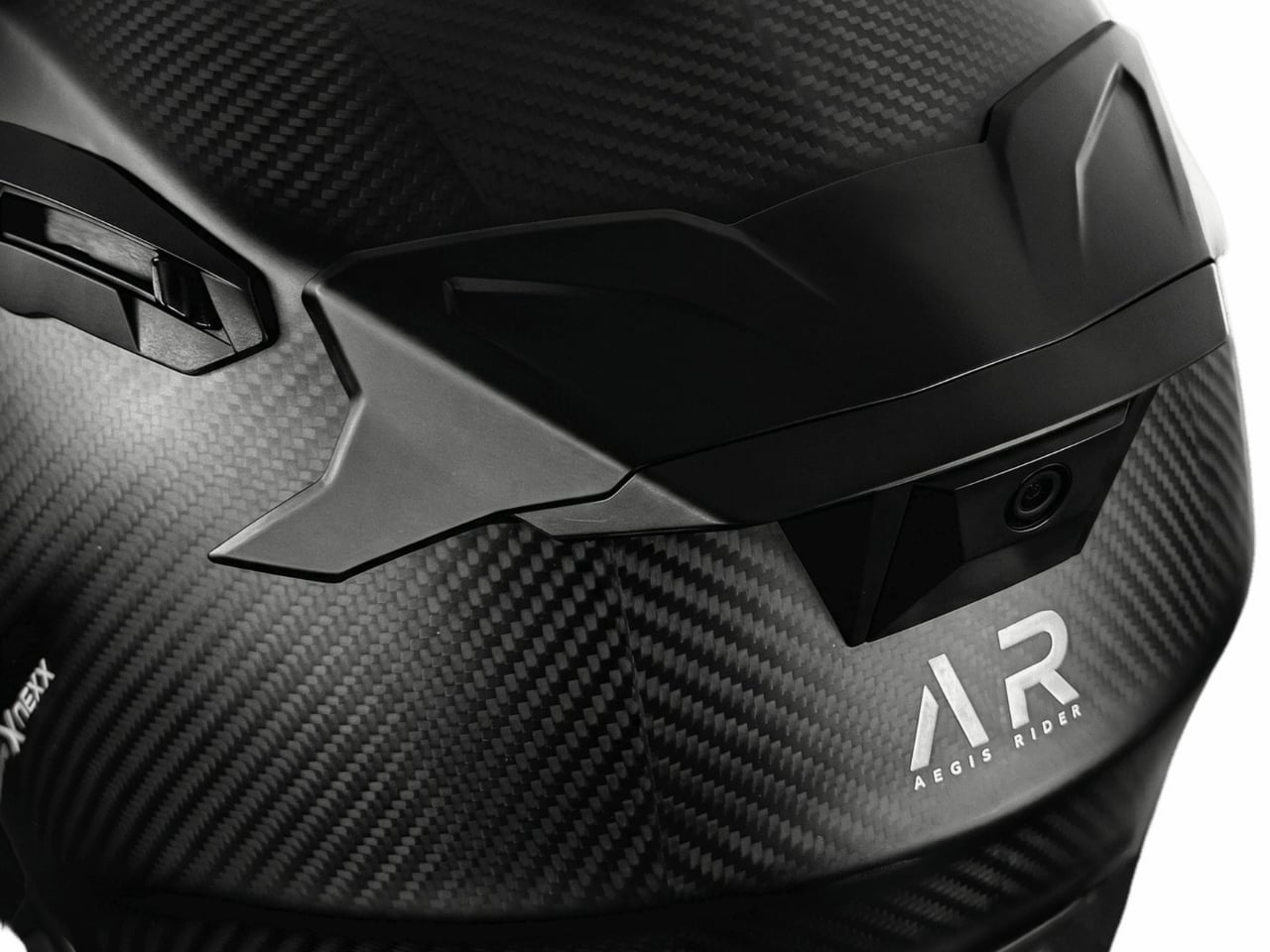
Then there is the physical hardware that the rider must comfortably support on their neck over the course of a long journey. The complete assembly—including the carbon-shell helmet, integrated electronics, and AR optics—weighs approximately 4.4 pounds. While a carbon fiber shell helps mitigate overall mass, this figure cannot be dismissed lightly, and individual fit, balance, and weight distribution will inevitably remain central factors in any purchasing decision. Aegis Rider estimates that the internal battery will deliver between four to six hours of continuous operation with the augmented reality system actively running, though riders have the convenience of utilizing USB-C charging while out on the road. For riders embarking on an extended cross-country tour, however, managing yet another power cable and charging routine is an extra logistical detail to consider.
Beyond its core augmented reality navigation, the Vision is heavily equipped with modern communications and recording hardware. It features built-in high-quality speakers, a dedicated microphone for clear communication, and a forward-facing camera capable of recording crisp 1080p video at 30 frames per second. The system includes 128GB of internal storage, which Aegis estimates is sufficient to hold approximately 20 hours of continuous riding footage. A rear-facing camera is also integrated into the overall physical design of the helmet, though advanced safety features like active blind-spot warnings remain actively in development. Prospective buyers are wise to assess the purchase based strictly on the functions and features available right now, rather than banking on planned future software updates to constitute today’s product value.
Priced at $1,999 for the complete helmet and the included AR Optics module as listed on the company’s United States-facing website, the finer regulatory and safety details carry considerable weight. Official safety documentation provided by the manufacturer notes that attaching the proprietary AR Optics module creates a structural configuration that falls outside the scope of the helmet’s standard ECE 22.06 safety approval. Furthermore, that European homologation does not automatically establish formal DOT compliance for riders in North America, meaning prospective buyers should independently verify regional regulatory compliance rather than making assumptions based on the base helmet’s certification.
The Aegis Rider Vision commands attention because its most compelling philosophy is one of digital restraint: utilizing technology that deliberately allows information to leave the field of view the moment you turn away. Even so, riders will naturally demand rigorous, real-world testing of optical visibility, spatial tracking reliability, and everyday comfort before embracing it as the ultimate riding companion. Seeing a precise navigational cue appear exactly where it needs to be at the correct corner is an undeniably appealing prospect, but earning a permanent place directly between a rider’s eyes and the open road requires far more than an impressive marketing demonstration.