For the better part of a decade, the global automotive industry has been largely defined by a quiet, pervasive homogenisation. Cookie-cutter shapes, identikit silhouettes, and an influx of conservative styling choices—compounded by the emergence of uniform copycat models—have made the modern car market remarkably bland. To the casual observer, navigating a parking lot has increasingly felt like scanning a monochromatic sea of indistinguishable crossovers and aerodynamically optimized electric eggs, differentiated only by their metallic paint or badge.
Yet, a palpable shift has been underway in recent times, breaking the monotony that has gripped the four-wheeled world. Off the back of major international industry showcases, most notably the Mondial de l’Auto—the Paris Motor Show—a glut of inspiring, daring, and narrative-shifting new designs has burst onto the scene. The collective output from major design studios across Europe and the United States suggests a fundamental pivot: we may finally be entering a brave new era of automotive eye candy.
The revival of character in car design is not merely a superficial styling exercise; it represents a deeper reimagining of how vehicles communicate emotion, heritage, and technological ambition. For years, stringent safety regulations, aerodynamic efficiencies required for maximizing electric vehicle range, and globalized manufacturing platforms forced designers into a narrow corridor of acceptable shapes. Today, however, manufacturers are discovering that electrification and modern engineering can actually liberate form rather than restrict it, allowing heritage brands to dig deep into their archives while forward-thinking upstarts push the boundaries of what a car can physically do.
No brand embodies this blend of technological audacity and theatrical showmanship quite like Tesla. The American electric vehicle manufacturer recently grabbed headlines with its long-mooted new Roadster, a machine that pushes the envelope of automotive performance by incorporating capabilities that sound more science fiction than street-legal reality. Capable of performing short hops, leaps, and dramatic mid-air maneuvers, the new Roadster demonstrates that whatever critics might say about the company’s eccentric leadership and unpredictable delivery timelines, the firm remains peerless when it comes to putting on a show and turning out remarkable motors that rewrite the rules of engagement.
The aesthetic of the new Tesla Roadster draws heavily from the pioneering wedge-shaped design language of the 1970s. Its razor-sharp lines and futuristic stance bring to mind legendary Italian coachbuilt icons such as the Lamborghini Miura penned by Bertone, alongside the submersible Lotus Esprit famously piloted by James Bond in The Spy Who Loved Me. Coming nearly twenty years after the company introduced its original, pioneering pocket-rocket Roadster, this latest iteration proves that Tesla can still successfully establish a powerful new benchmark for the industry to chase.
On the opposite shores of the Atlantic, European heritage manufacturers have been hard at work reasserting their cultural identities, breathing fresh life into their respective design legacies by looking backward to move forward. France, in particular, has leaned into its trademark brand of idiosyncratic design, utilizing concept vehicles to test the waters for future production models. Under the broad umbrella of the Renault group, two striking concept cars have captured the imagination of critics and enthusiasts alike.
The new Alpine 310 Vision concept directly reanimates the spirit of the original A310, a brutalist masterpiece of styling from 1971 that holds the distinction of being the final production model conceived by the brand’s visionary founder, Jean Rédélé. With its muscular stance and uncompromising geometric forms, the 310 Vision serves as a compelling blueprint for how a high-performance electric sports car should look in the current decade, proving that battery-powered vehicles do not need to look sterile to be aerodynamically efficient.
Complementing the Alpine is the Renault 8 Gordini Concept, an all-electric two-seater that builds thoughtfully upon the beloved 1964 model of the same name. This vehicle continues a rich, ongoing institutional seam of work at Renault that is aesthetically rear-gazing yet technologically future-facing, bridging the emotional gap between the golden eras of motoring and the digital age of zero-emission mobility.
Perhaps the most culturally significant and commercially disruptive project to emerge from France, however, is Citroën’s ambitious reboot of its legendary 2CV. This modern reimagining drags the quintessential Gallic classic from its 1948 origins firmly into the modern day by converting it into an accessible, fully electric urban runabout. While its playful proportions might evoke comparisons to a children’s toy model of France’s greatest motoring export, the real headline is its projected price point. Mooted to start at approximately €15,000, the modern electric 2CV has the potential to completely break the mould for electric-vehicle pricing, ushering in a new era of mass consumption and equitable urban mobility akin to the transformative social impact created by its historic forebear.
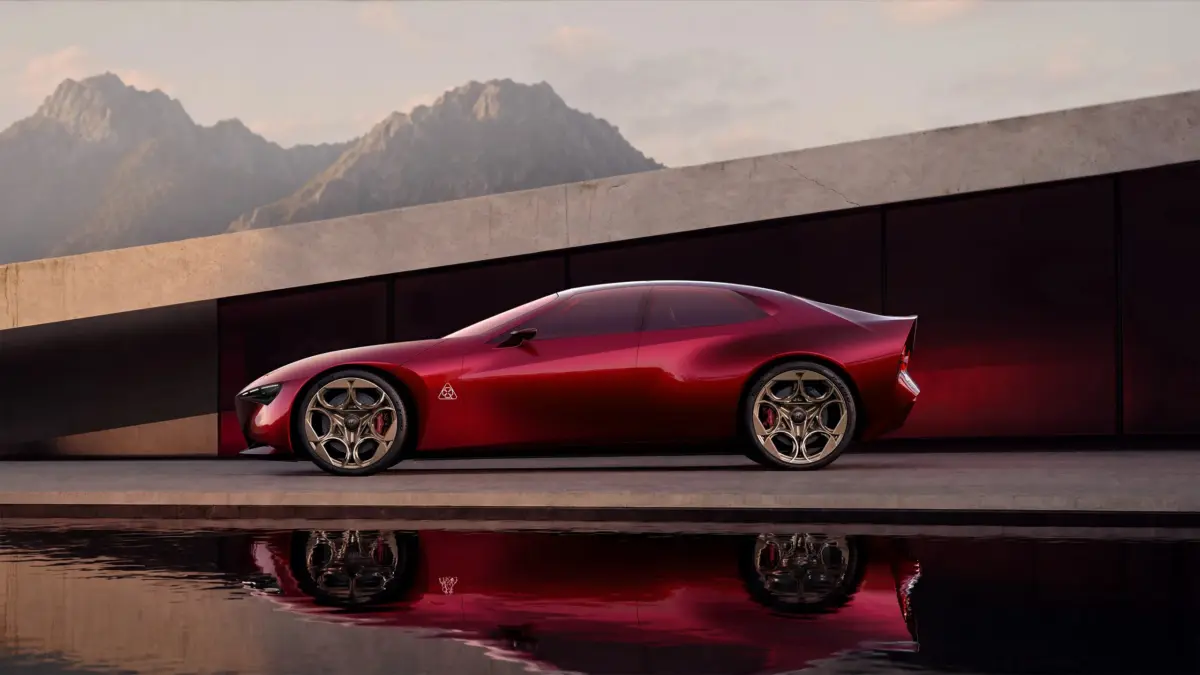
Not to be outdone by their neighbours across the Alps and the Pyrenees, Italian manufacturers have contributed their own share of breathtaking additions to the global garage. Alfa Romeo has introduced the sumptuous Cuorerosso—a name which happily retains its poetic mystique when translated into English as "Red Heart," avoiding the occasionally clunky nomenclature of past models. The sleek, four-seater coupé remains firmly at the concept stage for now, but it serves as a masterclass in embodying Alfa Romeo’s foundational design philosophy of bellezza necessaria, or necessary beauty. It captures the visceral romance that has defined Milanese coachbuilding for generations while packaging it for a sophisticated, contemporary audience.
An honorable mention must also go to Porsche, whose Mission S concept injects a fresh dose of unmistakable charisma into the Stuttgart manufacturer’s overarching visual language. By refining its classic proportions for the electric era, Porsche continues to demonstrate that sporting heritage can evolve without losing its soul. Meanwhile, Jaguar’s striking, mega-bonneted Type 01 has officially transitioned from distant teaser to a fully realized public presence, easily earning a permanent spot in contemporary design conversations. Boasting proportions and a silhouette that refuse to blend into the background, the Type 01 is unmistakably unique—a bold statement piece that guarantees enthusiasts will still be debating its merits half a century from now.
For years, it was an industry running joke that people with little interest in automotive design could only ever differentiate cars by their paint colour. Yet, until recently, the reality that monotone shades and homogenized shapes had become the primary identifying factors in a streetscape dominated by uninspired crossovers wasn’t actually that far off the mark.
Thankfully, the automotive landscape is undergoing a much-needed renaissance. As the industry forges ahead, drivers and enthusiasts alike will soon require far more than a simple Pantone swatch to distinguish between the bold new visions reshaping our roads.