For years, Starbucks poured billions of dollars into solving a very specific operational puzzle: how to make buying coffee as fast and frictionless as possible. The global coffee giant heavily invested in mobile ordering capabilities, streamlined digital rewards programs, and completely redesigned its store layouts to accommodate bustling crowds of customers rushing in to pick up pre-ordered drinks. The overarching corporate philosophy was centered on throughput—getting people in, getting their beverages into their hands, and getting them back out the door with maximum efficiency.
However, in pursuit of operational speed and digital convenience, the company made a strategic miscalculation that may have ultimately cost it far more than management initially realized. In optimizing purely for transaction speed, Starbucks largely forgot why millions of customers wanted to walk through its doors in the first place.
Now, under the leadership of CEO Brian Niccol, Starbucks is embarking on a massive, billion-dollar course correction to restore the very elements it spent years systematically eliminating. While the overhaul includes bringing back comfortable furniture and expanded seating options, the deeper ambition is to resurrect the core emotional appeal that originally defined the Starbucks brand. This initiative forms a cornerstone of Niccol’s sweeping "Back to Starbucks" turnaround strategy, and early indicators suggest the market and consumers are responding.
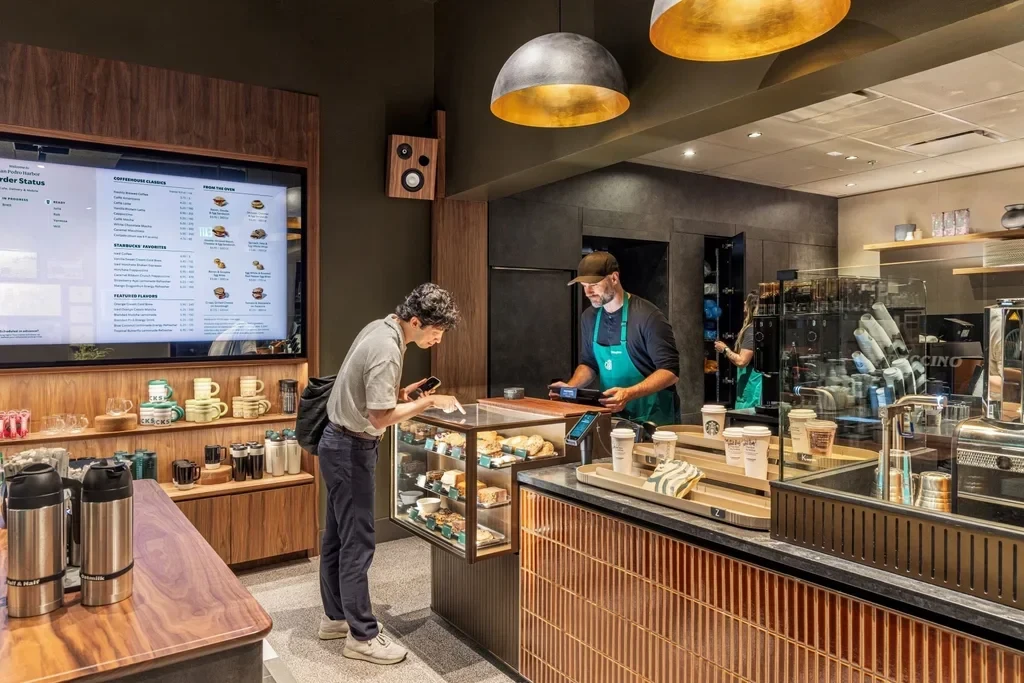
The latest evidence of this shift materialized with the unveiling of a new store design concept. On the surface, the physical changes appear relatively modest. The company announced it will experiment with smaller-format coffeehouses featuring shorter service counters, more compact food display units, and adaptable seating arrangements. This flexible architectural approach allows Starbucks to plant its flag in urban and neighborhood locations that might otherwise lack the square footage for traditional stores, all while attempting to preserve the distinctive atmosphere customers associate with the brand.
At its heart, this design evolution is not merely an exercise in spatial efficiency or downscaling. Instead, it represents a concerted effort to ensure smaller footprints still authentically feel like Starbucks.
Starbucks Forgot What Made It Special
There was a distinct era in modern retail when Starbucks functioned as much more than a convenient pitstop for a caffeinated beverage. It was envisioned and embraced as a destination where people could carve out time in their busy schedules. Customers could gather to catch up with a friend, open their laptops to work on projects, or sink into a well-worn armchair to read a book for an afternoon.
Starbucks famously popularized the sociological concept of the "third place"—the idealized social environment separate from home ("first place") and the workplace ("second place") where community members could organically gather, linger, and connect. This philosophy was the bedrock of the company’s cultural dominance throughout the late 20th and early 21st centuries.
Of course, Starbucks concurrently evolved into one of the most commercially successful restaurant chains in history precisely because it mastered the mechanics of consumer convenience. The company deliberately built brick-and-mortar locations on seemingly every accessible corner. The introduction of the Starbucks mobile application revolutionized the customer journey, enabling patrons to pre-order and bypass physical queues entirely.
For commuters rushing to catch a train, professionals racing against morning deadlines, or individuals juggling packed schedules, this digital infrastructure was undeniably valuable. Moreover, these digital-first and grab-and-go capabilities proved vital during the COVID-19 pandemic, when public health mandates and safety concerns temporarily made lingering inside retail spaces entirely unviable.
The underlying challenge, however, was that Starbucks gradually allowed these crisis-era adaptations and efficiency-driven frameworks to dictate its long-term architectural and operational identity. The company increasingly optimized its physical environments around the narrow assumption that consumers wanted nothing more than rapid caffeine delivery. In doing so, it inadvertently stripped away the experiential warmth and community-focused atmosphere that had built its legendary brand equity, leaving many regular patrons feeling alienated by transactional, sterile spaces that prioritized speed over human connection.