“If the problem looks bad, trust me, we haven’t seen the worst of it yet.”
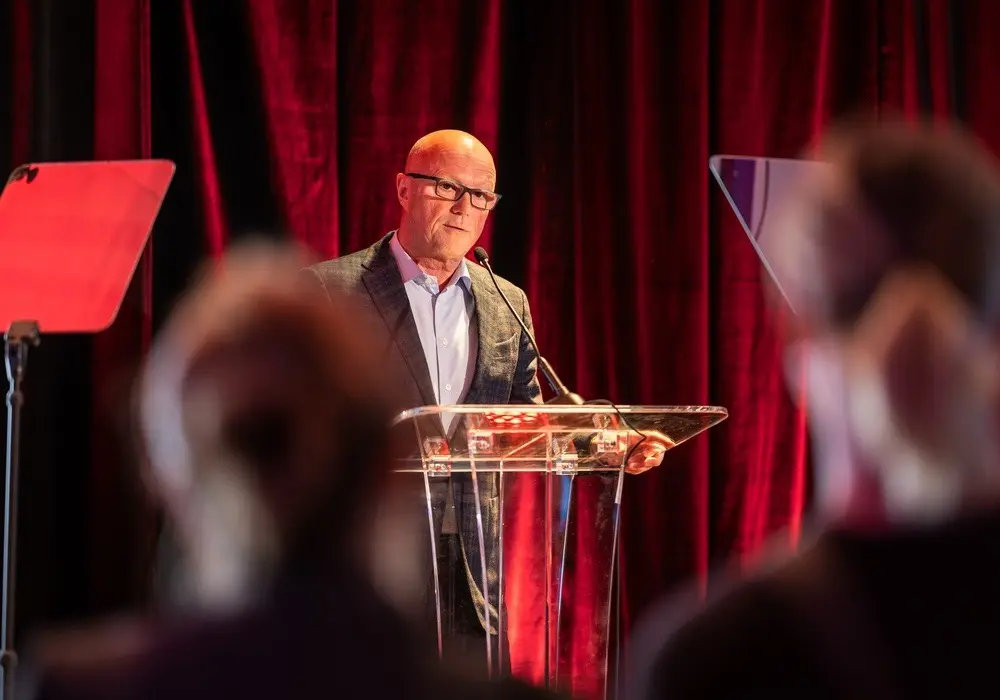
That stark warning came from Patrik Frisk, CEO of French materials regeneration company Reju. Speaking to industry leaders at a reception held at the Vancouver Art Gallery during the Textile Exchange conference last month, Frisk brought attention to a looming crisis that the global fashion industry has yet to fully confront: the ultimate destination of the billions of garments it manufactures and sells each year.
This challenge is compounded by compounding pressures on the ground. Across North America and Europe, textile collectors, sorters, and recyclers are currently buckling under the exponential rise of cheap, low-quality garments flooding the market. The volume has surged to such an extent that market selling prices can no longer cover the basic operational costs of sorting and processing. As a result, the entire traditional post-consumer textile handling system finds itself on the verge of a complete and irrevocable breakdown, turning what Frisk describes as the “waste gap” into an ever-widening chasm.
“The tide gets bigger every year,” Frisk told the gathered audience, emphasizing the urgency of systemic intervention. “If we wait for it before we start to build some sort of a seawall, we’ll probably be too late.”
On Tuesday, Reju revealed that it has officially begun laying the foundational stones for its own version of that seawall. Alongside recent announcements regarding full-scale textile-to-textile recycling facilities planned or developing in Sittard-Geleen, Netherlands; Rochester, New York; and the Lacq basin in France, the company has forged strategic partnerships with six prominent international mills. These collaborations are designed to accelerate the integration of Reju’s regenerated polyester into the broader, global textile supply chain. The partner mills include A. Sampaio, RDD Textiles, Swisstex Direct, Tintex Textiles, FOV Fabrics, and Utenos Trikotazas.
Each of these selected mills brings a distinct operational specialty and geographical advantage to the table. Based in Portugal, A. Sampaio specializes in advanced circular knitted fabrics. Swisstex Direct operates facilities in both Los Angeles and El Salvador, offering a diverse array of sustainable, natural, and synthetic fibers. In Sweden, FOV Fabrics provides full vertical integration across its high-tech woven production facilities. Meanwhile, Utenos Trikotazas brings more than 50 years of accumulated textile manufacturing experience from Lithuania. Rounding out the group are Tintex Textiles and RDD Textiles, both also located in Portugal, which hold vital certifications for recycled-content traceability and rigorous environmental compliance.
According to Frisk, this diverse network of partners grants Reju immediate access to the necessary manufacturing capabilities required to transition regenerated polyester from an experimental raw material into finished, market-ready fabric at the commercial scale required by the industry. Expanding upon his maritime metaphor, every mill selected by Reju adds another critical stone to its growing circular textile bulwark. As plans for Reju’s future Regeneration Hub network continue to expand—with the company targeting roughly 20 industrial-scale “megafactories” worldwide by the year 2034—so too will the company’s ability to deliver consistent, high-quality regenerated polyester that downstream manufacturers and fashion brands can reliably build upon.
“The gap isn’t technology, and it certainly isn’t good intention,” Frisk said, pointing out that the scientific and engineering hurdles of recycling are largely being solved. “It’s a system: collection, sorting, recycling, and demand, built at scale with economics that work for everyone in it.”
Yet, Frisk was quick to note that Reju cannot build and sustain this infrastructure alone. The necessary demand or market “pull” must originate from every stakeholder along the supply chain, with apparel brands bearing the greatest responsibility.
“We’ve lined up everything else: the engineering, the capital, the sites, the partners,” he said, delivering a direct pitch to the industry audience. “There is one piece missing, and that’s most of you. So I’m not here asking for a purchase order. Absolutely not. What I’m asking you to do is just simply sit down and listen, and take a seat in a system that’s being built for you. That’s all I’m asking, because you’re the ones held responsible for the end of life of products you can’t control on your own.”
He paused for a moment before leaving the audience with a final, sobering question: “How ready are we to serve the tsunami?”