Across the corporate world, executive suites are rushing to deploy artificial intelligence, pouring millions into enterprise licenses and demanding immediate productivity gains. Yet, to seasoned digital transformation experts, the current corporate scramble feels less like a forward-looking strategy and more like a repeating historical blunder.
Reflecting on the current state of artificial intelligence adoption, digital strategist Paul Boag observes that the way many organizations are rolling out AI borders on the absurd. The central tragedy of the modern AI revolution, Boag points out, is that the corporate world has already lived through this exact operational breakdown a decade ago.
Back in 2014, Boag authored Digital Adaptation, a book published by Smashing Magazine that documented the systematic missteps companies made during the height of digital transformation. Looking at today’s corporate AI rush, the parallels are striking. Organizations are once again falling into the trap of treating a fundamental shift in workplace culture as a simple technology upgrade. By revisiting the hard-learned lessons of the digital transformation era, leadership teams can identify why their current AI strategies are failing and how to chart a more human-centered path forward.
It’s About People, Not Technology
Both digital transformation and artificial intelligence are undeniably powered by sophisticated technological breakthroughs. Implementing them obviously requires technical infrastructure. However, focusing solely on the software is mistaking the tip of the iceberg for the entire structure beneath the surface.
During the digital transformation boom of the 2010s, corporate IT departments eagerly deployed enterprise Content Management Systems (CMS), Customer Relationship Management (CRM) platforms, and internal portals. On the customer-facing side, businesses poured resources into bespoke applications, websites, and algorithmic personalization. Yet, amidst this rush of procurement, enterprise leaders systematically ignored how human beings would actually interact with these platforms. Internal tools remained overly complex and counterintuitive, while end customers often ignored the newly built features because their actual needs had been overlooked.
A near-identical dynamic is playing out with artificial intelligence today. Driven by intense industry hype, executive leadership teams purchase company-wide licenses for tools like Microsoft Copilot Studio, mandate a brief generic training module, and consider the deployment complete.
This surface-level rollout leaves employees stranded. Staff members are provided powerful, unfamiliar tools and subjected to immense corporate pressure to deliver immediate results, yet they are given no meaningful context on how to integrate the software into their daily workflows.
This modern breakdown is even more severe than the digital transition of 2014 because of the acute human anxieties surrounding AI. Unlike past software updates, employees today face widespread anxiety that these new tools are designed to replace their jobs. When senior management pushes technology without addressing these fundamental fears, generic reassuring memos do little to relieve workplace tension or encourage genuine adoption.
Why Would Staff Want To Adopt AI?
To understand why corporate AI rollouts are stalling, leadership must examine the situation from the perspective of their employees. As it stands, frontline workers often perceive very little personal benefit in adopting AI tools, even setting aside fear of job displacement.
The primary driver for executive enthusiasm surrounding artificial intelligence is productivity—enabling staff to produce a higher volume of output in less time. However, increased institutional productivity rarely translates into direct benefits for the individual worker. Under standard corporate structures, employees who use AI to work faster are not granted shorter working hours, nor are they automatically offered higher compensation. Instead, they remain tied to their standard hours while being expected to process a significantly higher workload.
Before demanding widespread adoption, organizations must first address a fundamental operational question: what is the actual motivation for the staff to change how they work?
A effective starting point is helping employees identify the tedious, repetitive tasks they dislike most about their daily roles. Demonstrating how AI can relieve administrative burdens transforms the technology from a threat into a practical tool for workplace improvement. Employees prove far more receptive to technological change when it directly enhances their day-to-day work environment.
Beyond reducing daily friction, forward-thinking organizations must establish tangible incentives. Meaningful adoption requires aligning AI usage with clear career progression, performance compensation, or restructured, shorter working hours that return saved time back to the employee.
Staff Need Time And Support To Adopt AI
Integrating artificial intelligence into a professional routine is not an overnight task. It requires employees to question and rebuild procedural knowledge—the ingrained habits, shortcuts, and operational practices built up over years or even decades of professional experience. Dismantling and reconstructing these workflows requires substantial cognitive effort.
Asking employees to rebuild their working methods is difficult under optimal conditions, but modern corporate environments are rarely optimal. Most staff members operate in high-pressure roles, struggling daily to manage overwhelming task lists. They simply do not possess the spare time to pause, learn a complex new platform, and experiment with how it might fit into their daily responsibilities.
Superficial training sessions are insufficient for meaningful transformation. Sending employees to a single generalized seminar will not enable them to unlock the real capabilities of advanced tools. Staff members require training tailored specifically to their distinct functional responsibilities. Specialized disciplines—such as User Experience (UX) research and design—require deeply tailored instruction to understand how generative tools apply to their unique workflows.
Formal, role-specific educational programs are essential, but the most impactful support mechanism within any corporate shift comes from peer-to-peer engagement. Rather than focusing initial change management efforts on overcoming resistant employees, organizations achieve far better results by empowering early internal adopters.
Nearly every workplace contains a small group of enthusiastic employees who are already exploring AI tools independently. Organizations should identify these grassroots champions, offering them the dedicated time and space to collaborate and demonstrate their breakthroughs to their teams.
This dynamic mirrors successful strategies from the digital transformation era, where internal showcases and colleague-led presentations proved far more persuasive than executive directives. Workers are substantially more inclined to adopt new working methods when they observe peers in similar roles achieving tangible success through those tools. Utilizing social proof and peer enthusiasm allows adoption to spread organically across departments.
It Needs To Be Safe To Fail
A major structural barrier to AI adoption is the prevailing corporate culture of fear surrounding errors. In many traditional environments, making a mistake is viewed as a sign of incompetence. However, mastering an emerging technology inherently requires experimentation, trial, and initial failure.
This systemic issue heavily plagued the digital transformation era. Executive leadership frequently demanded rapid digital modernization while simultaneously punishing the inevitable mistakes that occurred along the way. Management sent deeply contradictory signals by demanding innovation while maintaining rigid Key Performance Indicators (KPIs) and holding traditional performance reviews that penalized operational disruptions.
Today, this friction has intensified. Employees across various industries report being publicly reprimanded for exceeding software token allocations just weeks after being ordered to integrate AI into their work. In other instances, staff are overwhelmed by restrictive operational guidelines, leaving them terrified of making a compliance error. Faced with such risks, employees logically determine that sticking to traditional, non-AI working methods is the safest strategy for job security.
If corporate leadership genuinely desires widespread AI integration, it must actively create an environment where experimentation is safe. Management must adjust rigid KPIs, revise annual performance review criteria, and temporarily relax non-critical governance structures to afford employees the operational breathing room required to learn.
Handle Governance With Care
The need for psychological safety does not imply that enterprise AI can be deployed in a total regulatory vacuum. Oversight is necessary to protect organizational integrity and data security. However, corporate governance historically tends to swing between two damaging extremes: a total absence of guidance, or a dense wall of bureaucratic restriction that completely stifles innovation.
When staff members are confronted with lengthy manuals detailing endless restrictions on what they cannot do, the resulting fear causes paralysis. It becomes far easier for an employee to ignore the technology entirely than to risk violating complex compliance mandates.
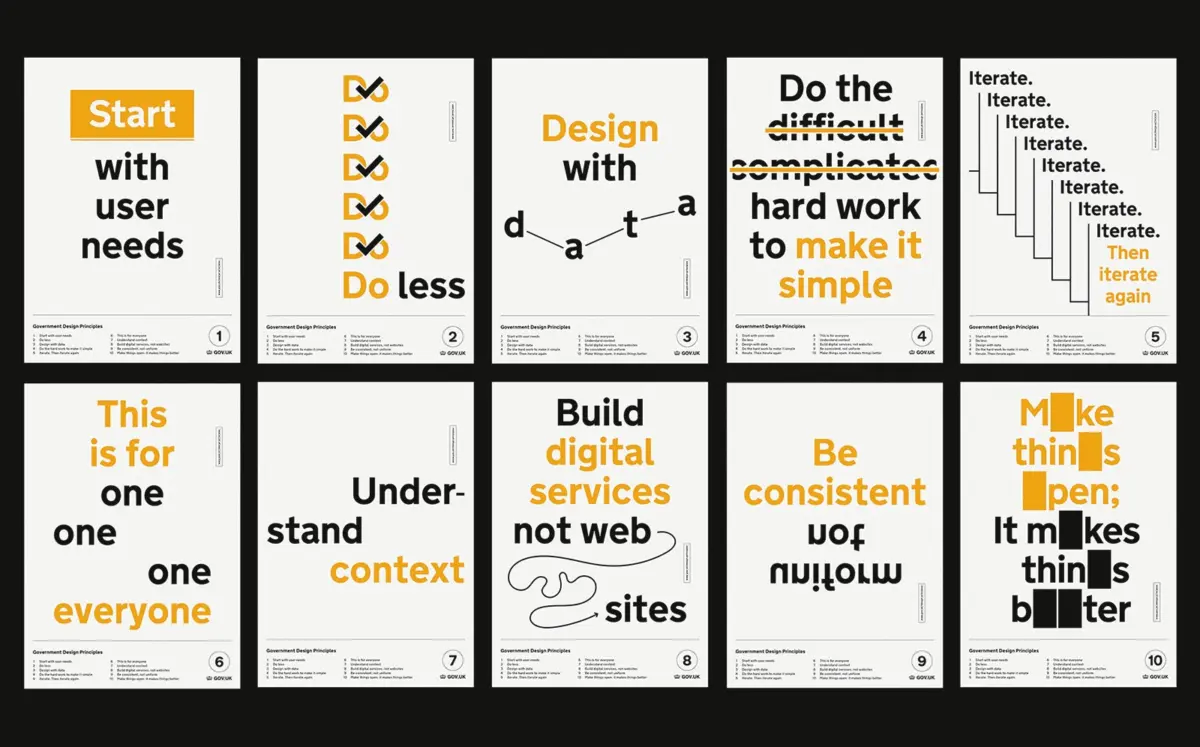
Instead of heavy-handed rulebooks, management should establish a clear, concise set of foundational principles that can fit onto a single page or poster. This approach mirrors successful public sector frameworks, such as the digital design principles pioneered by GOV.UK. Providing short, high-level guidelines offers clear operational guardrails while demonstrating fundamental trust in employees’ professional judgment.

Leaders must accept that minor mistakes will occur during the adoption process. Occasional missteps are an inevitable cost of organizational evolution, and leadership must design rollout strategies that absorb these minor errors rather than punishing the individuals who make them.
Adaptive Technological Rollout
The technical strategies executed by IT departments frequently impede adoption by failing to accommodate practical work realities. During the digital transformation era, overstretched IT teams routinely selected a single, standardized tech stack and enforced it company-wide with minimal consultation. Any team needing specialized software had to navigate slow steering committees, leading to a glacial pace of change that derailed countless projects.
Today, organizations are repeating this pattern by selecting a single enterprise tool—such as standard Copilot deployments—and asserting that the company’s AI needs are fully met.
Consider the experience of specialized teams, such as corporate UX departments. In many instances, enthusiastic user research teams want to leverage AI to build advanced research repositories or generate detailed user personas. However, standard enterprise tools often lack the functional flexibility required to execute these complex tasks. When teams attempt to gain approval for specialized alternative software, their initiatives are routinely stalled by AI steering committees. As bureaucratic delays drag on, initial enthusiasm vanishes, replaced by disengagement.
Furthermore, overly restrictive IT environments inevitably trigger the growth of "Shadow AI." Just as employees during the digital transformation era used personal accounts on cloud storage platforms like Dropbox or Google Docs to bypass corporate IT bottlenecks, modern workers are privately using personal ChatGPT or Claude accounts on personal smartphones and laptops to complete their daily tasks.
Shadow AI poses severe data security risks. Sensitive corporate data is uploaded to unmonitored external platforms with no security oversight, audit trail, or enterprise control. In an attempt to eliminate risk through strict technological lock-downs, organizations unintentionally push operational risk completely out of sight.
Cracking down on Shadow AI through punitive policies, web filters, and disciplinary threats rarely succeeds; it merely drives the behavior deeper underground. Management must recognize that Shadow AI is a diagnostic symptom highlighting where official enterprise tools fail to meet functional employee needs.
Rather than attempting to suppress shadow usage, organizations should study it. Leadership should engage in open dialogue with staff to identify which personal tools are being used and what specific functional gaps they address. These insights should directly inform future software procurement.
While managing a diverse software ecosystem presents real technical challenges, leadership must tolerate a degree of initial complexity while employees explore the boundaries of the technology. IT policy can gradually standardize and secure the tech stack as clear, proven use cases emerge across departments.
A Dangerous Time
For many traditional executives, shifting toward a decentralized, human-focused AI strategy feels uncomfortably risky. The instinct to maintain central control, enforce rigid oversight, and strictly minimize short-term errors is deeply ingrained in corporate leadership.
Yet, in a rapidly evolving technological landscape, the risk of moving too slowly due to institutional friction is far greater than the risk of moving quickly through controlled experimentation.
The greatest danger facing organizations today is treating artificial intelligence as a pure technology initiative while ignoring the human elements of adoption. Successful AI integration is fundamentally an exercise in culture, incentives, psychological safety, and change management. Until leadership teams apply the hard lessons learned from the digital transformation era, their modern AI investments will continue to yield frustration rather than real operational progress.