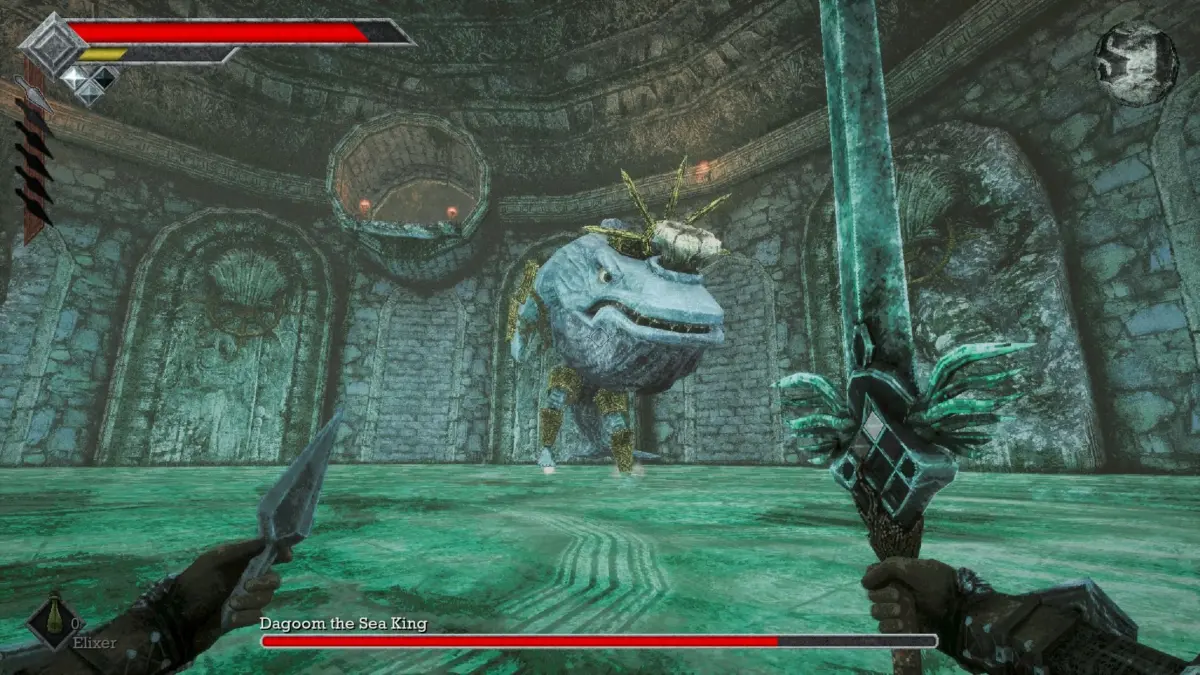
The landscape of indie role-playing games has seen a significant surge in interest surrounding first-person dungeon crawlers inspired by classic dark fantasy titles. Among this growing wave, games attempting to recapture the atmospheric essence of early FromSoftware projects—specifically the King’s Field series that predates their modern soulsborne phenomenon—have become increasingly common on digital storefronts. While many titles in this niche struggle to separate themselves from a rapidly crowding market, Queen’s Domain, developed by Freshly Baked Games and launched on Steam on October 30, manages to carve out a distinct identity of its own.
For players who sampled the early demo released prior to the game’s full debut, the initial hours might feel somewhat familiar. The transition from the preview build into the full release, however, quickly reveals that the demo chose to cut off precisely right before the core mechanics of the adventure open up in dramatic fashion. Five hours into an experience expected to span upwards of thirty hours or more, Queen’s Domain has swiftly established itself as one of the standout releases of the year within its genre, offering a depth of design that rewards perseverance past its deceptively grounded opening.
In its initial presentation, the game shares clear DNA with fellow genre standouts like Lunacid. It relies on fantastic art direction, a memorable and immersive musical score, and a careful mastery of nostalgic intangibles—ranging from the design of menus and user interfaces to specific sound cues that evoke a bygone era of PC and console role-playing games. Yet, the game operates on a deliberate pacing curve that initially keeps the player’s boots firmly planted on the ground, establishing a heavy, calculated sense of movement reminiscent of classic first-person titles where verticality is strictly limited.

Everything changes, however, upon defeating the first major boss encounter. The reward for this victory is the acquisition of a holy sword named Endu, equipped with a magic-infused airdash capability that fundamentally alters the nature of the entire experience.
Once players are equipped with Endu, the opening areas of the game transform into a complex, clockwork-like network of vertical pathways and hidden routes. The level design begins to evoke the intricate verticality found in high-end raid environments, where secret passages blend seamlessly into the surrounding dark fantasy architecture. Discovering these hidden corridors gives the distinct and exhilarating sensation of sequence breaking, turning previously restricted spaces into high-speed transit zones.
The traversal mechanics deepen further as players progress through the world and uncover special gems designed to upgrade Endu. Each upgrade grants an additional dash while airborne, compounding the freedom of movement and allowing players to streak across expansive maps without ever touching the ground. This system mirrors the satisfying progression loops found in classic metroidvania design, where acquiring a new mobility tool completely recontextualizes older areas of the map and invites extensive, rewarding backtracking.

Beyond mobility, the arsenal available in Queen’s Domain encourages diverse experimentation rather than rigid character builds tied to traditional statistical level-ups. Weapons evolve organically through active use rather than through the allocation of points upon gaining experience levels. Players can hotkey a maximum of three weapons at a time, creating customizable loadouts that lean closer to immersive sims like BioShock or the System Shock Remake than traditional action RPGs.
One notable alternative to the primary airdash sword is the Caestus, a fast-attacking blunt weapon familiar to veterans of dark fantasy action games. While exceptionally useful against enemies resistant to slashing damage, its special attack functions as a powerful uppercut that launches the player character into the air. This ability serves a dual purpose, acting both as a devastating offensive maneuver in combat and as an effective substitute for a double jump, enabling access to high-altitude secrets and treasures that consistently reward inquisitive exploration.
Navigating this demanding early game requires patience, as the deliberate, grounded movement of the opening half-hour has been known to catch some players off guard. Much like the feeling of vulnerability before acquiring essential mobility upgrades in genre touchstones like Hollow Knight, the contrast between pre-Endu and post-Endu gameplay makes the eventual acquisition of aerial freedom feel all the more earned. This stark transition ensures that players fully appreciate the weight of their newfound capabilities once the world truly opens up.
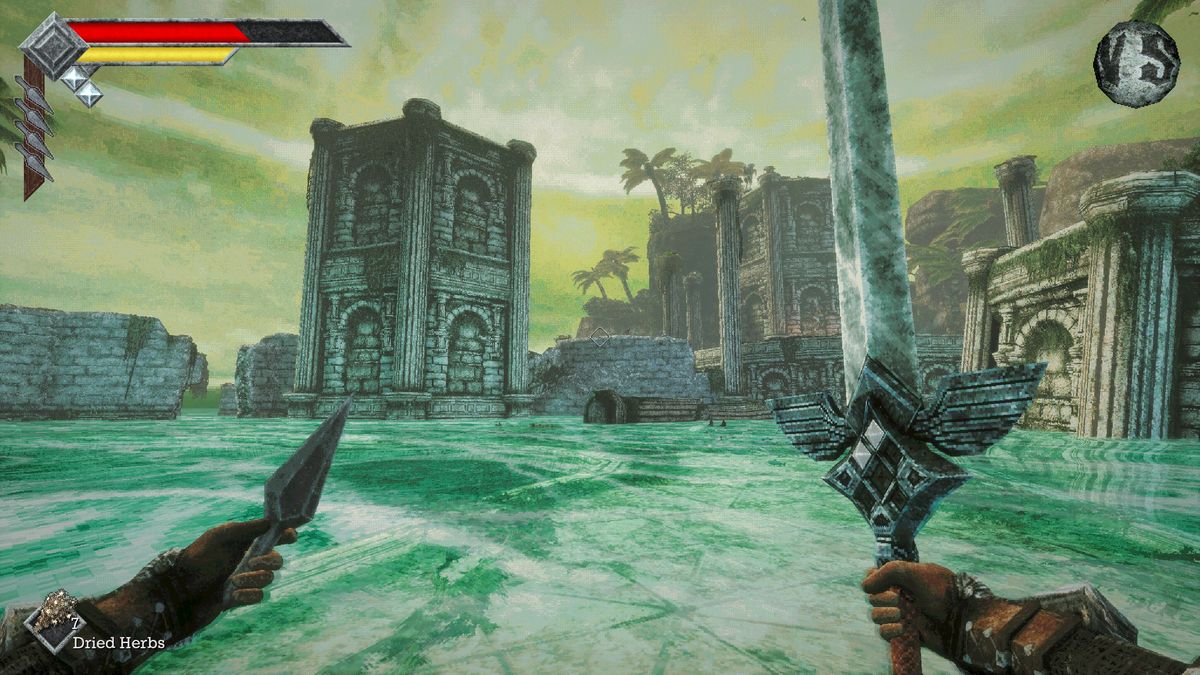
The scope and atmosphere of Queen’s Domain invite strong comparisons to classic first-person adventures, most notably Nintendo’s seminal Metroid Prime. The cryptic atmosphere, breathtaking vistas, and unique approach to first-person movement and level design share a clear lineage with the iconic sci-fi exploration game. While backtracking is an inevitable component of the journey, the clever layout of the world suggests that navigating back through previously visited regions will remain engaging rather than tedious.
Currently available on Steam for a launch price of $17, down from its standard MSRP of $20, Queen’s Domain stands as a remarkably ambitious project for fans of classic exploration and dark fantasy role-playing games. As players dive deeper into its expansive world and uncover the full extent of its arsenal and vertical design, the title continues to prove that there is still plenty of room for innovation within the first-person dungeon-crawling subgenre.