Across the geography of ancient Mesopotamia, the legendary lamassu figures traditionally assumed the majestic form of a winged goddess, a human-headed giant bull, or a powerful lion. In the culture of the ancient Assyrian Empire, these monumental celestial beings served as sacred protectors, painstakingly carved by ancient artisans at a massive scale to ward off malevolent forces and safeguard the entrances of sprawling cities and royal palaces.
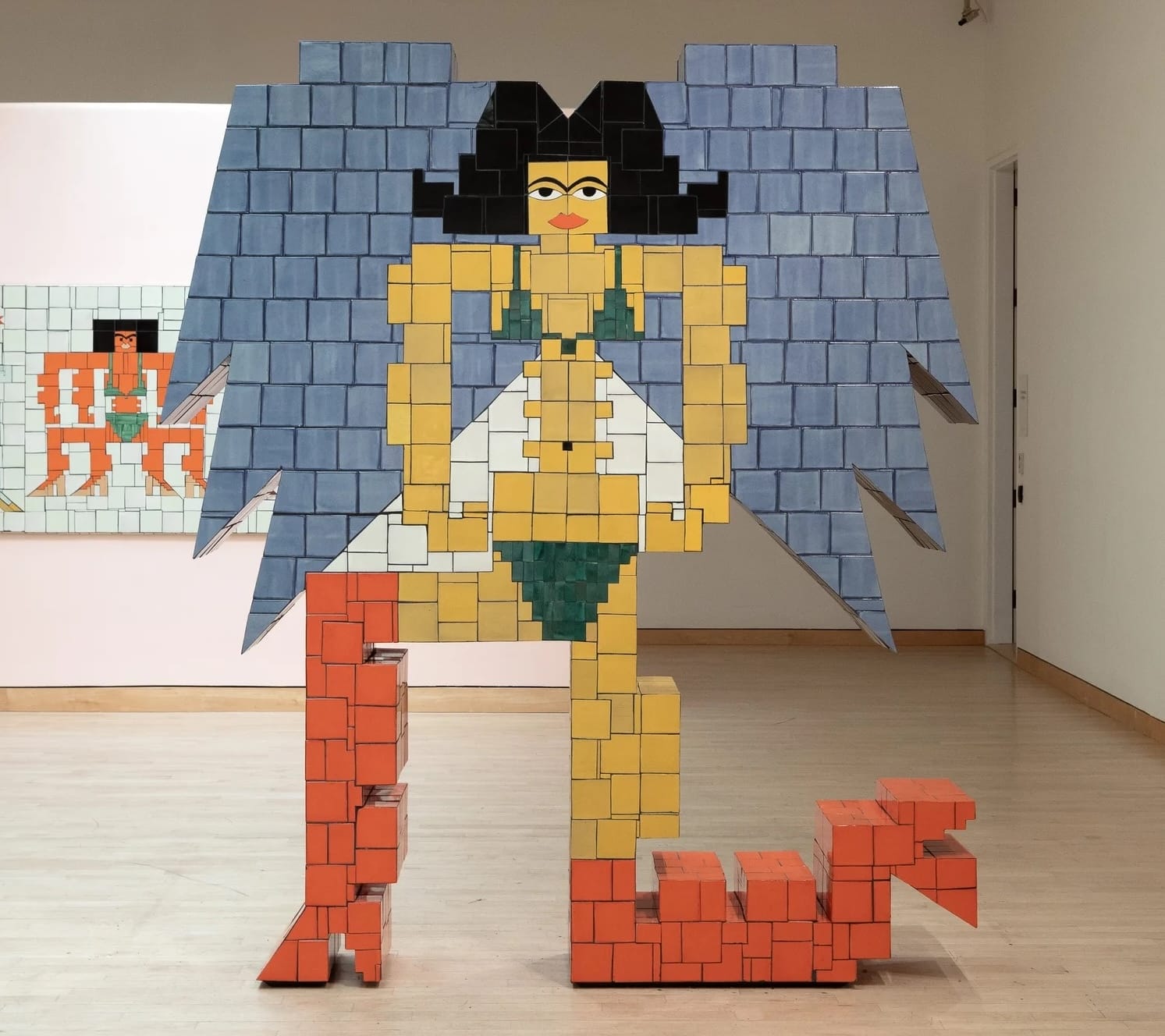
For Albuquerque-based multidisciplinary artist Esther Elia, who proudly traces her heritage to both Assyrian and Irish roots, these ancient guardians are far more than dusty relics confined to the distant past or sequestered behind museum glass. Instead, Elia views them as a living, breathing connection to her identity. Working fluidly across sculpture, painting, and textiles, the contemporary artist explores the nuanced realities of the modern Assyrian diaspora experience, utilizing intricate patterns, contemporary fashion, and deeply personal autobiographical elements to bridge millennia of history with the present day.
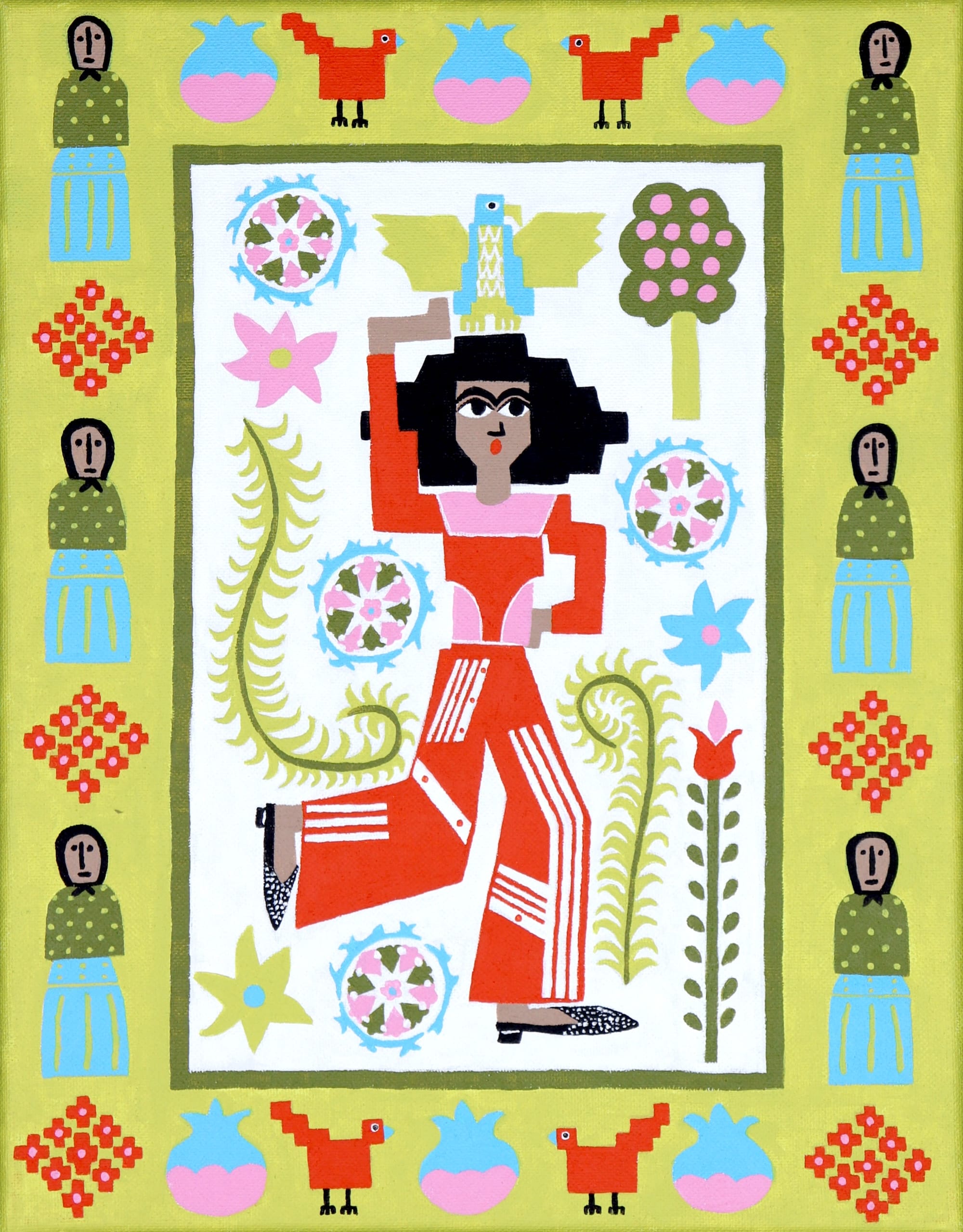
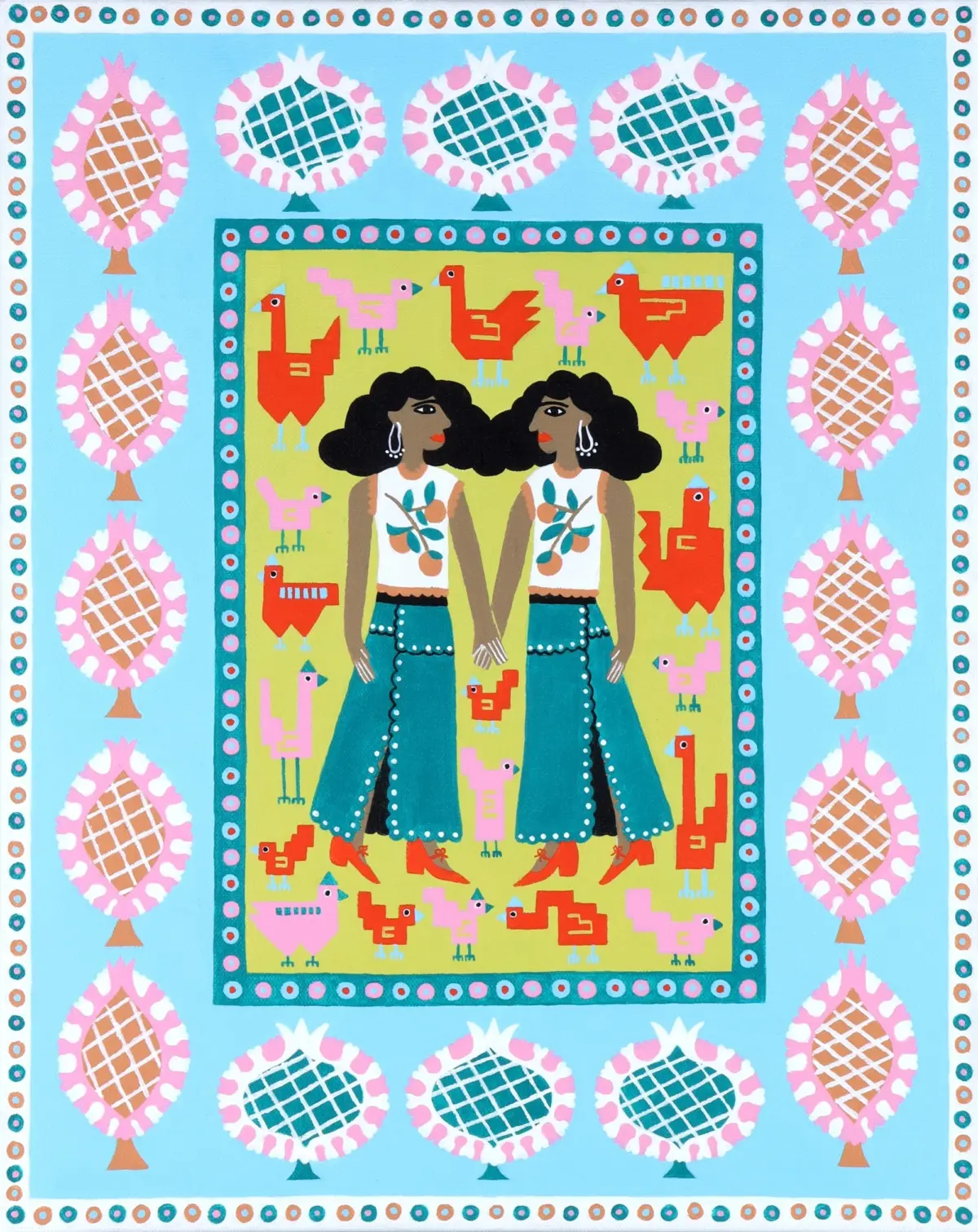
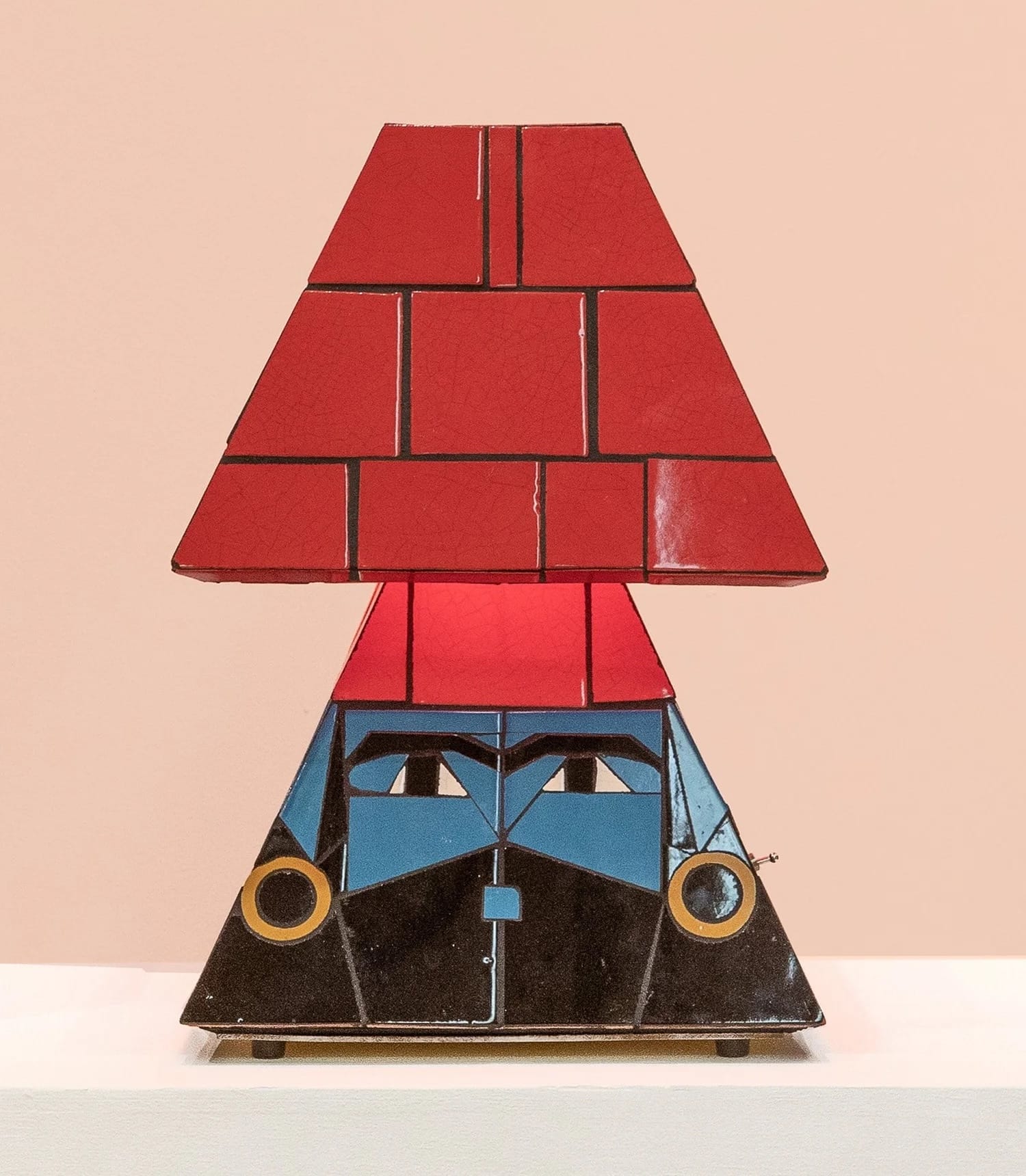
Elia’s latest artistic exploration takes center stage in her solo exhibition, Bazaar Ashuraya, hosted at Hecho a Mano in Santa Fe. The exhibition centers around an arresting new collection of vibrant acrylic paintings, complemented by tactile tile mosaics and thoughtfully crafted functional objects. Within this cohesive body of work, Elia delves deeply into the multifaceted theme of home. Through everyday items such as lamps, hand-crafted garments, and richly detailed paintings evocative of traditional rugs or woven tapestries, she portrays a lively cast of figures, geometric shapes, and objects associated with the rhythms of daily life.
The compositions on display frequently blend the ancient with the thoroughly modern. Works such as “Sharrat Wearing Adidas” and “Esther and Zahra Wearing Farm Rio” offer playful yet profound nods to contemporary global fashion paired harmoniously with traditional folk designs. These juxtaposition-rich canvases invite viewers to consider how cultural heritage does not remain static; rather, it evolves, adapts, and wears modern apparel while retaining its core ancestral spirit.
At the heart of Elia’s conceptual framework is a profound appreciation for the domestic sphere as a living archive. As the artist notes in her accompanying statement, the home functions as the primary vessel where Assyria truly lives and breathes.
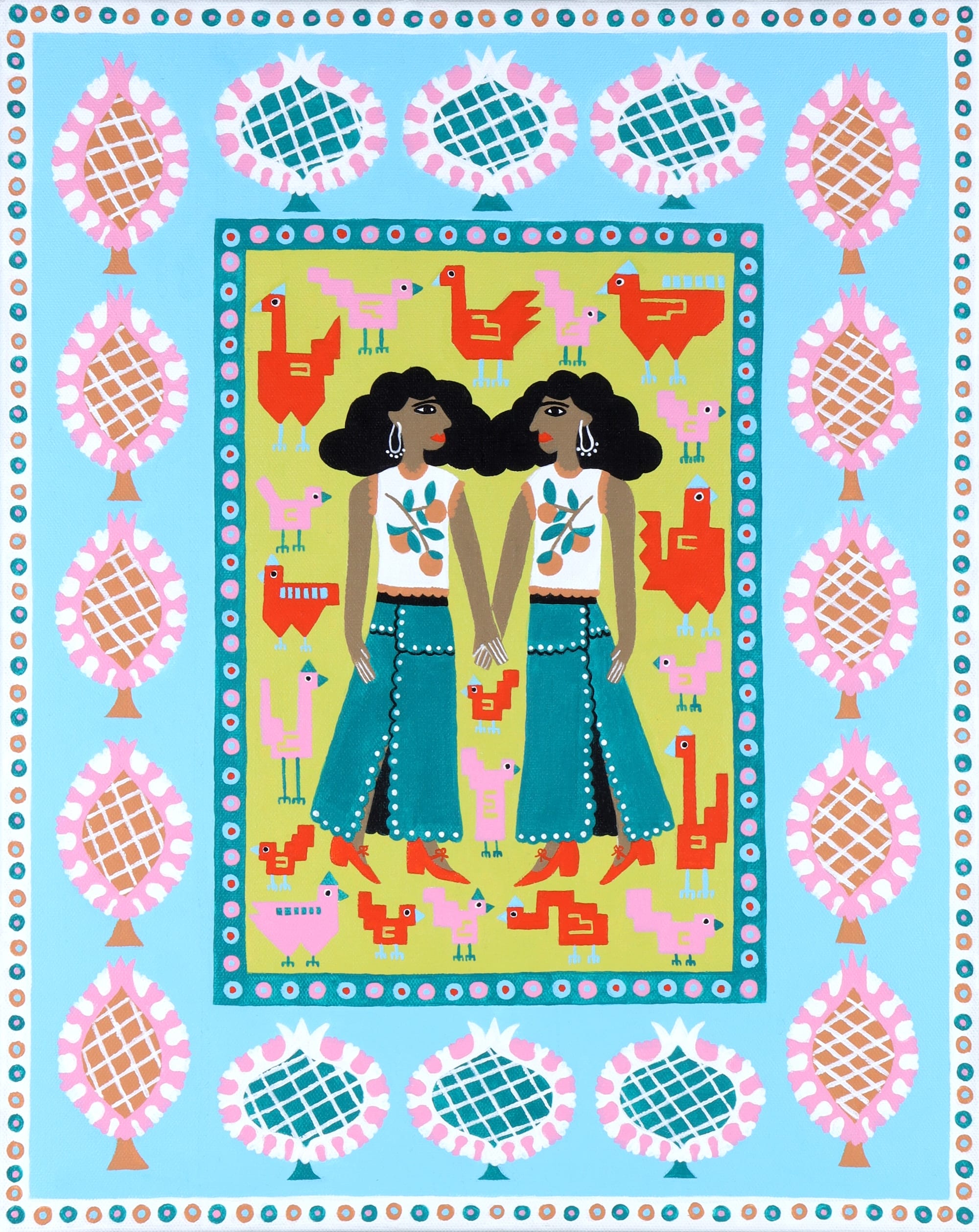
“The home is where our language is spoken,” Elia says. She elaborates on this vital cultural ecosystem by explaining that even when community members must navigate the world outside using English, Arabic, Farsi, French, or Swedish, the domestic sanctuary remains the sacred space where authentic Assyrian food is meticulously prepared, where ancestral customs continue to thrive, and where culture is not only carefully maintained but actively created and pushed forward into the future. As communities mix and merge within the global diaspora, she observes, our clothes, home furnishings, and daily habits naturally reflect the dynamic blending with these new geographical and cultural landscapes.
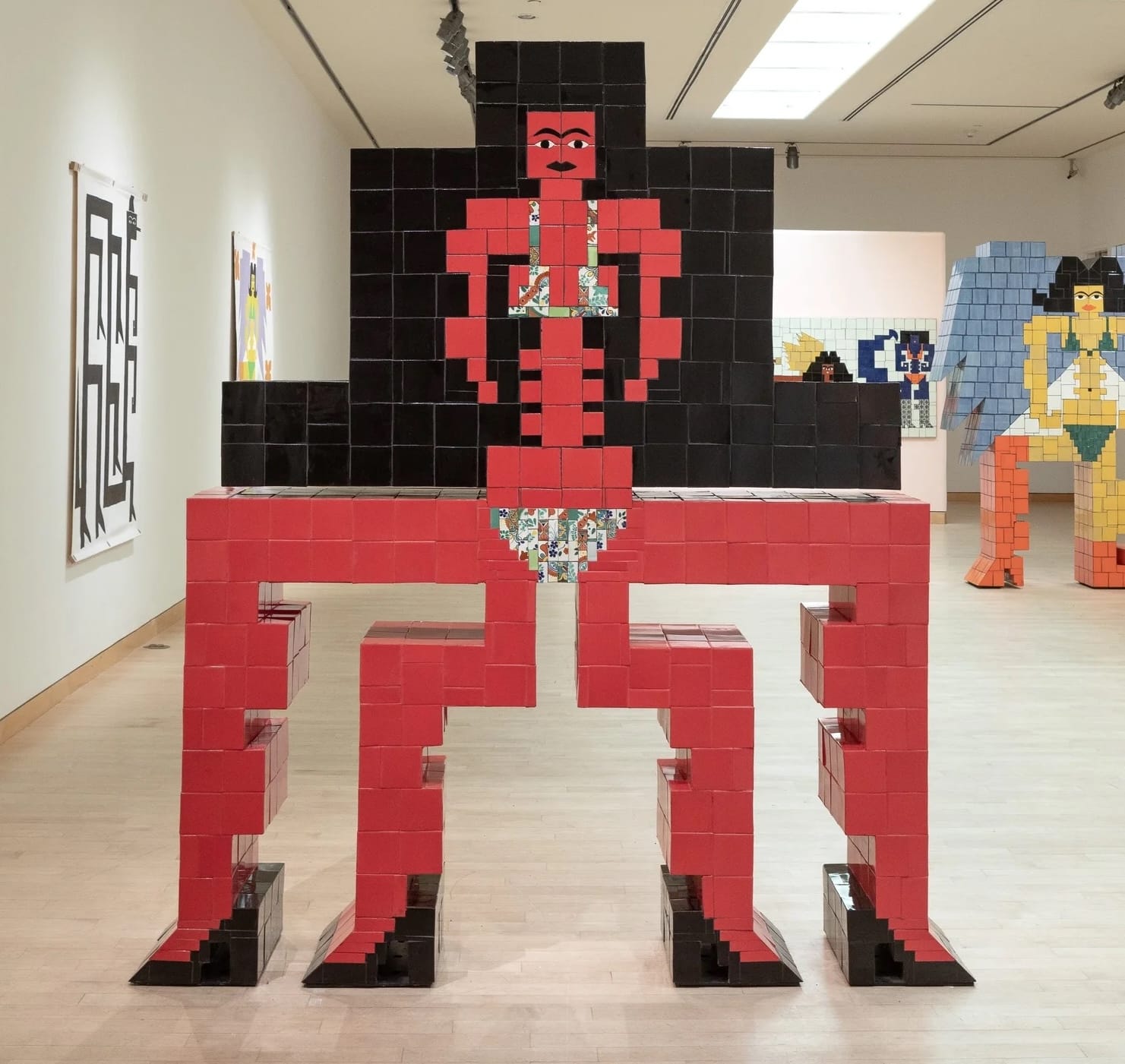
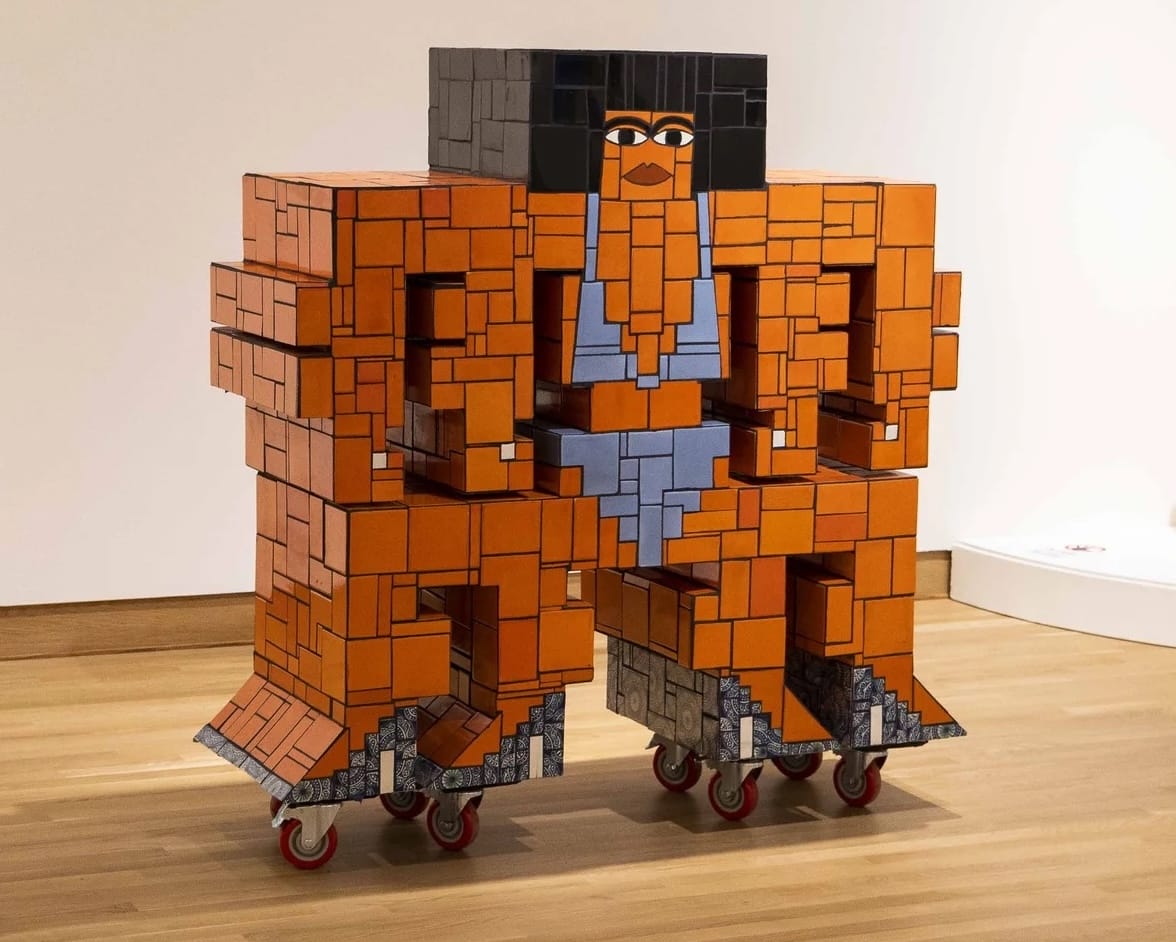
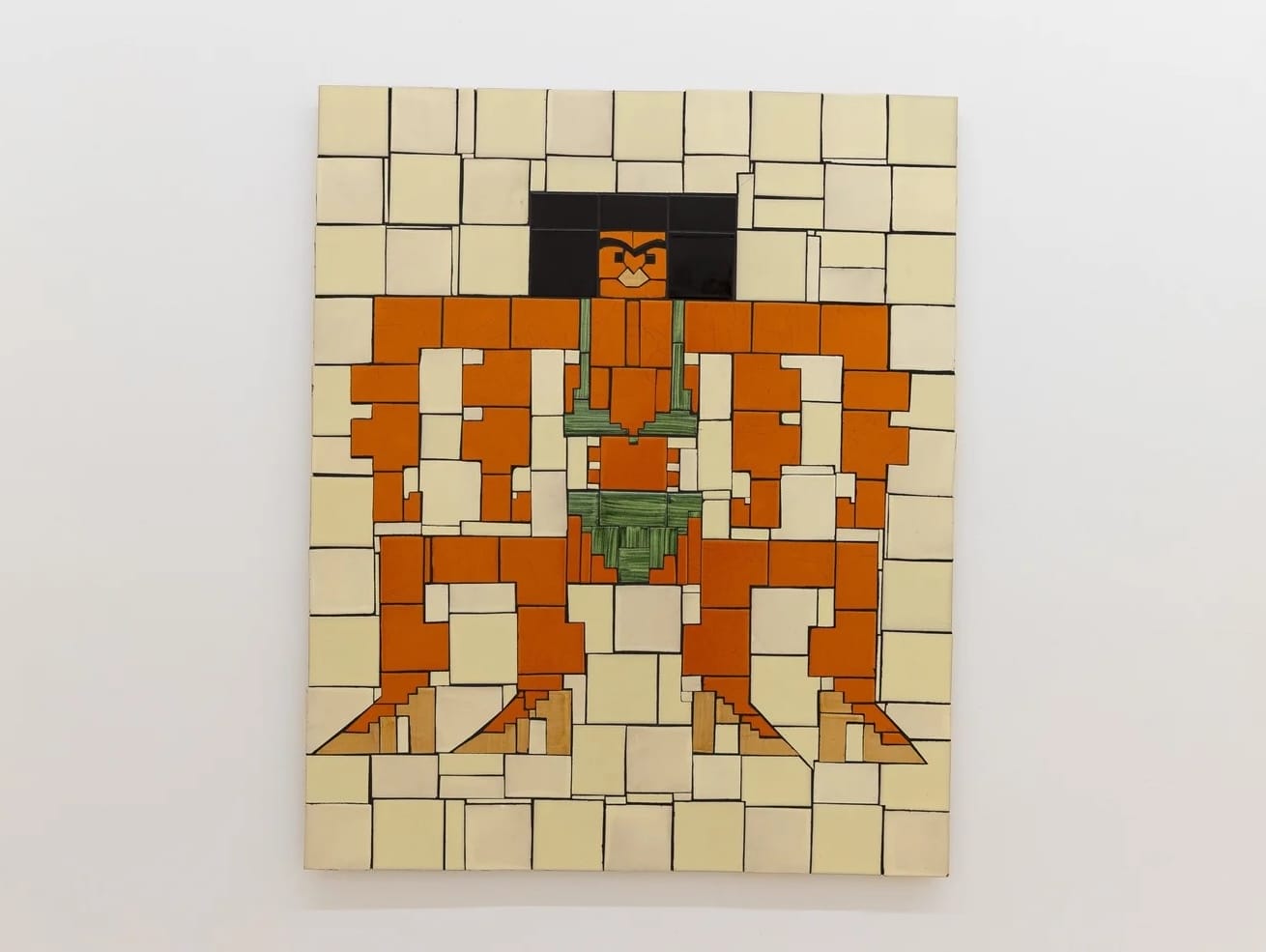
This philosophy of adaptation and movement is physically manifested in Elia’s ambitious sculptural works. Her three-dimensional pieces have grown significantly in scale, reaching nearly life-size proportions through the clever utilization of Mexican tiles mounted onto sturdy cement board and plywood. To underscore the themes of migration and displacement, the artist affixes heavy-duty wheels to the bases of these substantial structures, allowing them to be physically maneuvered and rolled around different spaces.
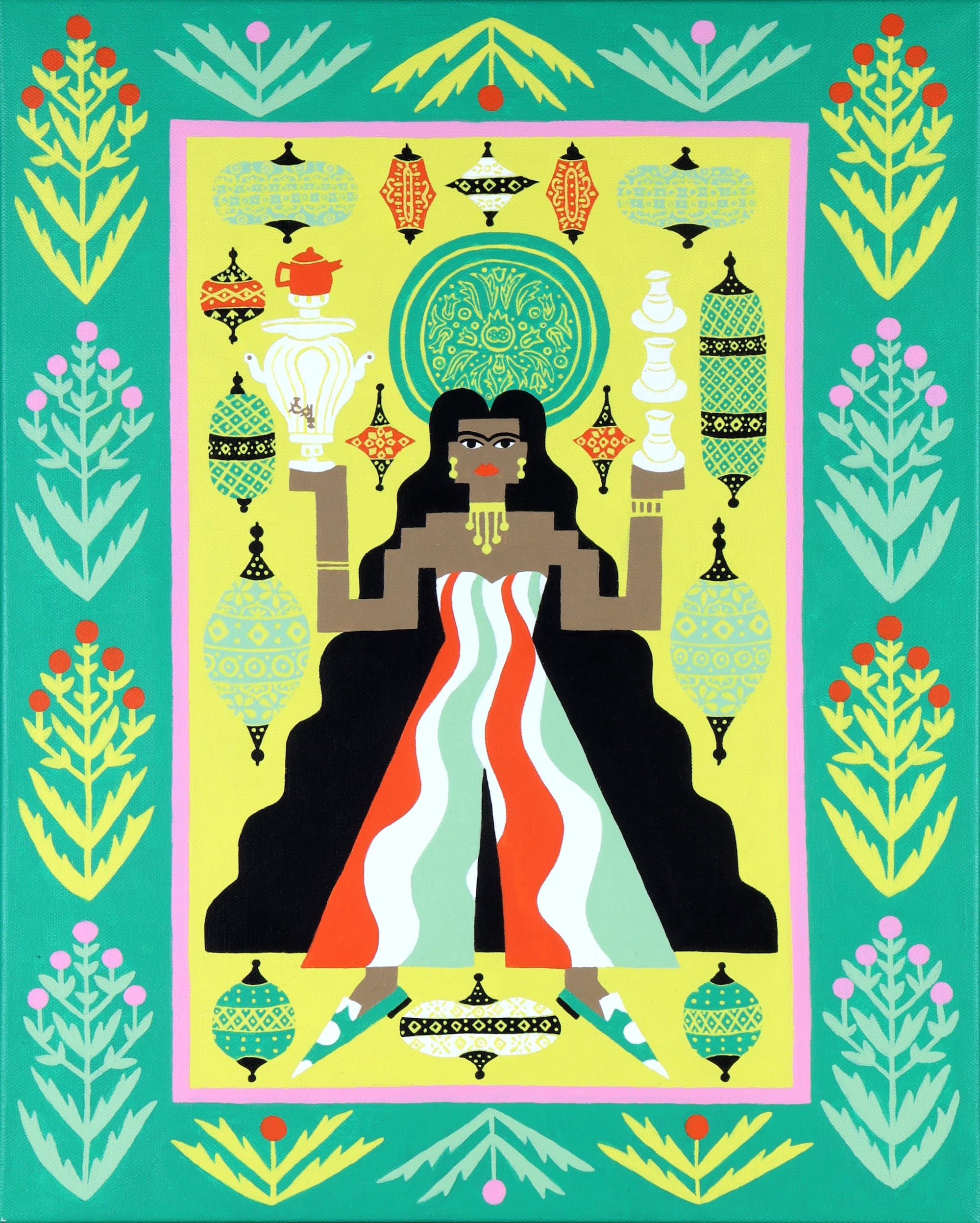
Elia has aptly coined these creations her “diasporic deities.” The moniker highlights both their spiritual lineage and their pragmatic construction, as they ingeniously incorporate readily sourced building materials native to the American Southwest while remaining entirely adaptable to shifting architectural environments and gallery layouts.
The exhibition Bazaar Ashuraya runs from November 6 through November 29 in Santa Fe, offering regional art enthusiasts and cultural historians a rare glimpse into a unique artistic practice. The timing of the exhibition coincides with another major milestone in Elia’s burgeoning career: she was recently announced as an official 2027 resident of the prestigious John Michael Kohler Art Center and Kohler Co.’s renowned Arts/Industry program, a coveted residency that promises to expand her sculptural vocabulary even further. Those wishing to follow her ongoing creative journey and view additional works can find further documentation on the artist’s social media platforms.