Nestled deep within a natural volcanic lava cave in Mexico City’s rugged Pedregal de San Ángel region, a sprawling, mosaic-laden residence once stood as a monumental achievement of modernist architecture. Designed in 1954, the dwelling—known globally as Casa Cueva—was the shared visionary home of the renowned architect Juan O’Gorman and his wife, Helen Fowler O’Gorman, a talented artist and naturalist. Though the icon of Mexican modernism met a tragic fate, largely destroyed following its sale by the couple in 1969, its profound spirit has found new life across town at Museo Jumex. There, contemporary artist Álvaro Urbano has unveiled a breathtaking solo exhibition titled Helen, offering a deeply poetic homage to the innovations of Casa Cueva, its wild native gardens, and the enduring legacy left behind by Helen O’Gorman.
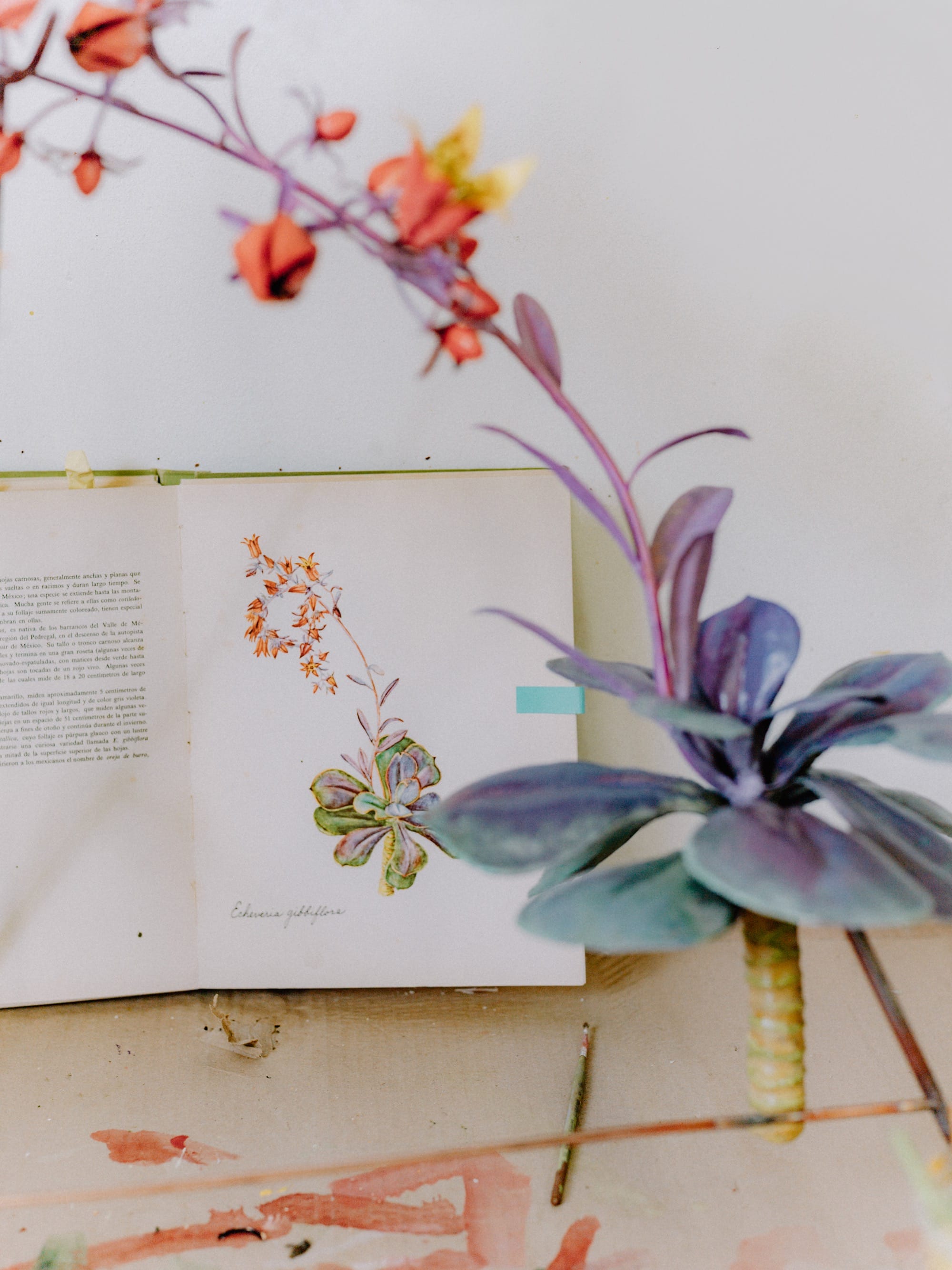
The exhibition draws its primary inspiration from a remarkable literary and artistic achievement: Helen O’Gorman’s 1961 masterwork, Mexican Flowering Trees and Plants. Conceived, written, and meticulously illustrated while she was immersed in the unique ecosystem surrounding Casa Cueva, the rich volume served as a definitive taxonomic and artistic document of the region’s diverse native botanical specimens. For Urbano, those historically resonant vegetal renderings became the foundational blueprint for an entirely new, ambitious body of metal sculptures. Rather than merely illustrating the past, the contemporary artist has translated Helen’s ink-and-paint studies into three-dimensional metallic forms, bridging the gap between historical botanical illustration and contemporary spatial sculpture.
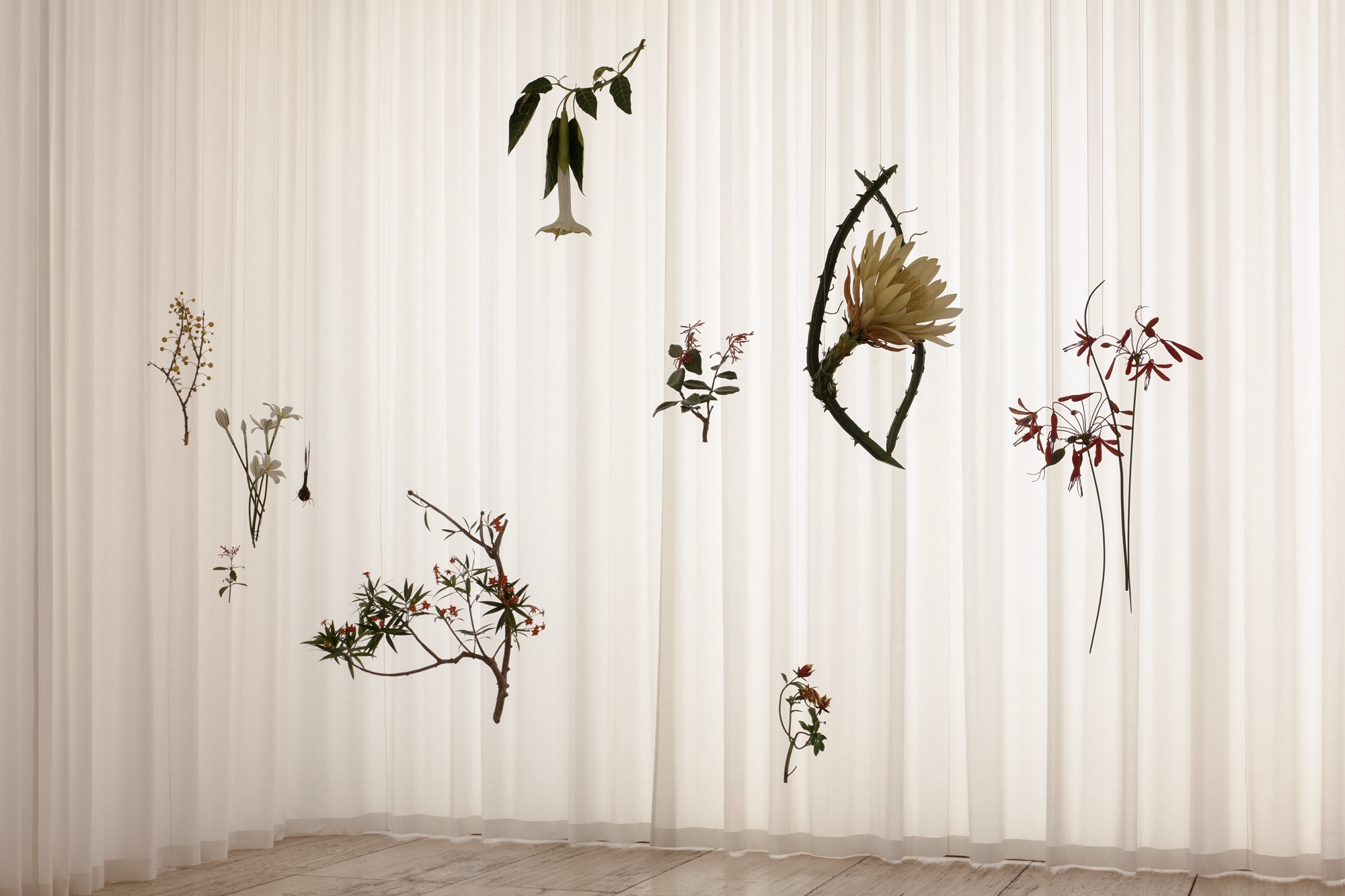
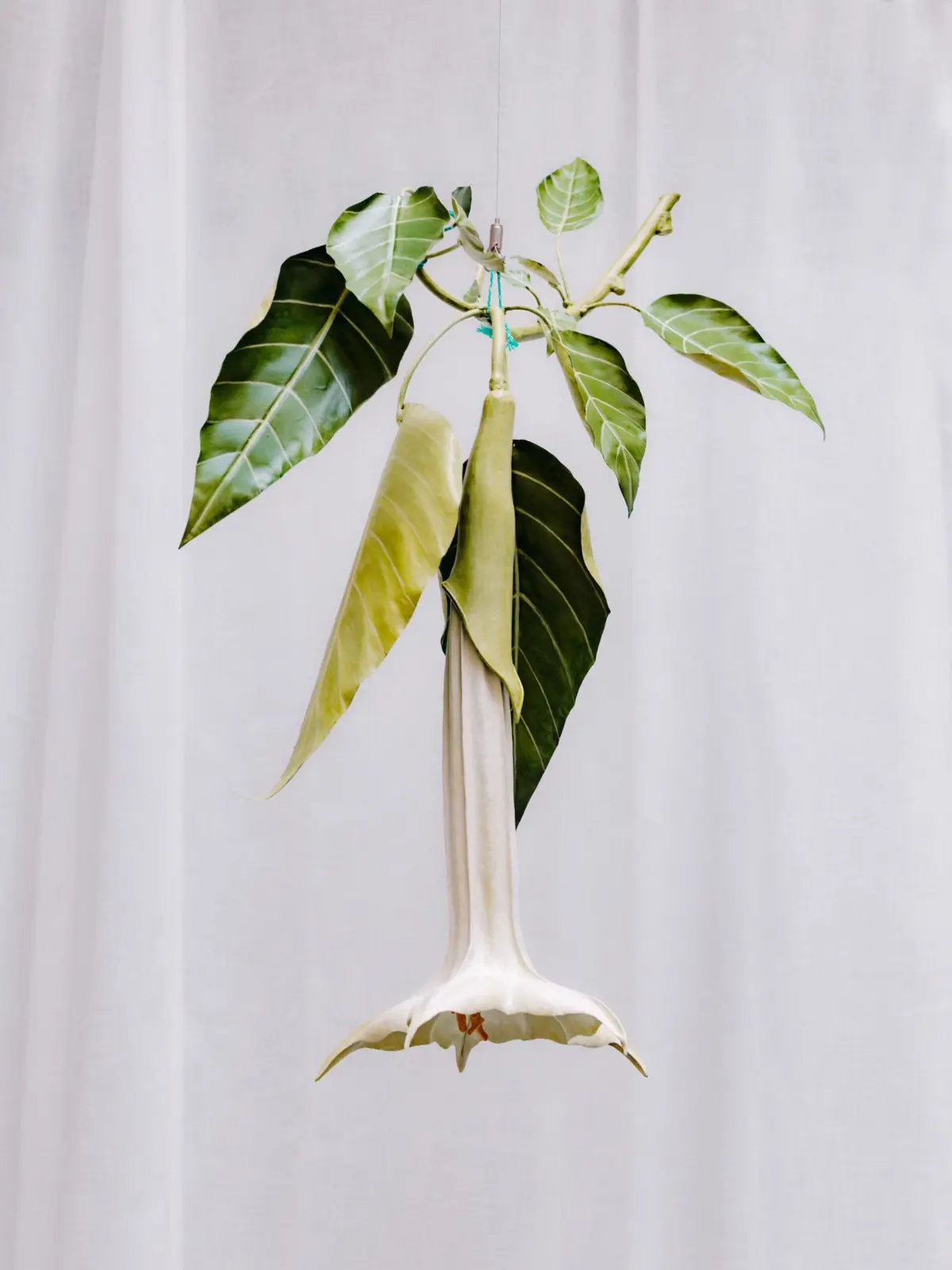
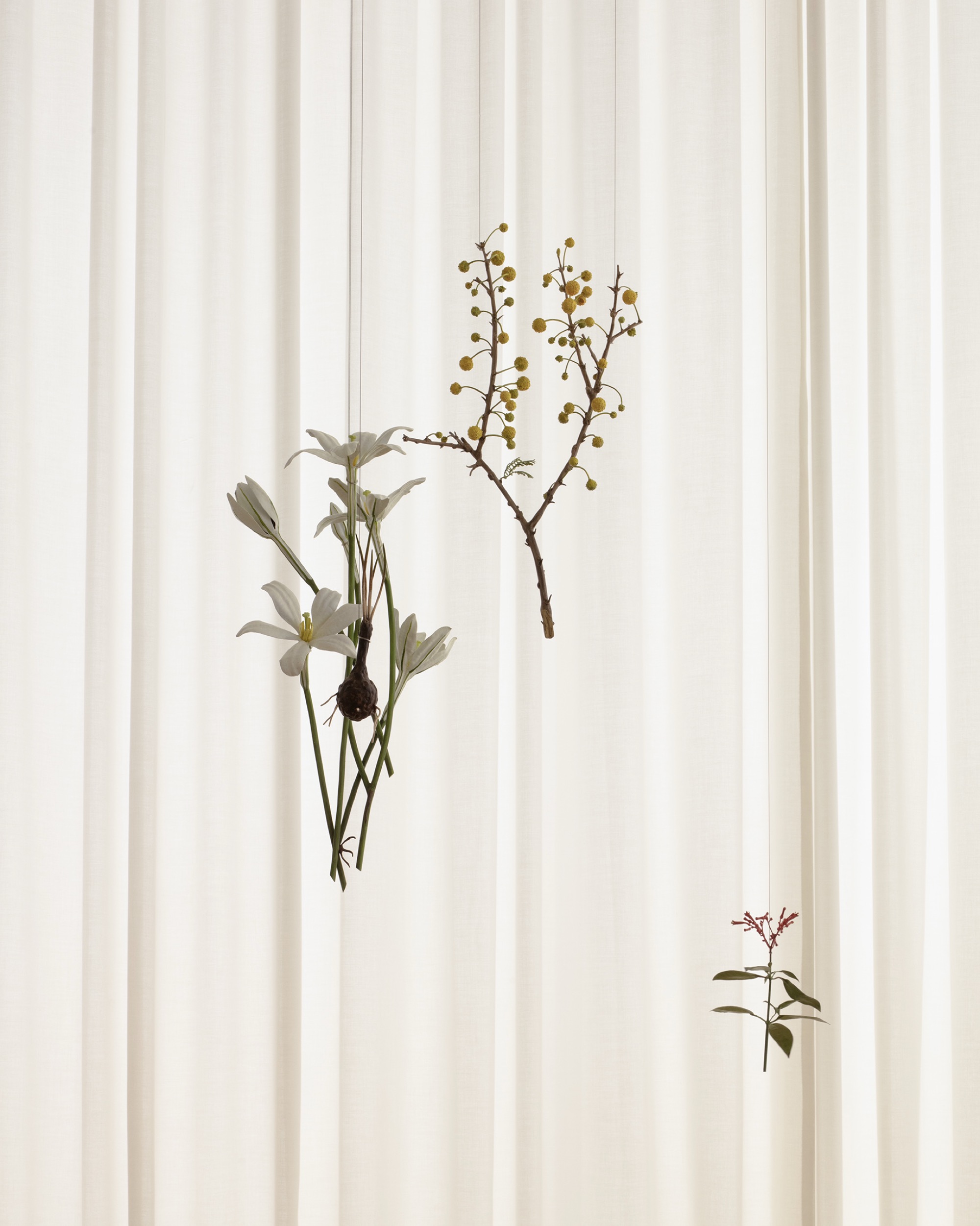
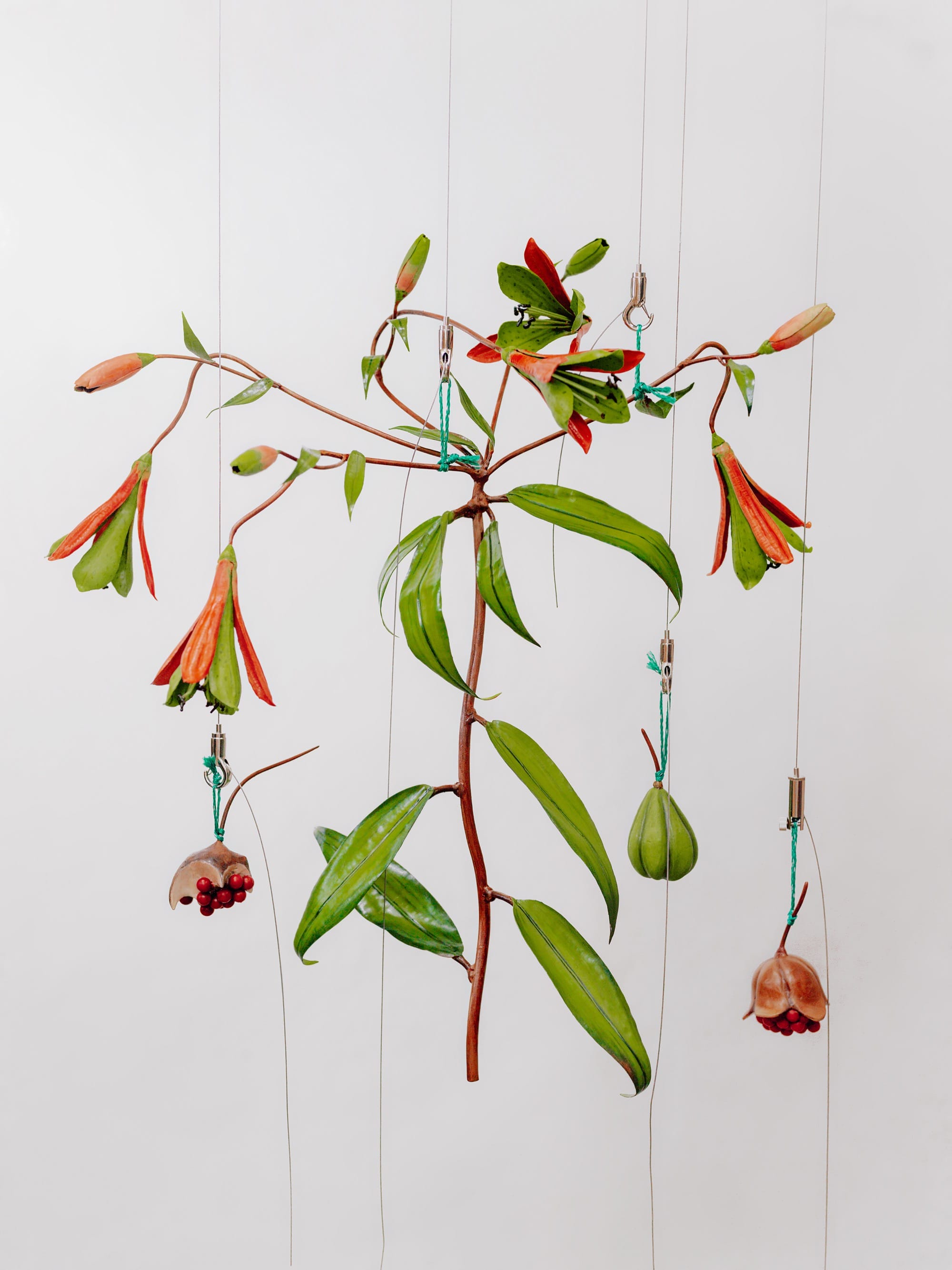
In Helen, Urbano suspends his signature painted metal plants in a delicate, almost weightless arrangement across the exhibition spaces of Museo Jumex. Floating effortlessly against a diaphanous, translucent curtain, the lifelike sculptures appear almost as botanical apparitions. They hover in mid-air, casting soft shadows and subtly guiding viewers through the dreamy, contemplative space. Every single sculptural specimen featured in the exhibition is directly modeled after a plant that originally appeared in Helen O’Gorman’s 1961 publication, creating a direct lineage between the artist’s historical documentation of Mexican flora and Urbano’s modern sculptural interpretation.
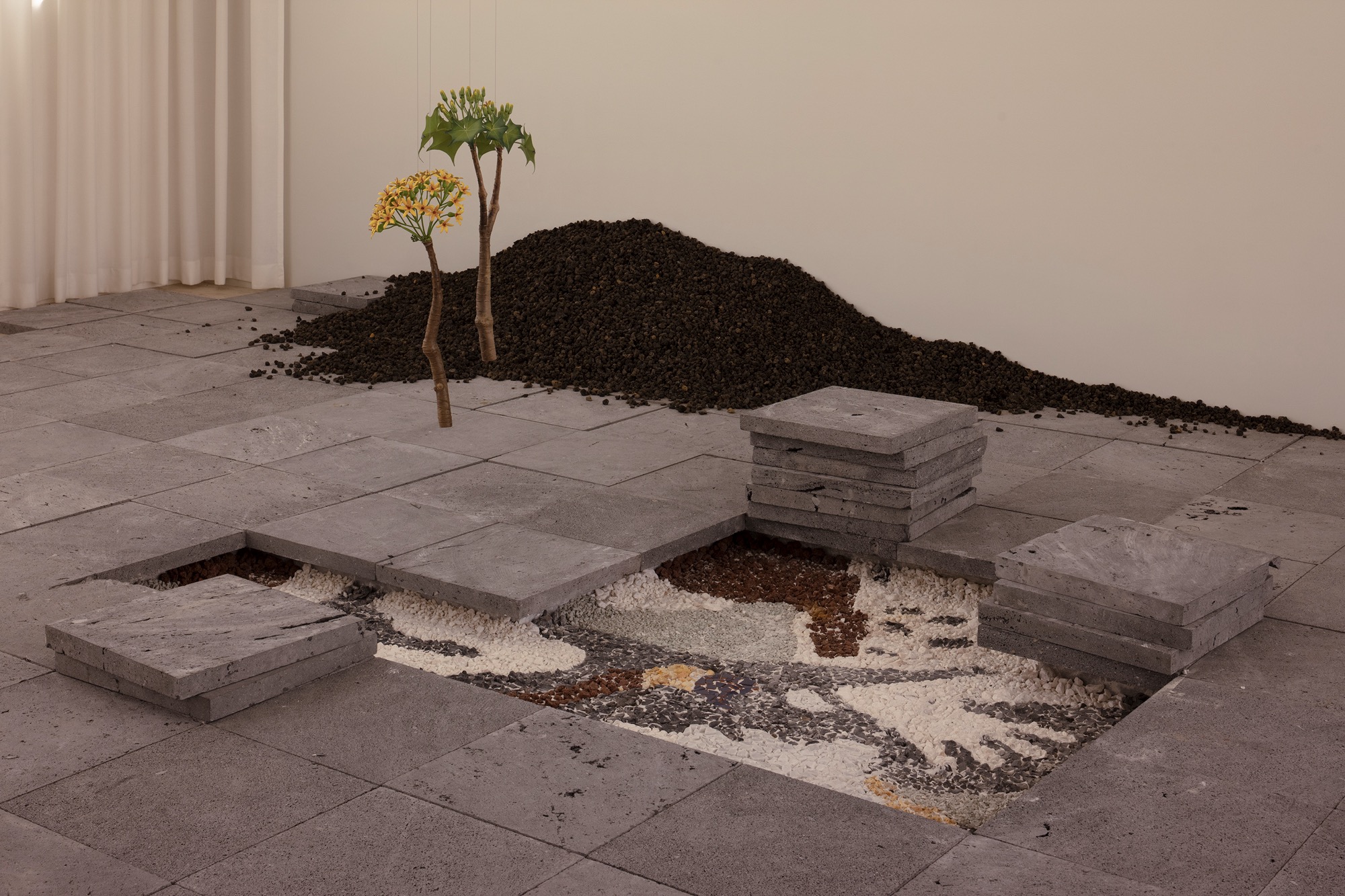
To further evoke the rugged, volcanic terrain that once defined the Pedregal de San Ángel and the physical footprint of Casa Cueva, Urbano has incorporated site-specific architectural interventions within the museum galleries. A carefully constructed floor of square pavers is interspersed with variegated natural stone, mimicking the jagged, ancient lava flows that break through the earth in southern Mexico City. Like the legendary cave house itself, which was built organically into the volcanic topography rather than imposing upon it, the exhibition unfolds in a fluid, continuous manner. It establishes a profound, ongoing dialogue between built space, native flora, and the visitors who bear witness to both the sculptural installations and the historical memory they invoke.
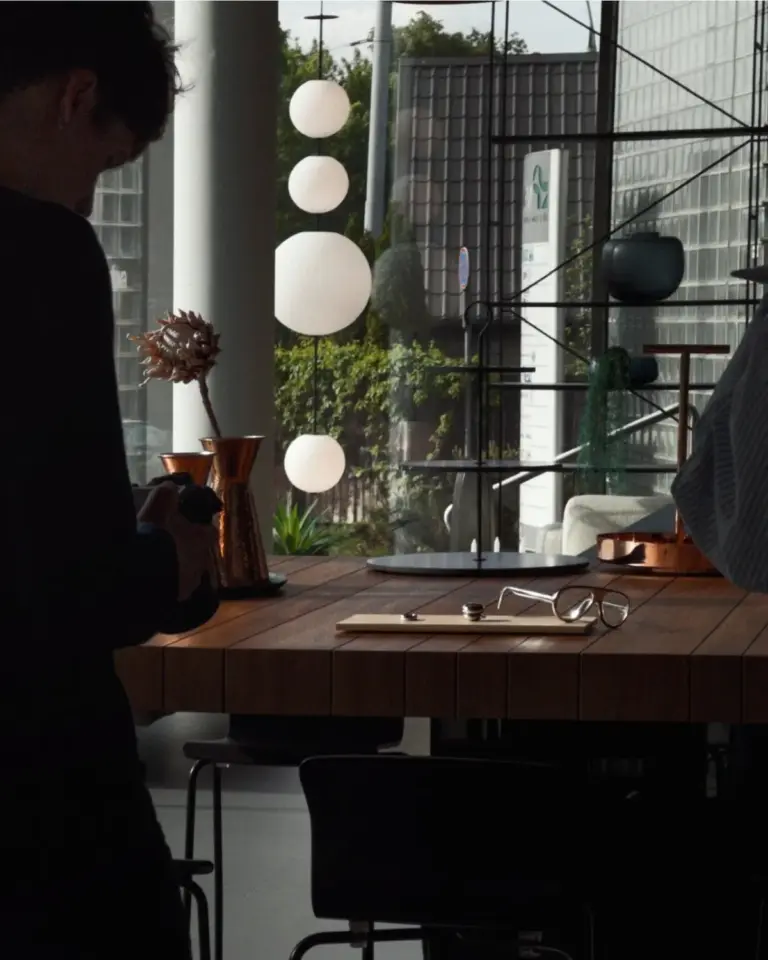
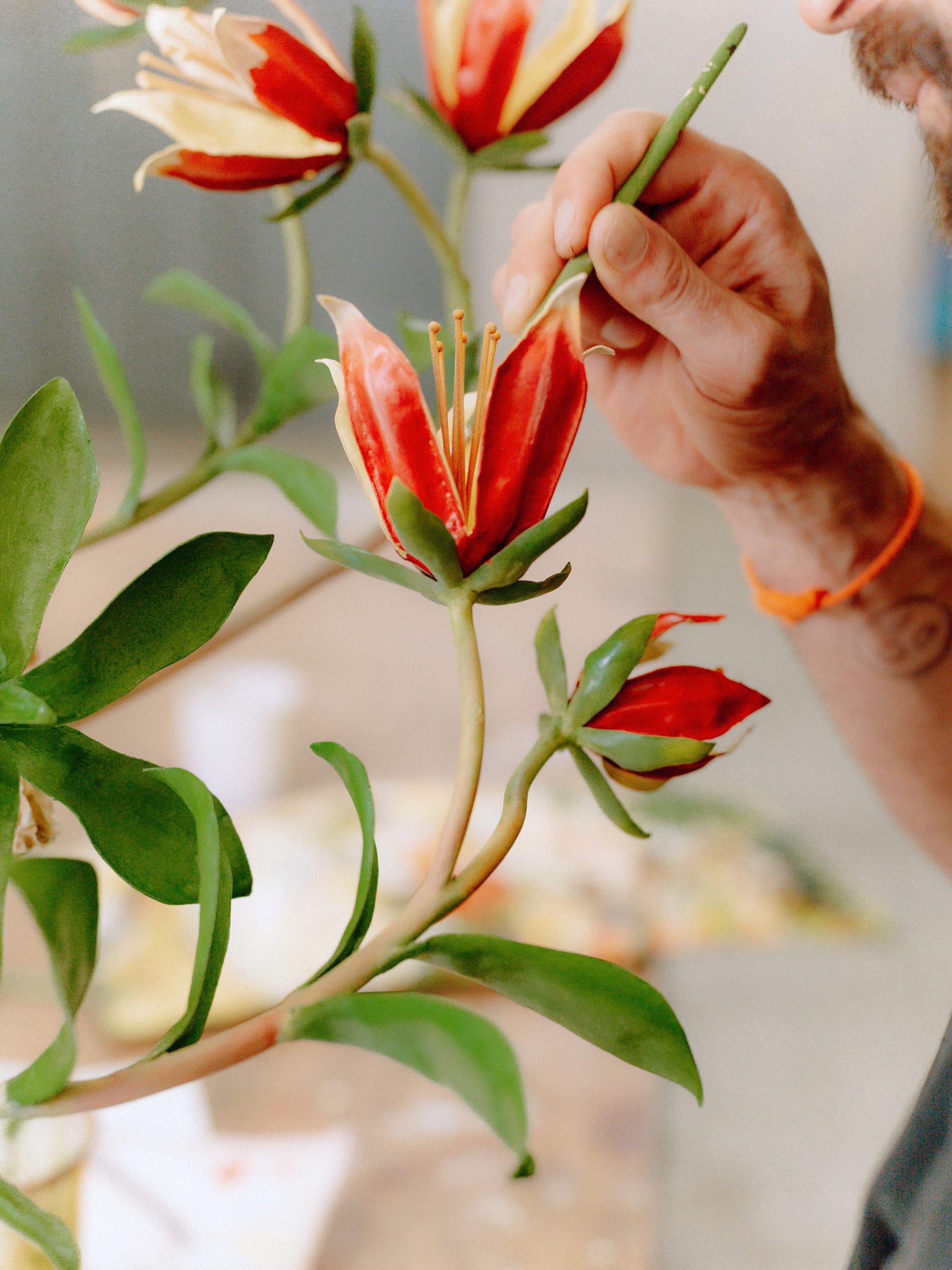
The genesis of Helen required extensive preparation within Urbano’s studio, where the intricate metal sculptures were meticulously forged, welded, and painted by hand. Studio documentation from earlier in the year reveals the labor-intensive process behind the finished installation: worktables cluttered with partially completed botanical sculptures, tins of specialized paint, and shelves lined with reference materials. In these intimate workspaces, Urbano and his collaborators grappled with the physical challenges of translating delicate floral structures into durable industrial materials, ensuring that each metallic leaf, stem, and blossom retained an organic vitality.
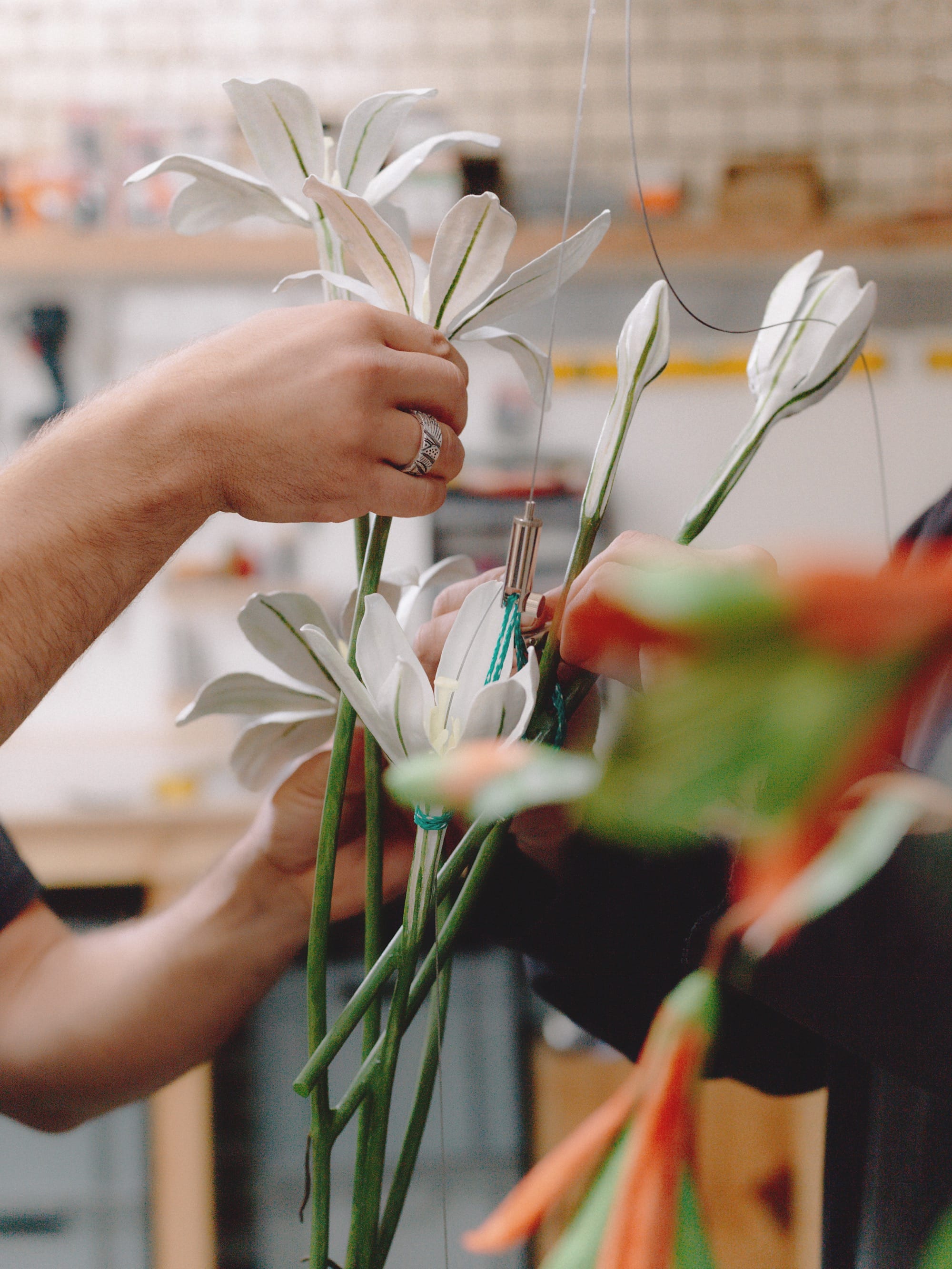
The exhibition also highlights the deep collaborative networks and institutional support surrounding Urbano’s practice, with studio views credited to photographer Agustín Farías and copyright held jointly by the artist alongside galleries ChertLüdde, Marian Goodman, and Travesía Cuatro. Meanwhile, the pristine installation views at Museo Jumex, captured by photographer Ramiro Chávez, showcase the ethereal interplay of light, metal, and fabric that defines the visitor experience. Through these images and the physical installation itself, viewers are invited to contemplate the fragile intersections of architecture, ecology, and gendered art histories that have frequently overlooked the contributions of women like Helen O’Gorman in shaping Mexico’s modernist movement.
As visitors navigate the gallery space at Museo Jumex, the boundary between interior museum architecture and the wild exterior landscape of the Pedregal dissolves. The suspended florals, caught mid-air against billowing curtains of fabric, act as spectral guardians of a lost architectural marvel. They remind audiences of the ephemeral nature of human habitation against the backdrop of natural geological formations, while simultaneously celebrating the enduring power of artistic creation and botanical study.
Helen is on view at Museo Jumex through February 7.