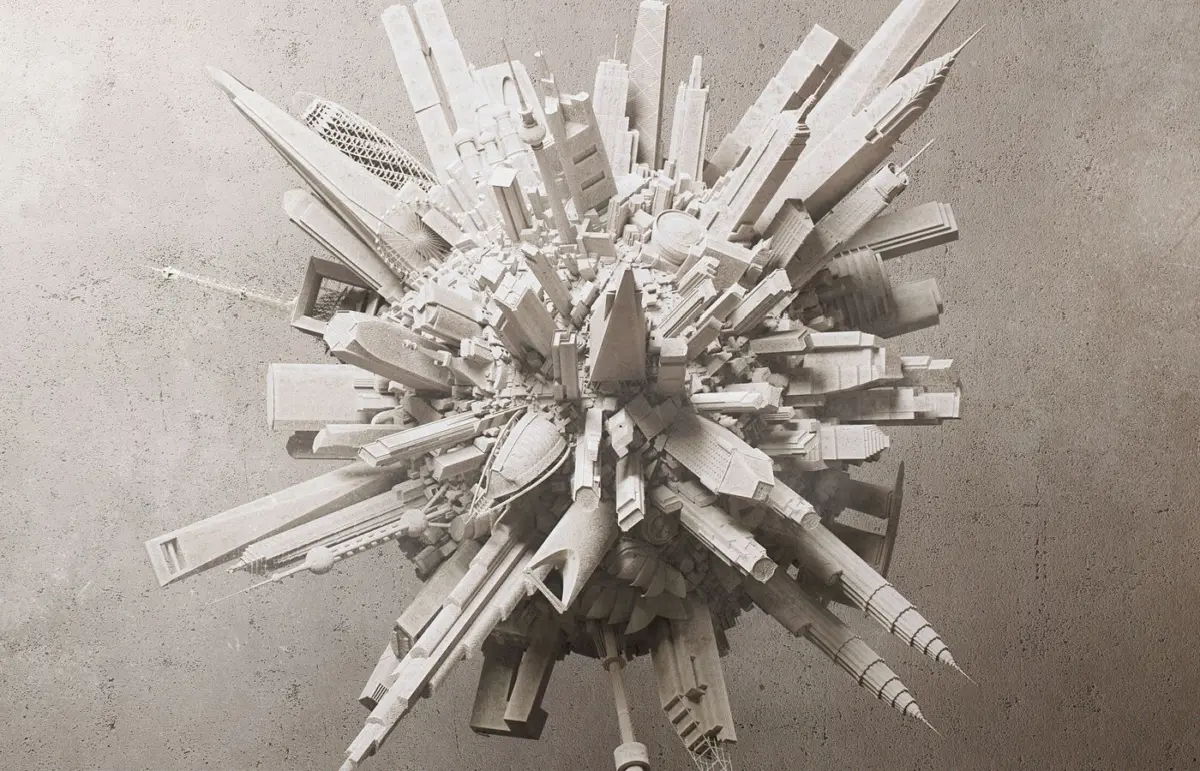
For most of human history, cities grew by accident. Locations were chosen for practical, defensive, or economic reasons—such as a defensible hill, an island, a resource extraction site, or the confluence of transport routes. What followed, however, was strictly ad hoc. People working in forts, mines, ports, or warehouses needed places to eat, sleep, and worship. Infrastructure threaded through this daily hustle and bustle, creating vast networks of improvised water systems, sewage lines, roads, trolleys, gas pipes, and electricity grids.

While historical exceptions existed, such as Alexandria, Roman colonial towns, specific districts in major Chinese cities, or Haussmann’s Paris, the development of the urban landscape was largely defined by happenstance, luck, and layering the new on top of the old.

Around the second decade of the 20th century, that approach changed. Cities began to happen on purpose. Beginning with New York City’s pioneering zoning laws in 1916, development shifted toward commission rather than omission. Laws and regulations began to dictate the shape of the urban envelope, while functional decisions increasingly determined aesthetic outcomes—though not always to the benefit of the inhabitants.

Today, more than a century after human beings first began applying deliberate design to cities as cohesive wholes, urban planning is reaching a new inflection point. High-tech materials, sensor networks, emerging scientific disciplines, and advanced data analytics are empowering architects, designers, and planners to work with unprecedented precision and intelligence. Urban centers are becoming more environmentally sustainable, vibrant, and visually compelling—a shift that arrives just in time, as the majority of the global human population now resides in urban areas.

From intricate new streetlights and sacred urban spaces in flux to masterful museums, dedicated bicycle infrastructure, and the underlying algorithms that coordinate them, modern urban projects demonstrate that the cities of tomorrow may still assemble haltingly, but they no longer need to be accidental. Every block, building, and brick represents innumerable choices, and when those choices are made with intention, cities achieve a rare kind of magic.

Los Angeles Goes LED and Gets Connected
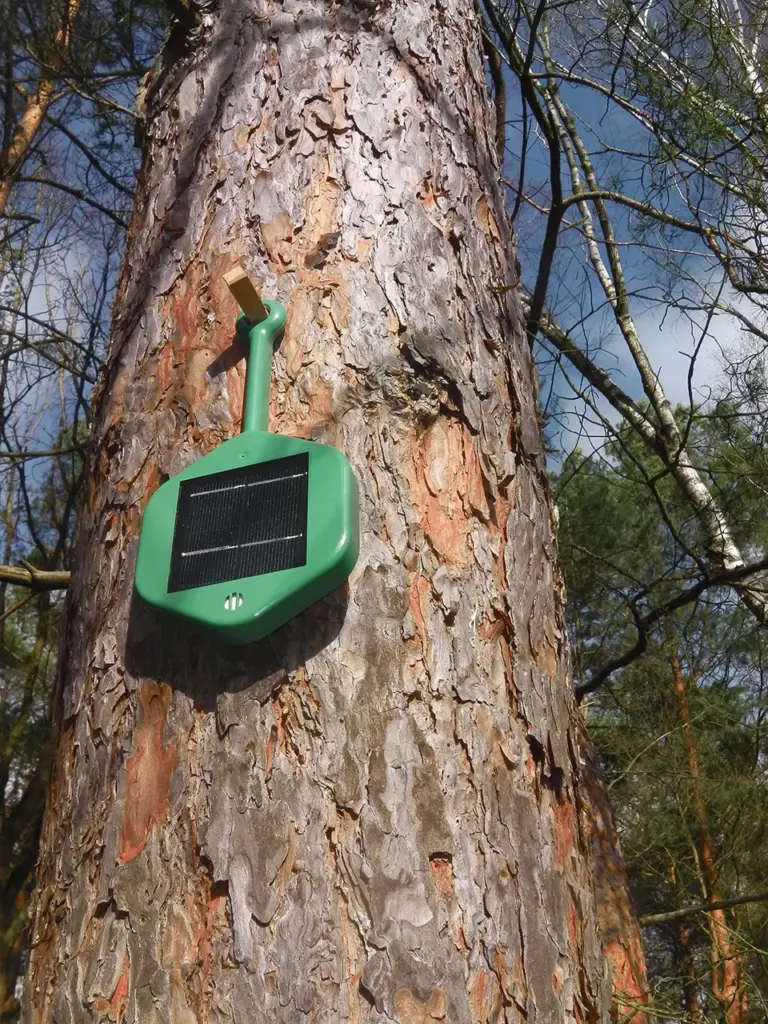
In Los Angeles, municipal authorities are retrofitting 4,500 miles of orange-yellow sodium-vapor streetlights with a moonlight-hued matrix of energy-efficient light-emitting diodes. While the initiative makes roads significantly brighter, it also links every lamp wirelessly to the Bureau of Street Lighting. This connectivity allows headquarters to monitor whether a light is operating, turned off, or broken.

Looking forward, the system envisions lights that respond dynamically to their surroundings. Lamps could blink to signal the approach of a police car or an ambulance, or brighten to assist pedestrians leaving a sporting event. While other cities worldwide have implemented LEDs primarily for financial savings and visual accents, Los Angeles aims to build a network that communicates data about the entire urban environment.

Meanwhile, as more than 70 million travelers pass through Los Angeles International Airport, the facility is undergoing an $8 billion overhaul encompassing everything from expanded concession areas to modernized moving walkways. Delta Air Lines contributed $229 million to revamp Terminal 5, introducing the Delta One lounge—an exclusive space catering to high-net-worth travelers and celebrities. The terminal-within-a-terminal offers curbside check-in, private elevators, and dedicated corridors to priority security checkpoints. Departing passengers can even utilize VIP Select service, crossing the tarmac in a hybrid Porsche directly to Century Boulevard.

To combat the severe regional drought, landscape architects across Los Angeles are simultaneously replacing imported plants and thirsty turf with native and drought-resistant flora. This movement, often called California Dry, swaps traditional lawns for decomposed granite or mulch, incorporates architectural plants like foxtail agave and echeveria, and adds softness and color through native shrubs.

Cultural life is also taking to the streets with Hopscotch, a mobile opera set across 24 limousines and SUVs driving through downtown Los Angeles. Audience members sit knee-to-knee with musicians while actors and dancers perform on sidewalks and passing vehicles, blending high art with the everyday choreography of the city.

An Evolving Museum Spirals Between Past and Present in Shanghai
In Shanghai, where a forest of skyscrapers has risen in recent years, the new Shanghai Natural History Museum offers a contrasting architectural approach. Situated in a park near the Pudong financial district, the building spirals downward into the earth, evoking an excavation of the city’s pre-urban roots.

Designed by architect Ralph Johnson of Perkins+Will, the museum’s shape was inspired by the nautilus shell and designed to manage high visitor volume by steering crowds along descending ramps on a chronological tour of life on Earth. The building features an interior courtyard inspired by the water gardens of Suzhou and a honeycombed glass wall modeled on plant cell structures. Two-thirds of the building’s mass is set below ground level, using sustainable climate and water systems, including a courtyard pool that helps cool the interior while housing approximately 11,000 specimens, including a towering Mamenchisaurus skeleton.

Medellín’s New Cable Cars Unify a Fractured City
Nestled in a high Andean valley, Medellín historically isolated its poorest residents in steep hillside comunas that were controlled by drug gangs and guerrilla fighters during the 1990s. As violence receded, residents faced severe mobility challenges.

To bridge the geographic and social divide, city leaders introduced the Metrocable in 2004, a system of gondolas that allowed residents to soar from perilous hillsides directly to metro stations in as little as 20 minutes. Urban planners note that the system successfully integrated low-income neighborhoods into the economic life of the city, driving down crime rates in areas with cable car access.

Former urban projects director Alejandro Echeverri expanded on this initiative by introducing beautifully designed public libraries surrounded by greenery in low-income neighborhoods. These "library-parks" provided safe community spaces, complemented by street-level investments such as tree planting and school reconstruction. Grassroots community efforts have also flourished, including the Graffitour in Comuna 13, where residents cover run-down walls with historical murals and establish community gardens to reclaim their neighborhoods from past violence.

The Hovenring Lets Cyclists Pedal Over the Traffic Jam in Eindhoven
Once a quiet provincial town, Eindhoven has evolved into a vibrant technology and research hub driven by a commuter workforce. To resolve congestion at a busy intersection and accommodate dedicated bicycle networks, the city commissioned design firm ipv Delft to construct the Hovenring.

Completed in 2012, the $8 million structure is a 1,000-ton steel deck suspended by 24 cables from a central pylon. Outfitted with LED lighting and supported by a lowered roadway below, the elevated roundabout allows thousands of cyclists to bypass stop-and-go traffic safely and efficiently.

How Saudi Arabia Prepares for Millions of Pilgrims in Mecca
During the annual hajj pilgrimage, Saudi Arabia experiences a population surge of 3 million people visiting Mecca. To manage these monumental crowds safely, the government has engaged international architects and designers to upgrade infrastructure.

The Hajj Terminal at King Abdulaziz International Airport features a 2.8-million-square-foot roof inspired by traditional Bedouin tents, utilizing Teflon-coated fiberglass to maintain comfortable temperatures in open-air waiting areas. Beneath the surface, a pneumatic waste management system channels 600 tons of daily trash through underground tubes at 40 miles per hour.

At the Masjid al-Haram, architects from Gensler designed eight-sided platforms surrounding the sacred Kaaba to double crowd capacity and improve traffic flow while preserving the spiritual experience. Meanwhile, in the Mina Valley, a vast tent city accommodates over 100,000 air-conditioned, fireproof fiberglass structures protected by permanent hydrants and supported by dedicated healthcare facilities. Pilgrims also utilize the five-level Jamarat Bridge during the Stoning of the Devil ritual, where upgraded access ramps help manage pedestrian movement and prevent dangerous bottlenecks.

Taming Nairobi’s Minibus Network With an Orderly Map
In Nairobi, the primary mode of public transportation is an informal network of privately operated minibuses known as matatus. While plentiful and affordable, the system lacked standardized schedules and fixed route maps.

Through the Digital Matatus project, researchers deployed university students with GPS-enabled smartphones to track routes and stops. By anchoring the resulting subway-style map around recognizable local landmarks rather than numeric addresses, the team provided residents with a reliable tool for navigating the city. The project’s integration into global platforms like Google Maps has legitimized the informal transit system and offered a replicable model for other cities facing similar transportation challenges.

Coworking Spaces Redefine the Workplace in San Francisco
As remote work and startup culture expand, coworking operators like WeWork have transformed traditional office environments. In San Francisco’s Golden Gate location, full-service workspaces combine natural light, open-plan communal areas, and private rooms with administrative support. These environments cater to independent professionals, remote teams, and growing enterprises seeking flexible leasing terms and collaborative networking opportunities without the traditional overhead of corporate real estate.

Dubai’s Turbine Interchange: Where Design and Velocity Intersect
To eliminate severe congestion at a major highway intersection that previously required drivers to come to a complete stop before merging onto a roundabout, Dubai officials restructured the roadway in 2008.

Replacing traditional cloverleaf designs and multi-tiered stacked interchanges, engineers implemented a turbine interchange. Devised in the UK in the 1960s, the turbine configuration allows drivers approaching from all four directions to navigate turns and directional changes at high speeds across just two structural levels. Spanning nearly a third of a mile with 11 bridges totaling 1.5 miles, the Arabian Ranches Interchange successfully balances high capacity with rotational symmetry, streamlining regional traffic across the growing urban landscape.