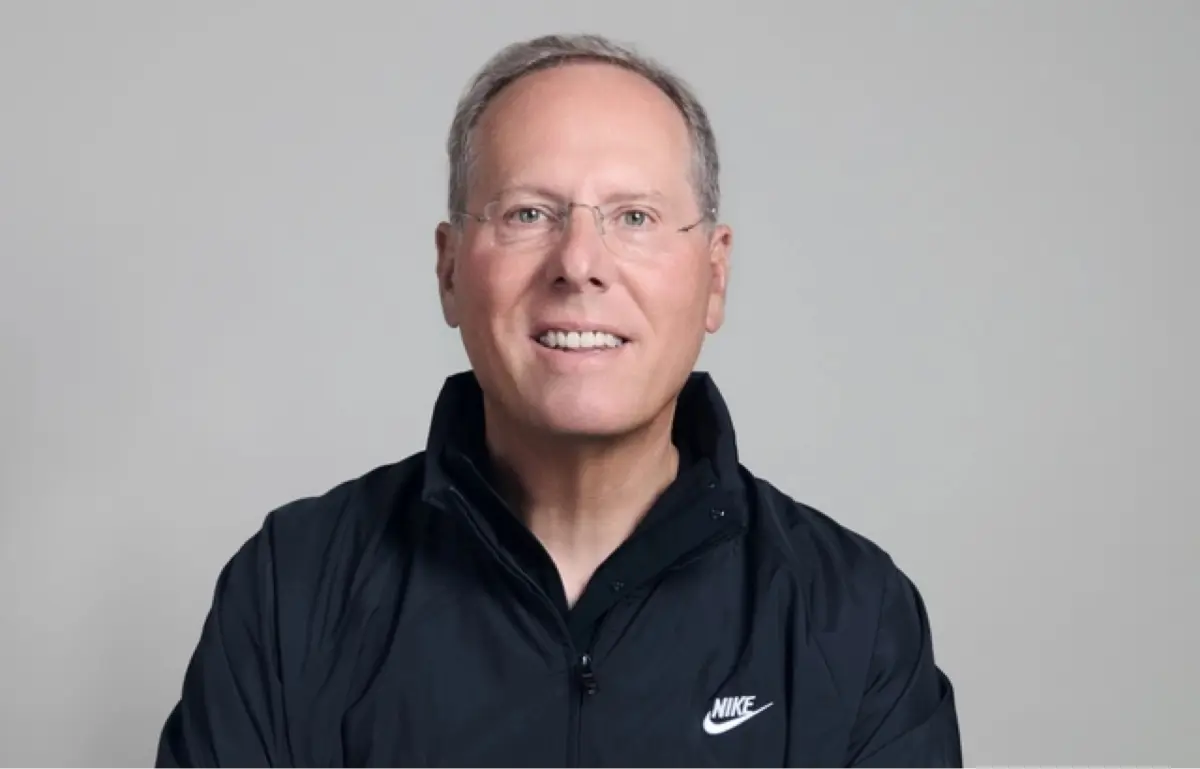
Wall Street analysts met with Nike’s new finance chief, David Denton, this week and walked away with a distinctly positive mindset regarding how his leadership will strengthen the finance team’s influence across the firm. Even though a broad corporate turnaround seems further down the road, the introduction of a fresh strategic perspective has offered a renewed sense of realism to the sportswear giant’s fiscal outlook.
Nike initially disclosed back in June that Denton would join the company as its executive vice president and chief financial officer, officially stepping into the role on August 17. Denton’s overarching mandate upon arrival has been clear: to support disciplined execution, capital allocation, and long-term value creation. Whenever there is a new financial sheriff in town, market speculation immediately centers on what his plans are for structural changes and whether more conservative financial guidance might lie ahead for investors.
There was also immediate and widespread recognition that Denton’s job was not going to be an easy one. Nike’s much-anticipated turnaround is taking significantly more time than initially expected by management and the street alike. Along the way, the company has had to navigate persistent macroeconomic and operational headwinds from its European and Chinese markets, both of which proved to be considerably more challenging than originally anticipated. That extended timeline and slower recovery trajectory have taken a heavy toll on market confidence. Nike’s stock dropped roughly 78 percent this summer compared to its previous high in November 2021, prompting some investors to walk away despite the best efforts of chief executive officer Elliott Hill to right the ship.
The prolonged stock decline has cost Nike in other tangible ways as well. The sportswear giant saw its listing dropped from the prestigious S&P 100—a subset of 100 mega-cap, blue-chip firms selected from the broader S&P 500 index. Although Nike continues to trade publicly on the New York Stock Exchange and remains a core component of the broader S&P 500 Index, the exclusion from the elite S&P 100 highlighted the severity of its recent market valuation adjustments. S&P Indices routinely rebalance their components on a quarterly basis, reflecting shifting market capitalizations among major corporations.
Wednesday’s meet-and-greet event marked the first official opportunity for sell-side analysts to meet Denton in person and hear his preliminary thoughts about plans for Nike ahead of the firm’s critical investor day slated for November 16 and 17.
BTIG analyst Robert Drbul shared following the gathering that Denton disclosed that while he officially joined the company nine weeks prior, he had already begun working closely with CEO Elliott Hill even before his formal start date. Denton views himself very much as a strategic CFO rather than a traditional comptroller, placing heavy emphasis on elevating the finance department’s proactive role within the broader organization.
“We came away impressed with both his strategic mindset and leadership approach,” Drbul said. He noted that Denton explained that Nike is actively building a robust financial plan that properly incorporates both identifiable risks and potential opportunities, while deliberately emphasizing a culture of risk awareness in its forward-looking financial outlook. In addition, Denton highlighted strategic capital allocation as a key focus area and emphasized that he is firmly dedicated to expanding operating margins over time.
Guggenheim analyst Simeon Siegel offered a slightly more tempered perspective, cautioning that while the heavy burden of corporate execution still rests squarely on management’s shoulders and a turnaround is far from guaranteed, it was nonetheless refreshing to hear pragmatic thoughts on existing problems and opportunities alongside a completely refreshed approach toward corporate finance.
Siegel also indicated in a report distributed to clients that Nike had historically operated as an organization where business-focused leaders had been implicitly trained to relentlessly chase top-line growth at all costs. This occurred even though those working within the finance ranks could clearly see that sometimes growth in certain geographic regions was fundamentally unhealthy, though they might not have felt empowered to voice those concerns or push back. According to Siegel, this cultural dynamic is precisely what Denton would like to change moving forward.
“We came away from the meeting with the impression that [Denton brings] a much-needed fresh perspective and a new approach to providing financial guidance that is transparent, realistic and based on achievable scenarios,” said Telsey Advisory Group analyst Cristina Fernández. “Up until recently, Nike had the mindset of a growth company that is always winning, and recent financial plans had been too aggressive.”
Fernández also pointed out that under the newly introduced Pace Program—which is heavily focused on comprehensive cost savings—Denton noted that a strategic realignment of the global supply chain, alongside operational efficiencies that Nike stands to garner as it reorganizes its geographic regions, could result in meaningful financial savings in the quarters to come.
Nike officially disclosed this new operating model, known as Pace, on October 1 when it posted its fiscal first-quarter earnings results. The model builds directly upon a previous cost realignment plan that was originally announced by the company in March 2026.
And while Denton appears to be uniquely well-suited to focus on stringent cost savings and operational efficiencies, Wall Street analysts remained notably cautious regarding the exact timing of Nike’s eventual turnaround.
BMO analyst Kelly Crago noted that visibility into a comprehensive brand turnaround or recovery remains very low. She observed that Denton frankly acknowledged that there is still a significant amount of hard work remaining to fully reset the crucial China business, and that management is entirely open to exploring different business models across various international regions, including the potential consideration of establishing a China Joint Venture.
Similarly, Truist analyst Joseph Civello, who stated that he was personally encouraged by Denton’s candid style and realism, reiterated that there is still a massive amount of work to be done given the currently tough global operating environment. Regarding the powerhouse Jordan brand business, Denton explained that the necessary resetting of the marketplace needs to be executed as a gradual, measured process to protect retail partners who rely heavily on the proper assortment mix. Civello also observed that Denton holds the opinion that past corporate decisions made years ago to expand the brand further down-market with a greater volume of price points sitting below the $100 threshold appear to have been misguided, and that Nike is now actively looking at rolling some of those strategies back to protect brand equity.