The corporate world’s current approach to implementing artificial intelligence is increasingly resembling a strategic farce, according to digital transformation pioneer Paul Boag. Reflecting on the systemic mistakes currently plaguing enterprise AI rollouts, Boag notes that if these corporate execution strategies were dramatized on film, critics would dismiss them as unconvincing exaggerations of organizational dysfunction.
Yet, despite decades of technical evolution, history is repeating itself. A decade ago, Boag authored Digital Adaptation, a book published by Smashing Magazine that documented the widespread missteps companies made during the height of digital transformation. Today, as executive leadership teams scramble to integrate generative AI into their operations, Boag warns that organizations are falling into the exact same traps that doomed previous modernization attempts—principally by viewing a deeply human and cultural shift as a simple software installation.
It’s About People, Not Technology
While both digital transformation and artificial intelligence rely on technological innovation, the technical architecture itself represents only the tip of a much larger operational iceberg.
During the primary era of digital transformation, enterprise IT departments routinely rolled out complex Content Management Systems (CMS), Customer Relationship Management (CRM) tools, and corporate intranets. Simultaneously, consumer-facing teams launched polished websites, native mobile applications, and early personalization engines. However, organizations routinely neglected the human element: how staff would interact with these tools, how internal workflows would adapt, and whether external customers actually wanted the features being engineered. The result was a proliferation of hard-to-use internal platforms and digital products that failed to resonance with market needs.
A near-identical dynamic is unfolding across modern enterprises attempting to integrate AI. Senior executives, captivated by market hype and aggressive vendor promises, are purchasing enterprise-wide software deployments, such as Microsoft Copilot Studio licenses, and hastily declaring their AI strategy complete. Implementation often begins and ends with broad, company-wide software rollouts paired with minimal, generic training webinars.
Left without tailored guidance or clear strategic direction, employees are left struggling to determine how these platforms fit into their day-to-day responsibilities, all while facing mounting pressure from leadership to demonstrate immediate, tangible results.
This modern transition is further complicated by intense psychological friction. Unlike earlier software rollouts, today’s workforce is adopting tools amid widespread anxiety regarding job displacement. Employees read headlines about AI-driven automation and workforce reductions, ensuring that vague executive promises of job security fail to alleviate deep-seated anxiety.
Why Would Staff Want To Adopt AI?
To understand why enterprise AI adoption is stalling, organizations must analyze the transition from the perspective of their frontline workforce. Stripped of executive rhetoric, the immediate value proposition for individual employees remains overwhelmingly weak.
From a managerial perspective, the primary allure of artificial intelligence is heightened operational productivity—enabling teams to produce more output in significantly less time. For the average employee, however, increased efficiency rarely translates into personal benefit. Workers bound to standard business hours are seldom offered reduced working days or increased compensation in exchange for higher output. Instead, increased capacity is frequently met with higher quotas and condensed deadlines. In the absence of personal incentives, employees have little operational reason to enthusiastically incorporate AI into their daily routines.
To overcome this inertia, leadership must address the fundamental question of motivation before demanding widespread adoption. A pragmatic starting point involves helping staff identify the most tedious, repetitive, and frustrating aspects of their daily roles, demonstrating how AI tools can alleviate those specific pain points. Positioned properly, the technology can be framed as a direct mechanism to improve working conditions rather than a tool designed to increase workload.
Beyond basic workflow improvements, forward-thinking organizations must establish formal incentives to drive engagement. This includes aligning AI proficiency with concrete career progression pathways, performance bonuses, or structural flexibility, such as reduced working hours for teams that successfully optimize their operational efficiency.
Staff Need Time And Support To Adopt AI
Integrating artificial intelligence into a modern enterprise requires far more than learning a new software interface; it demands the restructuring of operational practices that have matured over decades. Every employee relies on deep procedural knowledge—entrenched mental models, established methodologies, and habitual workflows. Dismantled procedural knowledge cannot be rebuilt overnight, particularly within organizations where teams are already operating at peak capacity.
Most corporate professionals remain overworked, constantly balancing competing deadlines and struggling to manage dense task lists. Asking employees to pause their daily operational duties to experiment with complex algorithmic tools, understand prompt design, and rethink standard operating procedures requires deliberate enterprise investment in time and space.
Generic, organization-wide training modules fail to address these realities. To achieve meaningful adoption, employees require role-specific education tailored directly to their operational domain—such as specialized training designed specifically for user experience design teams, software engineers, or financial analysts.
Yet, formal educational programs are only one component of a broader enablement strategy. Historical evidence from the digital transformation era demonstrates that peer-to-peer influence consistently outperforms top-down executive mandates. Every organization possesses a subset of early adopters who organically experiment with new technologies out of personal curiosity. Rather than attempting to force compliance among resistant personnel, leadership should prioritize empowering these internal advocates.
By establishing internal communities of practice, hosting cross-departmental showcases, and allowing organic experimenters to demonstrate how they solved real workplace problems, organizations leverage social proof. Employees are far more inclined to adopt new tools when observing colleagues in identical roles achieve practical, time-saving outcomes than when responding to corporate policy memorandums.
It Needs To Be Safe To Fail
A pervasive obstacle to enterprise technology adoption is the existence of punitive corporate cultures. In environments where operational errors are equated with professional incompetence, staff naturally default to risk-averse behavior. Because learning any transformative tool involves initial missteps, low-trust organizational cultures actively suppress innovation.
During the digital transformation era, executive teams frequently demanded rapid digital evolution while simultaneously holding employees to rigid key performance indicators (KPIs) that left zero margin for experimental error. When legacy metrics were impacted by the learning curve of new digital systems, staff were penalized during performance reviews, forcing them back into familiar, legacy routines.
Current AI deployment efforts exhibit even harsher dynamics. Reports across various industries highlight instances where employees have been formally reprimanded for exceeding computational token budgets or criticized for unexpected outputs mere weeks after being instructed to integrate AI into their departments. Concurrently, overwhelming lists of operational warnings leave staff terrified of regulatory or procedural breaches. Faced with conflicting signals—a mandate to innovate coupled with harsh penalties for mistakes—employees logically conclude that maintaining legacy methods is the safest career decision.
If executive leadership genuinely desires AI integration, it must construct an environment where experimental failure carries no professional penalty. This requires temporarily adjusting departmental KPIs, reimagining review metrics during transitional phases, and relaxing rigid oversight mechanisms to grant workers the psychological safety required to learn.
Handle Governance With Care
The necessity of robust risk management and data governance in the era of artificial intelligence is undeniable. However, the manner in which organizations implement governance frequently determines whether innovation flourishes or suffocates.
Historically, corporate governance tends to swing between two counterproductive extremes: complete non-existence or overwhelming bureaucracy. In the current landscape, many risk management frameworks are so restrictive that employees find compliance too cumbersome, concluding that avoiding the technology entirely is the safest course of action. Exhaustive compliance manuals detailing hundreds of prohibited interactions generate an environment of fear rather than clarity.
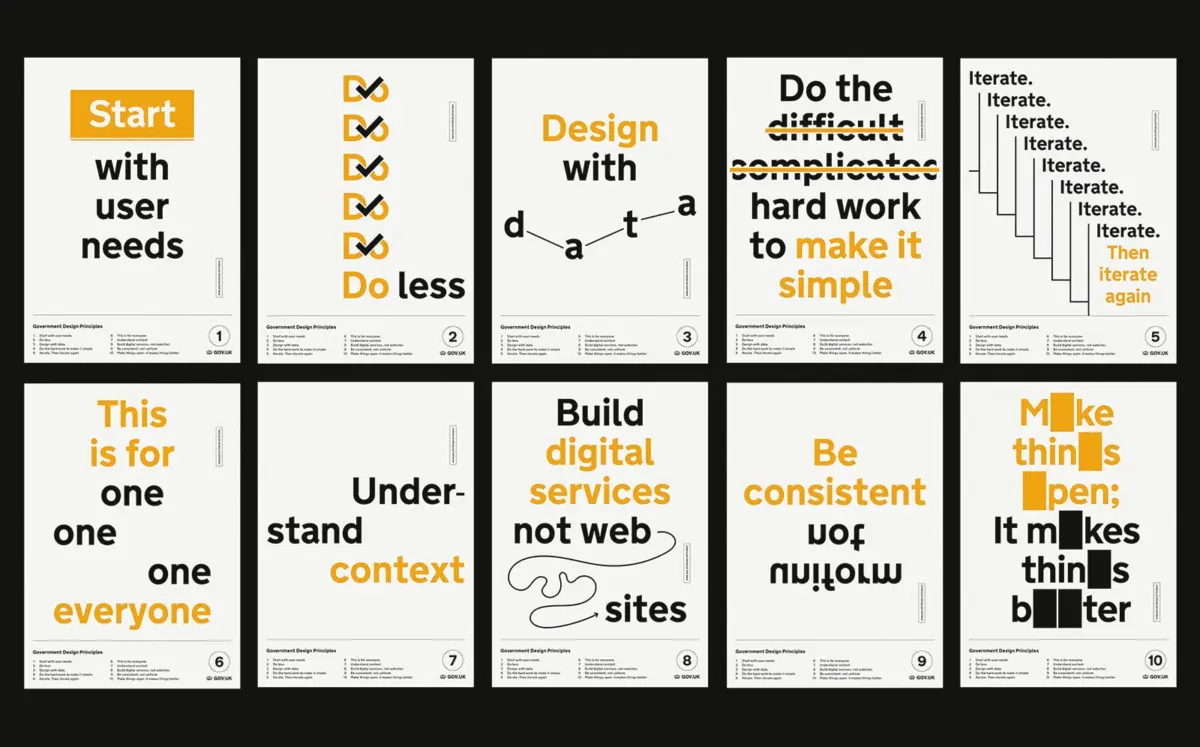
Instead of deploying dense regulatory manuals, organizations should articulate clear, high-level governance frameworks grounded in trust and common sense. A concise set of core principles—modeled after concise frameworks like the UK government’s design principles—can easily fit on a poster, providing clear boundaries while trusting employees to exercise professional judgment.
Management must accept that minor missteps are an inevitable cost of operational evolution. The objective of governance should be to establish reasonable guardrails and mitigation strategies, not to eliminate risk by rendering technology unusable.

Adaptive Technological Rollout
From an IT perspective, rigid technology procurement processes represent a critical point of failure in modern AI initiatives. Over the past decade, centralized IT departments routinely selected monolithic software suites and imposed them across entire enterprises with minimal input from end users. Departing from these pre-approved software stacks required navigating slow, committee-driven approval processes that dragged on for months, ultimately crippling project momentum.
The same dynamic is repeating today. Corporate IT departments routinely select a single enterprise AI platform, issue licenses across the company, and declare the organization enabled. However, generic tools frequently fail to meet the specialized needs of distinct departments.
Consider the experience of specialized teams, such as User Experience (UX) researchers. While enterprise leadership may aggressively push for AI integration, specialized teams often identify specific, advanced use cases—such as building custom qualitative research repositories or generating data-backed user personas. When standard corporate AI platforms prove inadequate for these tasks, teams find themselves bogged down in bureaucratic approval chains, attempting to convince centralized AI steering committees to approve specialized software alternatives. As approval processes stall, initial enthusiasm gives way to apathy.
This systemic bottleneck directly fuels the growth of "shadow AI." Just as employees during the digital transformation era bypassed corporate IT to use unauthorized cloud storage applications like Dropbox or Google Docs, today’s workers are utilizing personal accounts on platforms like ChatGPT or Claude via personal devices to complete their work.
When official corporate tools prove inadequate, dedicated employees routinely bypass administrative hurdles to maintain productivity. Shadow AI introduces severe data security risks, as sensitive corporate data moves through unmonitored personal accounts outside enterprise governance.
Attempting to eliminate shadow AI through draconian network blocks and disciplinary threats rarely succeeds; it simply drives the practice deeper underground. Shadow AI serves as an essential diagnostic signal, explicitly revealing where enterprise-sanctioned tools are failing to meet actual operational needs.
Instead of penalizing employees, organizations should actively study shadow AI usage patterns. Engaging with staff to understand why personal tools are being leveraged provides critical intelligence that should directly inform future enterprise software procurement and infrastructure rollouts. While managing a diverse tech stack carries operational complexity, organizations must tolerate a degree of initial technological fluidity as teams explore the boundaries of what different platforms can accomplish.
A Dangerous Time
For risk-averse leadership teams, embracing cultural flexibility, light-touch governance, and decentralized tool selection can feel dangerously unstructured. Executive instinct usually leans toward absolute central control, standardized workflows, and minimized operational exposure.
However, in periods of rapid technological shifts, the risk of organizational inertia and slow adaptation far outweighs the risks associated with controlled experimentation. The greatest danger facing modern enterprises is not that employees will make minor errors while learning to navigate artificial intelligence, but that organizations will view AI purely as a technical upgrade while ignoring the human systems required to sustain it.
Artificial intelligence adoption is fundamentally an exercise in human behavior, workplace culture, and organizational change management. Until corporate leadership shifts its focus from purchasing software licenses to supporting the people expected to use them, enterprise AI investments will continue to yield disappointing returns, repeating the costly mistakes of the digital past.