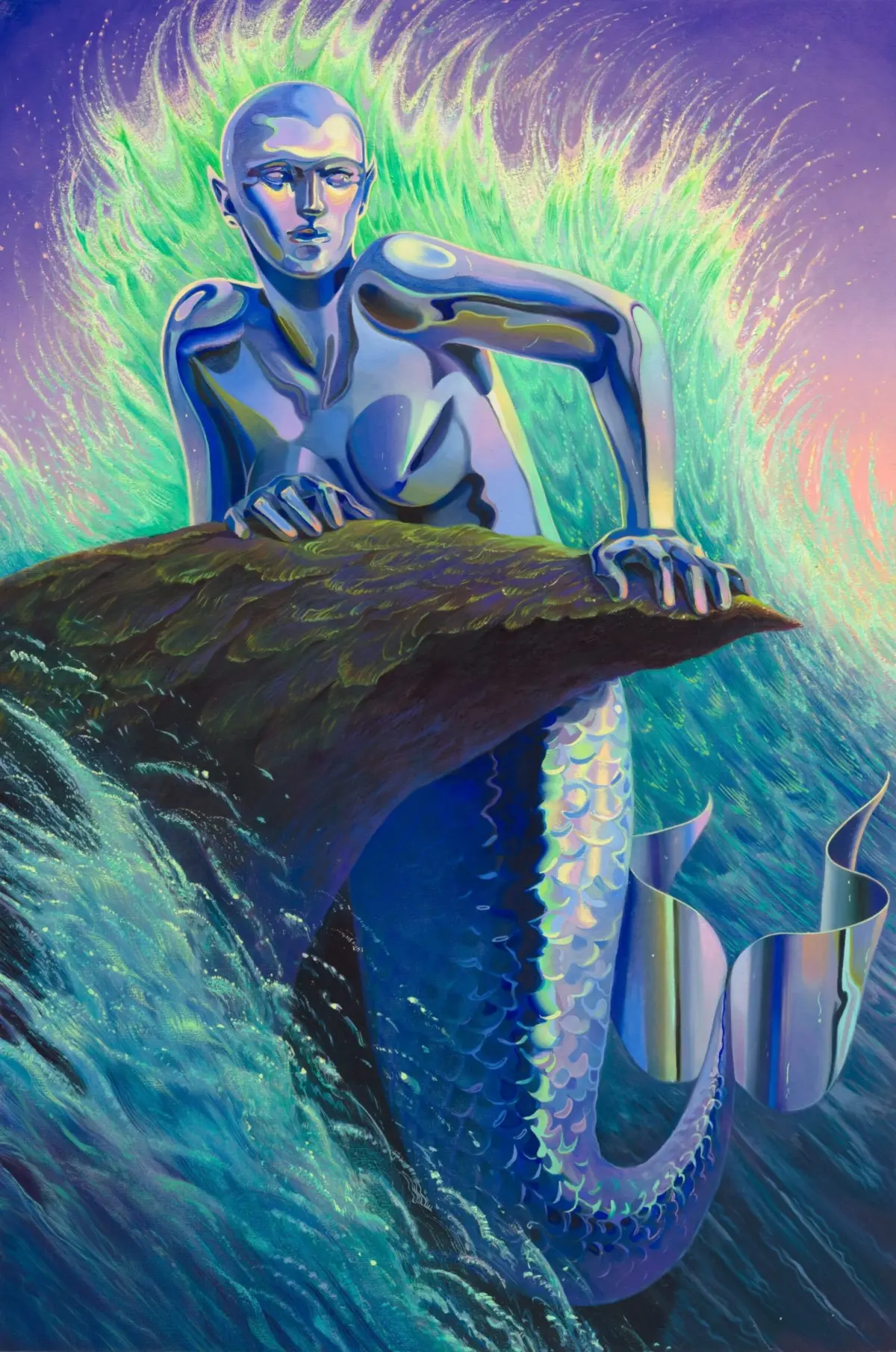
LONDON — A nude figure lies in bed amidst sickly colored linens, their frazzled hair framing a face locked in a catatonic stare. Fingertips glowing a fiery, inflamed red, the character clutches a navy smartphone as a vibrant infinity symbol superimposes itself over the scene, emerging from the device in endless, mesmerizing loops of digital energy.
This all-too-relatable portrait of modern exhaustion is just one piece of a striking new suite of works by Brooklyn-based artist Robin F. Williams. Capturing the omnipotent techno-dystopia that contemporary society seems collectively barreling toward, Williams’ latest exhibition presents a mystical, unsettling vision of a world where humanity and machines have begun to dangerously and inextricably merge. Infused with touchstones of pop culture and the rich vocabulary of art history, the collection serves as a vivid mirror for our hyper-connected, device-driven anxieties.
The new body of work is currently on view in London under the fitting title Act Natural. Presented as a pop-up exhibition by P·P·O·W Gallery at Frieze’s No. 9 Cork Street location, the showcase plunges viewers directly into the uncanny without neatly settling the unsettling state of things it portrays. The frictionless, hyper-sleek world Williams renders on canvas expertly balances the seductive allure of modern technology alongside the immense, creeping horror it continuously elicits from its users.
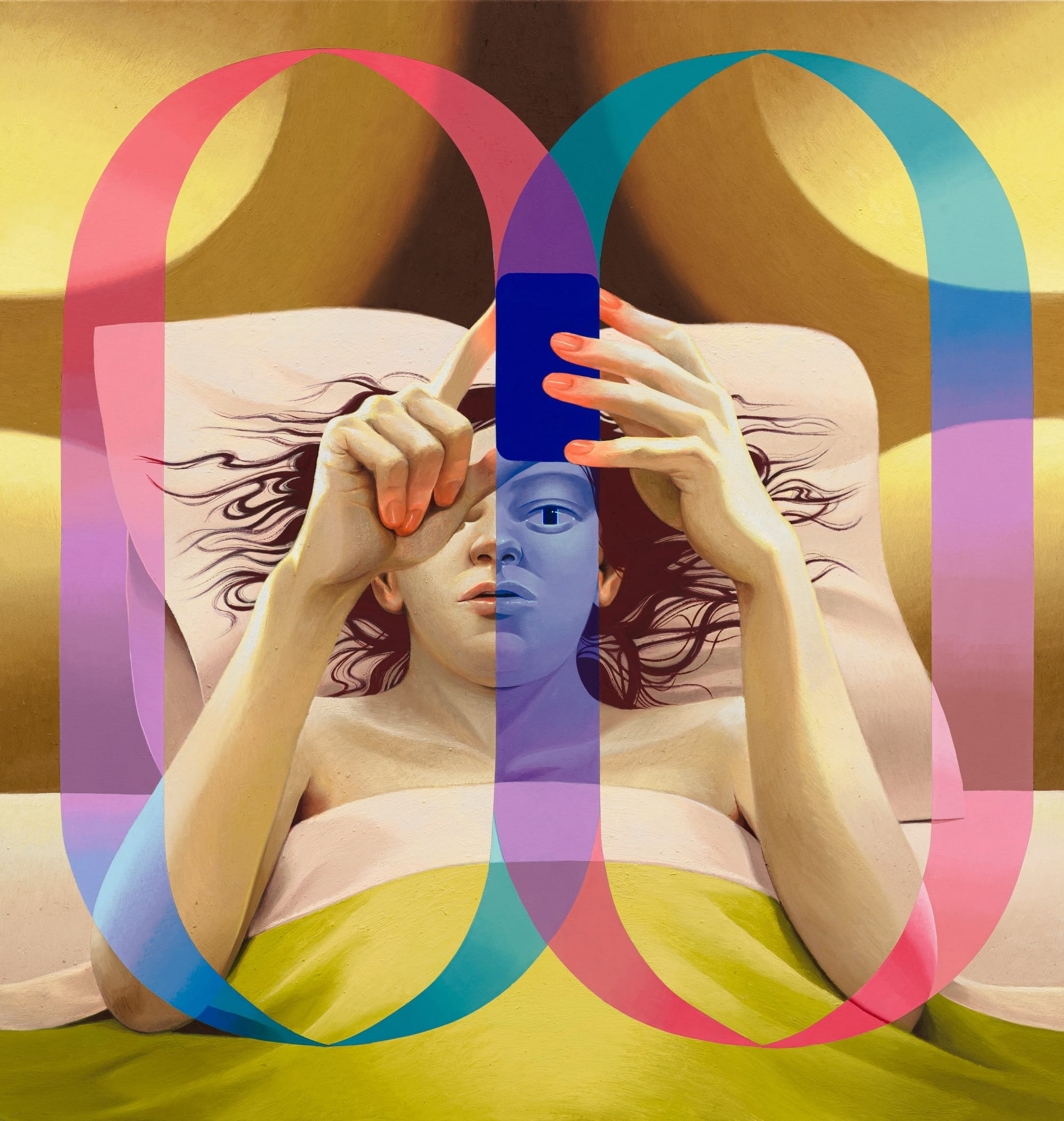
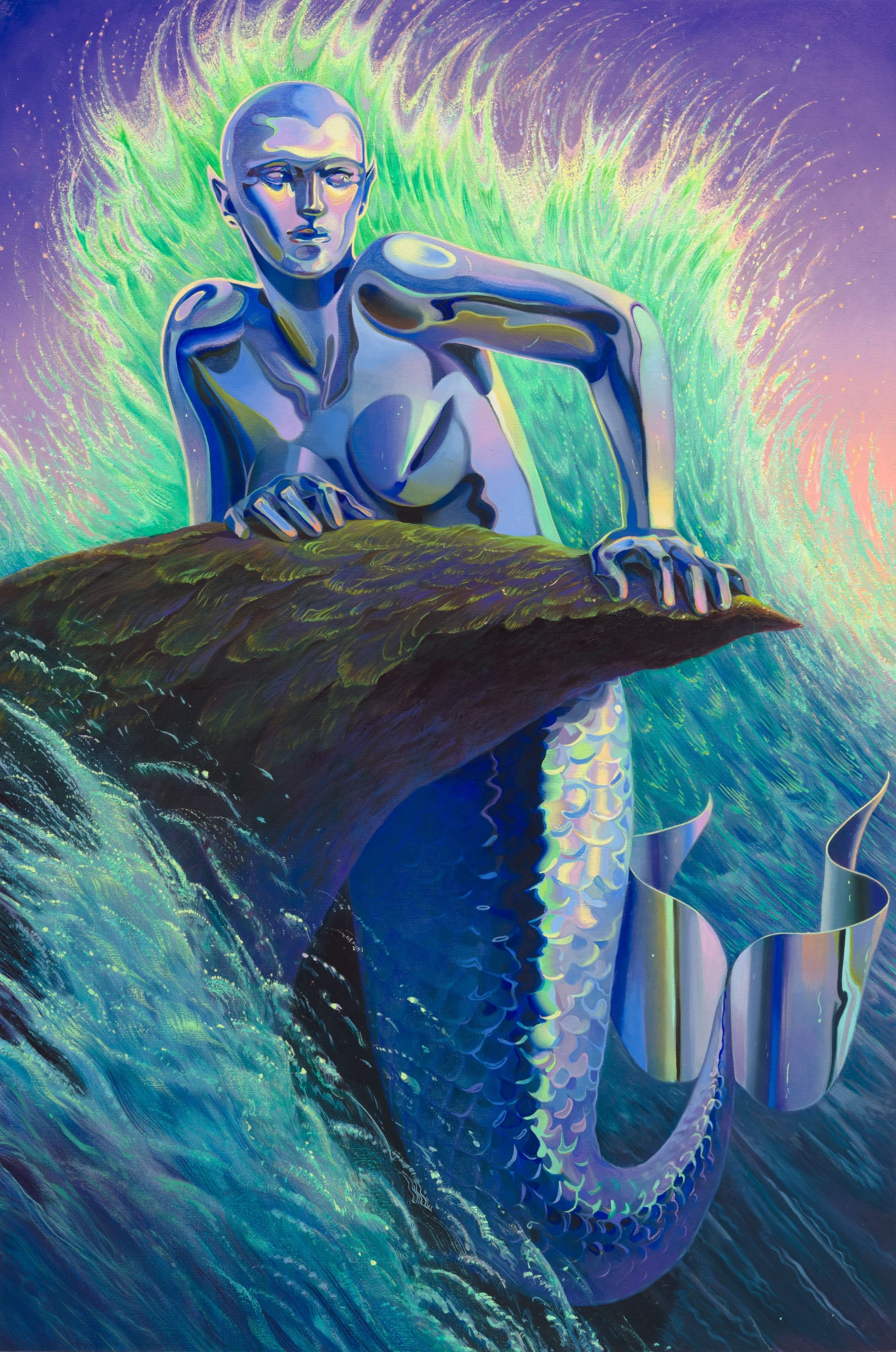
Among the standout pieces in the exhibition is "The Merminator," a compelling oil-on-linen painting measuring 60 by 40 inches. The work playfully yet unsettlingly combines two distinct cultural archetypes from the 1980s: the relentless cyborg assassin and the classic Disney princess. The resulting image features a metallic, robotic entity perched precariously on a stone. Like Hans Christian Andersen’s and Disney’s Ariel, the robotic figure peers out toward a world it presumably longs to be a part of, while simultaneously underscoring the tragedy of a creature that fundamentally cannot be accepted by the very environment it observes.
Another centerpiece of the exhibition is "I Am Not a Robot," a striking 48-by-48-inch acrylic and oil painting on canvas. The piece is intensely symmetric, taking distinct compositional cues and color palettes from the pioneering spiritualist abstractions of Hilma af Klint. At the same time, the painting deeply engages with classical religious iconography, drawing inspiration from Sandro Botticelli’s Renaissance masterpiece, the Madonna of the Pomegranate. In Botticelli’s original work, the titular fruit serves as a rich visual metaphor for the human heart and divine love. In Williams’ contemporary iteration, however, the human heart is replaced by the glowing smartphone, radiating its captivating light outward in place of a traditional, life-giving spiritual source.
Throughout Act Natural, Williams navigates the complex emotional terrain of living in a digitized society. The works investigate how human bodies, identities, and desires are continually reshaped, filtered, and commodified by the digital tools we carry in our pockets. By intertwining high art historical references with the low-brow ephemera of internet culture, memes, and algorithmic interfaces, the artist creates a visual language that feels both ancient and aggressively futuristic.
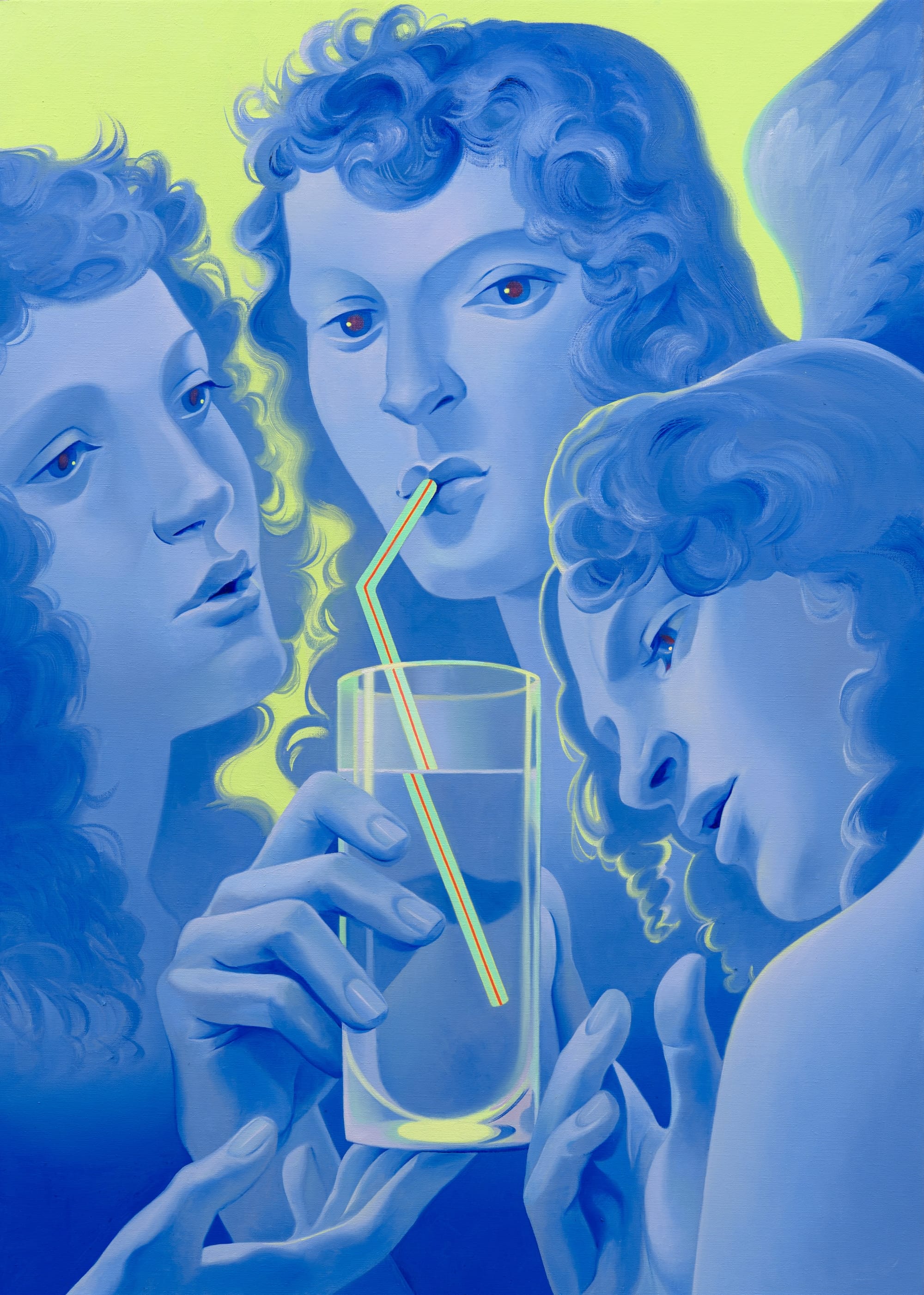
The exhibition also features works such as "Holy Thirst Trap," a 42-by-30-inch oil on linen piece depicting a trio of blue-hued figures huddled together to drink from a shared glass, and "Language Model," a 60-by-54-inch oil on canvas capturing a nude figure posing on a beach with an arched back rendered in deep shades of red and purple. Alongside "Spooky Action at a Distance" and the detailed intricacies of "Infinite Scroll," the collection presents a cohesive yet multifaceted examination of contemporary alienation.
P·P·O·W’s pop-up exhibition of Act Natural at No. 9 Cork Street in London is open to the public through October 24, offering international art enthusiasts a rare chance to engage with Williams’ profound commentary on the intersection of technology, myth, and human consciousness.