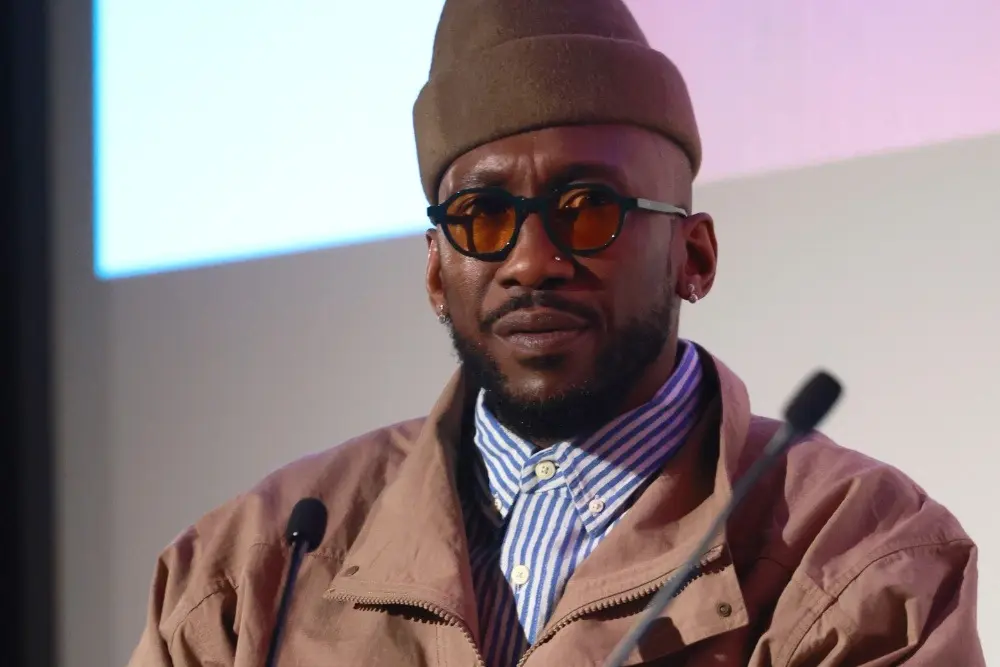
Mahershala Ali delivered an emotionally charged appearance at the BFI London Film Festival on Saturday, breaking down in tears on stage as he reflected on the profound impact of Barry Jenkins’ celebrated drama “Moonlight,” a film that recently marked its 10th anniversary and earned the actor the first of his two Academy Awards.
During an extensive and revealing Screen Talk hosted by interviewer Amon Warmann, Ali found himself revisiting one of the most pivotal moments in the film. The discussion turned toward the celebrated dinner-table scene in which young Chiron confronts Juan—the complex, nurturing drug dealer portrayed by Ali—asking him point-blank whether he sells drugs. As Ali recalled the heavy emotional architecture of that interaction, the gravity of the sequence clearly resurfaced for him.
“You see this like crisis for this young boy who’s already in crisis,” Ali said on stage, his voice carrying the weight of the memory. “It’s really heartbreaking.”
The emotional peak of the conversation arrived when Warmann asked Ali to account for the enduring cultural power and resonance of “Moonlight” a decade after its groundbreaking release. Upon hearing the question, Ali paused abruptly. Visibly overcome with emotion, he began to weep, taking a moment to cover his eyes and wipe away tears before addressing the packed auditorium.
“Sorry, just need a second,” he told the audience, collecting himself amidst warm, supportive applause.
Once he had composed his thoughts, Ali articulated why the film continues to resonate deeply with audiences around the globe. “Any time people put flesh on the bones of those who haven’t been seen or had their moment, I think it’s important,” he said. “I think ‘Moonlight’ was able to make those characters people… make it personal.”
To authentically inhabit the role of Juan, Ali drew deeply from his own personal history, specifically channeling a formative figure from his youth. The character was modeled in part after an uncle-like mentor whom Ali had known all his life—a man he grew up playing basketball with who also worked as a substitute teacher. Ali recalled the profound shock he experienced during his college years when this foundational figure was arrested and sent to prison, a jarring event that shattered his perception of the world around him.
“I thought of him a lot in the making of the film because of how human everyone was in my environment and in my upbringing,” Ali explained, detailing the rich, layered reality of the neighborhood and community that shaped his early years.
While celebrating the legacy of “Moonlight,” the actor was also candid about the complex professional and personal journey that followed his subsequent Oscar-winning performances. The conversation shifted toward the intense backlash that surrounded his 2018 biographical comedy-drama “Green Book,” in which he played the brilliant classical and jazz pianist Don Shirley opposite Viggo Mortensen. The film marked Ali’s first leading role of that immense magnitude, but it was accompanied by a firestorm of controversy, including public disputes over what Shirley’s family had and had not sanctioned regarding the portrayal.
Despite the fierce public scrutiny and online debate, Ali maintained a steadfast perspective on the project. “I still stand by it. I stand by the work,” Ali stated, adding that he also stands by “the experience as a whole, and what it taught me.”
Reflecting on the whirlwind period that saw him transition from an rising talent to a two-time Academy Award winner, Ali described the strange psychological terrain of sudden, massive critical acclaim. He noted that he went from feeling like a golden boy of the industry to questioning whether he had somehow misstepped.
“I think I’m just sensitive in general, you know what I mean? So it definitely like had its impact, like for sure,” he said. At the same time, he expressed profound gratitude for the intense exposure and the resilience it forged within him, using a vivid metaphor to describe the trial by fire: “Like swords are folded in the fire, you know?”
Reflecting further on his back-to-back Academy Award wins, Ali offered a grounded perspective on achievement versus personal peace. “I felt a sense of accomplishment, which is not fulfillment,” he revealed, noting that he deliberately keeps his prestigious golden statuettes tucked away in a cabinet, completely out of his sight line, so that he can remain focused on the craft of acting rather than past accolades.
That relentless work ethic has kept Ali at the forefront of both live-action prestige drama and major animated franchises. During the festival talk, the conversation turned to his voice role as Aaron Davis in the critically acclaimed animated “Spider-Verse” films. This includes his compelling portrayal of an alternate-universe version of the character who makes a surprise appearance at the suspenseful conclusion of “Across the Spider-Verse” and is slated to return in the upcoming “Beyond the Spider-Verse.”
When pressed by Warmann on how he manages to differentiate between the two distinct iterations of the character, Ali remained playfully tight-lipped. “I don’t want to give anything away or spoil anything, I’ve got to be careful,” he smiled. Pushed further on whether he had officially wrapped his recording sessions for the trilogy’s conclusion, Ali joked, “I might not even be in it, man! I don’t know, man! I don’t know!”
He was far more open, however, about the unique creative process of voice acting in modern animation. Ali explained that actors are frequently filmed in the recording booth while delivering their lines, and their spontaneous, improvised moments regularly find their way into the final cut of the movie. These organic choices occasionally prompt animators to execute script rewrites and call actors back for extra recording sessions to match the new visual beats. “I think that’s why, honestly, the animation films will hold up better than live-action films,” Ali observed.
The demands of live-action production, conversely, have occasionally pushed the actor to his absolute limits. Ali noted that he transitioned directly from the grueling press tour and release cycle of “Green Book” straight into the third season of HBO’s dark crime anthology series “True Detective,” allowing himself a mere week or two of rest. In the ambitious crime drama, he played troubled detective Wayne Hays across three distinct chronological timelines.
Portraying an aging Hays battling cognitive decline required punishing 80-hour work weeks, anchored by grueling daily four-hour sessions in the makeup chair beginning as early as 3:30 a.m. The exhaustive production schedule ran for a grueling seven months, all while his daughter was just a year old.
“I just think about how I almost went crazy doing that part,” he confessed.
Ali’s versatility was on full display at the BFI London Film Festival, where two very different projects featuring the actor were showcased. In addition to his festival appearances, he voices the villainous bandit leader Brendan in the anticipated stop-motion animated fantasy feature “Wildwood.” Meanwhile, in the gritty action thriller “Your Mother, Your Mother, Your Mother,” Ali stars as Latif, a devout Muslim father who also works as a contract killer—a dual identity that required him to rapidly master complex physical combat choreography in just three or four days.
“It’s really more like dance than what people realize,” he remarked of the fight sequences.
Elaborating on his choice to portray Latif, Ali emphasized the cultural importance of expanding cinematic representation for Black Muslim men. “I don’t feel like Black fathers have the dimensionality that I would love for them to have,” he said.
Currently hard at work on the upcoming HBO crime series “Task” alongside co-star Mark Ruffalo, Ali reflected that despite the punishing schedules, the intense emotional toll of past projects, and the relentless physical demands of his filmography, he remains deeply energized by the creative journey. He noted that he currently feels “exhausted for the right reasons” and “tired in the right way.”
“So that’s why I feel like I’m just getting started,” Ali concluded.