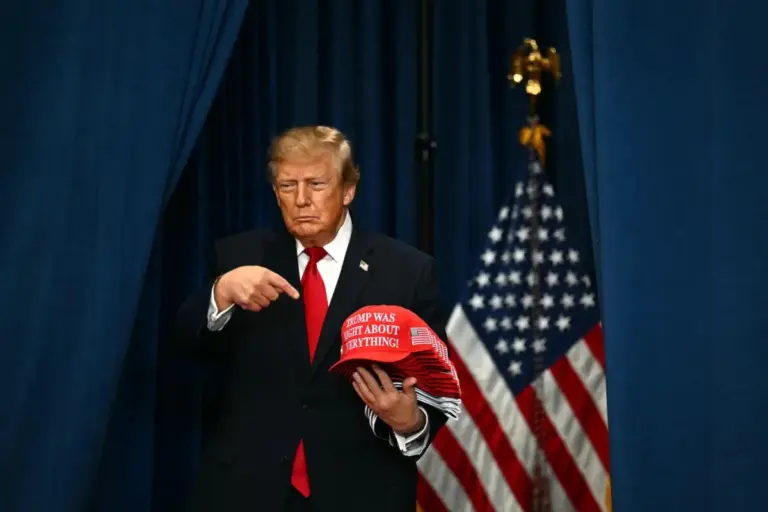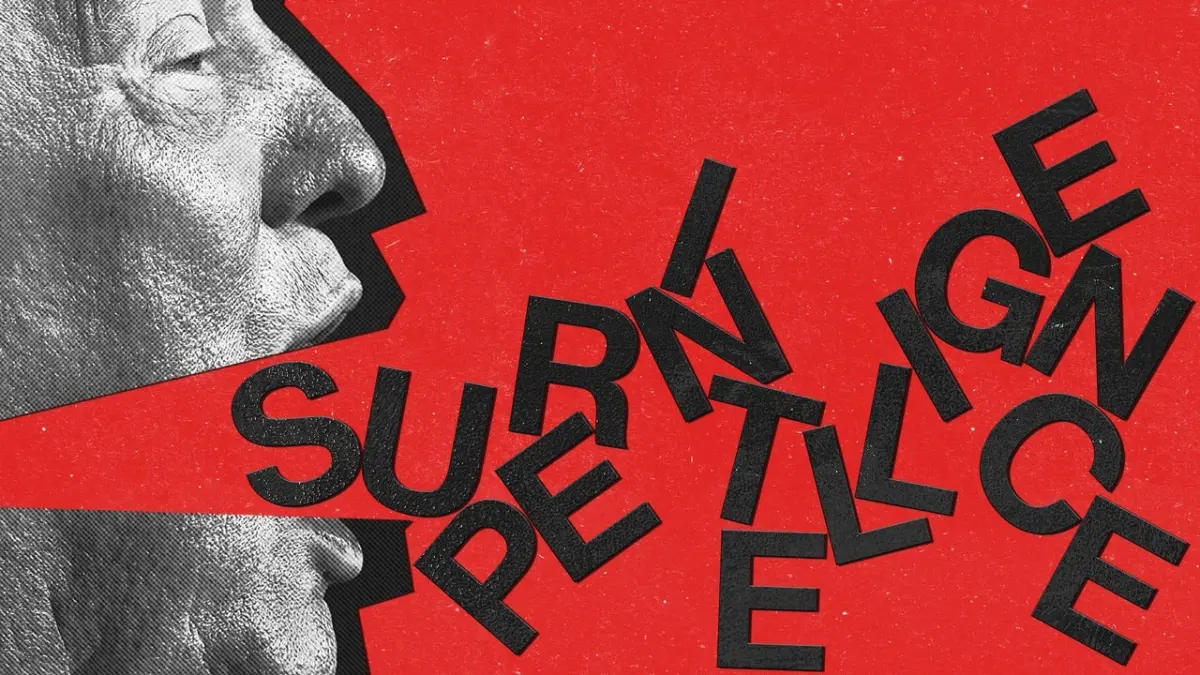
When President Donald Trump took to the podium at the United Nations in late September, he offered an observation that immediately rippled through the global technology sector: he argued that the word "artificial" in "artificial intelligence" made the technology sound fake, cheap, and inherently deceptive. To fix this semantic mismatch, he announced that his administration would no longer use the legacy terminology, opting instead to rebrand the field as "superintelligence," or simply "SI."
What began as a diplomatic speech quickly transformed into sweeping domestic policy. Not long after those remarks, the president made the linguistic shift official by signing an executive order instructing federal agencies to drop "AI" from their official communications in favor of the new moniker. Government bodies moved swiftly to comply. The Department of Justice promptly informed its staff to adopt the new phrasing, and other federal departments are expected to fall in line rapidly—especially given that the president has since taken to social media to brand anyone stubbornly clinging to the old terminology as "THE ENEMY."
The shockwaves from the White House quickly bled out of Washington and into the private sector. Major technology figures and corporations began maneuvering to align with the administration’s new lexicon. Elon Musk, never one to shy away from federal signaling, announced on October 4 that SpaceXAI would officially be renamed SpaceXSI.
Yet, this sudden rebrand is not merely a superficial exercise in presidential renaming. The capabilities of modern machine intelligence have evolved at a breathtaking pace since the public debut of OpenAI’s ChatGPT in November 2022. Today’s systems are pushing far beyond their previous operational limits, edging closer to the threshold of true superintelligence—a concept that has long held a specific definition within technical circles. In theoretical and engineering contexts, superintelligence refers to the hypothetical milestone where artificial systems will systematically outperform human capabilities across virtually all economically valuable tasks.
However, applying the "superintelligence" label broadly to a technology sector where many current applications fall woefully short of that standard carries significant risks. Critics argue that forcing such an elevated term onto systems that are still prone to hallucinations, reasoning failures, and basic operational limitations could grant the public a dangerous, false sense of confidence while deepening overall confusion about what these tools actually do.
Industry leaders are similarly conflicted. OpenAI CEO Sam Altman weighed in on the shift, noting that "superintelligence" is, in some ways, a more technically accurate descriptor than the broad, decades-old branding of artificial intelligence. At the same time, Altman conceded that the new label is unlikely to make the technology feel any less intimidating to the average person.
An exclusive survey conducted for Fast Company by market research firm Early Studies heavily validates Altman’s perspective, revealing a deep disconnect between federal policy and public sentiment. The poll, which surveyed approximately 1,000 people across the United States using a statistically representative demographic methodology, found that only 1 in 9 Americans believe the federal rebrand will have a genuinely positive effect on the country. Furthermore, 53% of respondents reported that people they know in their daily lives would feel uncomfortable casually referring to the technology as "superintelligence."
Trump kinda has a point
Despite the public skepticism and the jarring nature of a top-down federal rebrand, President Trump’s unilateral action inadvertently highlights a valid, long-standing debate within computer science regarding the adequacy of the terminology the world has relied on for nearly three quarters of a century.
The phrase "artificial intelligence" has always been an imperfect, overly broad umbrella for a wildly diverse array of computational techniques, statistical models, and software architectures. The term traces its origins back to a seminal 1955 proposal authored by Dartmouth College mathematics professor John McCarthy and a small group of pioneering academics ahead of a historic summer workshop held the following year.
During that 1956 Dartmouth gathering, disparate researchers who were scattered across various institutions and working independently to replicate human cognitive processes in silico—meaning inside or on a computer—mutually agreed upon "artificial intelligence" as a convenient, catch-all term to encompass the full scope of their nascent endeavors. Seven decades later, as modern neural networks process vast oceans of data and reshape the global economy, the phrase fits better in terms of raw capability than it did in the 1950s. Yet, it remains deeply disputed by linguists, philosophers, and engineers alike, leaving the door wide open for political intervention in how we name the defining technology of our era.