At the start of this year, an unusual wager was placed between a human and a hound. My brother-in-law, Phil, decided to place a bet with our family dog, Macy. I allowed the proceedings to move forward with the full understanding that our dog possessed no cash reserves of her own, meaning she could lose little more than a chewed-up toy. The whimsical gambling moment had been prompted by sobering news that arrived earlier: both hound and human had been diagnosed with incurable cancers and had reached a stage where medical consensus dictated stopping treatment to let the disease run its course. While the premise sounds bleak, it proved to be a prelude to a series of life-changing moments underscored by a persistent, defiant brand of humor.
Macy lost the bet quite badly—thankfully, she never discovered the complexities of blackjack—and departed in March. Now, Phil has gone too, with his funeral scheduled for this week. Yet, looking back, this column isn’t really about either of them in isolation. Instead, it grapples with that age-old, inescapable question: "But what does it all mean?" Because when Phil placed that lighthearted bet, he quietly established a couple of powerful, unyielding caveats regarding his final chapters. He made a pact with himself that he was not going to die before September 5th, a date circled on the calendar because he and my sister were planning to throw a grand party to celebrate her milestone birthday alongside a major wedding anniversary. Furthermore, he stipulated that when his time finally came, he would pass away in a hospice of his own choosing, rather than at home.
The path to that milestone celebration required some logistical gymnastics. I headed straight to the big shindig after attending the Monocle Quality of Life Conference. My partner picked me up directly from Heathrow Airport, and I executed a rapid wardrobe change inside the car as we hurried to ensure we were not excessively late. It proved to be an extraordinary, unforgettable night, even though an underlying melancholy accompanied the festivities; I knew with absolute certainty that this would be the final time all three of my sisters, their respective partners, and mine would ever gather together in the exact same room.
In the days immediately following that celebratory evening—where Phil had effectively held court and savored the company of his dearest loved ones—his health experienced a swift and anticipated decline. He was transferred to the hospice he had hand-picked, but on the very first night, shortly after his family had departed for some necessary rest, he passed away. I have since discussed this sequence of events at length with my sister, marveling at how that single date circled on the calendar acted as an anchor that kept him going, and how even his sheer, stubborn determination to make it safely to the hospice doors kept him alive for one final, purposeful day. He possessed a tangible purpose and a meticulously executed plan.
This interplay between mental resolve, intentionality, and physical longevity was brought into sharp focus just last week. While I was traveling with the Monocle crew at the Livex liveability summit in Abu Dhabi, I had the privilege of hosting a panel discussion dedicated to exploring how we successfully engineer and cultivate healthy cities. I quizzed three remarkable authorities on the subject: Dan Buettner, the acclaimed writer and researcher who has popularized global findings surrounding "blue zones," which are distinct geographic regions boasting exceptionally high concentrations of centenarians; Max Lugavere, a highly successful author and podcaster who focuses heavily on nutrition and brain health; and Khaled Ghattass, an author and human-behavior expert who offered invaluable perspectives from the Arab world. While our conversation naturally touched upon traditional pillars of wellness like diet and exercise, a profound secondary theme quickly emerged to dominate the discourse: the critical, life-extending importance of living a life anchored by clear meaning.
During the panel, Ghattass introduced some stark, sobering examples illustrating how deeply human mortality is tied to psychological purpose. Citing extensive data, he noted that if your romantic partner passes away, your own statistical likelihood of dying within the subsequent year increases by a staggering 60 percent. Naturally, I can only hope my own sister doesn’t catch wind of those statistics and get any ideas—there is, after all, a strict limit to how many bereavement days I can possibly take off work. Ghattass also addressed the widespread phenomenon of why individuals so frequently succumb to accelerated physical illness and cognitive decline immediately following retirement. He shared a personal anecdote regarding his own father, whose mental health noticeably deteriorated once he stepped away from his career. By consciously injecting purpose back into his father’s daily routine—specifically by placing him squarely in charge of managing the family’s household finances—Ghattass watched his father’s cognitive and physical health rapidly rebound and flourish.
Buettner’s extensive demographic and anthropological research strongly reinforces these very conclusions. He explained that individuals who live remarkably long, vibrant lives almost universally tend to maintain rich social circles that actively reinforce healthy behaviors. These populations are typically sustained by strong family ties, active faith systems, and reliable networks of friends whom they can call upon whenever support is needed. Furthermore, Buettner highlighted surprising physical correlations discovered during his research, noting that individuals who regularly engage in volunteer work tend to maintain significantly lower body mass indices (BMIs) than their non-volunteering peers. Pointing to cultural differences in places like Okinawa, he noted a striking linguistic detail: in their native vocabulary, there is simply no native word that translates to "retire."
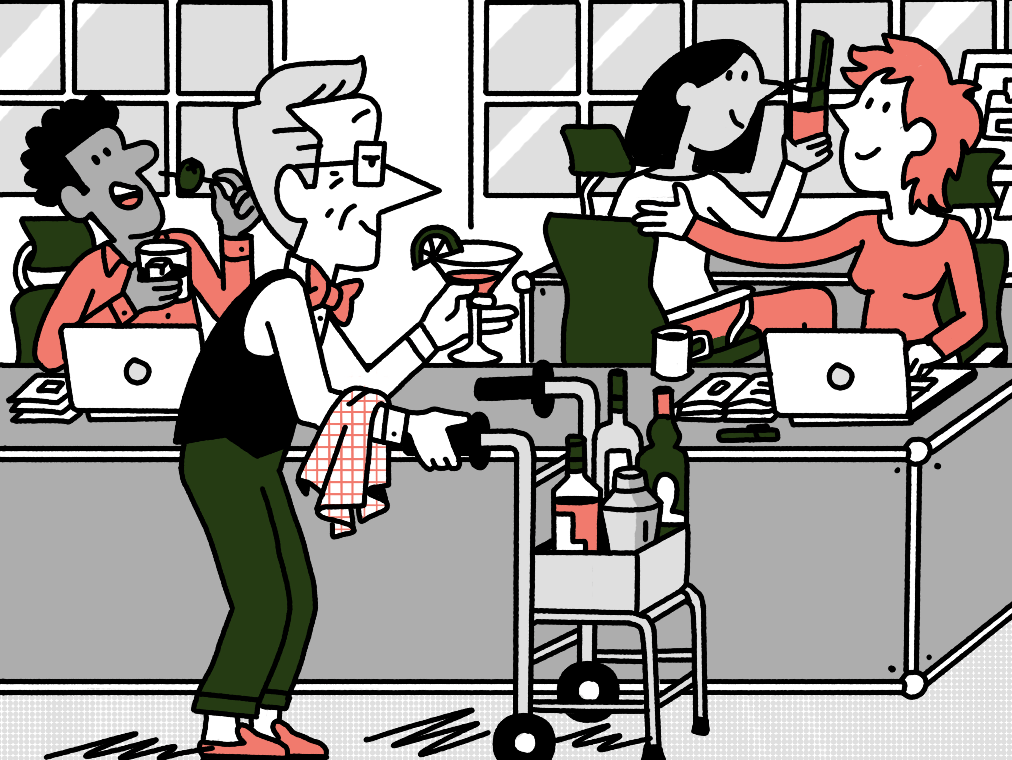
The broader takeaway from these converging narratives is clear. If one harbors a genuine desire to keep moving forward, to sustain physical health, and to keep the brain sharp well into advanced age, an individual must be able to readily answer a deceptively simple question: what am I actually here for? And that answer needs to be clear well before you have even finished your morning wholegrain toast. If these principles hold true, it appears I may well end up shuffling around the corridors of Midori House as a nonagenarian someday. Perhaps I can take charge of the office drinks trolley; I have a strong suspicion I would be rather good at that.