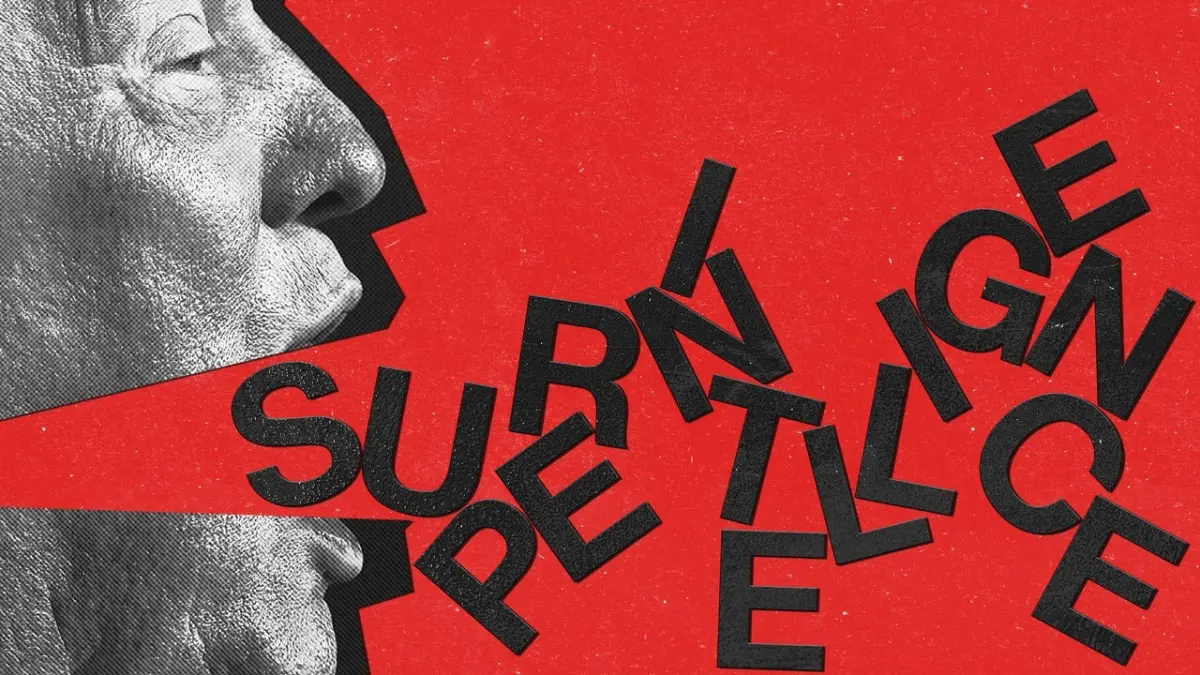
When President Donald Trump took the podium at the United Nations in late September, he delivered a critique that immediately sent ripples through both government halls and the tech industry. Taking aim at the foundational nomenclature of modern technology, the president argued that the word "artificial" in "artificial intelligence" made the revolutionary systems sound fake, cheap, or deceptive. Instead, he declared that his administration would transition to calling the technology "superintelligence," or simply "SI."
What began as a diplomatic speech quickly transformed into sweeping administrative policy. Not long after those remarks, the president made the rebrand official by signing an executive order instructing all federal agencies to drop the term "AI" in favor of his chosen phrase across all official communications and documents. The federal bureaucracy moved with swift compliance. The Department of Justice promptly instructed its staff to adopt the new terminology, and other government departments are rapidly falling in line. The compliance is driven not just by administrative protocol, but by high-stakes political reality: the president has publicly branded anyone who continues to use the old terminology of "AI" as "THE ENEMY" on social media.
The linguistic pivot has not remained confined to Washington. The tech sector, deeply intertwined with federal policy, defense contracts, and regulatory oversight, has begun responding to the administration’s new paradigm. Among the most notable early adopters was billionaire entrepreneur Elon Musk, who announced on October 4 that SpaceXAI would officially be renamed SpaceXSI, signaling how quickly high-profile figures and corporations are pivoting to align with the new nomenclature.
Yet, this sudden rebrand is far more than a superficial linguistic exercise driven purely by political whim. Over the past several years, the capabilities of these computational systems have advanced dramatically beyond their previous historical limits. Ever since the widespread public release of ChatGPT in November 2022, rapid leaps in processing power, algorithmic sophistication, and data integration have pushed the technology closer to true superintelligence—a term that already carried a specific, technical definition within computer science and research circles. In those technical contexts, superintelligence denotes the theoretical threshold at which artificial systems can systematically outperform human capabilities across virtually all economically valuable and cognitive tasks.
However, abruptly slapping the "superintelligence" label onto a technology whose current iterations frequently fall short of that ultimate standard carries significant risks. Critics and industry observers point out that elevating the terminology before the underlying technology is genuinely mature could create a dangerous false sense of confidence among the public while deepening widespread confusion about what these systems can actually do.
OpenAI CEO Sam Altman weighed in on the shift, noting that "superintelligence" is arguably a more accurate descriptive term than the broad, catch-all branding of AI used for decades. At the same time, Altman acknowledged a persistent reality about public perception: adopting a grander, more powerful-sounding name is unlikely to make the technology feel any less intimidating to everyday citizens.
An exclusive survey conducted for Fast Company by market research firm Early Studies validates Altman’s perspective, revealing a deep chasm between official rhetoric and public comfort. The poll, which surveyed approximately 1,000 individuals across the United States using a statistically representative demographic methodology, found that skepticism heavily outweighs optimism regarding the rebrand. According to the data, only 1 in 9 Americans believe that renaming the technology will have a positive net effect on the country. Furthermore, an outright majority of 53% of Americans reported that people they know personally would feel uncomfortable or uneasy calling the technology "superintelligence."
Trump Kinda Has a Point
Despite the public skepticism and the heavy-handed nature of the federal mandate, Trump’s unilateral action inadvertently highlights a genuinely valid, long-standing debate within the scientific community regarding the adequacy of the terminology the world has relied on for nearly three quarters of a century. Long before it became a ubiquitous consumer product and a geopolitical flashpoint, "artificial intelligence" was widely considered by computer scientists to be an imperfect, overly broad way to describe a vastly diverse spectrum of computational technologies.
The term’s origins trace back to a foundational 1955 proposal written by mathematics professor John McCarthy and a small group of academic peers ahead of a historic summer workshop held at Dartmouth College the following year. During that landmark gathering, disparate researchers who were striving to replicate human brain functions in silico—meaning inside or on a computer system—agreed upon "artificial intelligence" as a convenient, umbrella phrase broad enough to encompass the full scope of their scattered research efforts.
Seven decades later, as modern neural networks and machine learning systems permeate daily life, the old acronym fits somewhat better than it did during the pioneering days of the 1950s, yet it remains a heavily disputed and imprecise label. Whether replacing it with a politically mandated term like "superintelligence" will clarify public understanding or simply introduce new layers of confusion remains to be seen as federal agencies, tech giants, and everyday citizens navigate this sudden era of linguistic and technological transformation.