To the average commuter, a battered end table left on a London sidewalk or a single, lonely mitten trodden into the pavement represents little more than urban refuse. But in the imaginative landscape of Seoul-born artist Woo Jin Joo, these accidental relics of daily life are pregnant with possibility, serving as the raw ingredients for uncanny, myth-infused sculptures that blur the boundaries between domestic architecture and breathing biological forms.
Joo, who divides her time between living in London and commuting to her studio space in Deptford, has built a distinctive artistic practice rooted in the serendipitous discovery of discarded materials. As she navigates the streets near her home or travels to her studio, she maintains an open, receptive posture toward her environment, allowing objects left behind by strangers to cross her path by pure happenstance.
"I am not actively looking for anything in particular, but I discover them by happenstance, and they become meaningful; they provoke my imagination," Joo explains, reflecting on her scavenging process. "This is how I feel like we conjure meaning in our lives."
The Alchamy of Ordinary Materials
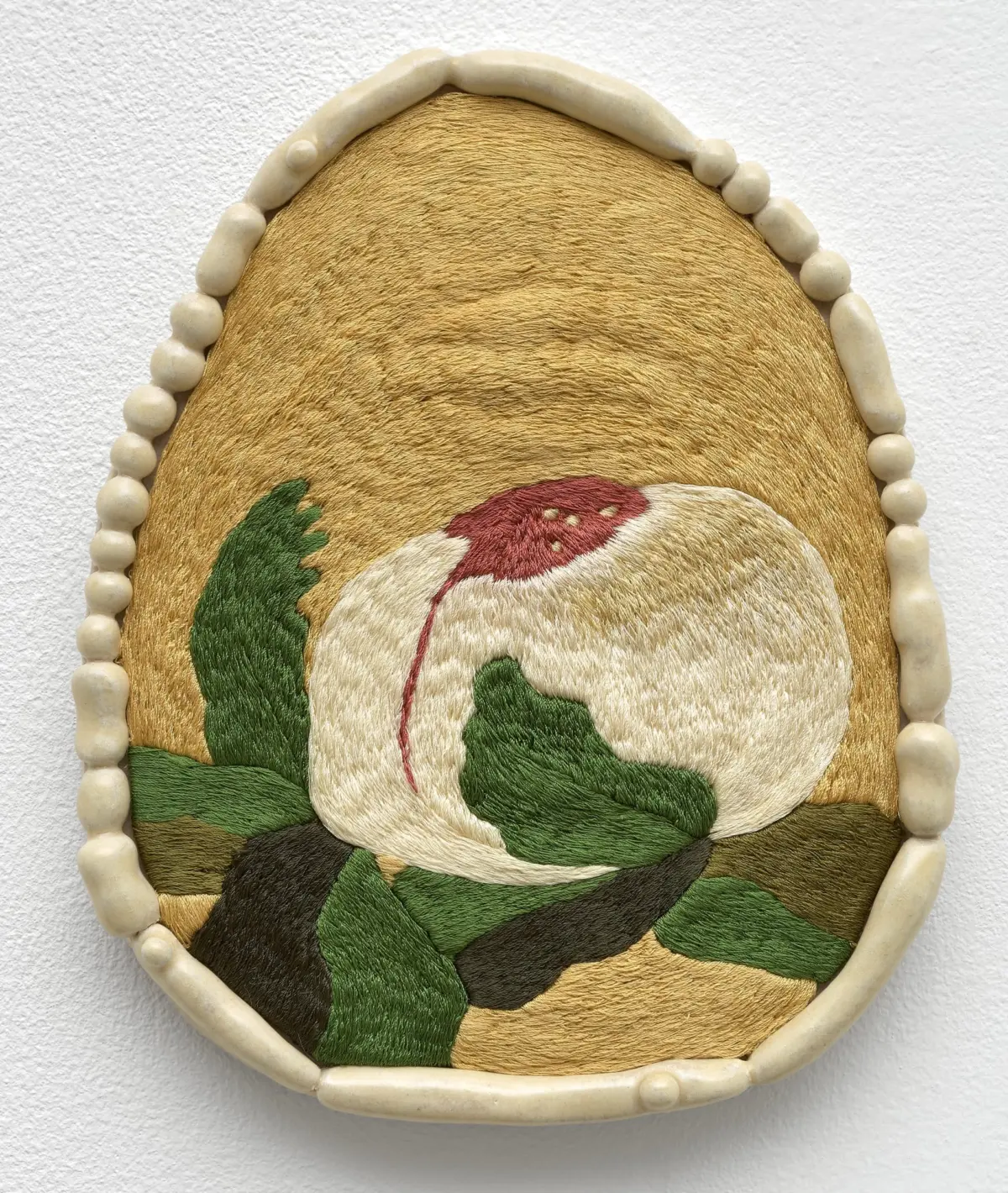
Once brought into the studio, these overlooked fragments undergo a radical physical and conceptual transformation. Through a meticulous combination of traditional handiwork—specifically intricate viscose thread embroidery—alongside clay, textiles, wadding, and the salvaged objects themselves, Joo fashions figures that evoke a powerful, eerie presence.
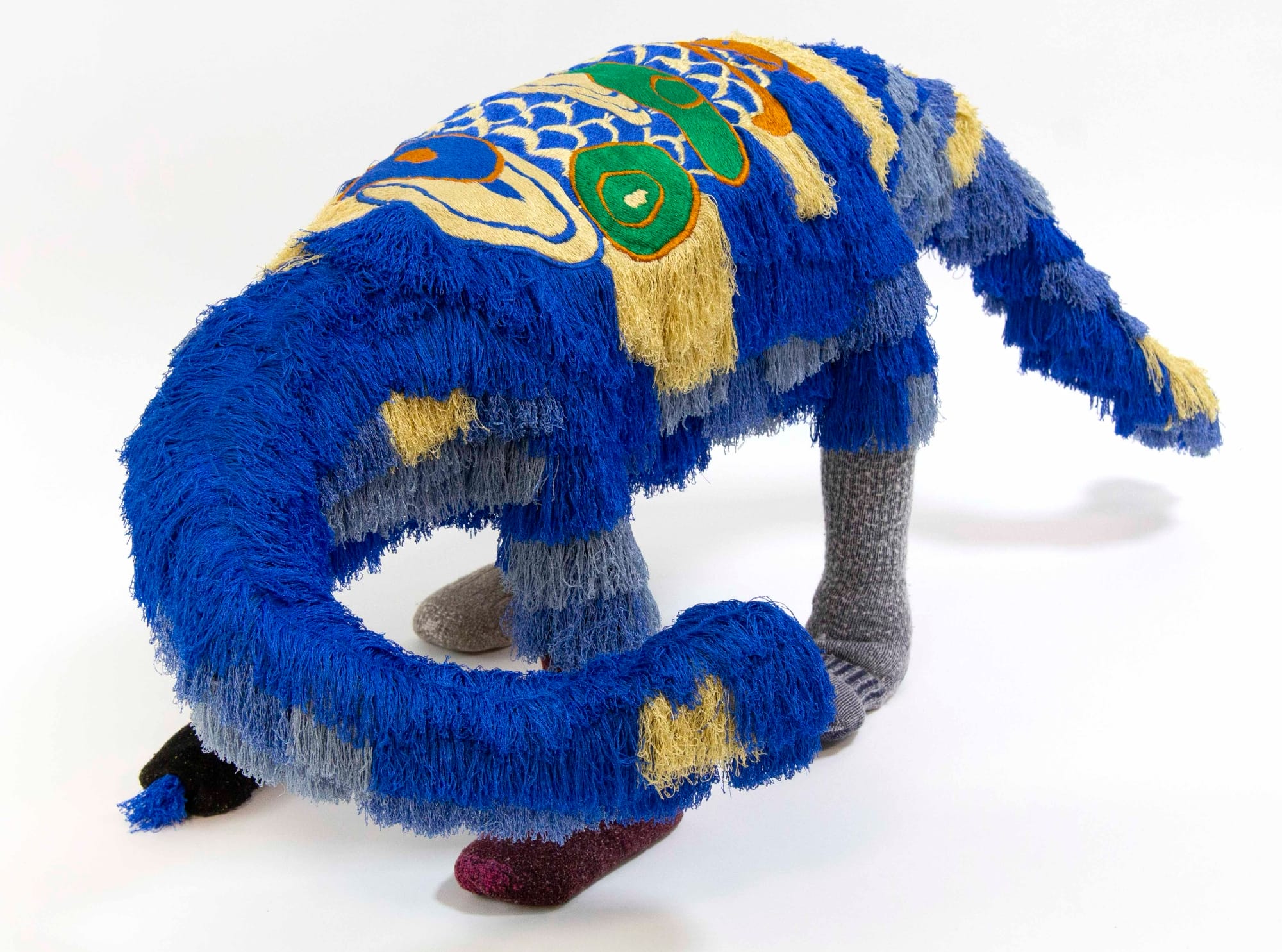
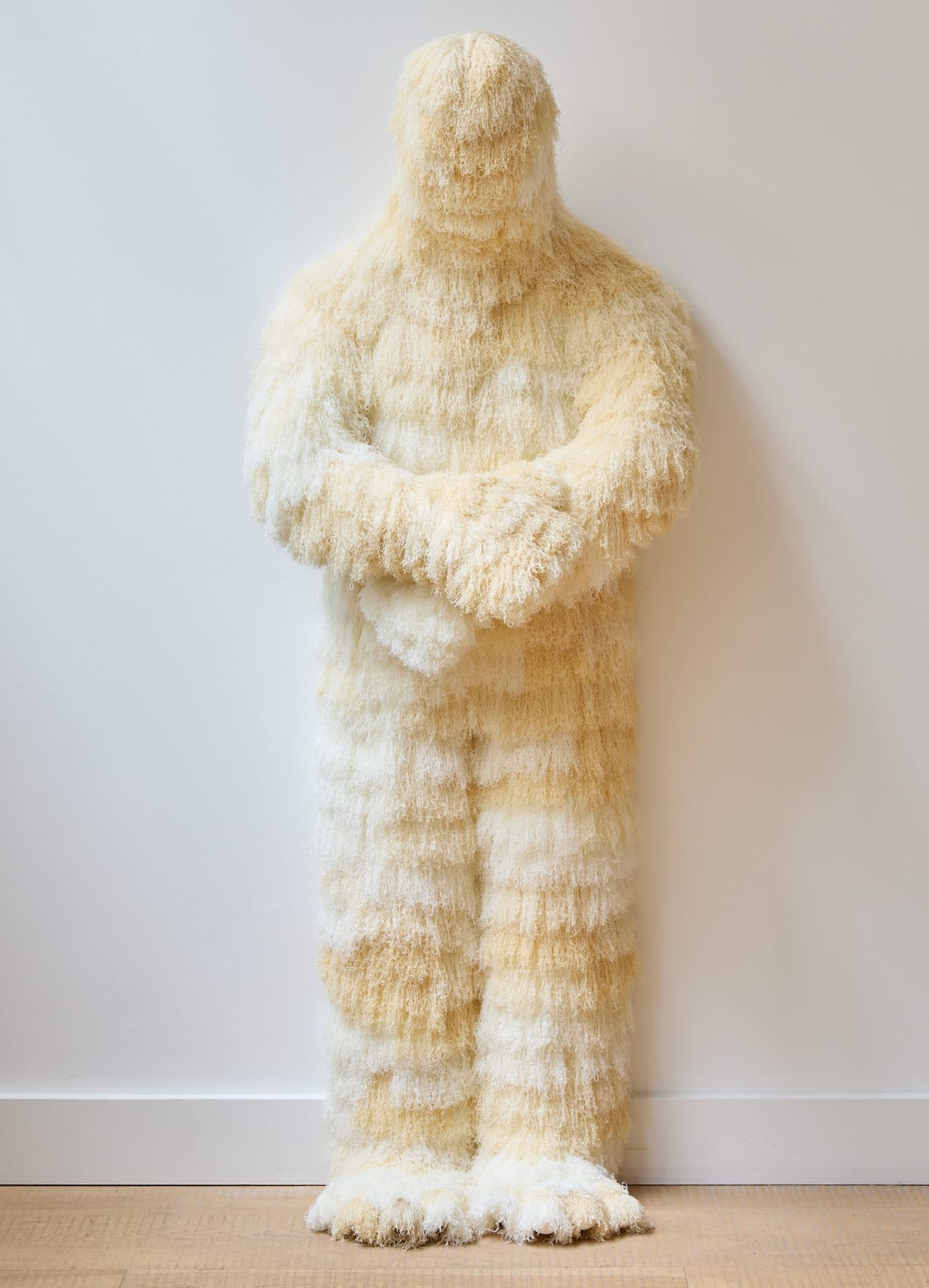
Her sculptures frequently meld animal bodies with familiar domestic fixtures, creating a disorienting yet captivating visual vocabulary. Visitors to her exhibitions often encounter human-sized figures draped in costumes constructed from dense layers of white and beige fringe. These quiet sentinels slump dejectedly on the gallery floor or stand in still repose against the walls, evoking the uncanny sensation of living beings waiting patiently to be addressed.
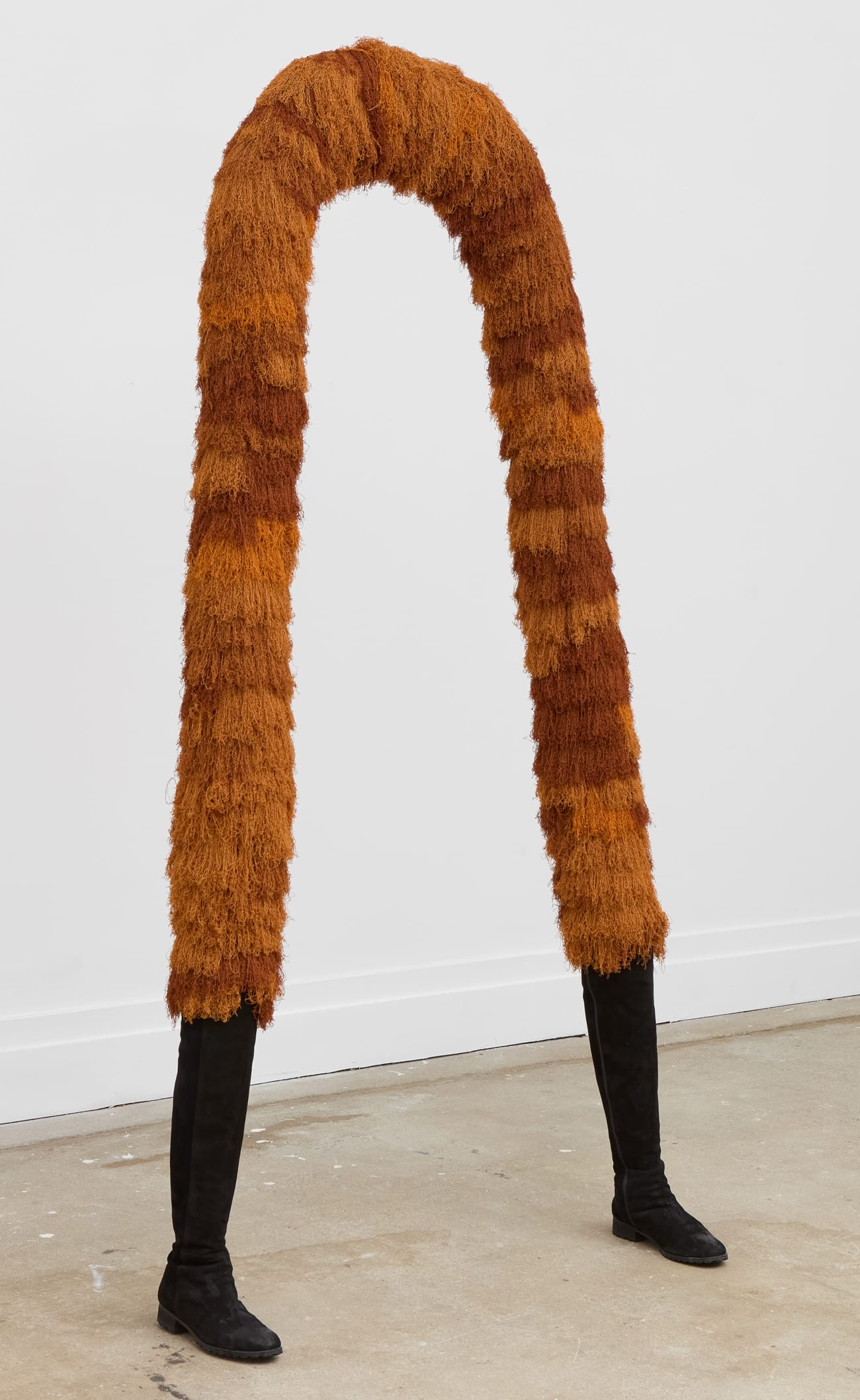
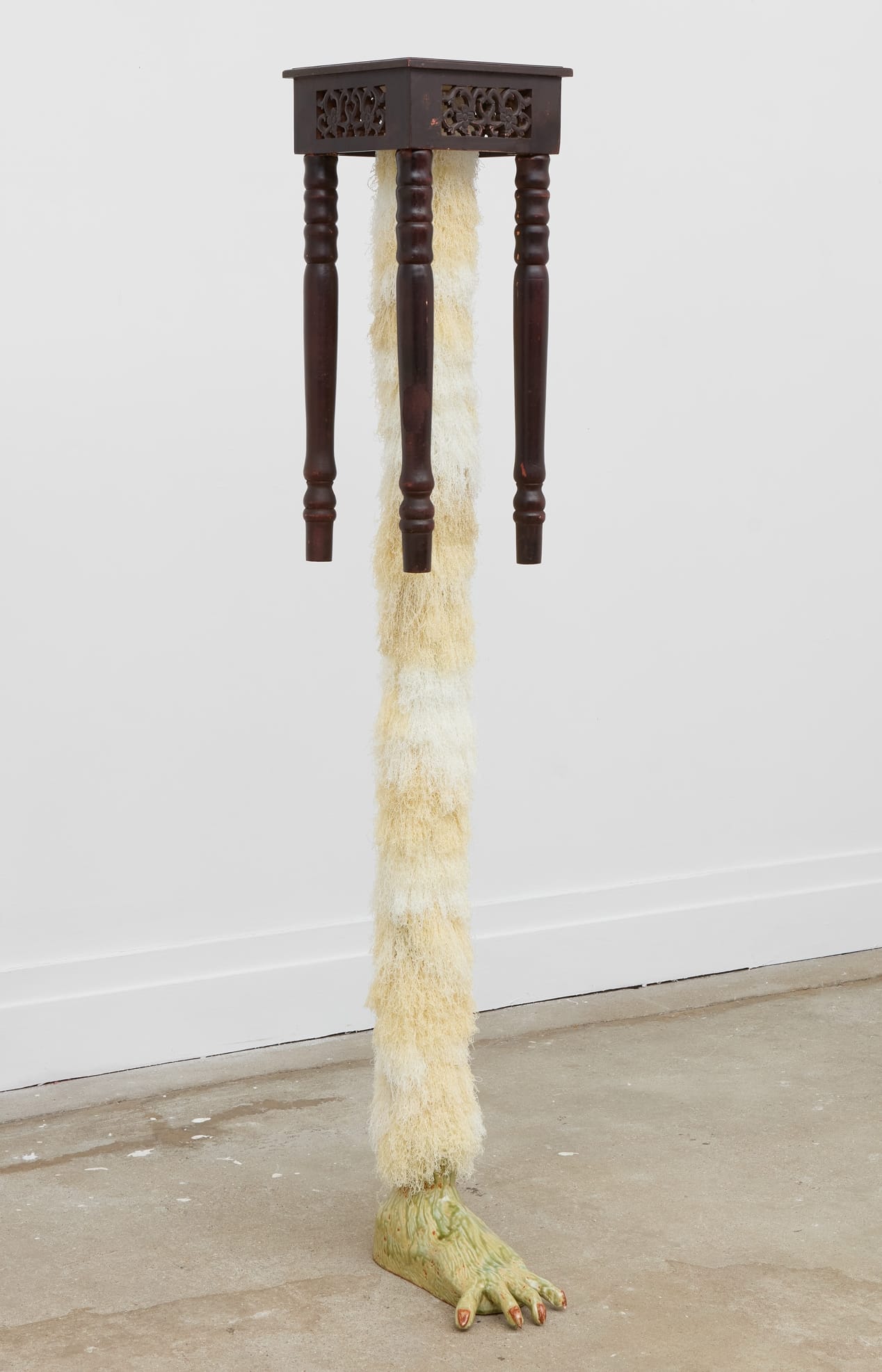
Other works push this morphological fusion even further by merging distinct body parts with unusual, structural forms. In pieces like the 2025 work "For Those Who Wade," an ochre-colored arch clad in textile embroidery emerges from a pair of worn black suede boots resting on the floor. Similarly, the sculpture "Murmur," also completed in 2025, presents a totemic, fur-covered leg anchored by a ceramic foot, crowned unexpectedly by a small, carved wooden table perched at its peak.
Bridging Cultures and Collecting Histories
This attraction to the strange and surreal serves a deeper purpose within Joo’s artistic methodology. By breaking free from the rigid constraints of ordinary perception, she investigates how ancient mythologies, folklore, and storytelling can offer alternative frameworks for human knowledge and wisdom. She operates under the foundational belief that even the most mundane, overlooked interactions harbor an immense, latent potential for meaning and transformation.
This fluid, borderless worldview is deeply informed by her multicultural upbringing. As a Korean-Chinese artist raised between two distinct nations, Joo notes that the narratives, traditions, and cultural memories of East Asia have left an indelible imprint on her psyche. Yet, this heritage is continuously balanced and reshaped by her physical reality in London, where immediate, tactile encounters with discarded Western objects spark entirely new imagery and conceptual trajectories.
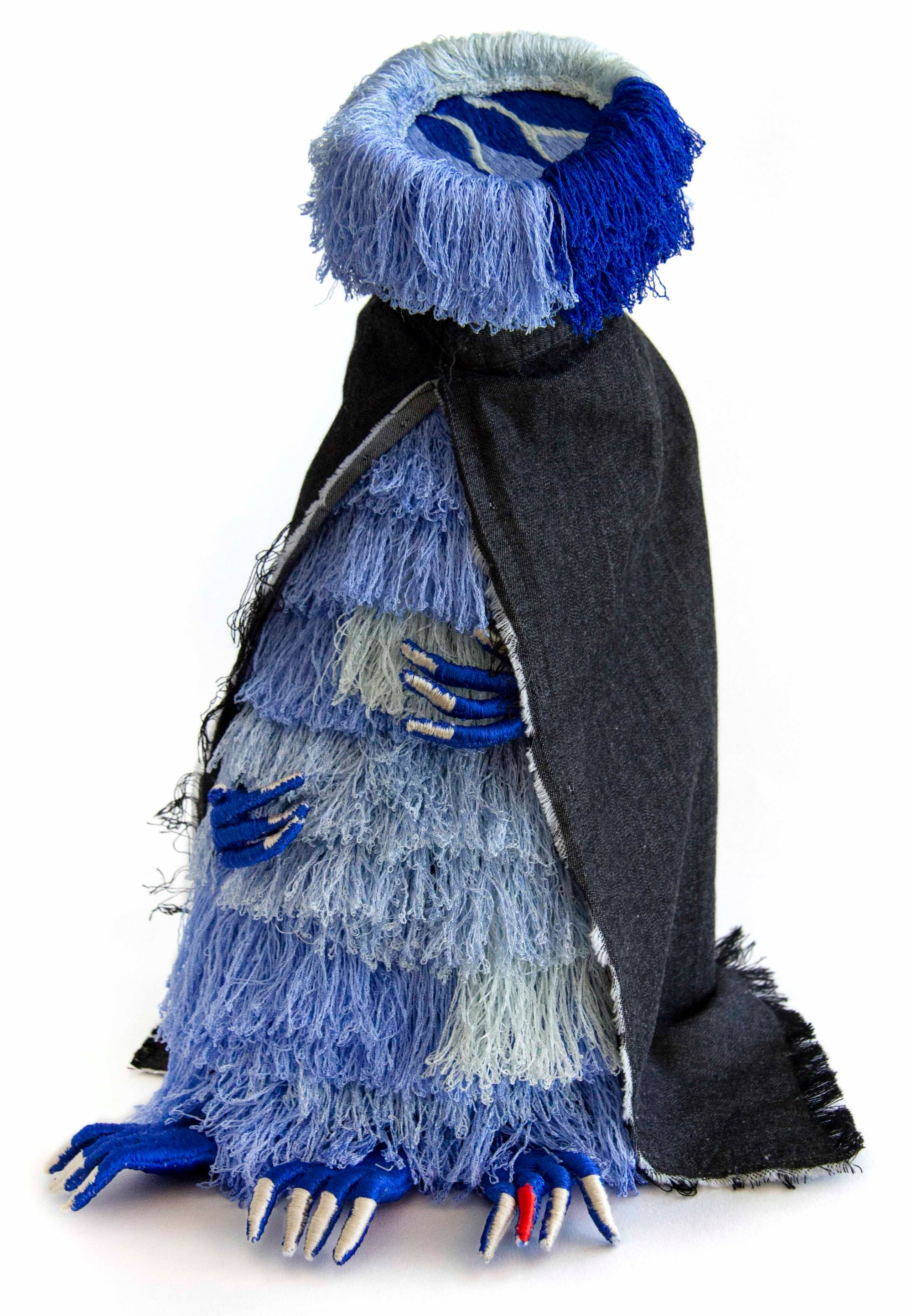
Like many contemporary artists who gravitate toward found items, Joo finds a significant part of her inspiration in the hidden biographies of the materials she collects. Every discarded garment, old sock, or piece of furniture carries the invisible weight of a previous life lived entirely outside her awareness.
"I am left to imagine, build, and find meaning in objects that have their own history," Joo notes. "Naturally, it is not always that I discover an object that draws me, but I still have other creative ideas that exist within my imagination that I can turn to."
The Power of Scale and Presence
Scale plays a critical role in how these narratives are communicated to the viewer. While Joo produces works of varying dimensions—ranging from intimate wall pieces like the embroidered floral ceramic circle "Shivers, Quivers and Silence" to delicate tabletop sculptures like the 2022 piece "Dusk Dokkaebi"—several of her major figures stand as tall as the artist herself.
This deliberate choice of height and physical heft introduces a bodily presence that traditional, smaller-scale wall hangings simply cannot replicate. Standing before these towering, textile-clad figures encourages gallery visitors to navigate the physical space around the sculptures, directly comparing the bulk and stature of the artwork against their own human frames.
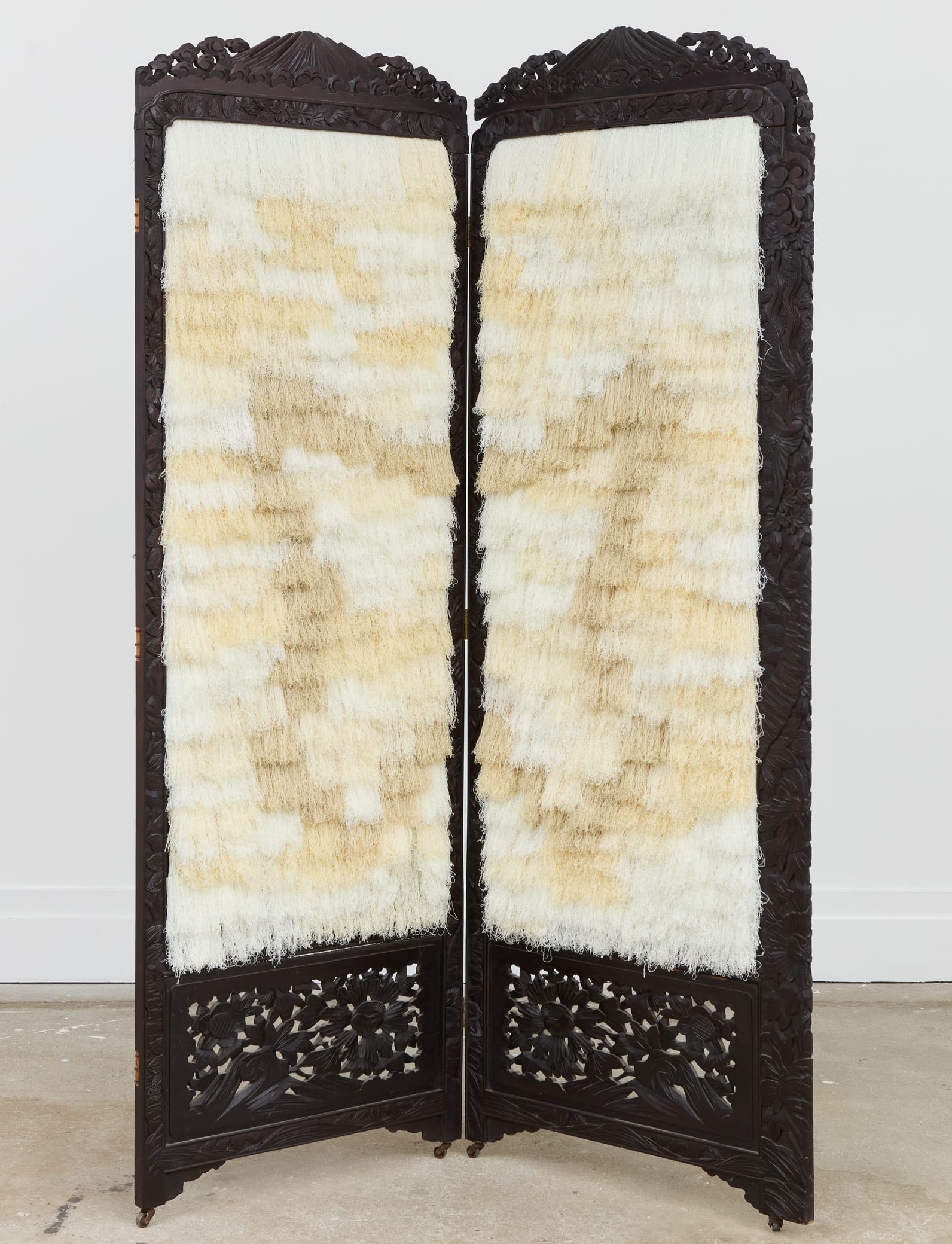
For Joo, bringing these larger pieces into existence offers a deeply gratifying emotional and psychological reward. The protracted journey from initial mental ideation to physical production culminates in a moment of genuine enchantment, as concepts once confined to her thoughts materialize within the corners of her studio to stand as fully animated beings.
Audiences eager to experience these surreal, uncanny creations firsthand have several opportunities to view Joo’s work in person. In London, her solo exhibition Bodily Inbetweenness remains on display at Ruup & Form through November 13, offering a comprehensive look at her recent sculptural investigations. Looking ahead to early 2027, her work is also scheduled to be featured at the Harley Foundation in Nottinghamshire.