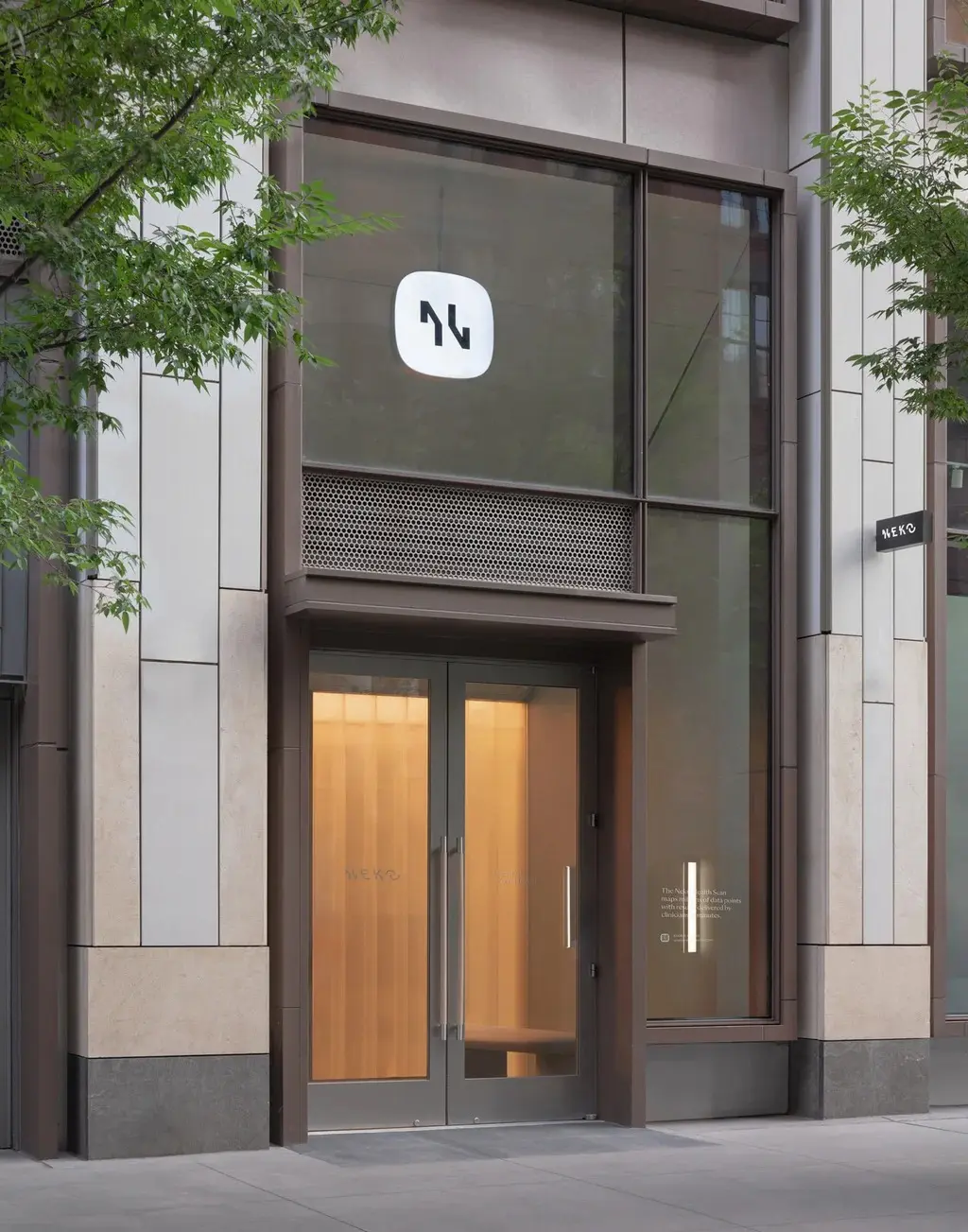
This design-forward philosophy is on full display at the company’s newest facility, which has officially opened its doors in the heart of New York City’s trendy Soho neighborhood. Stepping inside the Soho clinic immediately reveals an environment tailored to reduce anxiety and inspire calm. The facility features gently lit rooms, spare and uncluttered walls, and soft splashes of muted pastels. Together, the waiting areas and examination spaces combine a futuristic aesthetic with the warm, curated touches of a luxury retail concept, signaling to patients from the moment they arrive that they are entering an entirely new kind of medical ecosystem.
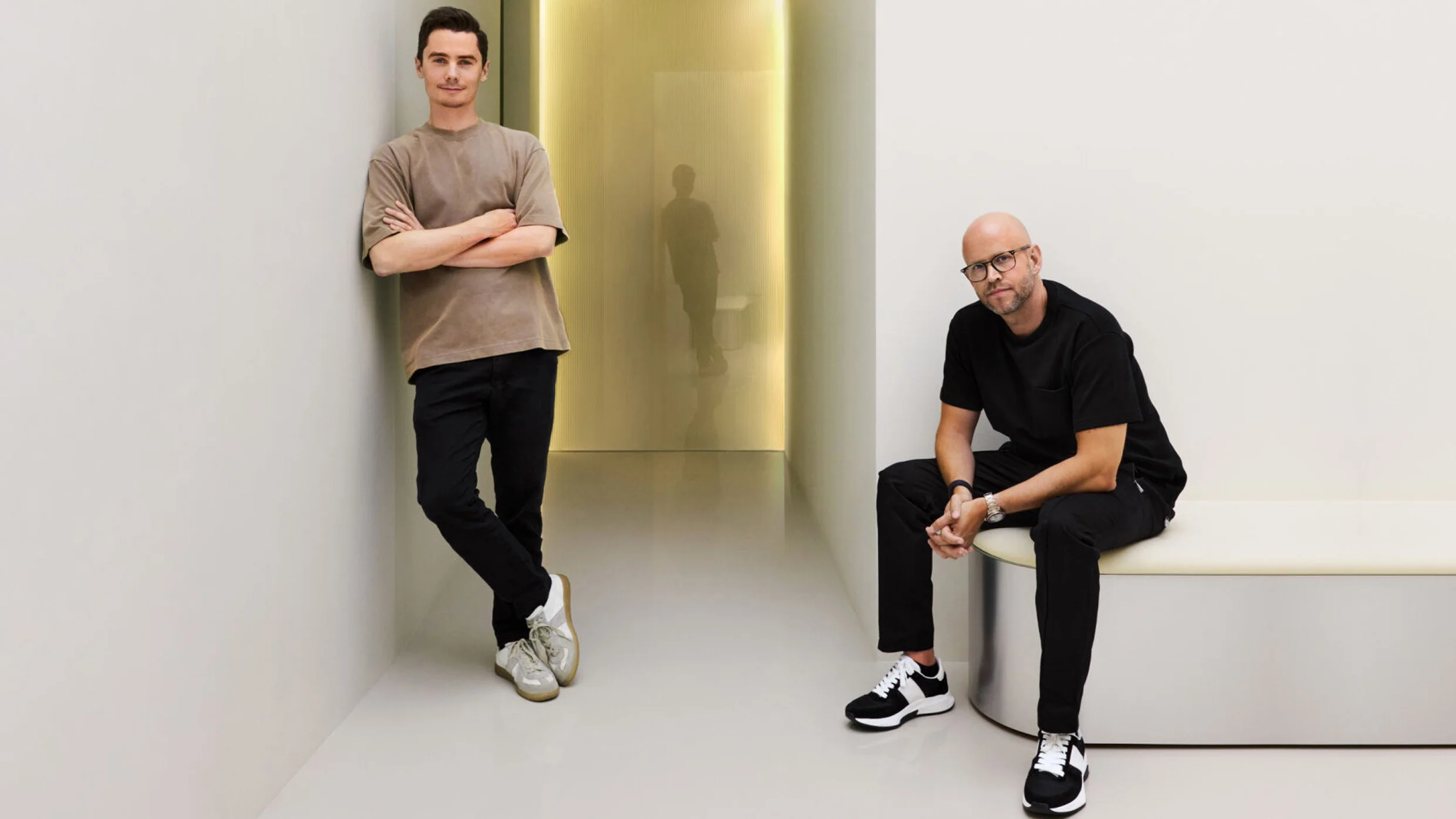
The launch in New York represents a major milestone for Neko Health, which has been steadily operating and refining its model internationally since 2003. To date, the company has successfully performed more than 100,000 of its signature $499 radiation-free scans, building a massive repository of preventative health data. Backed by a massive $700 million Series C fundraising round, Neko is positioning its New York flagship as the crucial first stepping stone into the lucrative and highly competitive U.S. market. Following the Soho opening, the company has already set its sights on expanding further across the country, with planned future locations slated for major metropolitan hubs including Miami, San Francisco, and Washington, D.C.
Behind the striking architectural concept of the New York clinic is Franquibel Lima, an accomplished architect and the former global head of design studios for WeWork. Lima has been the creative force behind Neko’s international footprint, having previously designed the company’s clinics in European capitals such as Stockholm, London, and Manchester, England. According to Lima, the fundamental departure in design is driven by a stark difference in purpose. Traditional healthcare environments are universally built around the management and treatment of acute illness, catering to people who are already sick. In contrast, Neko’s model is built on the premise that identifying potential health risks before symptoms manifest brings exponentially more value to the individual. Shifting that paradigm, Lima explains, requires a foundational mindset shift that must be mirrored in the physical architecture itself.
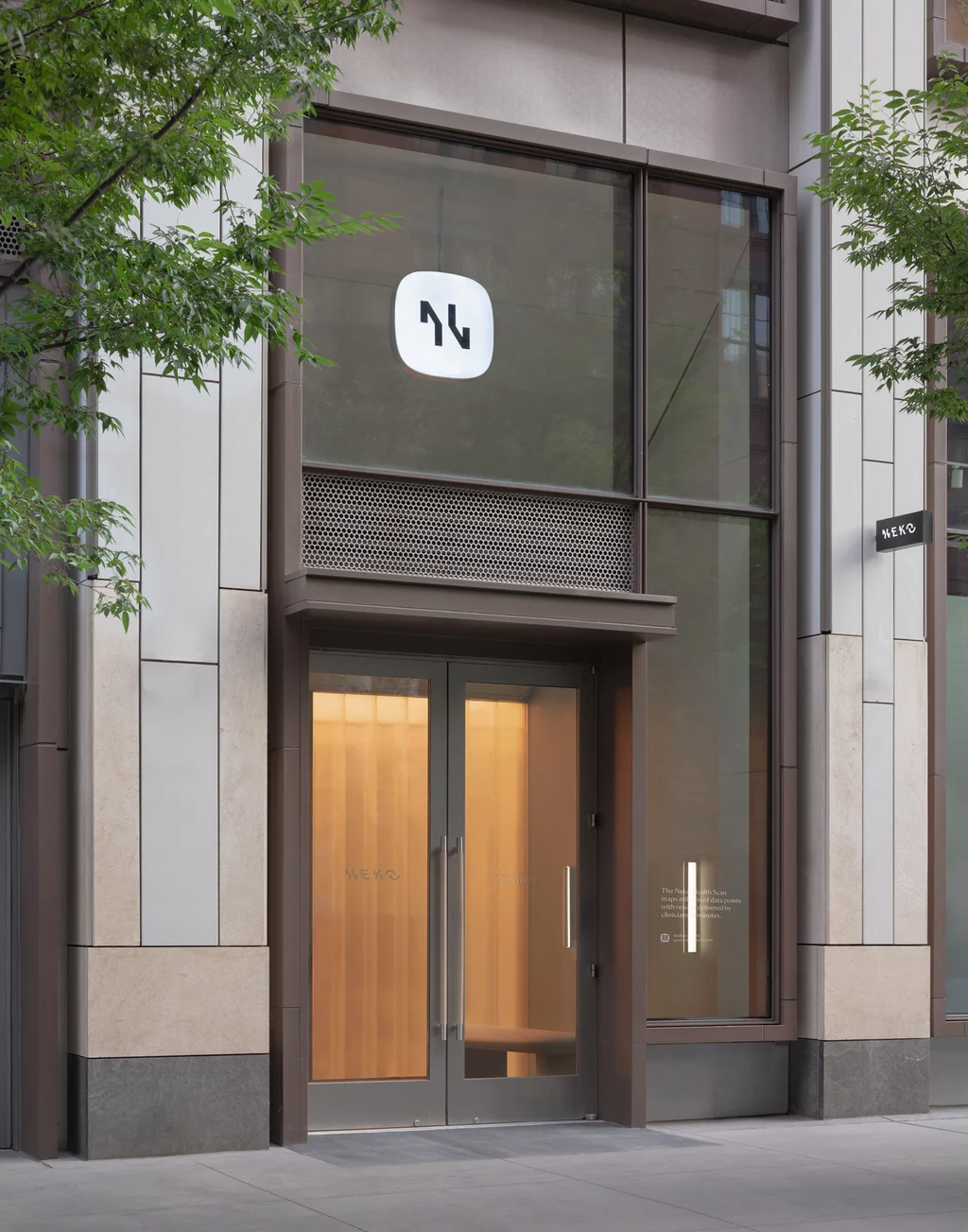
Convincing the public that healthcare can be experienced entirely differently is no small feat, which is why Neko has deliberately gone to great lengths to ensure its clinics feel like a curated experience rather than an institutional processing center. Lima points out that traditional healthcare settings are typically cluttered, stressful environments defined by generic educational posters—such as anatomical charts of a standard human skeleton—that focus strictly on generalized averages rather than the individual. By leveraging modern technology, however, the company believes medical diagnostics can finally pivot toward hyper-personalization, and the physical environment must reflect that bespoke nature.
Drawing significant aesthetic inspiration from the sleek minimalism of Apple retail stores as well as the polished look of classic science fiction films, Neko’s New York clinic merges carefully controlled lighting schemes with a tactile palette of soft, natural materials. At street level, the storefront is deceptively simple, marked primarily by a discrete door that emanates a warm, amber glow, drawing curious passersby inward. Once inside, visitors descend down a brushed stainless steel stairwell that transitions smoothly into a pristine, white-walled waiting area.
At the base of the stairs, a small, unobtrusive greeting podium welcomes guests before opening up into a plush, U-shaped seating area designed for comfort. The room incorporates fluted wall coverings equipped with integrated backlighting, giving the entire perimeter a soft, cloudlike ambiance. Additional underlighting placed beneath the seating arrangements further enhances the surreal, floating sensation of the space, effectively dissolving the clinical sterility typically associated with medical facilities.
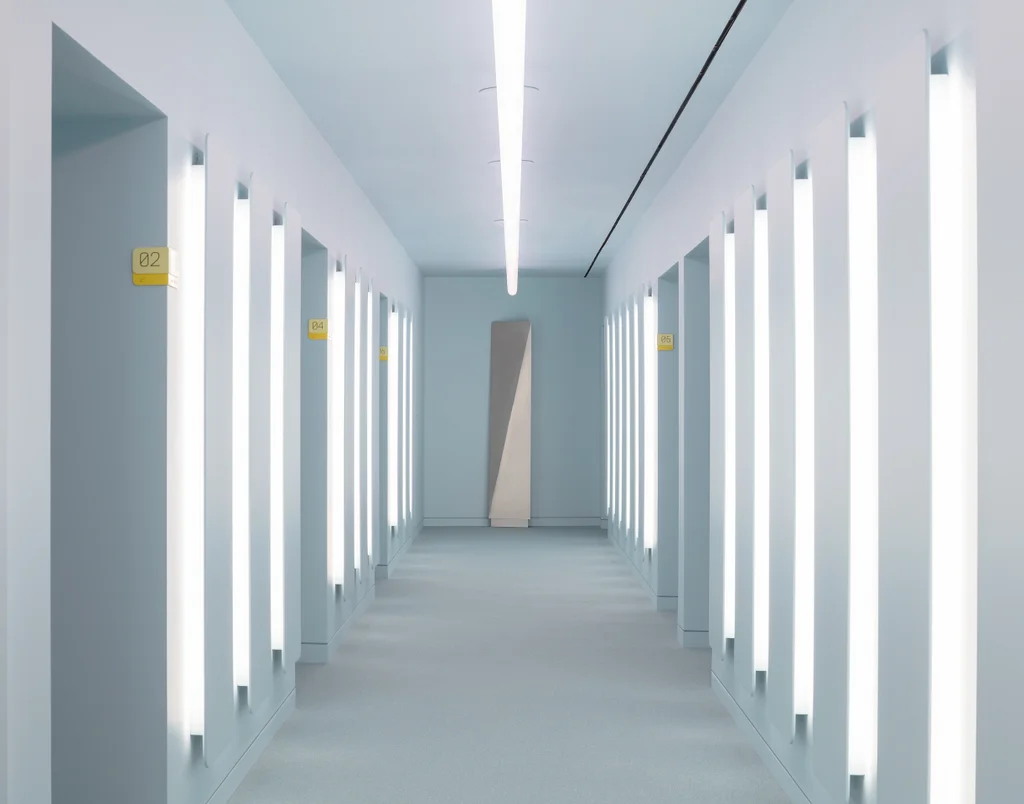
Transitioning from the waiting lounge into the all-white clinical core of the facility, the lighting shifts dynamically, brightening purposefully to guide visitors toward one of the six specialized scanning areas. As individuals approach the doorways, soft pastel yellow lights and carefully chosen paint tones emanate from within the scanning rooms, washing the thresholds in a calming, therapeutic glow. Lima notes that lighting is never treated merely as an afterthought or an overlay applied on top of raw materials and finishes; rather, it is approached as an essential, structural building component. By treating illumination as a foundational element, the company creates a multisensorial journey that actively prepares visitors to engage with their own health data in a calm, informed, and empowered state of mind.