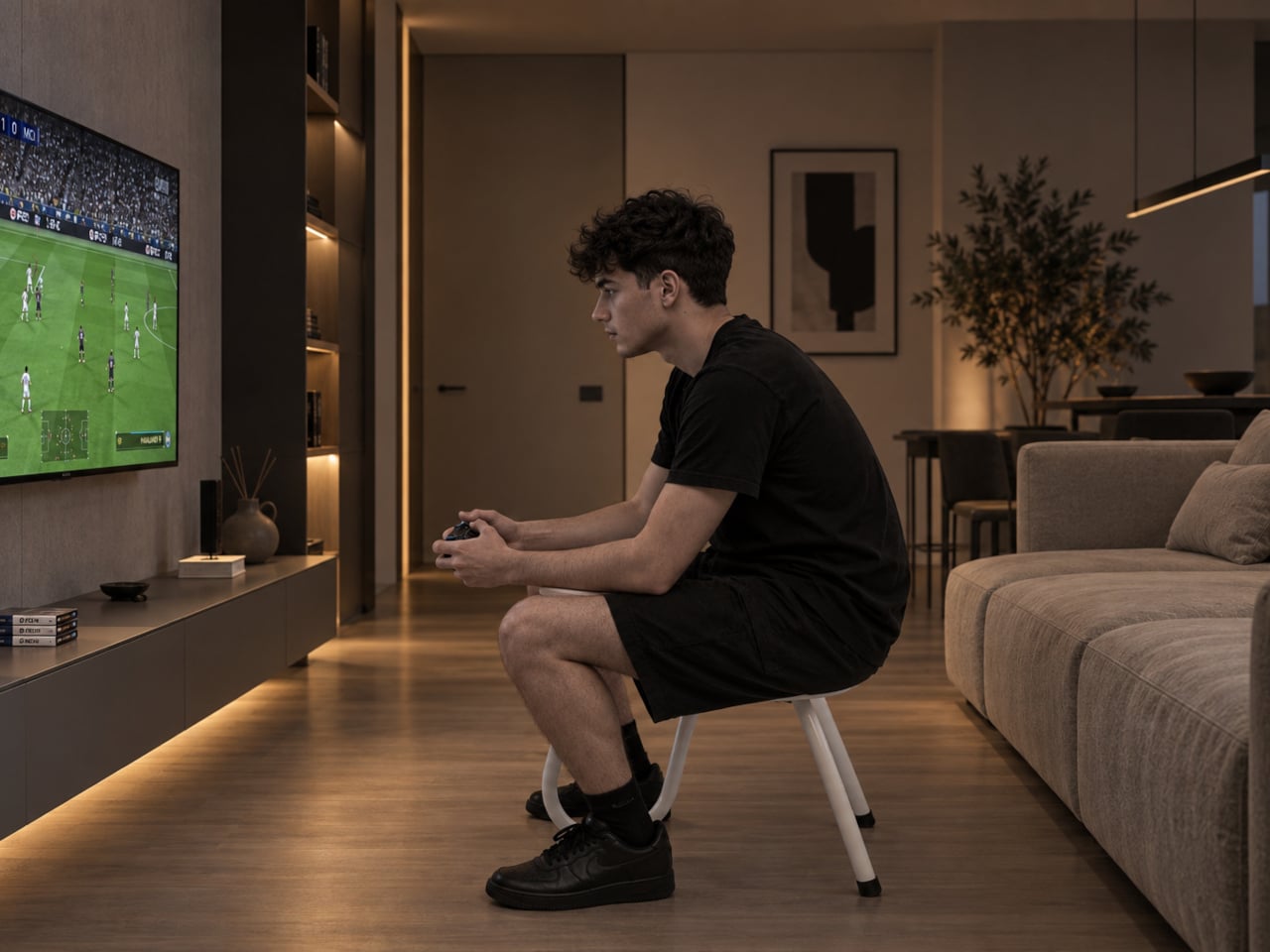
Anyone who has spent even a tense, focused hour in the heat of competitive gaming knows the posture instantly without ever needing to name it. It is an unconscious physical adaptation: leaning forward, elbows braced firmly against the thighs, and the spine curving intently toward the screen as if the sheer angle of the upper body could somehow command the controller to perform better. Rather than fighting this universal habit or constantly lecturing players about sitting up straight, a new furniture concept called Uplay starts from that exact physical reality. Instead of asking players to force their bodies into an unnatural, upright posture, it builds a specialized stool shaped entirely around the forward-leaning slouch that competitive gaming already produces on its own.
Most contemporary gaming chairs still borrow their foundational DNA directly from office seating or high-end racing simulator rigs. However, neither of those traditional categories was ever genuinely engineered around a human body holding a controller and staring intently at a display a few feet away. Uplay skips that inherited industrial logic entirely. Instead, designer Ilya Lazukin’s concept begins with actual hand positions, authentic postures, and the specific ergonomic relationship between a player’s core and a screen positioned just a short distance across the room. That represents a notably narrower, more specific starting point than most mass-market furniture in this category ever bothers to consider.
That familiar forward-leaning posture came with a very real physical cost long before Uplay entered the conversation. Hours spent rigidly bracing elbows against upper legs inevitably leave deep pressure marks, muscle fatigue, and genuine discomfort—the kind of nagging aches that quietly force a gamer to end a session long before the final match has even been decided. A comprehensive survey of existing furniture retailers and marketplace options reveals a striking absence of anything built specifically to solve that exact problem. That pervasive everyday annoyance was precisely what pushed this concept out of the realm of personal frustration and into an actual, fully realized industrial design brief worth pursuing.
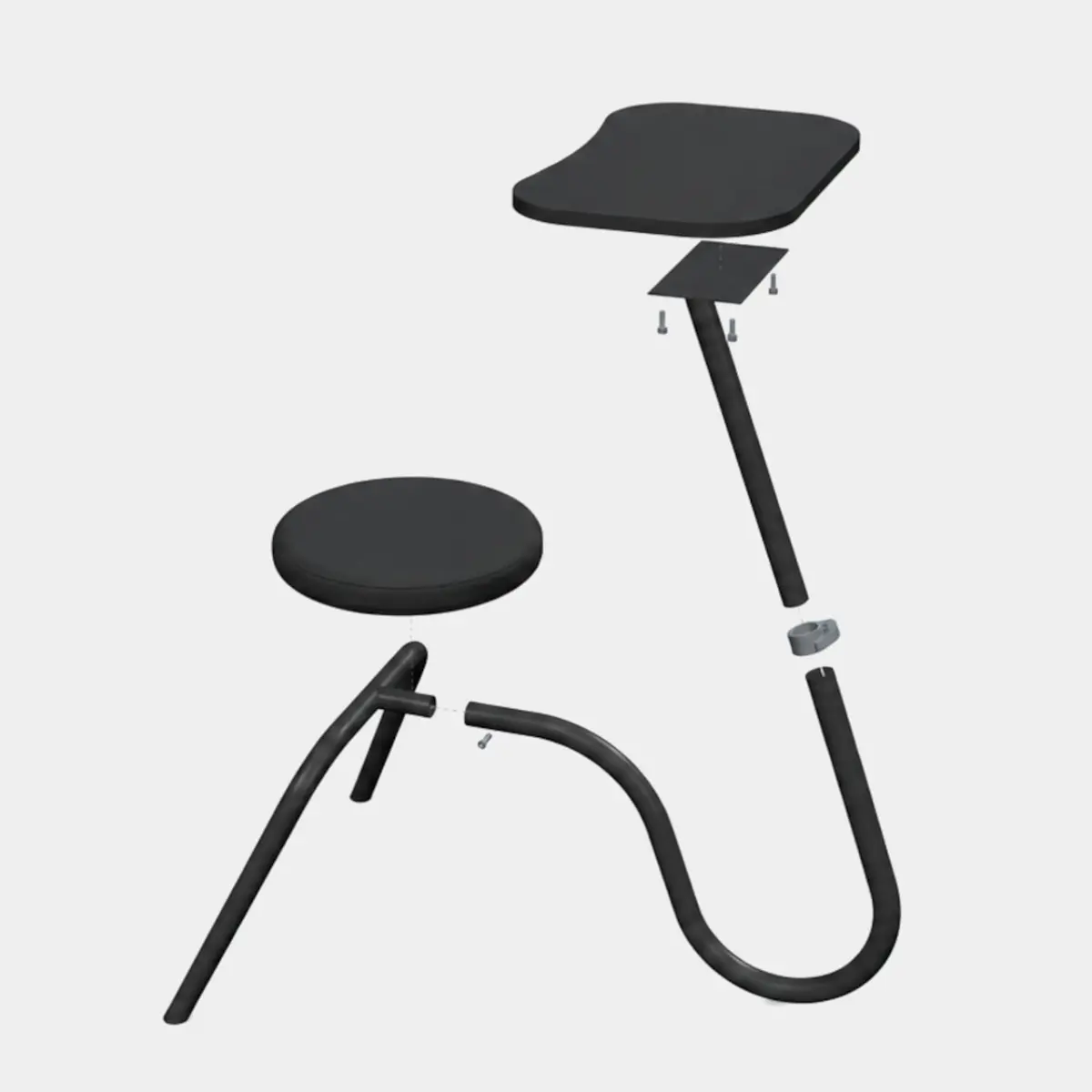
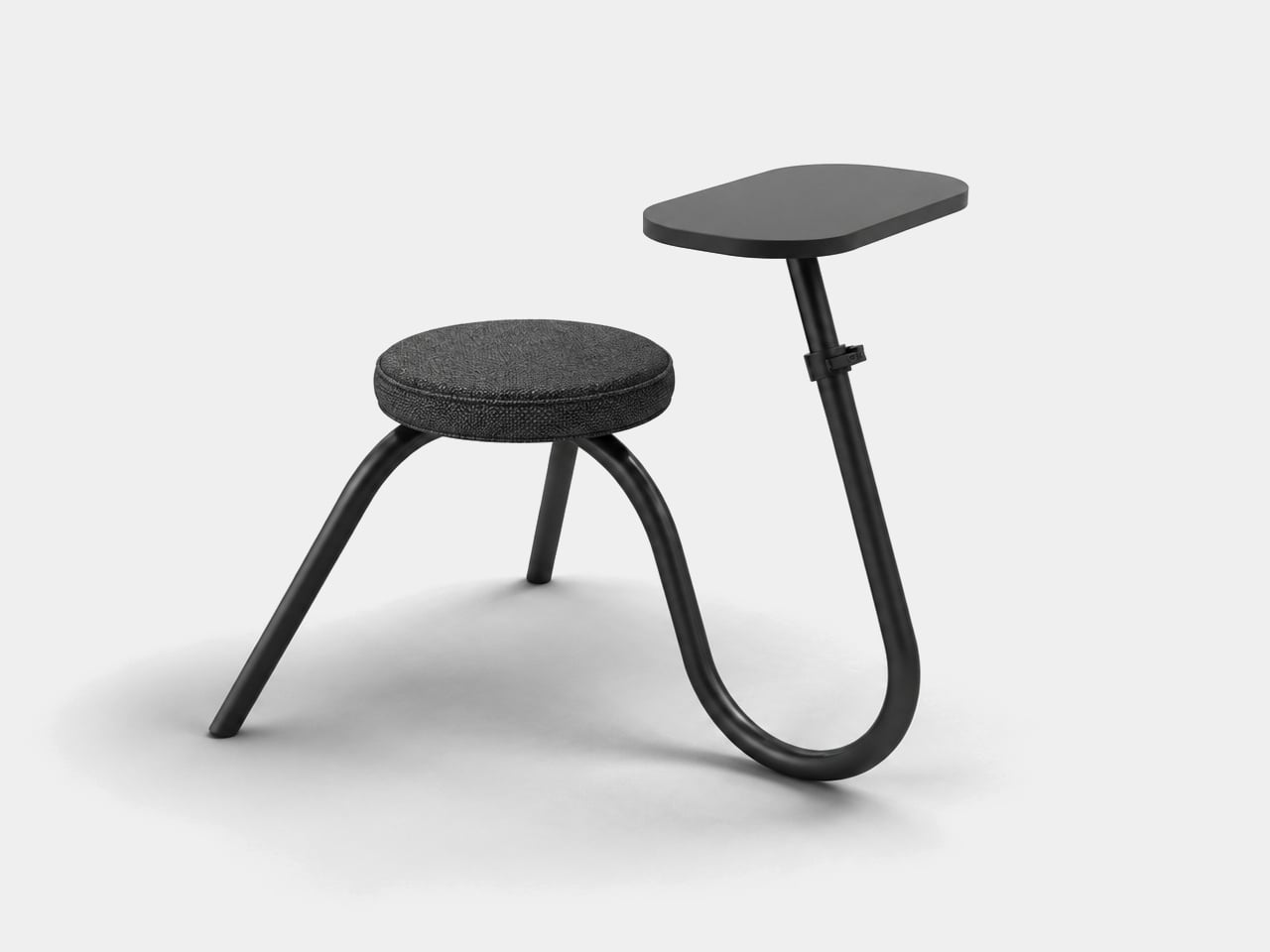
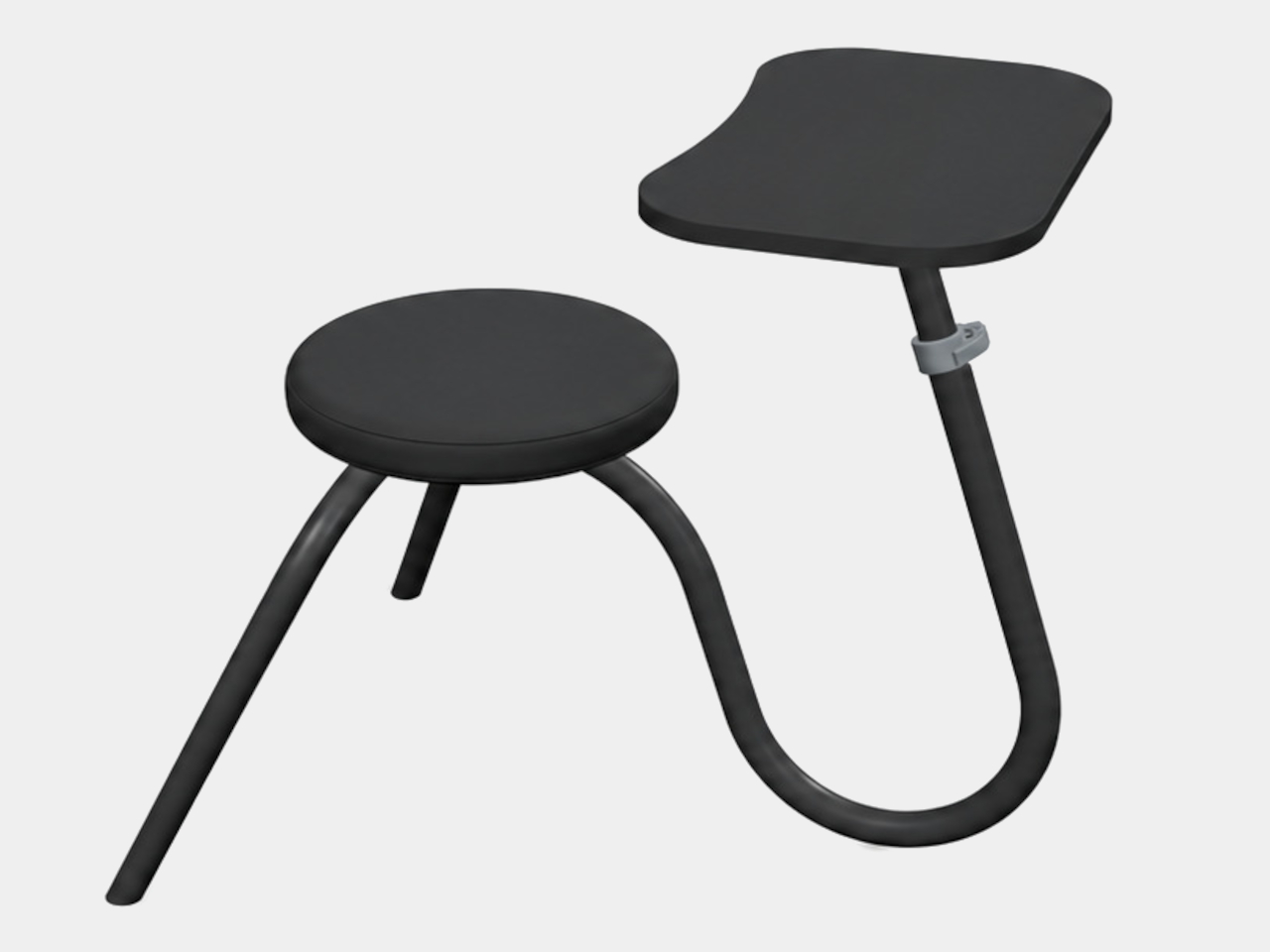
The resulting solution appears deceptively simple at first glance: a compact round seat, a streamlined tubular metal frame, and a small tabletop positioned just ahead of the sitter to support the arms. What makes the engineering actually work, however, is that both the seat assembly and the forward platform share one continuous bent tube rather than existing as separate, disjointed pieces bolted together out of convenience. That single, elegant curve carries weight seamlessly from the stable tripod base all the way up to the armrest and tabletop support column, successfully turning what visually looks like two distinct objects into a single, structurally unified piece of functional furniture.
When it comes to adjustability, the hardware borrows its mechanical principles from an entirely different category of human-powered design. An eccentric clamp—the exact same mechanical mechanism utilized for decades to secure a bicycle seat post—lets a simple lever release the tabletop support column, slide it effortlessly to a new height, and lock it firmly back into place. That clever cross-industry borrowing means the armrest platform can sit at the exact height where a specific human body and a specific controller grip actually need it to be, rather than forcing the user to settle for one rigid, predetermined compromise height designed for an average that rarely fits anyone perfectly.
Nothing about Uplay is designed to stay permanently locked into a single rigid configuration, either. The seat, the tabletop surface, and the individual frame elements can all be separated into distinct components by intentional design rather than as an afterthought meant only for shipping efficiency. That knock-down structural capability means a dedicated gaming setup that sits prominently in the corner of a room during an intense match can collapse down small enough to slide easily under a bed or tuck away neatly into a shallow closet once the gaming session officially ends—a practical detail that matters profoundly more in modern urban apartments than any glossy manufacturer spec sheet might suggest.
Material choices for the concept extend well beyond a single, unyielding aesthetic. Some proposed iterations pair industrial painted steel tubing with a simple, utilitarian plywood tabletop and seat, leaving the wood grain exposed in a natural, warm tone. Other variations wrap that exact same core plywood structure in a soft, removable fabric slipcover, effectively transforming a stark, utilitarian frame into a piece of decor that can easily blend in with a living room couch rather than looking like it was bolted together in a hardware store. Either way, the underlying structural integrity and the clever bicycle-inspired adjustment mechanism remain entirely identical.
Crucially, if a user decides to sit back without touching the front tabletop at all, Uplay functions just as comfortably as an ordinary low stool; nothing about its geometry forces the armrest platform into active use when it is not needed. That functional flexibility matters immensely because a real gaming session rarely stays completely static for hours on end. A player might brace aggressively forward through a series of tense, high-stakes matches, and then lean back to decompress and set the controller down entirely, all without needing to swap out furniture or leave the room to find a completely different chair to accommodate a shift in mood or focus.