The Nikon Small World in Motion competition has officially announced its 2026 winners, offering the public a mesmerizing glimpse into what are arguably some of the most extraordinary moving images captured anywhere in the world. As an annual celebration dedicated to microvideography, the prestigious contest invites global audiences to witness alien-like worlds that exist entirely beyond the naked eye, brought into focus through the sophisticated lenses of scientific microscopes.
However, the competition is far more than an exercise in aesthetic wonder or visual novelty. Beyond showcasing the striking beauty found within microscopic environments, the event serves as a vital global platform to highlight the serious science driving this specialized genre of imaging. It demonstrates how advanced microvideography functions as an indispensable tool across a wide spectrum of scientific inquiry and critical medical research.
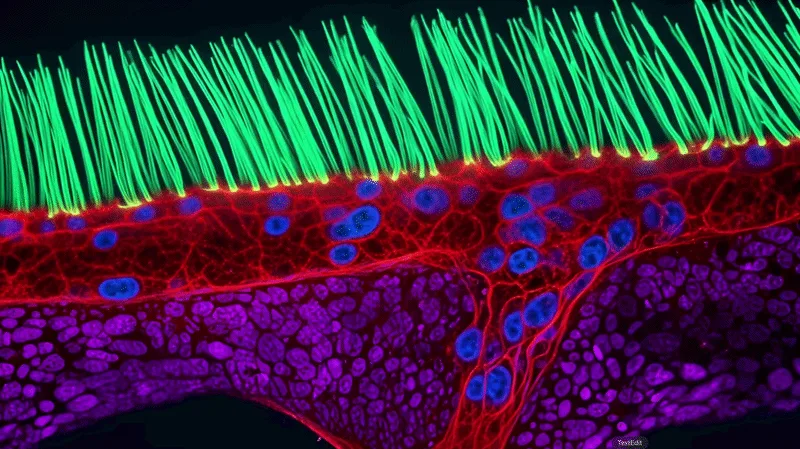
This dual purpose—bridging breathtaking visual art with groundbreaking scientific utility—is perfectly exemplified by this year’s overall winning video. Created by Dr. Ning Xu, a researcher at China’s prestigious Tsinghua University, the winning entry depicts the abnormal, erratic beating of cellular structures known as airway cilia. This microscopic dysfunction points directly to Primary Ciliary Dyskinesia (PCD), a rare genetic respiratory function disorder that impairs the body’s ability to clear mucus from the lungs and airways.
As Dr. Xu, based in Beijing, explained when discussing the complexities of the project, observing such a condition requires far more than a snapshot. To truly understand the mechanics and pathology of the disease, researchers must observe the cilia through dozens of continuous beat cycles rather than relying on a static, still image.
Capturing the winning footage presented a series of formidable technical challenges. Biological samples of this nature are exceptionally delicate; if the sample were to die prematurely, or if the microscopic imaging process itself altered the natural behavior of the cells, the resulting video would be completely ruined. Furthermore, traditional and harsh microscopy lighting had to be entirely avoided during the capture process, as intense illumination carries a severe risk of damaging or destroying the living subject.
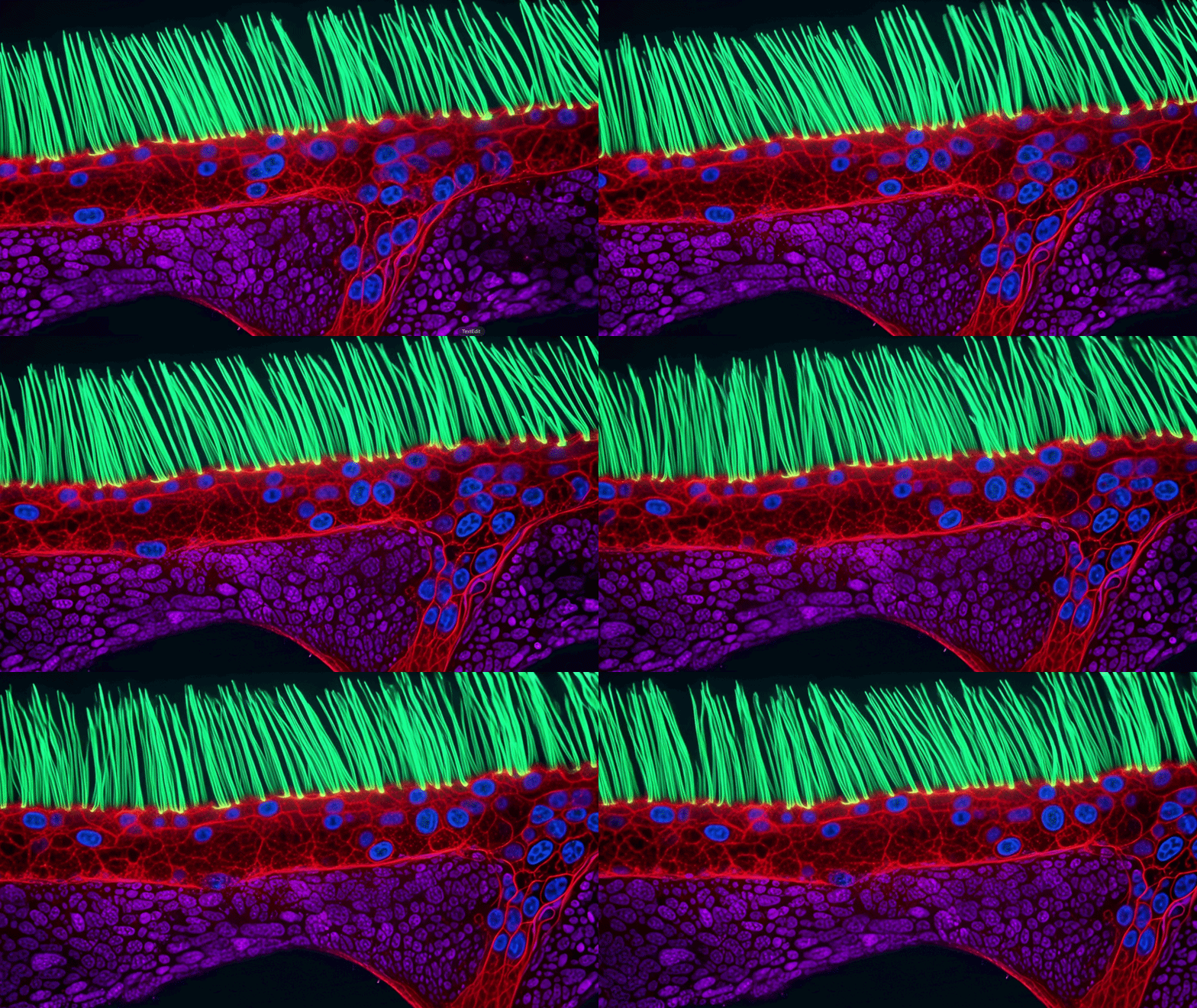
To overcome these obstacles, Dr. Xu devised an innovative solution. By carefully shaping existing light via advanced light waves and a digital micromirror device, the researcher was able to exert precise control over the exact amount of illumination that ultimately reached the living biological subject. To achieve the necessary clarity and detail, the final visualization was captured using diffractive super-resolution microscopy, utilizing a 100x objective lens magnification to reveal the intricate, rhythmic failures of the cellular structures in unprecedented detail.
While Dr. Xu claimed the top honor, the podium was rounded out by remarkable submissions from across the globe, with the runner-up positions awarded to Nguyen Nam Nhat from Vietnam and Benedikt Pleyer from Germany, securing second and third place, respectively.
Nguyen Nam Nhat’s second-place entry offers viewers a fascinating and somewhat surreal look at the microscopic ecosystem, featuring a tiny roundworm interacting with a single-celled Dileptus at 40x objective lens magnification. Meanwhile, Benedikt Pleyer’s mesmerizing third-place submission captures delicate jellyfish larvae gracefully drifting within microscopic droplets of water, showcasing the ethereal beauty of early aquatic life.
These winning entries form the newest chapter in the enduring history of the Nikon Small World competition, which has celebrated the intersection of art and science for over half a century. While the broader photography competition boasts a history spanning more than 50 years, the specialized Small World in Motion category has been running for 16 years, continuously pushing the boundaries of what is possible in technical video capture. As has been the tradition since the competition’s inception, all video entries are rigorously critiqued and evaluated by an expert panel of independent judges drawn from various scientific and photographic disciplines.
Those interested in learning more about the competition, viewing the complete gallery of winning entries, or exploring the technical specifications behind this year’s submissions can find further details by visiting the official Nikon Small World website.