For wildlife photographers, the most extraordinary encounters rarely happen when trudging through a secluded wildlife refuge with a heavy-duty telephoto lens mounted and ready. Instead, the most magical moments seem to materialize unannounced, often when gear is left behind or entirely unsuited for the task.
Earlier this week, Hillary K. Grigonis, the US Editor for Digital Camera World, experienced this exact phenomenon firsthand. While visiting a bustling urban park during an unseasonably warm October afternoon in Michigan, she crossed paths with an elusive and charismatic animal she had never before photographed in the wild: a North American river otter. The catch, however, was that her camera bag held only basic kid cameras she was testing and a single 90mm prime lens typically reserved for portraiture.
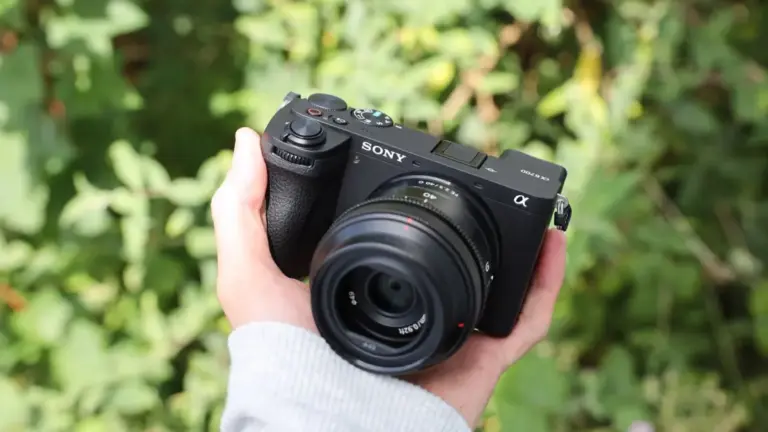
Grigonis had initially ventured out to the riverside park simply to enjoy the autumn warmth alongside her children. Having brought along a bag of single-digit megapixel kid cameras for professional evaluation, she made a last-minute decision to slip her mirrorless Fujifilm X-T4 and a Fujinon 90mm f/2 R LM WR lens into her pack so she could capture a few family snapshots.
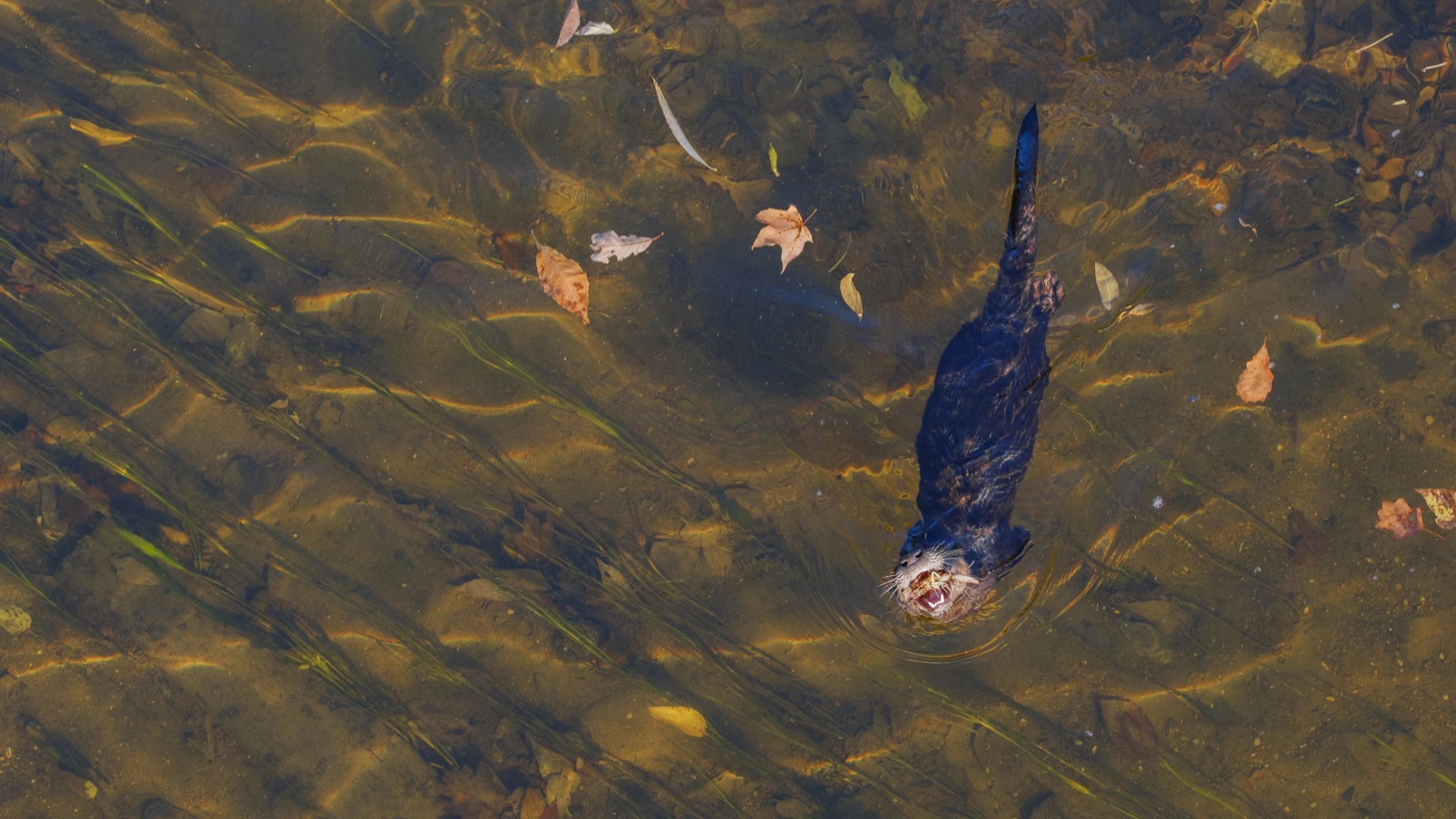
The chosen destination was far from a remote wilderness sanctuary. Located right in the heart of a populated area, the riverside park is consistently busy, echoing with the sounds of screaming children on nearby playgrounds, joggers pounding across a bustling pedestrian bridge, and the constant hum of a nearby highway. For anyone seeking serious wildlife photography, it ranks as one of the least likely spots to yield remarkable animal sightings. Traditionally, the most exotic fauna spotted in those waters amounts to little more than the exceptionally common mallard duck.
That prevailing assumption shattered instantly when Grigonis and her family were walking across the pedestrian bridge. Her seven-year-old son suddenly pointed down toward the water and shouted, "Look, an otter!"
Initial skepticism is a natural defense mechanism for anyone who spends time outdoors. Grigonis’s first thought was that her son had likely caught a glimpse of a muskrat, an aquatic rodent of similar size and shape that frequently populates local rivers. Yet, when she leaned over the edge of the bridge and peered down into the flowing water, any doubt vanished. There, unmistakable in the midday light, were the tell-tale rounded ears, large prominent nose, heavily whiskered face, and long, narrow tail of a North American river otter.
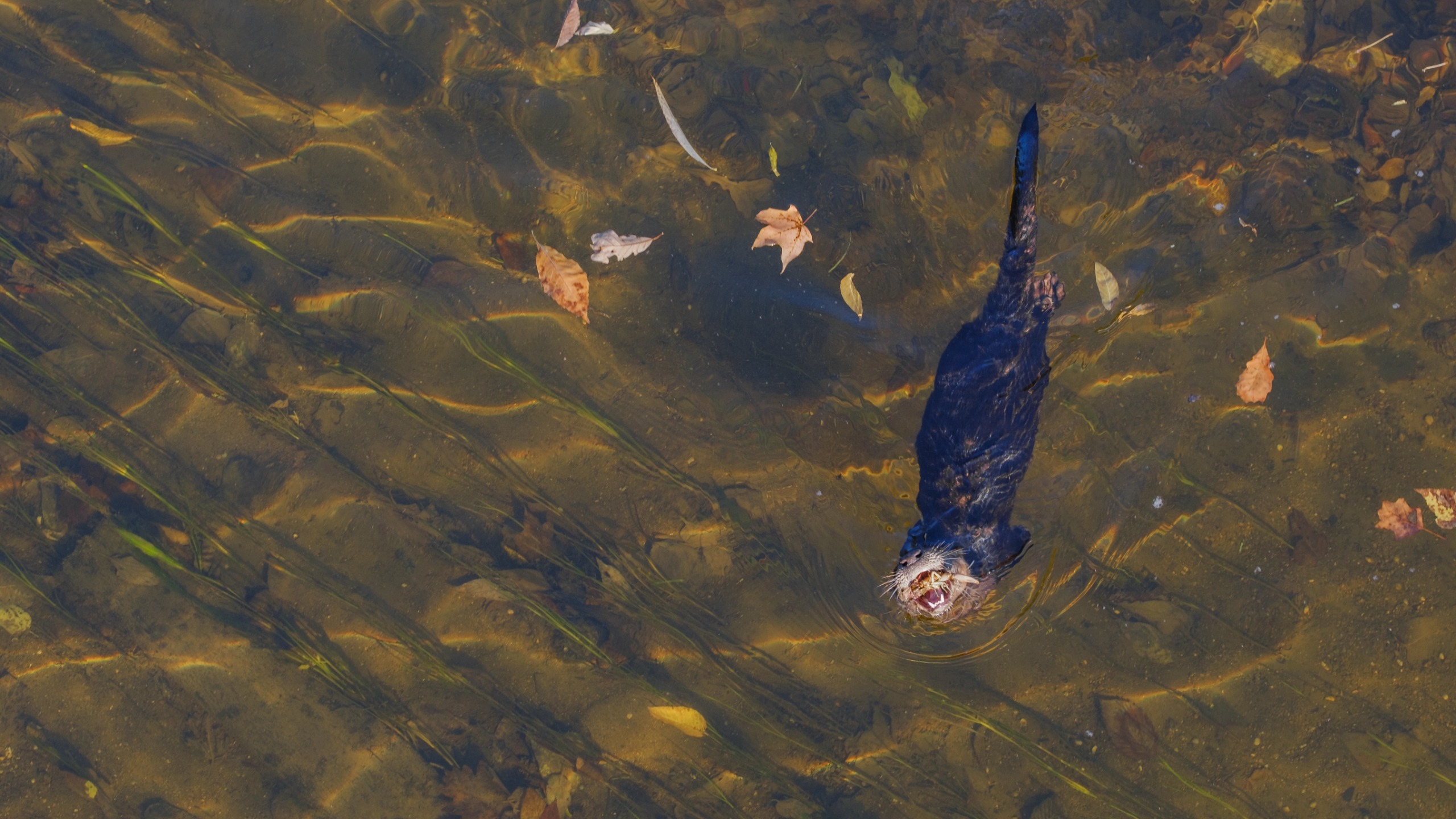
Only seasoned wildlife photographers can truly comprehend the unique emotional turmoil that accompanies such a moment: an instant surge of wild, unadulterated excitement at spotting a fascinating and unusual animal, immediately counterbalanced by the sinking, imminent dread of being entirely unprepared for the photographic opportunity.
Standing in her hands was a camera outfitted with a 90mm prime lens. Full-frame equivalent to roughly 135mm, the optic is a favorite for portraits due to its ability to render a creamy, soft background separation and sharp subject isolation. It is an exceptional tool for capturing human expressions, but it is fundamentally the wrong piece of equipment for tracking swift aquatic mammals from an elevated bridge. For serious wildlife excursions, photographers typically rely on much longer reach, turning to heavy-duty 400mm, 600mm, or versatile 150-600mm super-telephoto lenses.
Despite the obvious equipment mismatch, the encounter offered an unexpected advantage in sheer proximity. Standing directly on the bridge hovering above the river, Grigonis found herself remarkably close to the animal—so close, in fact, that she could distinctly hear the otter loudly crunching on the fresh fish and crayfish it was successfully hunting in the shallows. Having never previously been close enough to photograph a wild otter, she refused to let the equipment limitation deter her. She grabbed the 90mm lens, adjusted her settings, and hoped for the best.
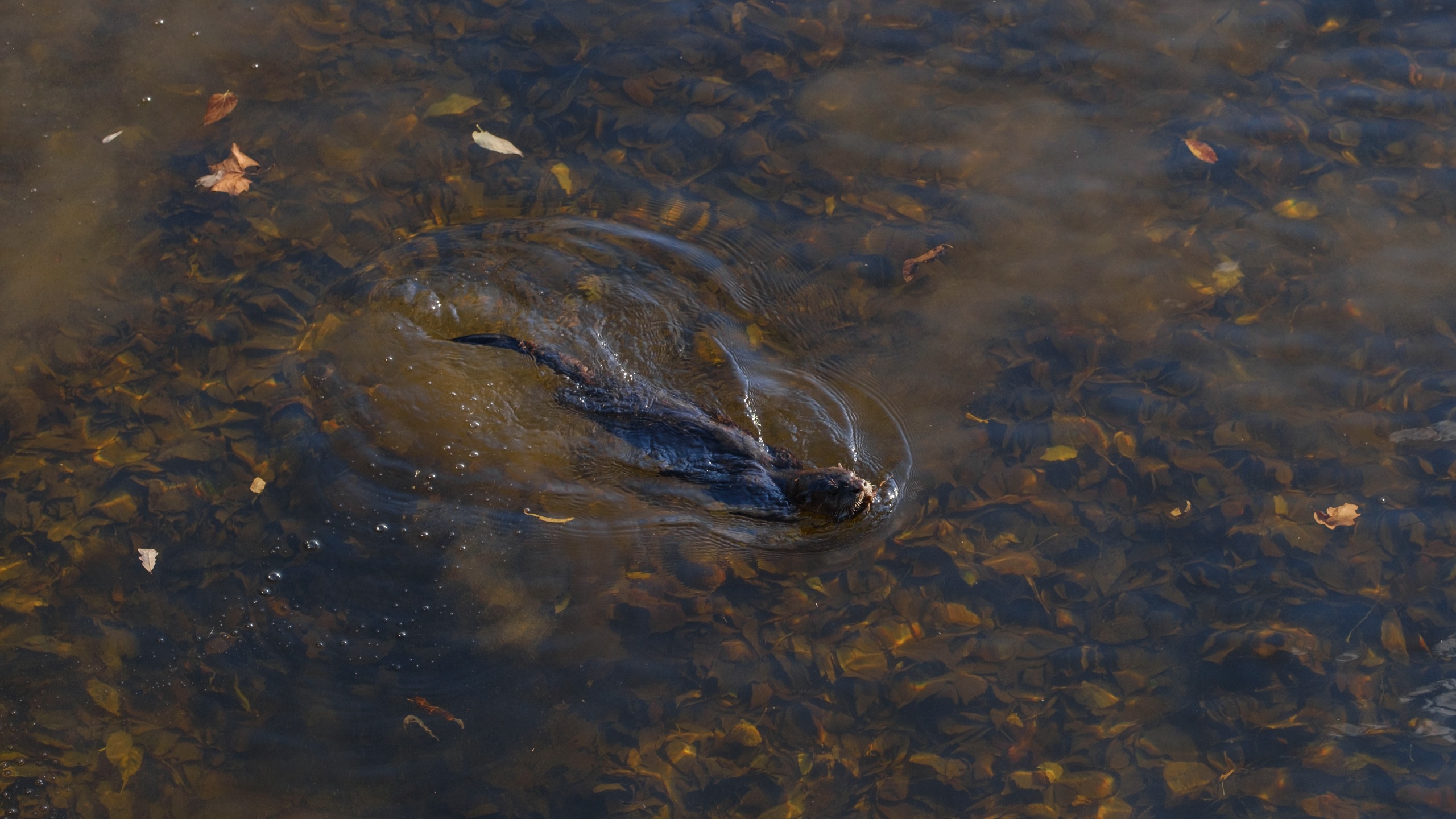
Nature, however, added yet another layer of photographic challenge to the impromptu session. The late-day autumn light proved frustratingly uneven. As the river otter swam back and forth, it repeatedly dipped underneath the deep, stark shadow cast by the pedestrian bridge, only to emerge moments later into the glaring, unfiltered afternoon sunlight.
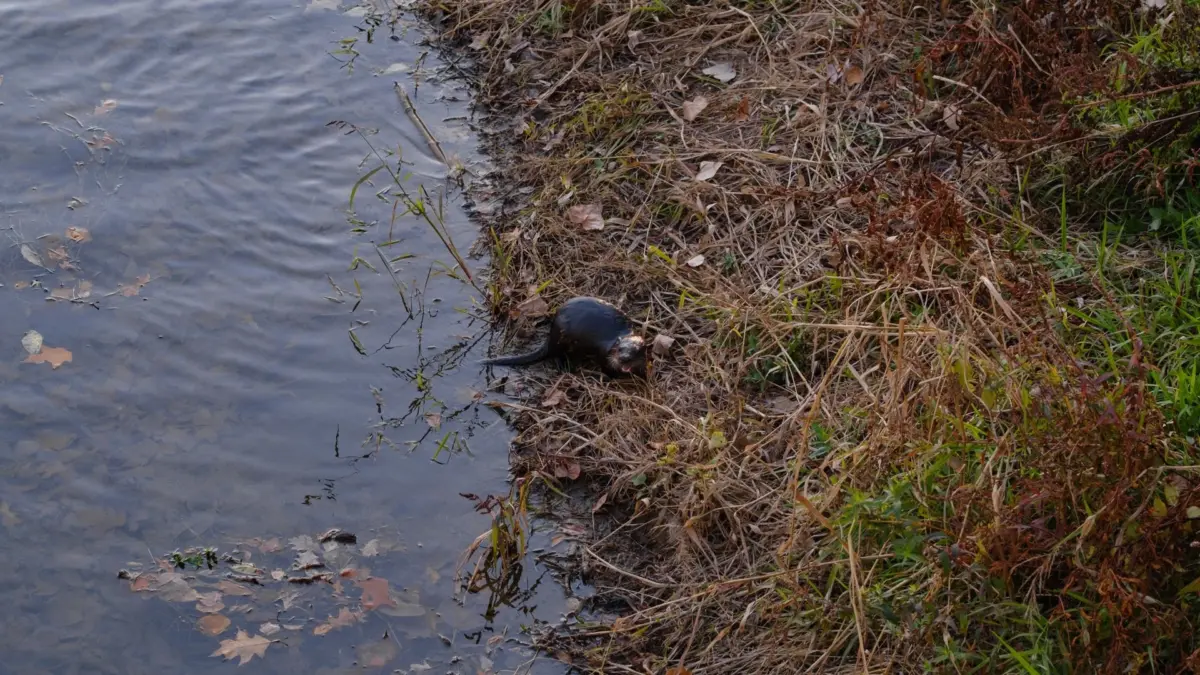
Reflecting on the experience later, Grigonis noted that while she deeply wished for a super-telephoto lens to isolate the otter’s expressive, whiskered face as it broke the surface with a freshly caught crayfish clenched in its jaws, the broader scene possessed its own distinct charm. The river surface was flecked with colorful, drifting fall leaves, and the otter itself was thoroughly engrossed in an afternoon of swimming and foraging, completely unbothered by the ambient noise, nearby traffic, and human presence on the bridge above.
Utilizing what she had on hand, she managed to capture a series of environmental portraits of the animal within its natural habitat. While the resulting frames might not grace the cover of a major wildlife magazine, the encounter succeeded in bringing a genuine, lasting smile to her face—a reminder of why photography matters beyond technical perfection.
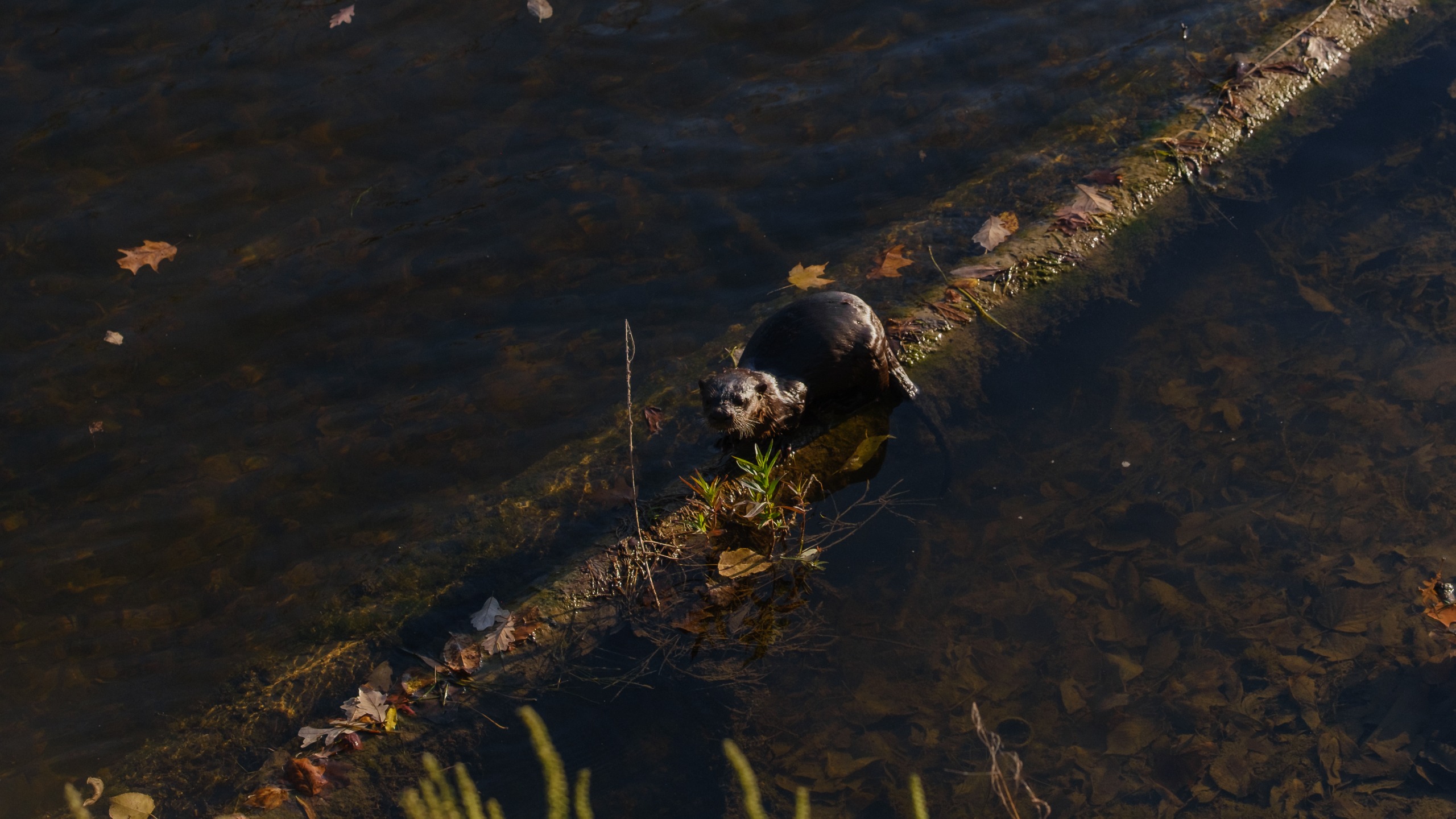
The incident felt uncannily like stepping directly inside a widely known internet meme concerning the laws of wildlife photography: the running joke that interesting animals unfailingly vanish the exact second a photographer retrieves proper telephoto gear, only to appear in full view when one is completely unequipped. For Grigonis, the moment was part of a larger trend. She has experienced countless fleeting wildlife opportunities while driving or going about daily errands—including once spotting an unusual bird in a standard grocery store parking lot—only to wish her heavy and expensive professional wildlife kit was compact enough to accompany her everywhere.
Beyond the personal photographic irony, the presence of the river otter in an urban Michigan waterway speaks to a broader ecological success story. North American river otters were once an exceptionally rare sight across Michigan’s Lower Peninsula. In recent decades, however, concerted conservation efforts and gradual environmental improvements have allowed local populations to steadily rebound, serving as a biological indicator of cleaner, healthier river systems. Among the thirteen distinct species of otters found globally, the North American river otter stands out as the only one whose populations are robust enough that the species is not currently classified as vulnerable, threatened, or endangered.
For casual parkgoers and professional photographers alike, the unexpected visitor offered a rare glimpse into a thriving local ecosystem, proving that nature can still surprise observers in the most unlikely urban settings.