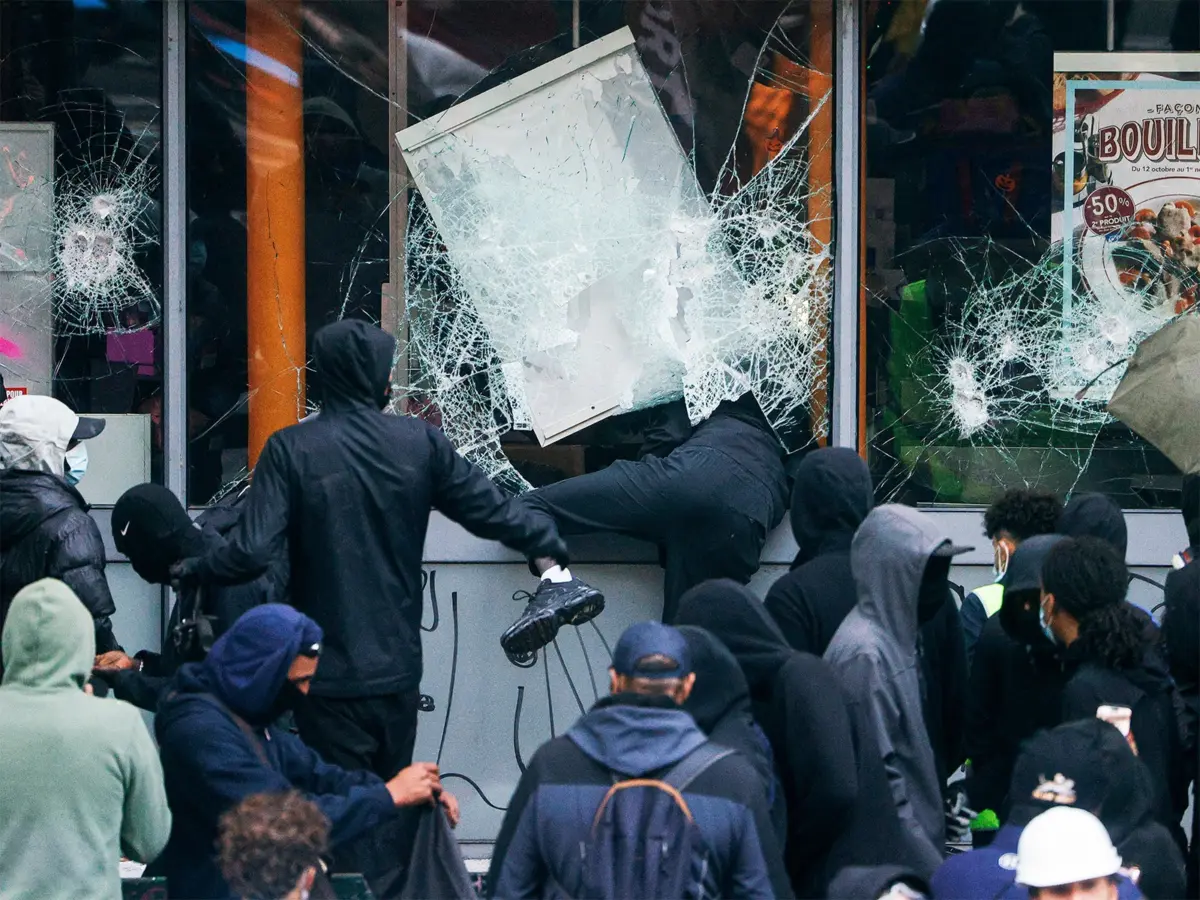
France is preparing itself for another tense weekend of civil unrest following a turbulent wave of demonstrations earlier this month. The initial protests, which were organized to voice public outrage over a deteriorating cost-of-living crisis and the severe decline of public education standards, quickly deteriorated into widespread violence, arson, and looting. In response to the chaos, the French government deployed police forces across the country in an urgent bid to prevent further destruction. According to statements from Justice Minister Gérald Darmanin, more than 2,000 individuals were taken into police custody during last weekend alone, marking one of the most volatile security challenges the nation has faced in recent years.
The scenes on the ground in major urban centers underscored the rapid escalation of the crisis. In the Strasbourg-Saint-Denis neighborhood, thick plumes of dark smoke billowed into the air from burning trash cans while gangs of looters—numbering in the hundreds by some local estimates—forced their way into commercial storefronts. Vincent, the proprietor of a local tobacco shop in the affected area, recounted the helplessness felt by small business owners as the chaos unfolded. "They came out of nowhere," Vincent said, explaining that he attempted to contact emergency services and the police, but no assistance arrived. "They said that they were completely overwhelmed and that they couldn’t help."
The widespread rioting exposed significant vulnerabilities in the government’s preparedness and laid bare deeper structural flaws in its national strategy for maintaining public order. Opposition politicians were quick to condemn the administration, blaming the executive branch for a severe misallocation of law enforcement resources. Critics questioned why a higher concentration of specialized security units was not deployed proactively to quell the unrest, and why it took hours for tactical forces to establish a meaningful presence on the ground. In Marseille, for instance, only a single riot unit was initially assigned to monitor the demonstrations. This proved to be a drastic underestimation when several hundred rioters converged on the city early in the morning, eventually breaching the town hall and tipping over a historical statue.
Despite weeks of heavy social media mobilization and online organizing leading up to the demonstrations, French intelligence services reportedly miscalculated the true scale of the movement. On the day of the national protests, an estimated 550,000 people poured into the streets, completely dwarfing the roughly 60,000 security personnel who had been mobilized to keep the peace. Interior Minister Laurent Nuñez conceded the gravity of the oversight during an interview on France Inter, admitting that "in certain large cities, we lost control" and acknowledging a profound "lack of anticipation" on the part of the authorities.
This lack of foresight was further complicated by the complex nature of policing a fragmented and multifaceted crowd. Law enforcement commanders pointed out the immense difficulty of managing simultaneous threats within the same operational theater. Officers were forced to navigate "three topics at once: peaceful demonstrators, opportunistic looters and more organised ‘breakers’ attacking state institutions," according to Sébastien Malzieu, a senior police commissioner at the central directorate of the Compagnies Républicaines de Sécurité (CRS). The CRS functions as a specialized national police reserve dedicated to security and crowd control. Within its ranks are elite, highly mobile tactical units such as the CRS 8—often described as a French equivalent to a SWAT team—though these specialized reinforcements were not deployed to assist with the riots until late in the afternoon on October 17.
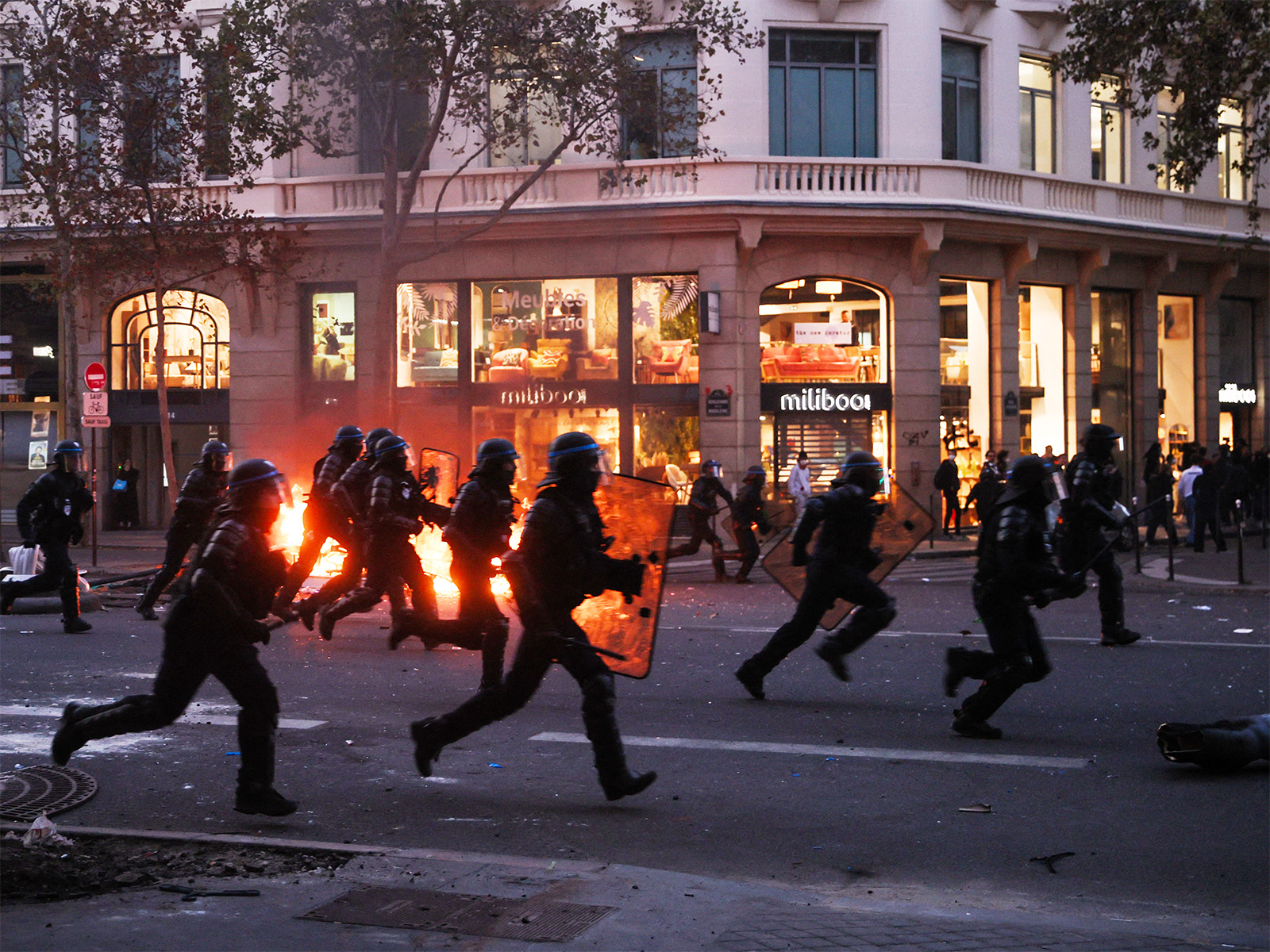
Restoring order proved to be a painstaking and protracted process. Malzieu explained that stopping the violence was both difficult and time-consuming, requiring police to track suspected looters through the night and over the course of the following two days. "Officers had to go street by street, shop by shop, following the long protocol for making arrests," Malzieu noted, while defending the overall operation against claims of total institutional failure. He argued that the intervention prevented a complete collapse of public order, emphasizing that "a great majority of institutions were protected."
While citizens have expressed profound anger over the destruction of local businesses and municipal buildings, public criticism has turned with equal intensity toward the aggressive tactics employed by the police. During the street confrontations, officers made heavy use of tear gas, rubber bullets, and stun grenades to disperse crowds. French legal regulations stipulate that multiple formal warnings must be issued before such force is authorized, yet numerous videos circulating online captured tear gas being deployed directly into peaceful gatherings. Furthermore, human rights observers and journalists documented the widespread use of la nasse, a controversial kettling tactic that involves surrounding a mass of people and physically blocking all exit routes, frequently trapping peaceful marchers alongside individuals suspected of engaging in violence.
As the nation looks ahead to another weekend of anticipated demonstrations, the French government has chosen to escalate its security posture dramatically. On Tuesday, authorities instructed local governments to implement curfews across several municipalities. To secure sensitive locations and public infrastructure, the administration announced the deployment of military personnel from the nation’s long-standing counterterrorism operation—troops who have not been mobilized for domestic crowd control since the height of the Yellow Vests protests in 2019. Additional elite units, including the Brigade de Recherche et d’Intervention (BRI) and the notorious Brav-M motorcycle squads, have also been integrated into the security apparatus, despite the latter group’s history of court convictions related to the excessive use of force against protesters and members of the press.
The deployment of heavily militarized policing units reflects a recurring pattern in the government’s response to civil disobedience in recent years. During student-led protests earlier in October, Interior Minister Laurent Nuñez reportedly instructed law enforcement personnel to utilize anti-riot munitions with "no restraint." That directive fueled a fresh wave of public outrage regarding institutional police violence, particularly concerning CRS units whose reliance on flash-balls and explosive sting-ball grenades has left several high school students with severe, life-altering injuries during recent demonstrations.
Academic and research experts have strongly criticized the administration’s hardline approach. Sébastien Roché, a research director at France’s National Centre for Scientific Research and co-author of La Police Contre La Rue, characterized the state’s playbook as an act of political desperation. "The government’s strategy is one of political desperation," Roché said. "The use of the army, for example, is not a strategy that will add efficiency to dealing with public disorder. It sends a message about waging a war against the youth and people who are angry about their purchasing power."
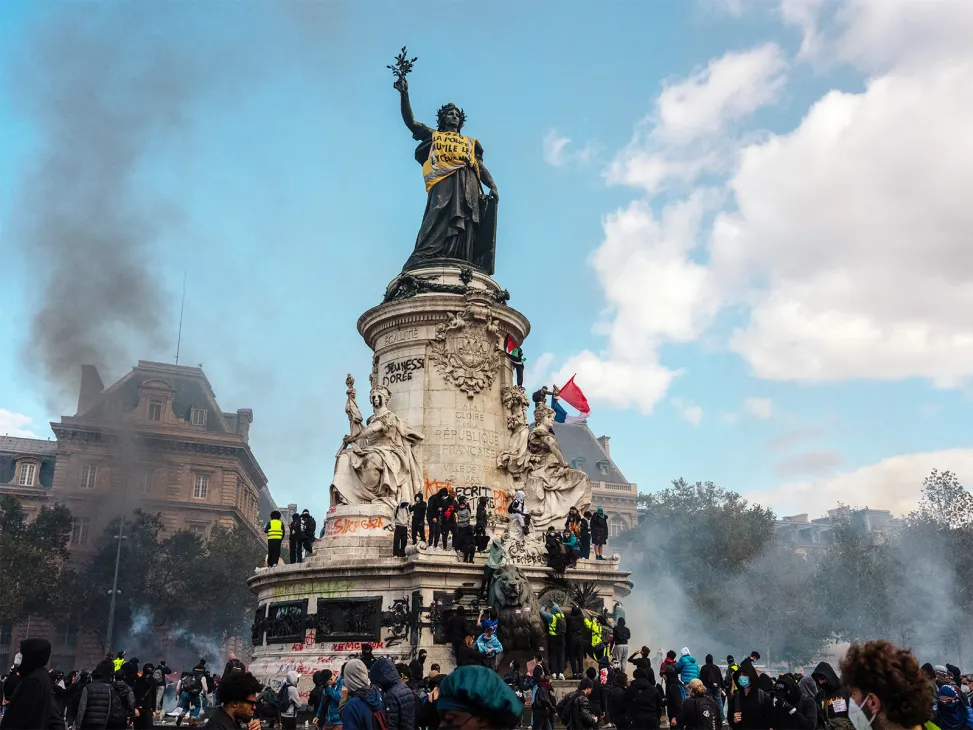
The trajectory of the political landscape in the wake of the riots remains deeply uncertain, with political factions rushing to assign blame rather than forge consensus. Prime Minister Sébastien Lecornu attributed the explosion of violence to agitators on the far left. Meanwhile, Jean-Luc Mélenchon, leader of the left-wing La France Insoumise party, sharply criticized the executive branch’s heavy-handed policing strategy. On the opposite end of the political spectrum, Marine Le Pen, leader of the far-right Rassemblement National, directed her criticism at both the government’s administrative failures and immigration policies, though investigators have found no evidence linking migrants or organized far-left factions to the instigation of the broader riots.
With France scheduled to head to the ballot box next year for a crucial presidential election, the management of law enforcement, civil liberties, and public safety will undoubtedly dominate the national debate. The contrasting visions of law and order championed by figures like Mélenchon and Le Pen highlight the deep divisions within the electorate. The outcome of the upcoming election will ultimately determine not only how the French state responds to future waves of social unrest, but also whether the nation can find a viable path out of the persistent cycle of escalation between frustrated citizens and the government.
When contacted for comment regarding the security strategy and allegations of excessive force, the French Interior Ministry declined to answer questions.