Museums such as the newly opened Lucas Museum of Narrative Art might appear to traditional critics as though they have abandoned intellectual rigor entirely. Yet, by placing an uncompromising focus on emotional immersion, spatial resonance, and direct sensory experience, these institutions are beginning to highlight something vital that has long been missing from conventional galleries and academic institutions.
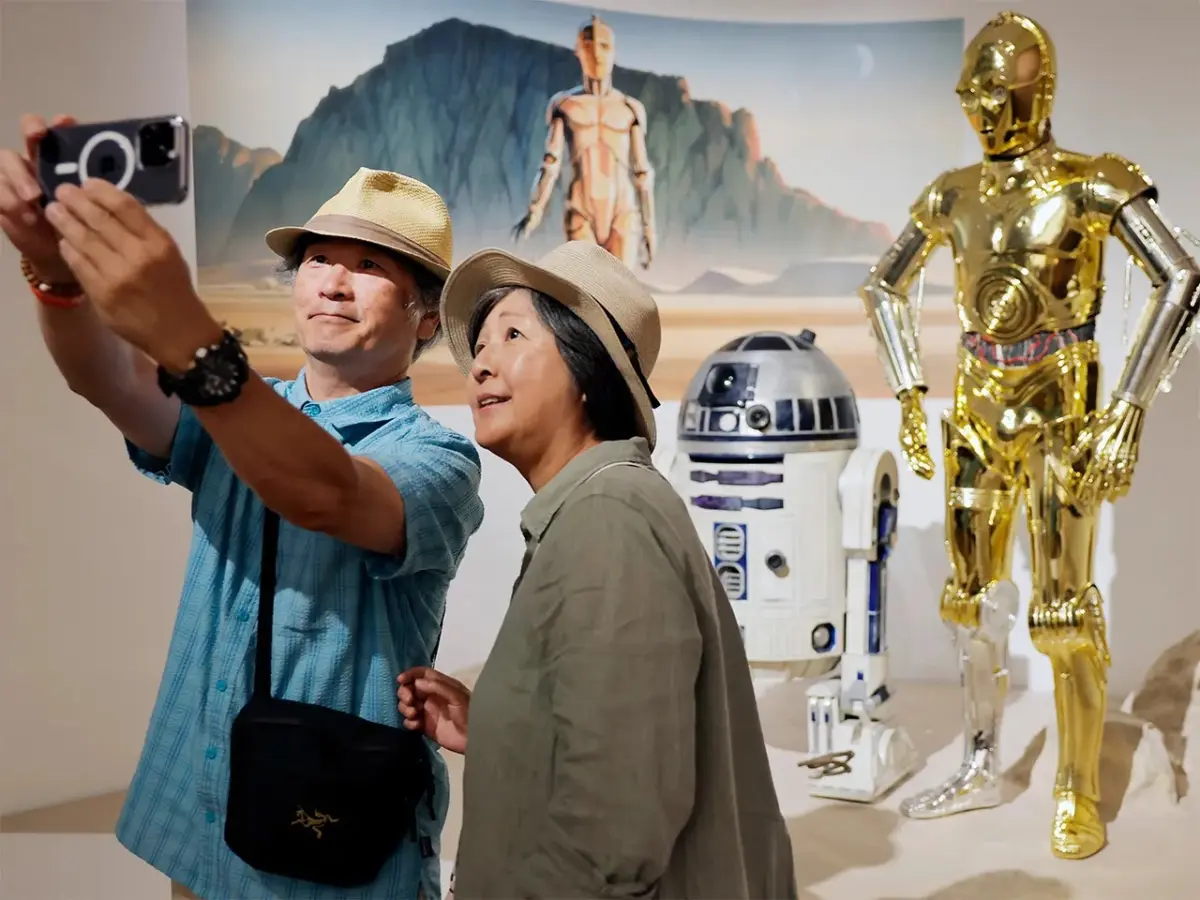
A short time ago, in a cultural landscape deeply resistant to sudden shifts in tradition, a museum opened to great fanfare and intense debate within the global art world. The Lucas Museum of Narrative Art (LMNA) in Los Angeles is the $1bn (€892m) brainchild of filmmaker George Lucas—celebrated creator of the Star Wars franchise and co-creator of Indiana Jones—and his wife, business leader Mellody Hobson. When the futuristic, sweeping building designed by renowned architect Ma Yansong recently opened its doors to the public for the first time, many art critics took the institution’s apparent pivot away from traditional academic framing as an aggressive attack on the established norms of the Western museum model.
The LMNA—which, in a conscious and deliberate effort to elevate the under-appreciated art of illustration and visual storytelling, employs a remarkably laconic labeling system and prioritizes visceral visitor experience over dense academic explanations—quickly found itself accused of aggressively collapsing the traditional, tightly guarded boundaries between high art and low culture.
The fundamental question at the absolute heart of the unfolding cultural row is a remarkably simple one: should an art museum primarily make us think, or should it make us feel? Describing the LMNA in polarising terms ranging from upending the traditional art world entirely to bringing the centuries-long history of the Western art museum to its inevitable and disruptive conclusion, contemporary critics seem to suggest that the profound experience of viewing art is somehow entirely separate from intellectually understanding it.
George Lucas vehemently disagrees with this separation. In a recent interview with Vogue, the legendary world-builder laid out his philosophy with absolute clarity. “My feeling is that art is emotional,” he noted. “It’s not intellectual. Are you emotionally connected to it? If you’re connected, it’s art. And if you’re not, then it’s not art.”
Yet Lucas is hardly alone in championing this experiential and emotional philosophy of cultural spaces. Just as the LMNA was being heavily scrutinized and lambasted across the media landscape, the prestigious Fondation Beyeler unveiled three brand-new architectural additions designed by celebrated Swiss architect Peter Zumthor in a picturesque, leafy slice of suburban Basel. Forming an integral part of its new “expanded ensemble,” these architectural additions seamlessly meld into a newly accessible public parkland that virtually doubles the physical footprint of Switzerland’s most-visited art museum.
Much like Lucas, Zumthor builds monumental cultural superstructures on the unshakeable foundation of his deeply held personal beliefs. His distinctive architectural style leans heavily into invoking powerful feelings through carefully crafted spaces that prioritize sensory experience, atmospheric qualities, and deep emotional resonance over dry academic contextualization.
“Feelings encompass much more than thinking,” Zumthor observes, explaining his architectural ethos. “Your emotions contain things that you don’t even consciously remember.” This is certainly not to say that Zumthor dismisses intellectual engagement out of hand or suggests that learning has no place in culture. “But let’s not make museums too didactical,” he adds, cautioning against the dangers of turning galleries into classrooms.
The shared desire of both Lucas and Zumthor to do away with traditional art-world didacticism stands in stark contrast to the deeply entrenched views of traditional critics who believe that museums are, by their very definition, institutions meant to provide historical context, rigorous interpretation, and the intellectual architecture necessary for the academic understanding of art.
However, cultural spaces need not be exclusively reserved for clinical thinking and historical contextualization; they can and should also function as places to stretch out emotionally, to reach for fresh, unmediated feelings, and to discover entirely new ways of understanding ourselves and our shared human experience. Meanwhile, illustrating the friction of this paradigm shift, one prominent critic wrote that he left the LMNA deeply disappointed simply because he failed to learn any new historical facts beyond what he already knew—a reaction that sounds suspiciously like someone who went in search of an encyclopedic textbook and was visibly frustrated to find pure, evocative art instead.
Just as the impressionist movement originally emerged as a direct, rebellious reaction to the stale, lifeless sobriety of rigid academic painting, contemporary art museums that proudly premise feeling, atmosphere, and sensuality are not historical aberrations. Rather, they represent entirely natural, organic reactions to the dizzying, heady pace of modern life. Today, everyday people do not want to walk into public galleries that make them feel dull, uneducated, or intellectually inadequate; they want galleries that make them feel profoundly human. Or, at the very least, they want spaces that allow them to feel something genuine.
If impressionism was once considered “the new painting” that shocked conservative sensibilities, the LMNA and the expanded Fondation Beyeler are rapidly proving to be the new museums of the twenty-first century. The fierce critical backlash they currently face can largely be put down to the timeless reality that the new and unfamiliar almost always arrives as a profound shock to established institutions. Yet, in an era marked by heightened global instability and cultural anxiety, pioneers like Lucas and Zumthor may simply be attempting to bring a much-needed sense of emotional balance to the cultural force.