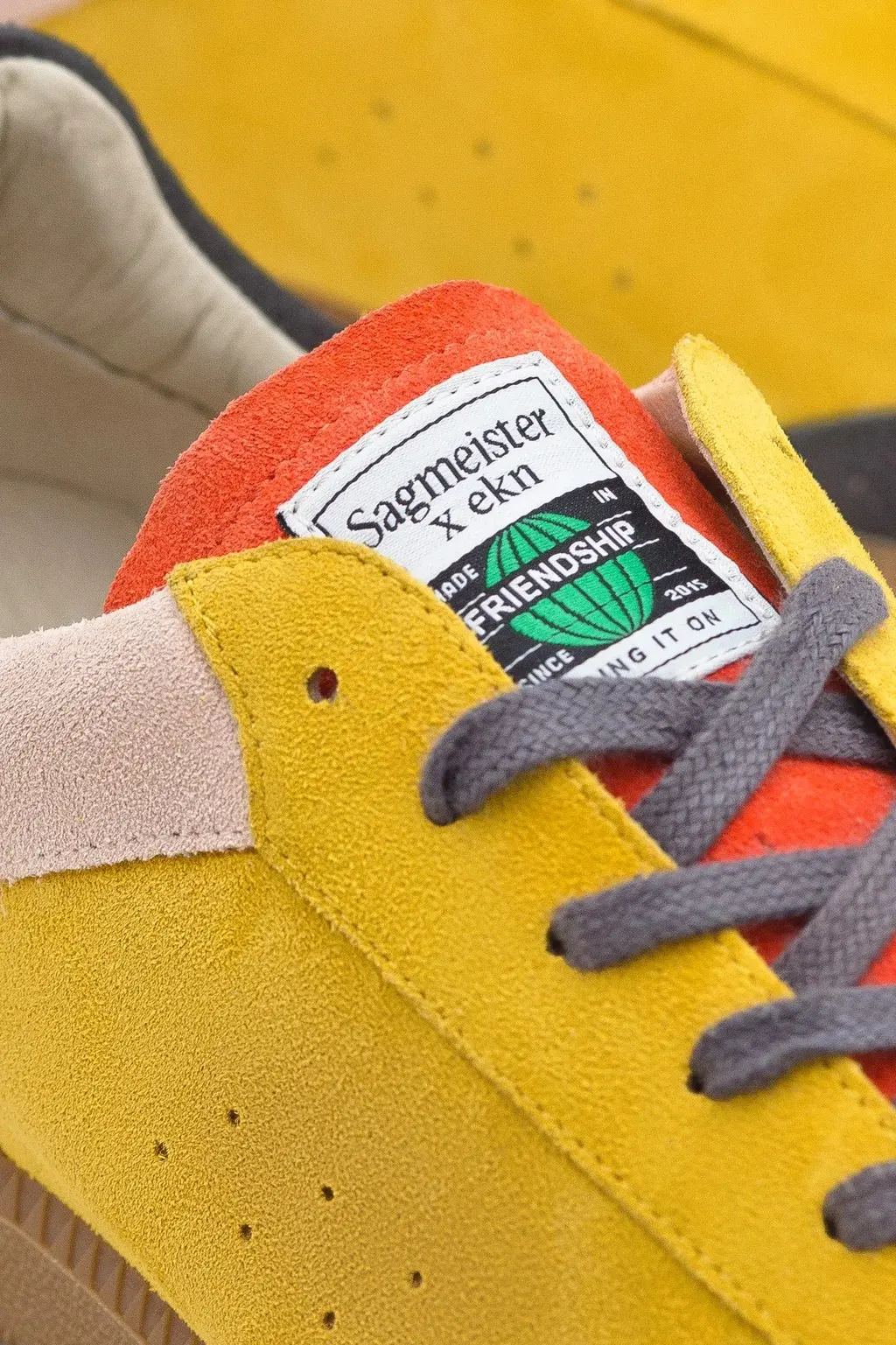
This innovative intersection of graphic design, statistics, and fashion is showcased through two unique pairs of shoes designed by Sagmeister in collaboration with Ekn, a German footwear brand known for its sustainable approach to manufacturing. The shoes are currently on view as part of his major exhibition, titled Finally, Something Good, which is hosted at the Paris gallery Gaîté Lyrique and runs through April 2027. Through this exhibition, Sagmeister aims to encourage audiences to reflect on the world over a much longer, macro-level historical timeline rather than becoming trapped in the cyclical anxiety of the daily news cycle.
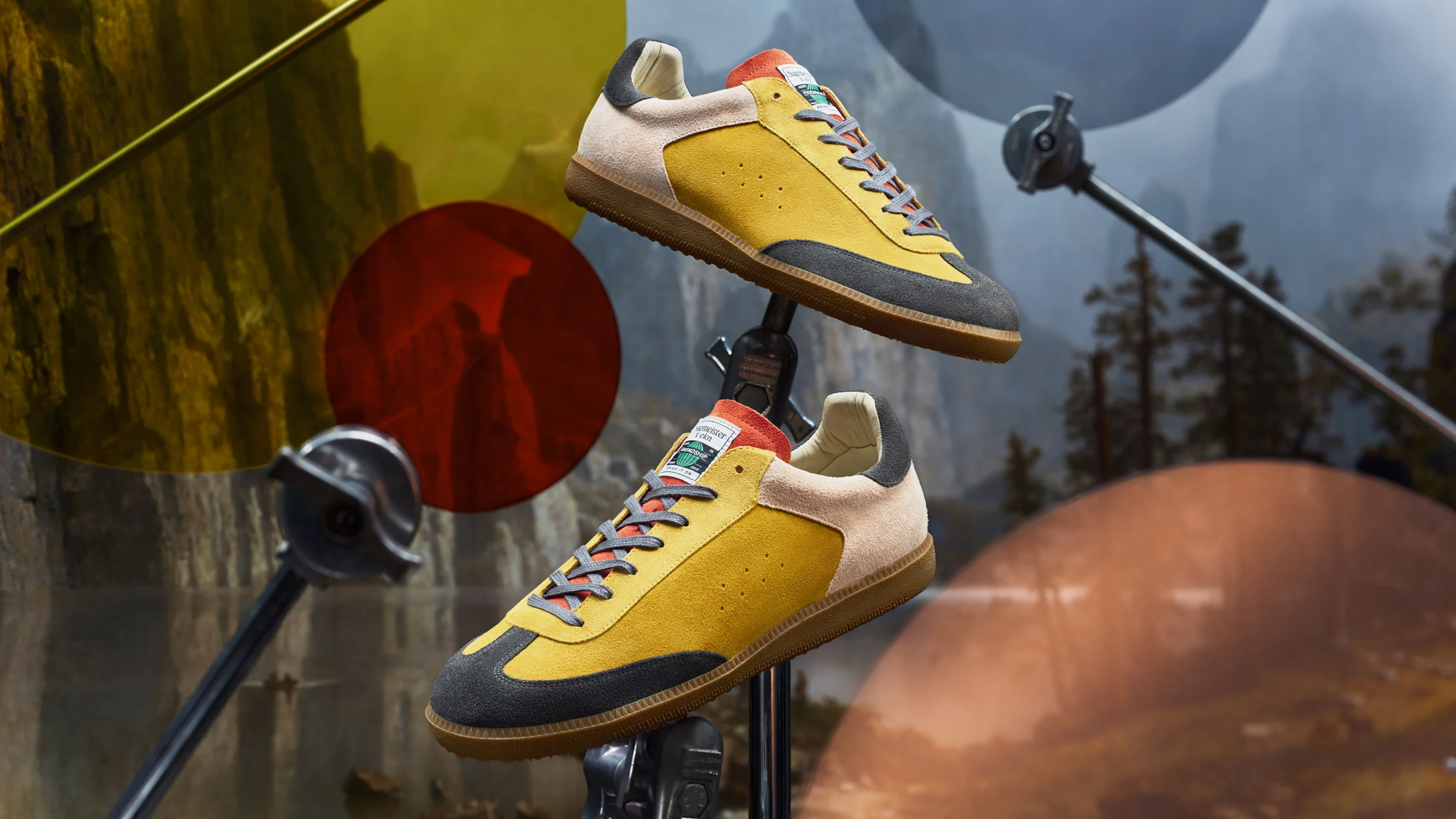
Each shoe in the collaboration uses tangible data sets to tell a distinct story about the state of modern society, with one focusing on the global transition toward renewable energy and the other addressing the stark realities of urban homelessness. To fully understand the deeper narrative behind each design, the wearer or viewer only needs to look inward, as the key to interpreting the data encoded into the shoes is written directly on the footbed.
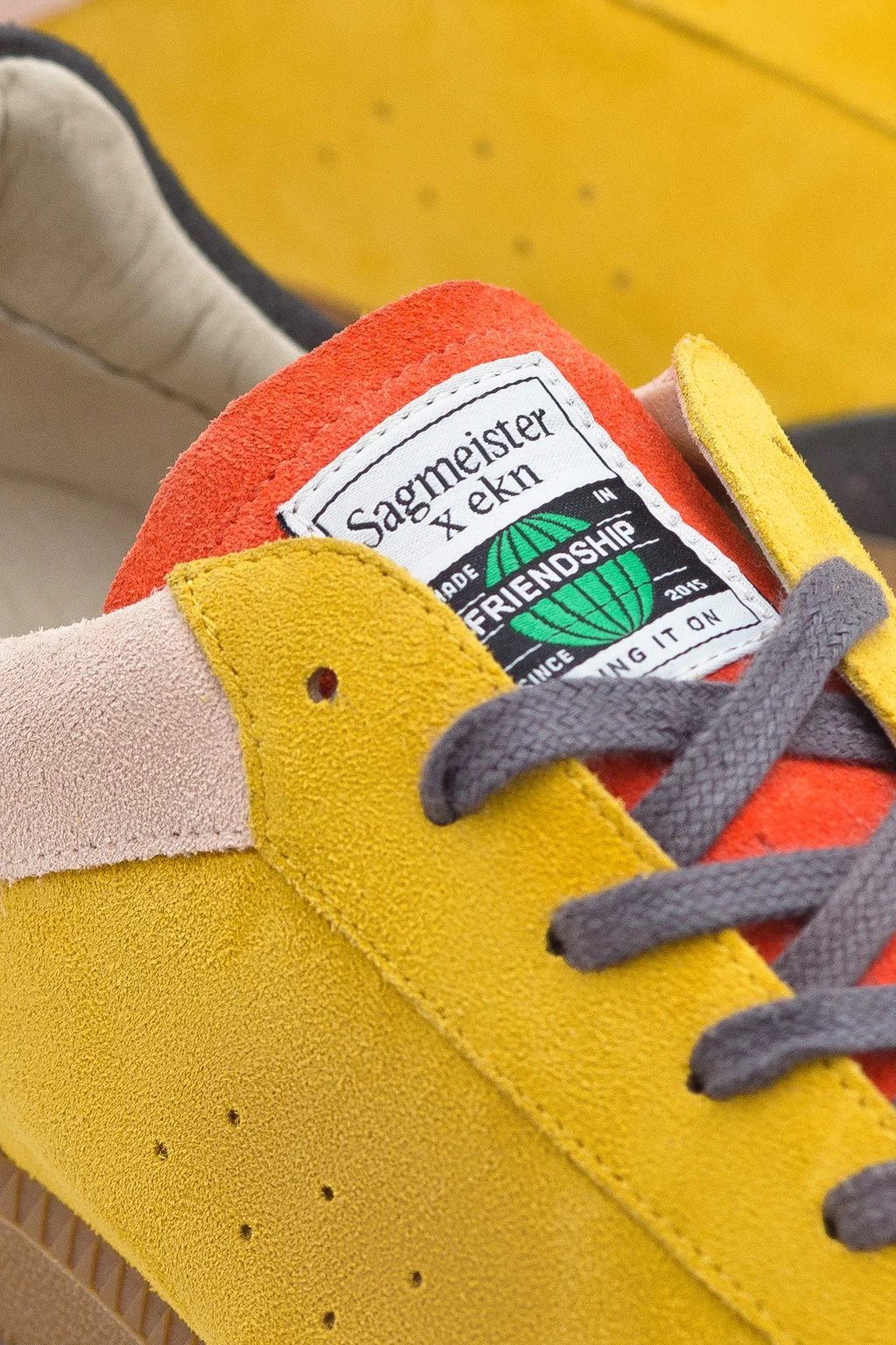
The first of the two designs is a multicolored sneaker named "Bring It On," which tackles the critical subject of renewable electricity generation. To construct the visual narrative of the shoe, Sagmeister utilized empirical data sourced directly from the Energy Institute’s 2024 Statistical Review of World Energy. This data dictated the relative physical sizes of the various colored leather panels stitched onto the sides of the sneaker, with each distinct color representing a different source of power within the global energy landscape.
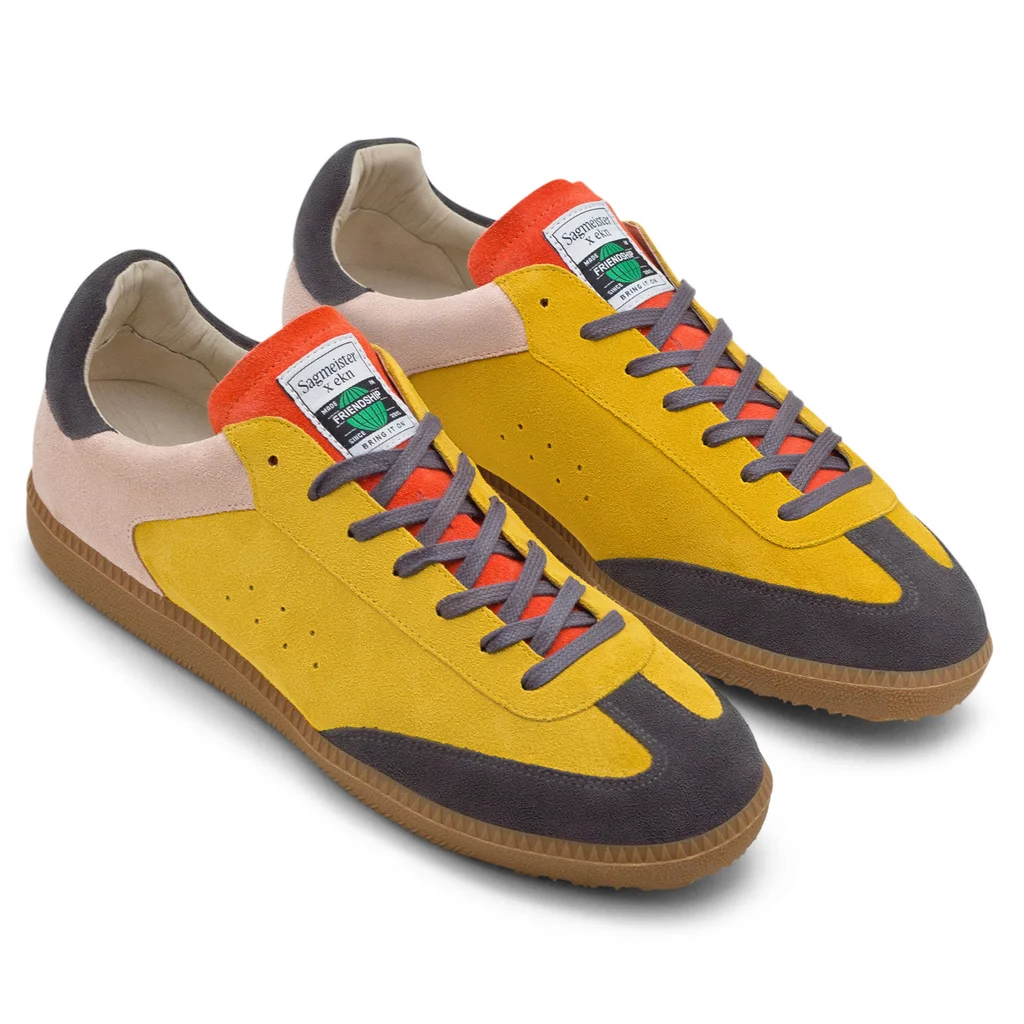
In this architectural layout of data, yellow stands out as the largest color block on the shoe, representing hydropower, which currently holds the largest share in the specific metrics utilized. This primary yellow block is followed by a black panel representing wind energy, a pink panel dedicated to solar power, and a red panel that groups together all other renewable energy sources. By mapping statistical proportions onto the panels of a sneaker, Sagmeister has effectively transformed a standard footwear silhouette into an infographic that walks through city streets.
Yet, because real-world data is constantly shifting and evolving, the sneaker carries an inherent irony that highlights the dynamic nature of statistics. As Sagmeister noted in an interview with Fast Company, the shoe is already technically out of date due to the rapid pace of green energy adoption. With the release of the 2025 energy figures, published over the summer, solar power surpassed wind energy on a global scale for the very first time. Reflecting on this swift transition, Sagmeister pointed out that if he were to manufacture the shoe today based on the most recent updates, the pink solar panel would need to be slightly larger than the black wind panel, perfectly capturing the fast-moving momentum of the green energy transition.
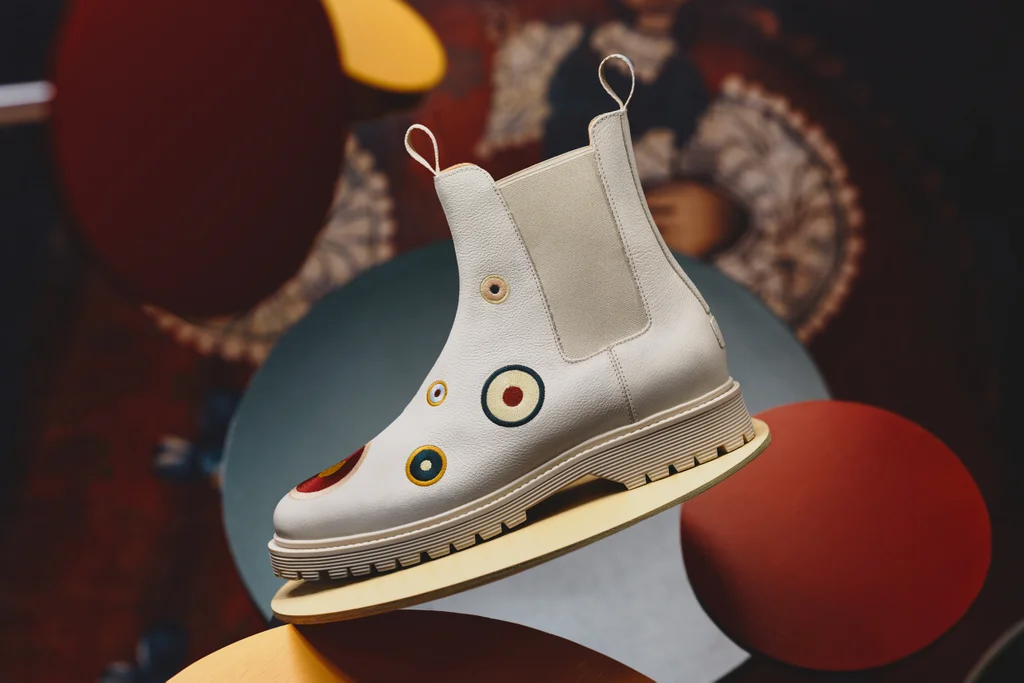
The second footwear design in the exhibition takes a sharply different approach, shifting focus from environmental systems to human welfare and social policy. Titled "Like a Complete Unknown," this rugged boot uses geometric circles as an infographic device to represent the relative populations of people experiencing homelessness across six different countries. Rather than relying on arbitrary design choices, the surface area of each circular leather applique directly corresponds to the number of individuals living unsheltered in streets and public spaces per 100,000 inhabitants, utilizing standardized data compiled by the Organisation for Economic Co-operation and Development (OECD).
The visual weight of the data on the boot immediately draws attention to the vast disparities between nations. The largest circular appliques on the footwear design are assigned to the United States, which registers at 76 individuals per 100,000 inhabitants, and Germany, which follows closely behind at 46. These prominent markers are followed by significantly smaller circles representing the United Kingdom at 16, France at 8, Mexico at 5, and Japan at 2.
While acknowledging the methodological challenges inherent in comparing social statistics internationally, Sagmeister emphasizes that the gap revealed by the data points to a deeper systemic reality. Different nations record and count their populations in varying ways, meaning the numbers are not entirely uniform or perfect. However, when examining the stark contrast—such as Mexico, a considerably poorer country, reporting a homelessness rate that is roughly a fifteenth of the American rate—Sagmeister argues that a discrepancy of that magnitude cannot simply be written off as a mere counting difference.
This perspective is informed by Sagmeister’s own personal background and hands-on civic engagement. Prior to designing the boot, the graphic designer volunteered for the Coalition for the Homeless, a prominent advocacy and service organization dedicated to helping unhoused populations. He notes that what stayed with him most profoundly from that formative experience was the lingering question of why certain countries manage to navigate and mitigate the exact same social problem so much more effectively than others, while wealthier nations continue to struggle with deep-seated crises. By embedding these numbers into the physical structure of a boot, Sagmeister hopes to keep these difficult questions visible and circulating in public spaces long after visitors leave the gallery walls of the Gaîté Lyrique.