Nestled deep within a natural volcanic lava cave in Mexico City’s rugged Pedregal de San Ángel region, a sprawling, mosaic-adorned domicile once stood as a testament to radical modernist design. Built in 1954, the architectural marvel known as Casa Cueva was conceived, designed, and lived in by the creative powerhouse couple Juan and Helen Fowler O’Gorman. He was an acclaimed architect and painter, and she was a talented artist and botanist. The home was an icon of modernist Mexican architecture, seamlessly integrating structural ingenuity with the untamed, organic landscape of the surrounding terrain. Though the iconic residence was largely destroyed following its sale by the couple in 1969, its profound artistic and ecological legacy continues to resonate through contemporary creative practices.
That enduring legacy has now been brought to the forefront at Museo Jumex in Mexico City, where artist Álvaro Urbano has unveiled a breathtaking and deeply contemplative solo exhibition titled Helen. Running through February 7, the exhibition serves as a profound homage to the architectural and ecological innovations of Casa Cueva. Rather than attempting a literal reconstruction of the lost home, Urbano draws inspiration directly from its surrounding gardens and the remarkable botanical legacy left behind by Helen O’Gorman. In doing so, the artist has crafted an immersive environment that bridges the gap between mid-century Mexican modernism and contemporary spatial installation, transforming the gallery into a living ecosystem of memory, sculpture, and botanical reverence.
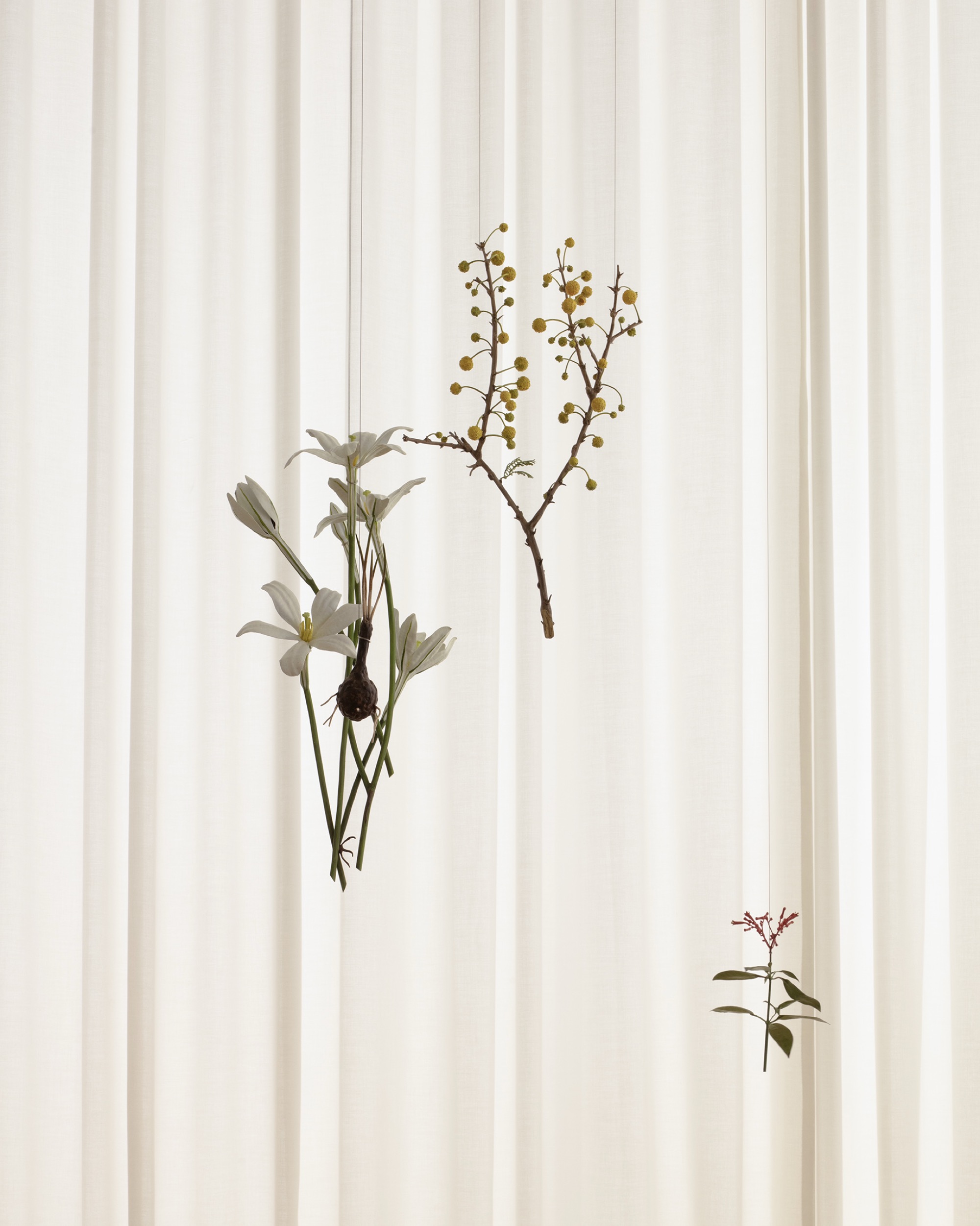
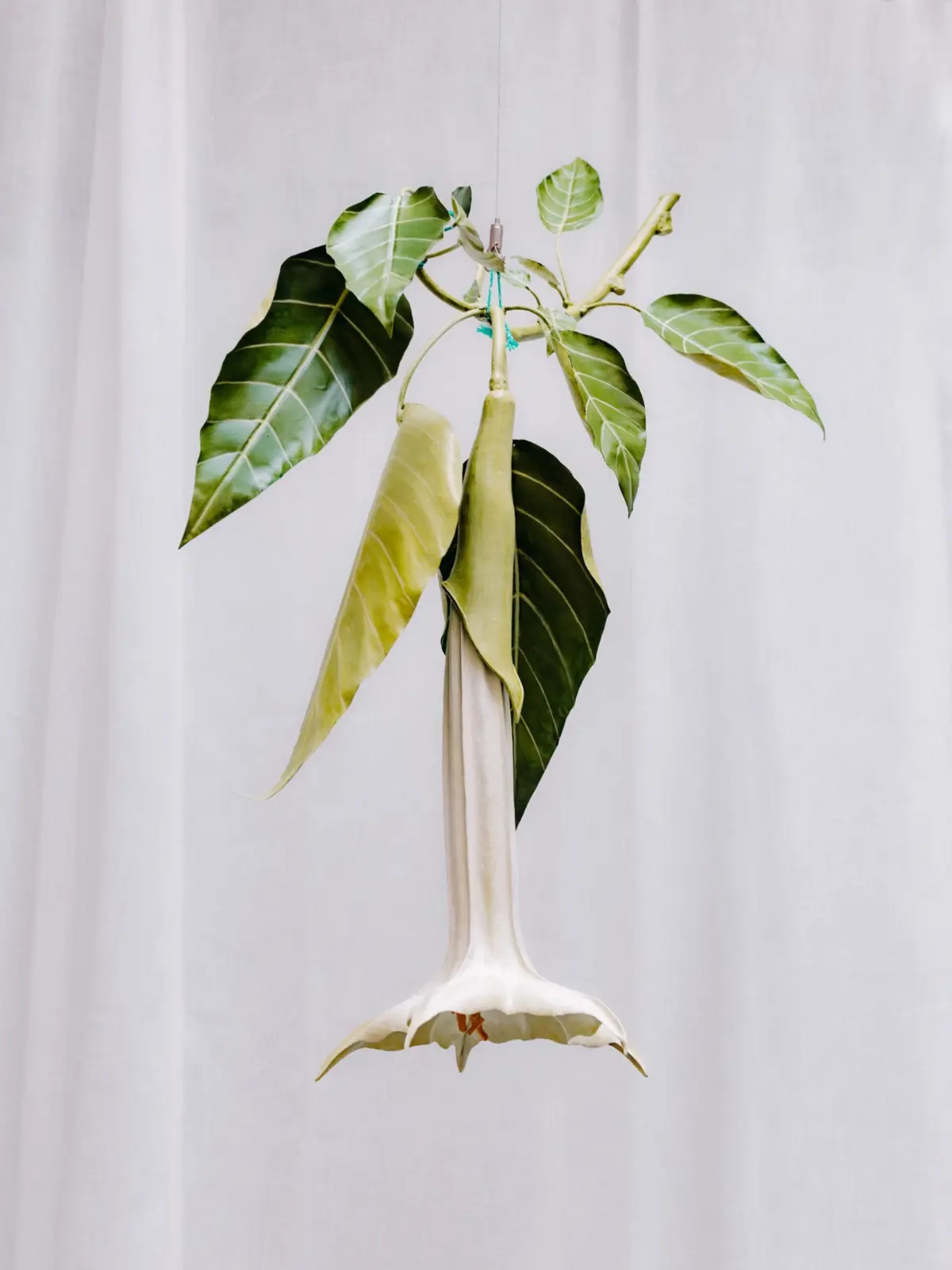
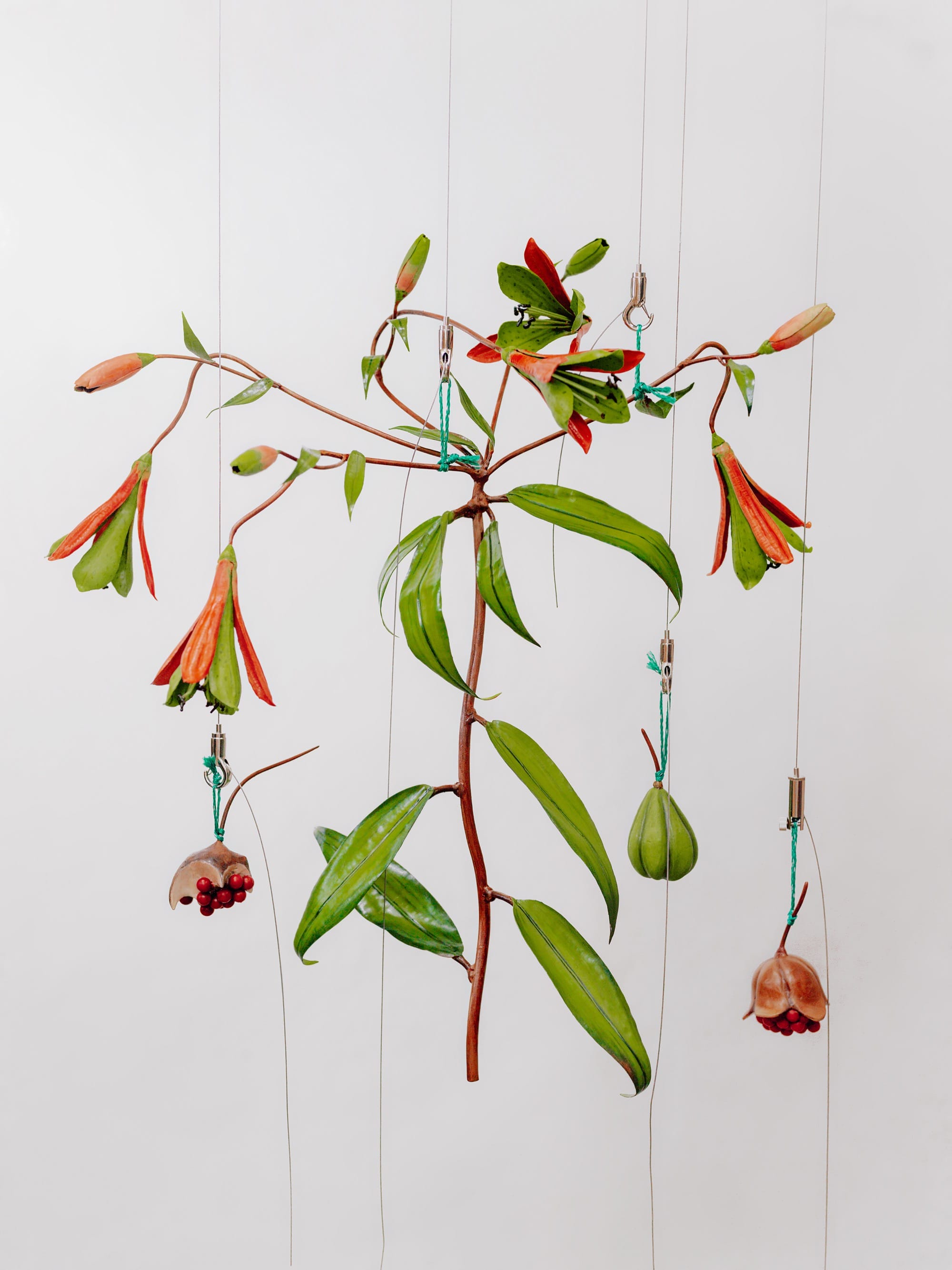
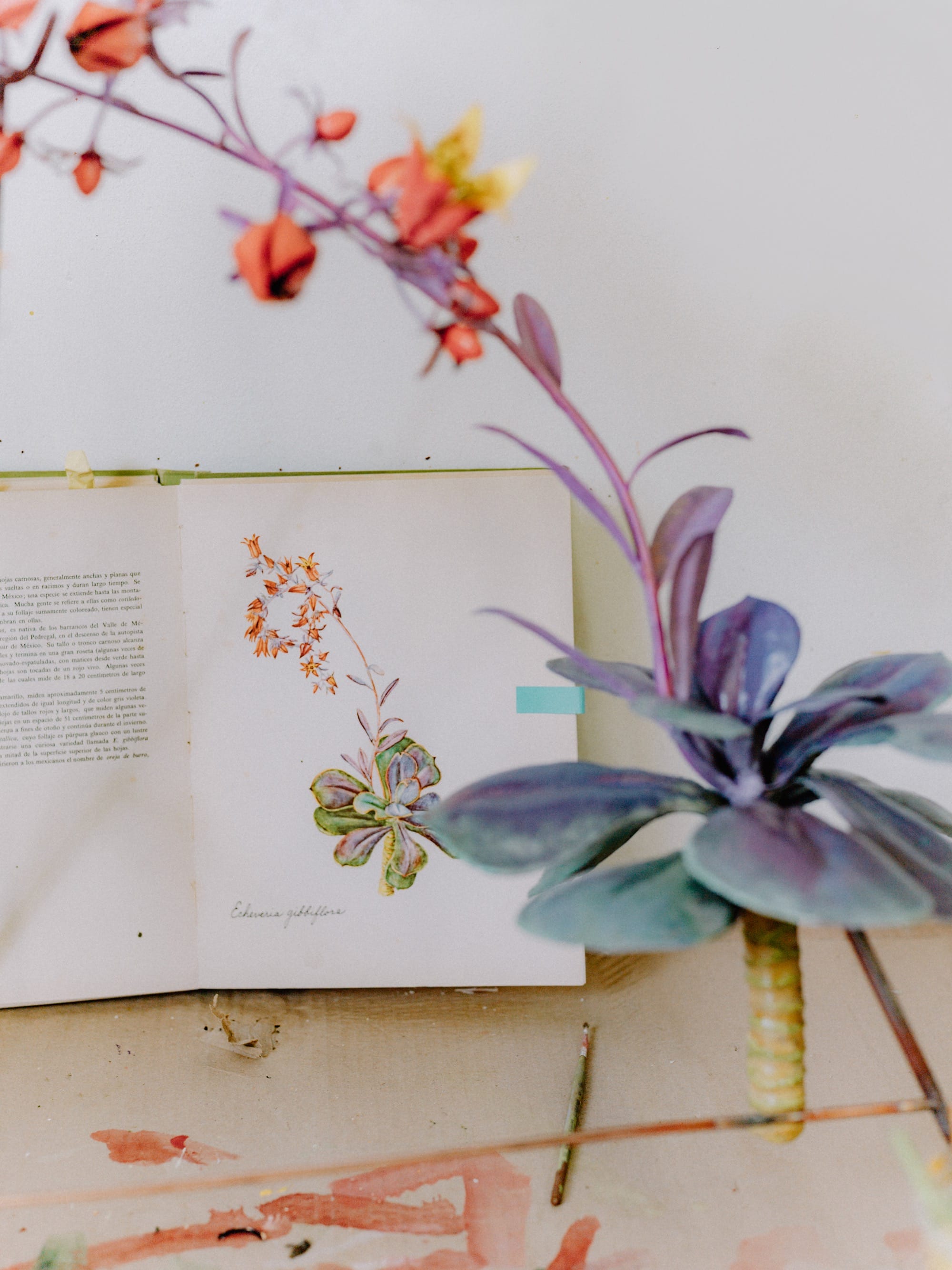
At the heart of Urbano’s inspiration is Helen O’Gorman’s seminal 1961 book, Mexican Flowering Trees and Plants. Written and intricately illustrated during her time living amidst the volcanic landscape of Casa Cueva, the rich volume served as a comprehensive, beautifully documented study of a wide variety of the region’s native botanical specimens. For decades, the book has stood as an important contribution to the documentation of Mexican flora, capturing the vibrant life that thrived amid the harsh, dark stone of the Pedregal. For Urbano, these historical vegetal renderings became the foundational blueprint for an entirely new body of metal sculptures, translating two-dimensional illustrations from a mid-century text into tangible, three-dimensional forms crafted from industrial materials.
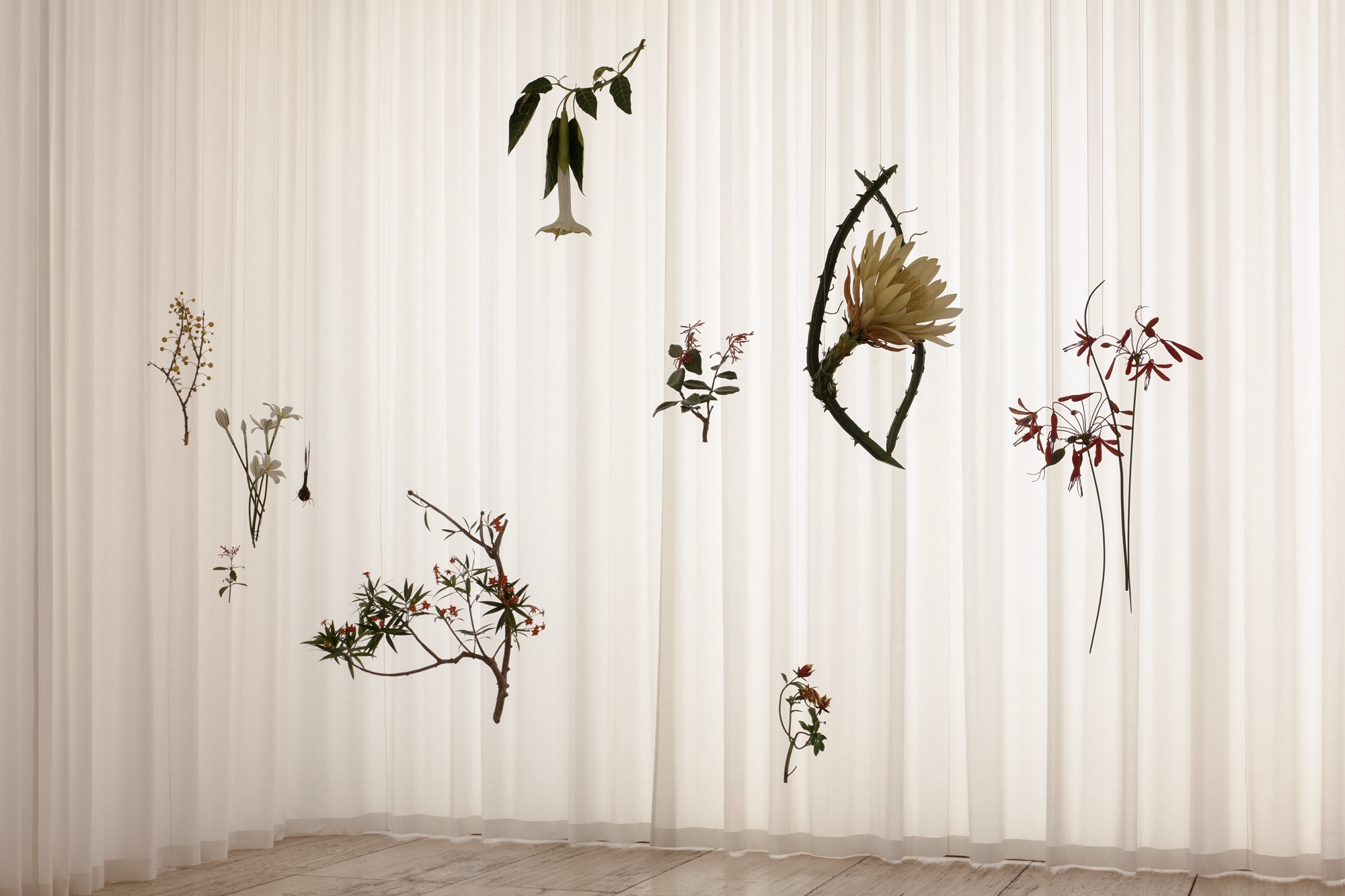
In the striking installation at Museo Jumex, Urbano suspends his signature painted metal plants in a delicate, deliberate arrangement that defies the rigid architecture of the museum gallery. Floating against a diaphanous, translucent curtain, the lifelike sculptures appear almost as ethereal apparitions. They hover gently in mid-air, casting soft shadows and guiding viewers through the dreamy, meditative space with an effortless grace. Every single botanical specimen featured in the exhibition is directly modeled after a plant that originally appeared in Helen O’Gorman’s 1961 publication, creating a direct line of communication across the decades that separates contemporary museum-goers from the botanical observations of the mid-20th century.
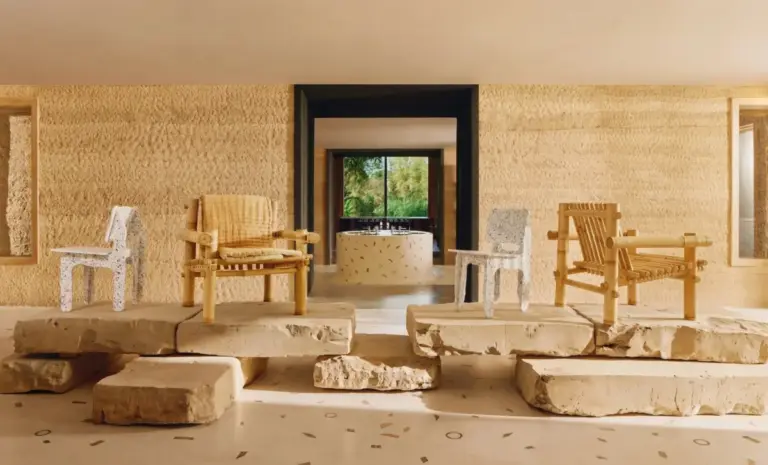
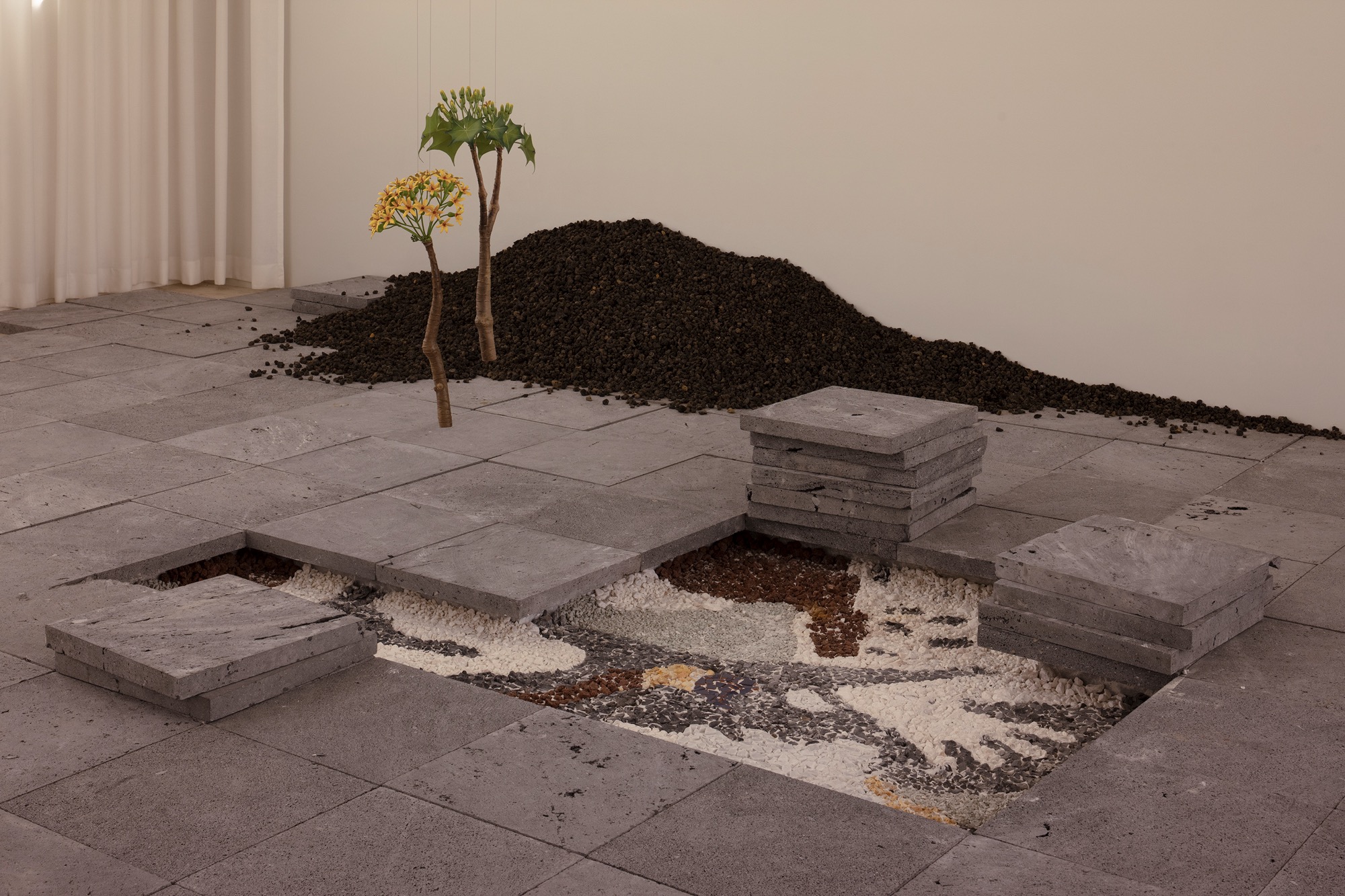
Complementing these suspended metallic flora is a striking, site-specific floor installation that further anchors the exhibition in the tactile reality of the landscape that inspired it. Featuring variegated natural stone interspersed among a floor composed of traditional square pavers, the design recalls the rugged terrain of the Pedregal de San Ángel and the geological foundations upon which Casa Cueva was originally built. Much like the legendary cave house itself, Urbano’s exhibition unfolds in an organic, unforced manner. The installation creates a continuous, unbroken dialogue between the architectural space, the botanical sculptures, and the museum visitors who are privileged to witness both, inviting them to step into an environment where nature and artifice merge seamlessly.
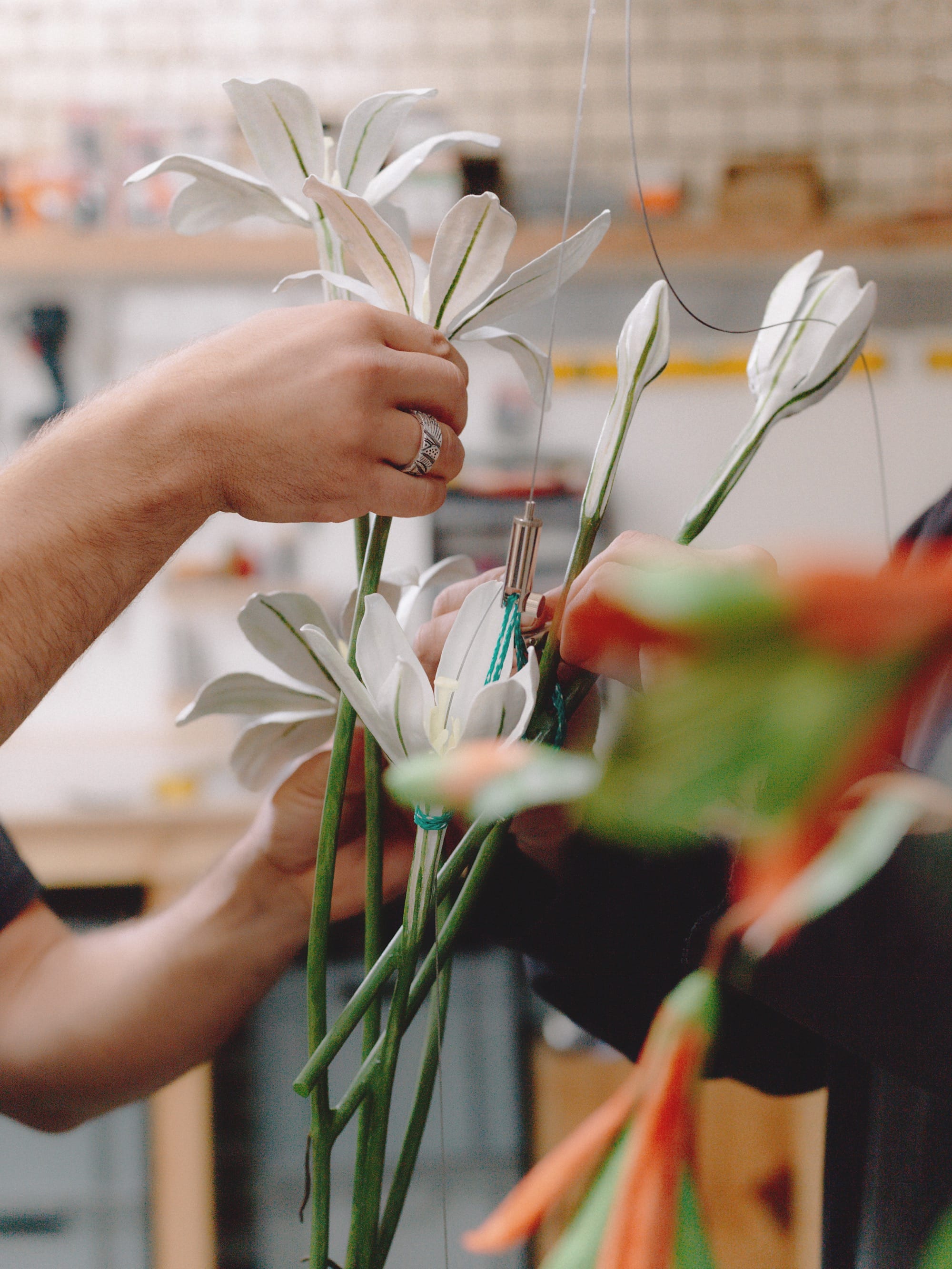
The realization of Helen is the result of an extensive and meticulous studio practice, captured in recent behind-the-scenes photographs that reveal the labor-intensive process behind the finished installation. In studio views captured by photographer Agustín Farías, the intricate metalwork is shown in various stages of creation, highlighting the careful shaping, welding, and painting required to transform raw industrial materials into convincing botanical replicas. Surrounded by paint tins, worktables, and unfinished fronds, the artist’s workshop functioned as an interim greenhouse of metal and pigment, reflecting the rigorous craftsmanship that underpins Urbano’s conceptual vision. These studio images, alongside documentation by photographer Ramiro Chávez of the final installation at Museo Jumex, emphasize the physical transformation of the botanical subjects from ink-and-paper illustrations into monumental yet delicate gallery objects.
Through Helen, Álvaro Urbano does not merely resurrect a lost chapter of Mexican architectural history; he revitalizes it, offering a fresh lens through which to view the intersection of domestic space, indigenous plant life, and artistic collaboration. By channeling the spirit of Helen O’Gorman and the geological poetry of Casa Cueva, the exhibition establishes a timeless connection between the past and the present, ensuring that the botanical treasures of the Pedregal continue to captivate and inspire audiences long after the physical walls of the original cave house have vanished.