The transformation of club culture over the past several decades reveals a fascinating shift in how societies utilize space, light, and community after dark. For Italian photographer Giovanna Silva, this world was initially a complete blank slate. Commissioned by Monditalia for the 2014 Venice Architecture Biennale to investigate the architecture of Italian nightlife, Silva embarked on an exploration that would eventually transcend the exhibition space, culminating in her comprehensive book, NIGHTSWIMMING: Discotheques from the 1960s to the Present.
Approaching the subject with the fresh perspective of an outsider, Silva acknowledges that her unfamiliarity with the universe of discotheques provided her with an unconventional and detached lens. Yet, capturing this ephemeral environment required a concerted effort to balance intense curiosity with strict self-restraint.
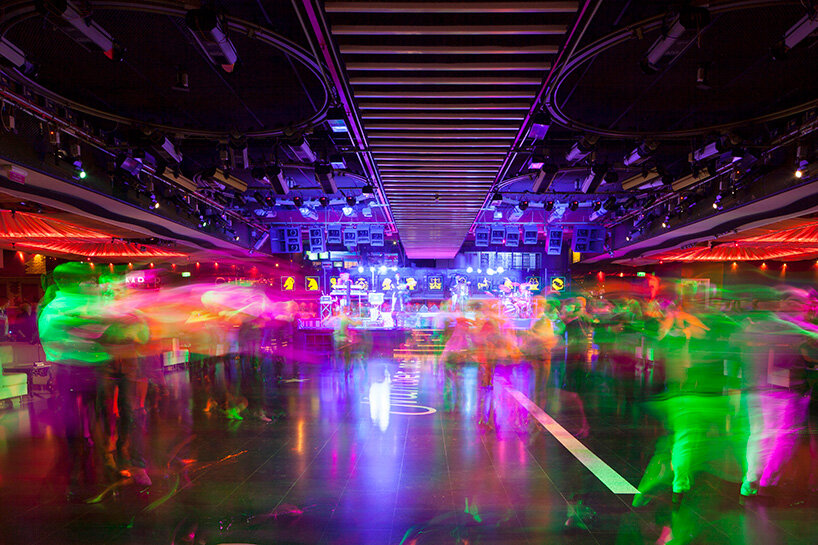
Documenting the Ephemeral Spaces of the Night
Because discotheques are inherently chameleon-like spaces, constantly altering their appearance to keep pace with shifting fashions, evolving music genres, and rapid advancements in lighting and sound technology, documenting them presented a unique challenge. Silva and her collaborators began their research by gathering existing publications on the subject. On one hand, this archival dive was essential for accumulating historical data; on the other hand, books served as the primary visual repository for clubs that had long since transformed or vanished.
These texts did more than provide architectural floor plans and historical timelines; they introduced Silva to the key figures who shaped the nocturnal landscape. Through the pages of old books, critics, architects, resident DJs, art directors, and club owners came to life—individuals whom Silva aptly describes as the "night swimmers."
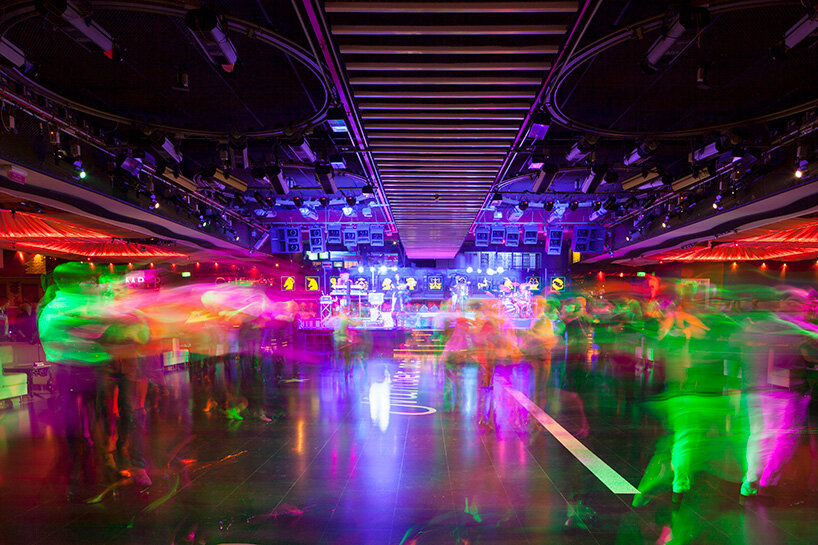
After mapping the evolution of the Italian discotheque, the research expanded to encompass four major European capitals: Berlin, London, Paris, and Barcelona. Selecting the specific venues for this broader European phase proved far more complex than the Italian survey. While the Venice Biennale presentation demanded an exhaustive overview, the subsequent phase required rigorous selectivity. Silva focused on clubs that held deep social and musical significance while offering compelling architectural traits.
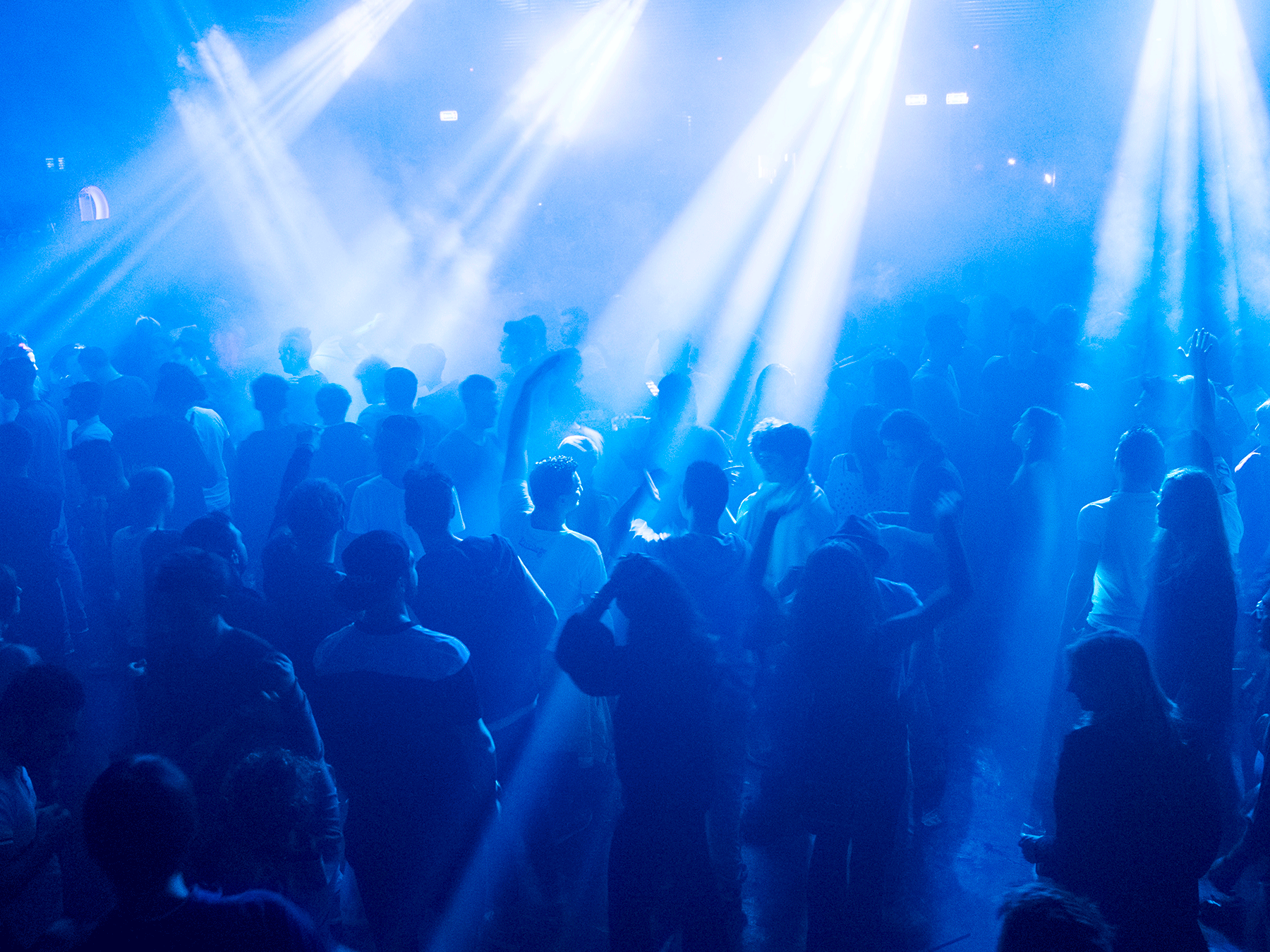
In doing so, her lens captured spaces that define the contemporary perception of the night. Increasingly, venues not originally intended to function as nightclubs are being temporarily occupied and transformed into party locations—a phenomenon that represents a modern, legalized evolution of the clandestine rave culture of the 1990s. Silva’s photographs, capturing these environments in alternating states of emptiness and congestion, highlight how crowds of bodies fundamentally alter and occasionally erase the architectural concept of space itself.
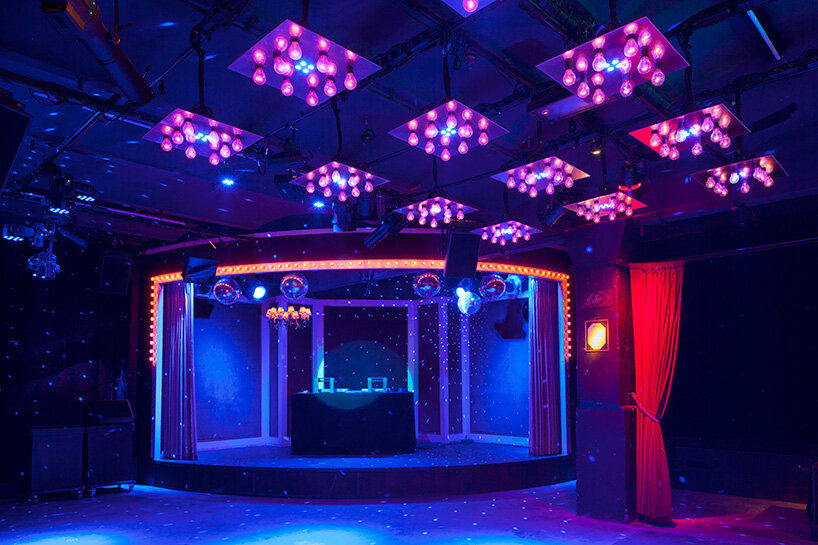
The Sensory Architecture of Clubs: Smell and Light
When entering a venue, Silva noted that the first element to greet her was almost always olfactory. Because she photographed the majority of these locations during daylight hours, out of their natural operational context, the lingering scent served as a powerful trigger. It functioned like a madeleine of the night—a pervasive, comforting constant composed of an enigmatic mixture of residual cleaning products, human presence, cigarette smoke, and detergent.
Beyond smell, the defining element of any discotheque is illumination. "Lights are everything," Silva observes, noting that clubs are frequently compared to aging figures who should never be seen without their makeup. Natural light strips away the illusion, exposing the raw, unadorned infrastructure, whereas theatrical lighting performs the essential magic of the venue, completely altering the perception of space at the flip of a switch. While much of her documentation relies on the atmospheric glow characteristic of nightlife, some photographs were intentionally shot under flat, clinical white light, laying bare the physical reality of the architecture when the spectacle is turned off.
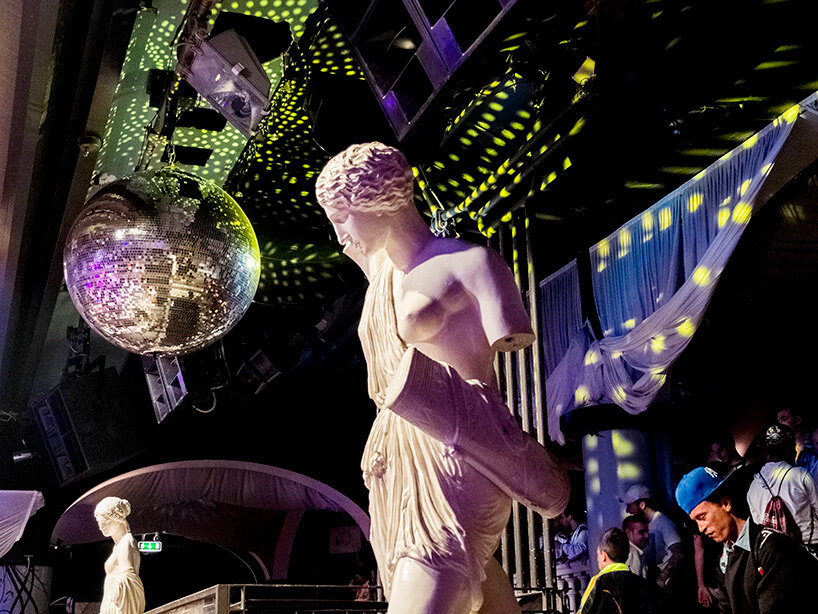
What began as a detached, academic commission gradually transformed into a familiar and deeply personal exploration. Through patience and the guidance of those who understand the intricacies of nocturnal culture, Silva’s initial distance dissolved into a profound appreciation for the ephemeral architecture of the night.
Born in Milan in 1980, Giovanna Silva has maintained a prolific career as a photographer, publisher, and educator. Her extensive bibliography includes numerous titles focusing on urban landscapes, geopolitical zones, and architectural transformations, ranging from Baghdad: Red Zone, Green Zone and Syria: A Travel Guide to Disappearance to Saudiscapes and Niemeyer4ever. In addition to her photographic work, Silva is the founder of Humboldt Books and San Rocco Magazine, and she currently teaches at NABA in Milan and ISIA in Urbino. Her ongoing exploration of spaces—both public and private, permanent and temporary—continues to challenge how contemporary society perceives the built environment long after the sun goes down.