A riotously colorful punk-rock action RPG driven by visual excess and eccentric combat mechanics, Stupid Never Dies has officially arrived across major platforms. Published by Sega and developed by GPTRACK50 Inc., the Unreal Engine 5 title delivers an unapologetically loud experience on PlayStation 5, Xbox Series X|S, and PC via Steam. Directed and produced by industry veterans including Eiichiro Sasaki and Hiroyuki Kobayashi—both known for their previous work on Capcom’s Devil May Cry franchise—the game marries a bizarre zombie narrative with aggressive brawler mechanics and deep action RPG customization.
While the title boasts an undeniably distinct identity, featuring clever combat systems and overwhelming visual flair, its reliance on heavy dungeon grinding and the frustrating absence of a lock-on mechanic can occasionally test the player’s patience. Nevertheless, once its unconventional combat loops and interlocking upgrade systems click, Stupid Never Dies emerges as a delightfully quirky entry in the modern action RPG landscape.
An Absurdist Quest Powered by Undead Obsession
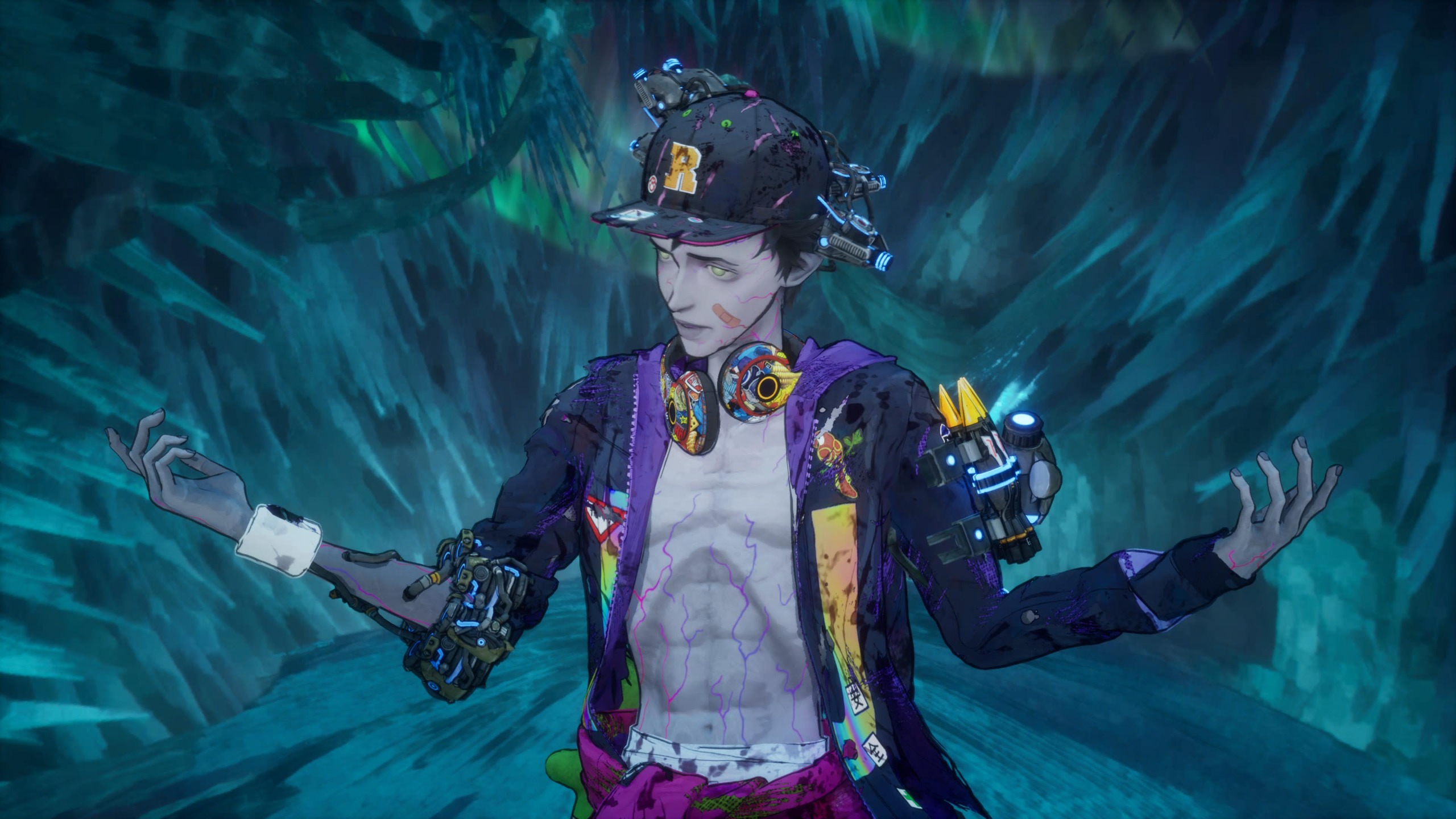
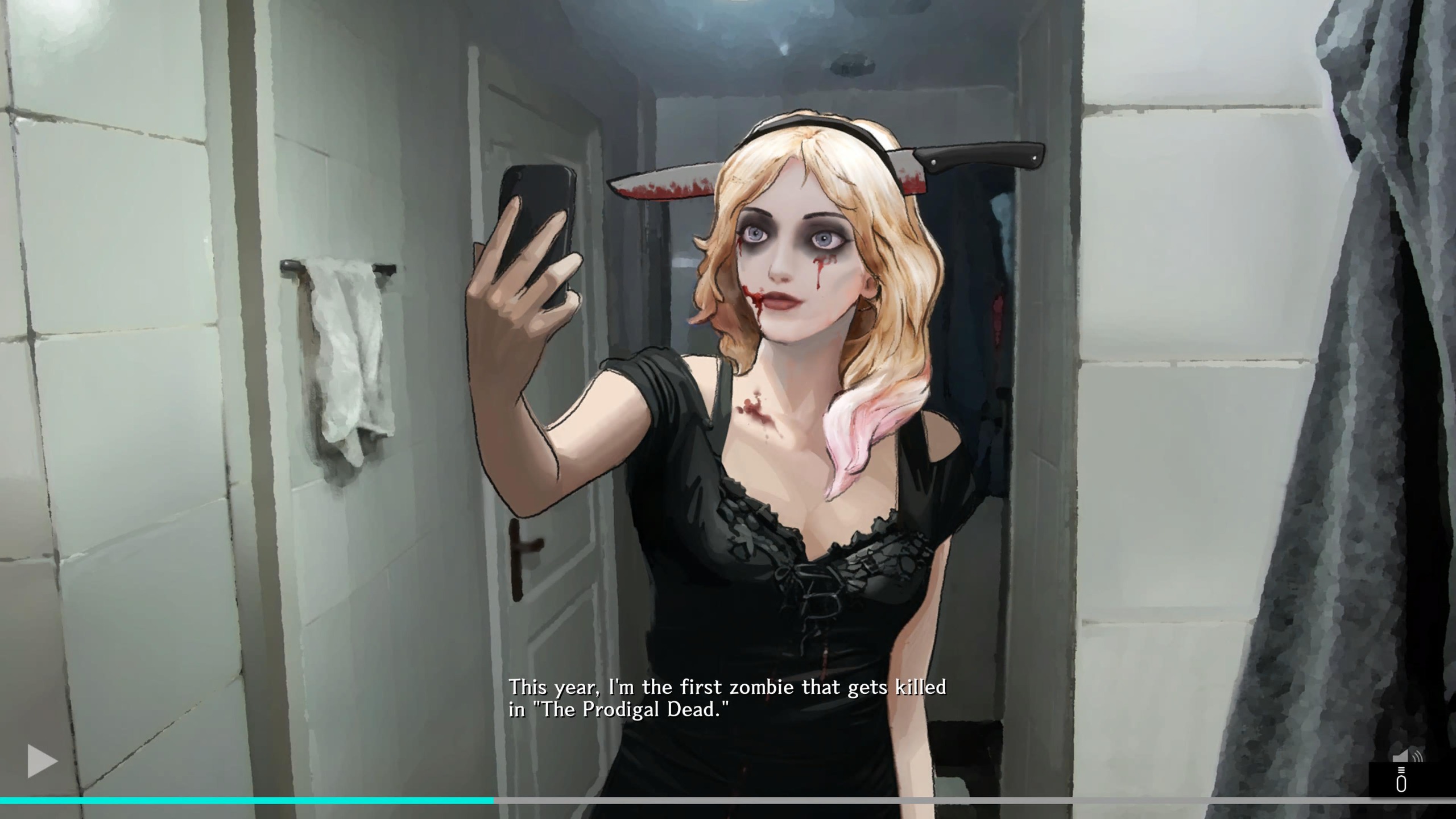
At the center of Stupid Never Dies is Davy, an undead protagonist whose core motivation is as absurd as it is strangely tragic. Davy has fallen hopelessly in love with a dead girl named Julia and has made it his life’s mission to bring her back to life. There is, however, an uncomfortable catch to this romantic goal: Julia never actually met Davy while she was alive, meaning his devoted mission is entirely one-sided. Completely unbothered by this minor detail, Davy sets out to brave a demon-infested underworld controlled by an entity known as "KOM." His goal is to gather high-tech equipment known as Overtech to thaw Julia out from a deep freeze, seemingly giving no thought to how she might react upon waking up to find an undead stranger claiming to be her boyfriend.

This bizarre setup sets the tone for a protagonist who is far from a traditional video game hero. In the human world—represented by a bustling, lived-in shopping mall that serves as the game’s central hub—Davy spends his downtime picking his nose, rolling around on a robot vacuum cleaner, and loafing about while his adopted mentor, "Dr. Frank," attempts to explain the overarching plot. Dumb, shambling, and virtually incapable of coherent thought, Davy seems entirely ill-suited for heroism.
Yet the moment he leaps down into the underworld dungeons, Davy transforms into a hyper-aggressive, cartoonish brawler. The game’s narrative logic dictates that because Davy is already a zombie, he cannot technically die and has no concept of self-preservation. As a result, the gameplay completely discards traditional defensive tactics in favor of relentless, all-out offense, proving the game’s core ethos: "stupid never dies." Between dungeon runs, players can access Julia’s recovered tablet to watch unlocked messages and personal video diaries, vicariously learning about her past life and lending a surprisingly poignant, albeit creepy, emotional backdrop to Davy’s foolish crusade.
A Riot of Colour and Ideas
Visually, Stupid Never Dies is a continuous, sensory-overload showcase for Unreal Engine 5. The game’s art direction functions as a chaotic, high-energy mashup of anime, punk aesthetics, graphic design, pop art, manga, stop-motion animation, and scrapbooking. It reads visually as if Spider-Man: Into the Spider-Verse and Persona 5 were thrown into a blender with a stack of 1990s underground zines, topped off with an extra dose of irreverent punk attitude. Every menu transition, character animation, and background detail pulses with intentional creativity, competing for the title of the year’s most inventive visual presentation alongside titles like Romeo Is a Dead Man.
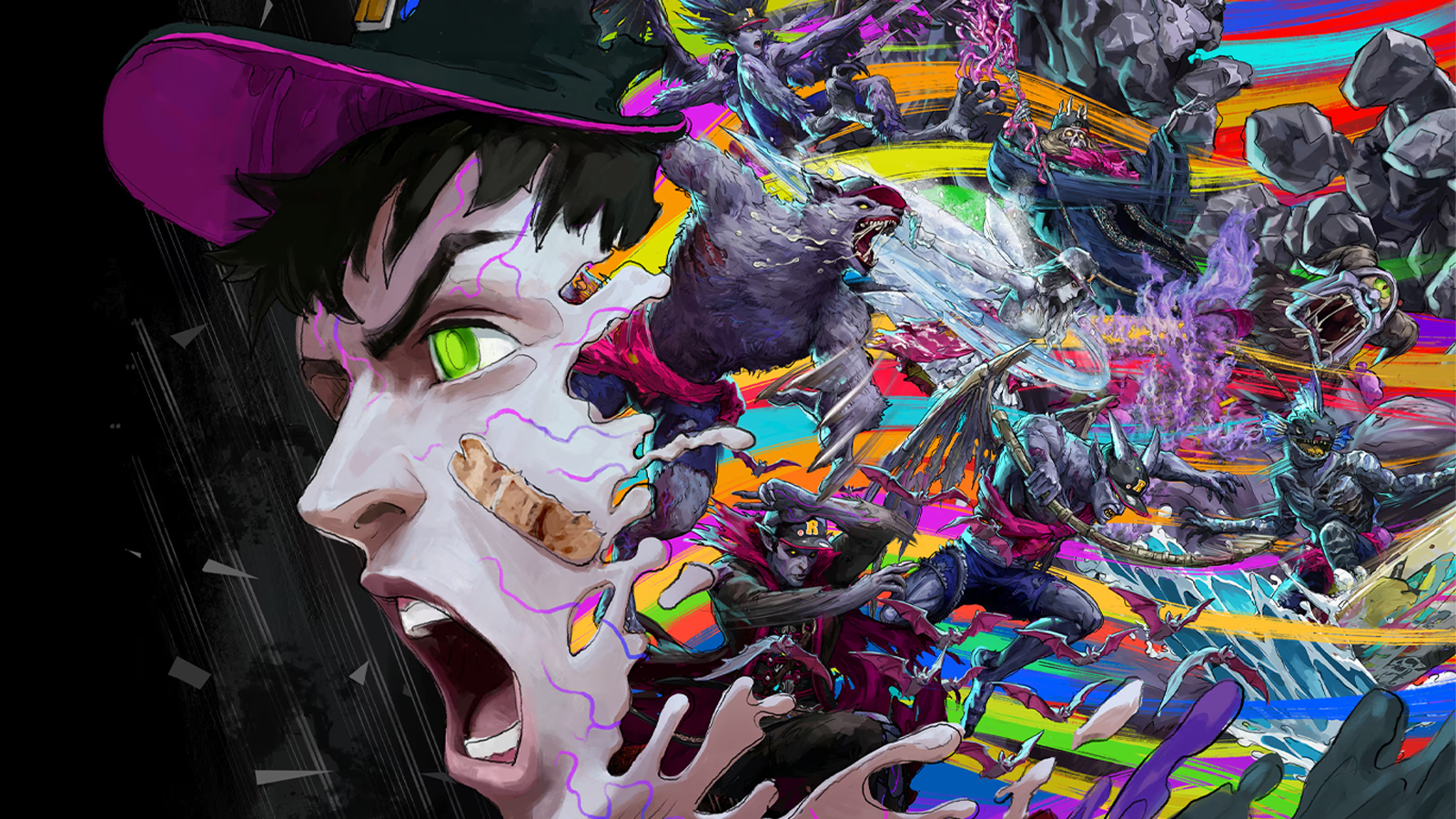
The visual design is divided into two distinct stylistic worlds. The human world within Davy’s shopping mall hub leans into a stark, almost photographic realism, grounded by dense physical details and sharp graphic design that make the environment feel tangible and lived-in. Conversely, the demon realm below is painterly, splashy, and loose, filled with exaggerated geometry and vivid hues. As Davy descends deeper into the underworld, he fights his way through environments styled after scattered memories of human history—ranging from frozen, wind-swept Norse tundra to violent, volcanic Roman ruins. Rather than expansive, open-ended environments to explore, these levels are designed as focused, highly stylized gauntlets where combat takes center stage.
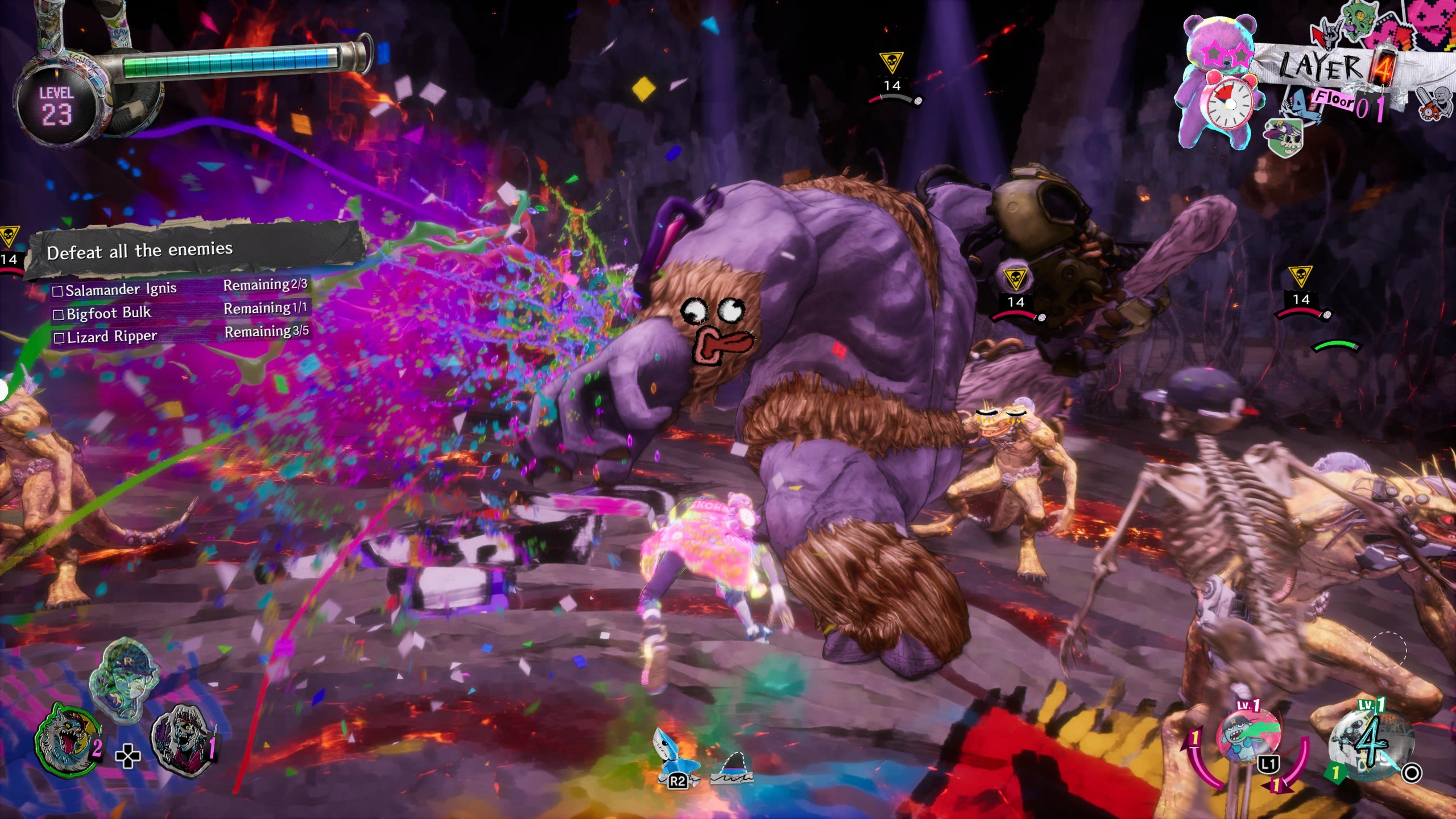
The graphical flare intensifies dramatically during combat encounters. Whenever Davy defeats an enemy, streams of rainbow-colored ink explode across the screen, permanently splashing over the surrounding scenery. Triggering "Davy Burst"—Davy’s temporary, supercharged state—bathes the arena in vibrant, multicolored lighting accompanied by roaring electric-guitar audio flourishes that elevate the action to an absolute fever pitch. Adding to the game’s comic book charm are whimsical details like scrawled googly eyes and foolish stickered smiles drawn directly onto demon enemies and massive bosses, striking a playful balance between grotesque monster design and lighthearted absurdism.
Bite First, Ask Questions Later
Beneath its flashy visual exterior, Stupid Never Dies operates as a traditional, loop-based Japanese action RPG that heavily emphasizes resource gathering and mechanical experimentation. The primary gameplay loop is intentionally straightforward: players venture into a dungeon, combat hordes of monsters, harvest enemy cores to steal their innate abilities, collect raw crafting materials, and return to the Shopping Mall hub to construct permanent character upgrades before diving back in.
With individual dungeon runs lasting anywhere from five to ten minutes, the loop creates a fast-paced rhythm reminiscent of Persona, albeit with a much quicker turnaround. Instead of balancing high school schedules, Davy’s downtime revolves entirely around upgrading his undead body and riding around the mall on a Roomba.
The mechanical meat of the combat lies within the game’s Bite System. By consuming harvested enemy cores during battle, Davy can instantly restore his health or shift into various monster forms known as "Styles." Players can unlock and experiment with up to 11 distinct Styles, each dramatically altering Davy’s combat capabilities and movement options. Crucially, these transformations are far more than cosmetic alterations; each Style comes with its own rarity ranking (such as Common or Rare) and a dedicated tree of evolving special abilities.
For instance, the heavy-hitting Cyclops Style allows Davy to swing a massive baseball bat, eventually unlocking the ability to hurl spinning clubs into crowds. The Werewolf Style provides swift movement and high mobility to close the gap on evasive targets, while the airborne Harpy Style allows Davy to hover above hazardous terrain—a crucial advantage during early boss fights, such as an encounter with a dragon that turns the arena floor into a molten hazard. Other forms, like the Vampire Style, seem niche at first glance, allowing Davy to zip across the arena, bite targets, and summon swarms of zombie bats. However, as players dig deeper into its capabilities, the Vampire Style reveals unique utilities, such as tapping into pools of dark energy to uncover hidden areas within dungeons.
Davy’s progression is further augmented by the "Body Hack" system, which allows players to physically dismantle and upgrade Davy’s undead anatomy using Overtech gear. Players can attach missile pods, spinning saws, spiked balls, and thrusters for directional dashes directly onto Davy’s body. Beyond pure offensive weaponry, some of the most critical Body Hack modifications yield defensive and utility enhancements, such as boosted healing efficiency, increased item drop rates, or accelerated Davy Burst charge times—frequently proving more valuable during high-level dungeon runs than basic damage boosts.
Supporting Davy in these endeavors is a colorful cast of eccentric hub NPCs. Upgrades and Body Hacks are developed by Acelino, a chihuahua-were-dog mechanic, while new combat abilities are cooked up out of fast food by a zombie named Bessie. Meanwhile, performance metrics and run data are tracked by Goyle, a forgetful gargoyle who frequently struggles to remember his own purpose. These humorous, character-driven interactions between runs provide lighthearted downtime that compensates for the repetitive nature of the dungeon dives.
Attack and Grind, Repeat
Combat in Stupid Never Dies centers entirely around continuous aggression. Traditional defensive mechanics like dedicated dodge rolls, blocks, or standard parries are wholly absent. Instead, the game introduces the "Stupid Parry" mechanic, which encourages players to charge headfirst directly into incoming enemy strikes. Successfully executing a Stupid Parry reduces incoming damage and sets up the opportunity to tear out an enemy’s Core—which only becomes exposed while the monster is actively attacking. Eating exposed Cores restores Davy’s stamina and health, creating a self-sustaining combat loop where taking damage and staying on the offensive actively keeps the player alive.
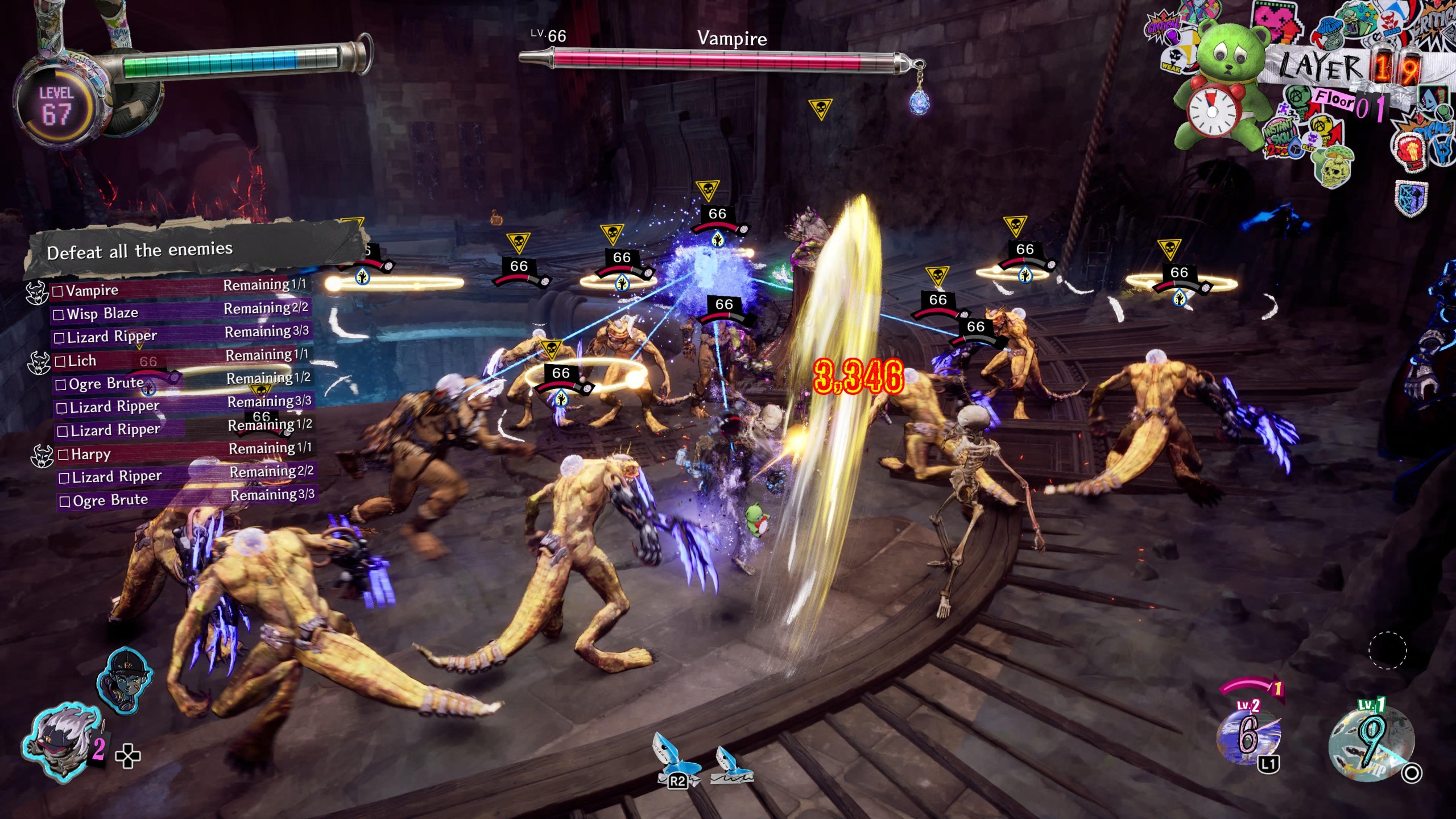
Additionally, powerful enemy attacks—indicated by a glowing gold "Heat Attack" aura—can be countered using "Stupid Impact" if a Stupid Parry is timed perfectly, leaving bosses momentarily stunned and open to massive follow-up damage. Stringing together fast attacks and relentless executions charges a Devil May Cry-inspired Style Meter, which grades player performance in real time and increases the yield of dropped items and crafting materials.
Despite the pedigree of developers Eiichiro Sasaki and Hiroyuki Kobayashi, players expecting complex, high-dexterity combo strings similar to Devil May Cry may find the moment-to-moment swordplay relatively basic. The core combat focuses heavily on macro-level strategy—matching the right Styles and Body Hacks to specific dungeon hazards—rather than execution-heavy button inputs.
This design approach brings a few notable mechanical shortcomings. The most prominent issue in Stupid Never Dies is the complete lack of a lock-on targeting system. In fast-paced battles involving dozens of enemies or elevated flying targets, Davy will frequently swing wildly at empty air. This issue becomes especially frustrating during encounters on narrow platforms suspended over lava or icy abysses, where judging 3D spatial depth proves difficult.
Furthermore, the game occasionally succumbs to rigid JRPG progression walls. Players will routinely encounter bosses that suddenly demand significantly higher stats, forcing them to retreat to previously cleared dungeons to grind for materials and money. Because the pool of available Body Hack parts can stall until specific story thresholds are met, players must often repeat short dungeon runs multiple times to unlock superior gear. While these repeated trips showcase Davy’s growth from a feeble zombie into a heavily
modified death machine, the environmental art and level layouts can begin to blur together over extended grinding sessions.
Ultimately, Stupid Never Dies succeeds on the strength of its overwhelming personality, stylistic confidence, and clever interlocking progression systems. Its singular mix of punk-rock graphic design, absurd zombie romance, and offensive-minded combat mechanics ensures that while the journey may require a fair amount of grinding, it remains a wildly unique experience from start to finish.