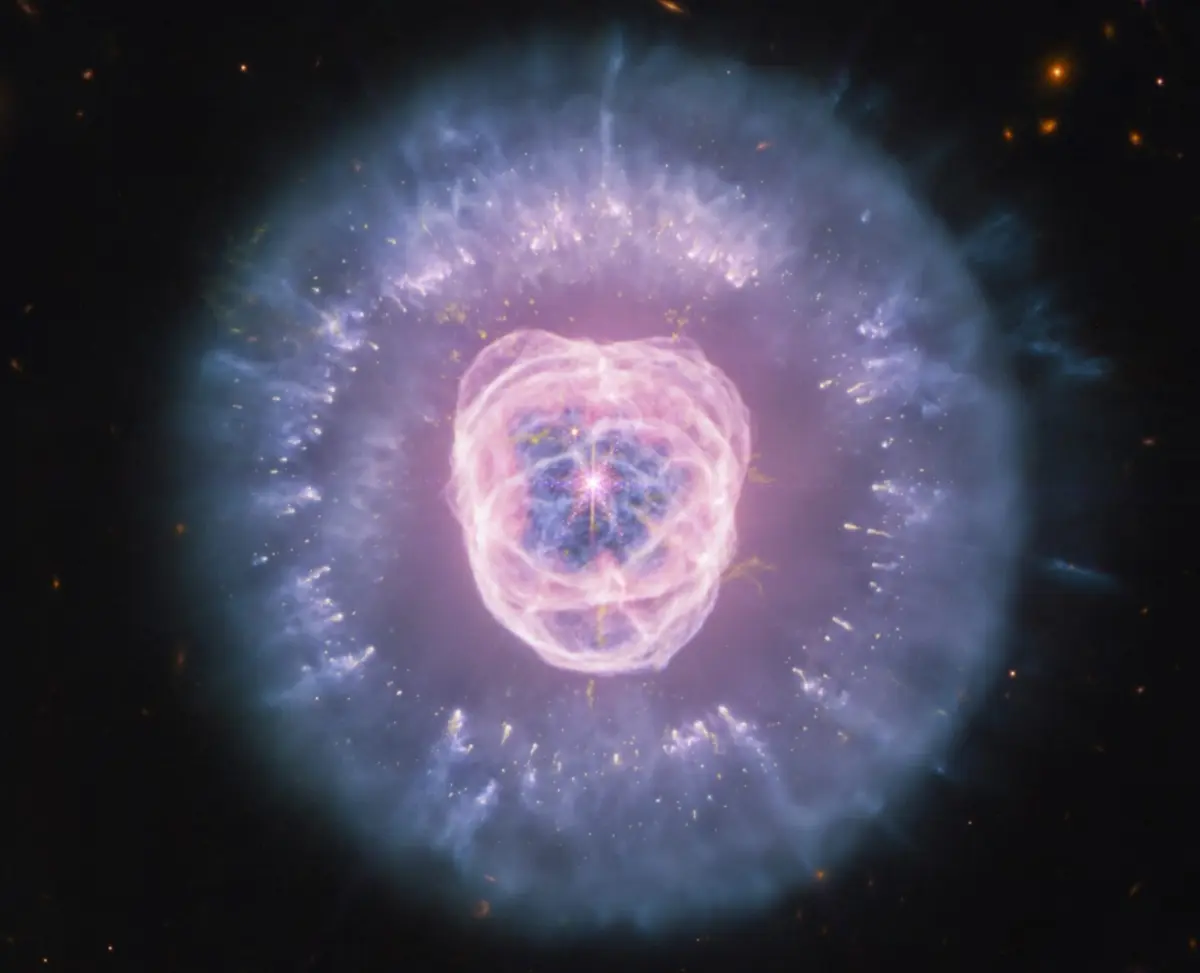
NASA’s James Webb Space Telescope has continually revolutionized our understanding of the cosmos by capturing some of the most remarkable and intricate phenomena ever witnessed in deep space. From the iconic contours of the Horsehead Nebula to the breathtaking expanse of the Pillars of Creation, the space observatory has consistently delivered unprecedented views of stellar nurseries and dying stars. Now, the telescope has added another marvel to its portfolio, returning brilliant, high-resolution imagery of the Lion Nebula, cataloged scientifically as NGC 2392.
Captured through the combined power of the observatory’s Near-Infrared Camera, known as NIRCam, and its Mid-Infrared Instrument, designated as MIRI, the new images reveal the dynamic and violent processes unfolding within the planetary nebula. The distinct shape of the nebula is formed by the remains of a dying star that has transitioned into a white dwarf phase. At this stage in stellar evolution, the star has exhausted its nuclear fuel, leaving behind a remarkably dense stellar core while it dramatically sheds its outer layers of gas and dust into the surrounding interstellar medium. Within the intricate morphology of NGC 2392, the bright central core creates a distinct feature that resembles a tiny nose, anchoring the complex cosmic portrait.
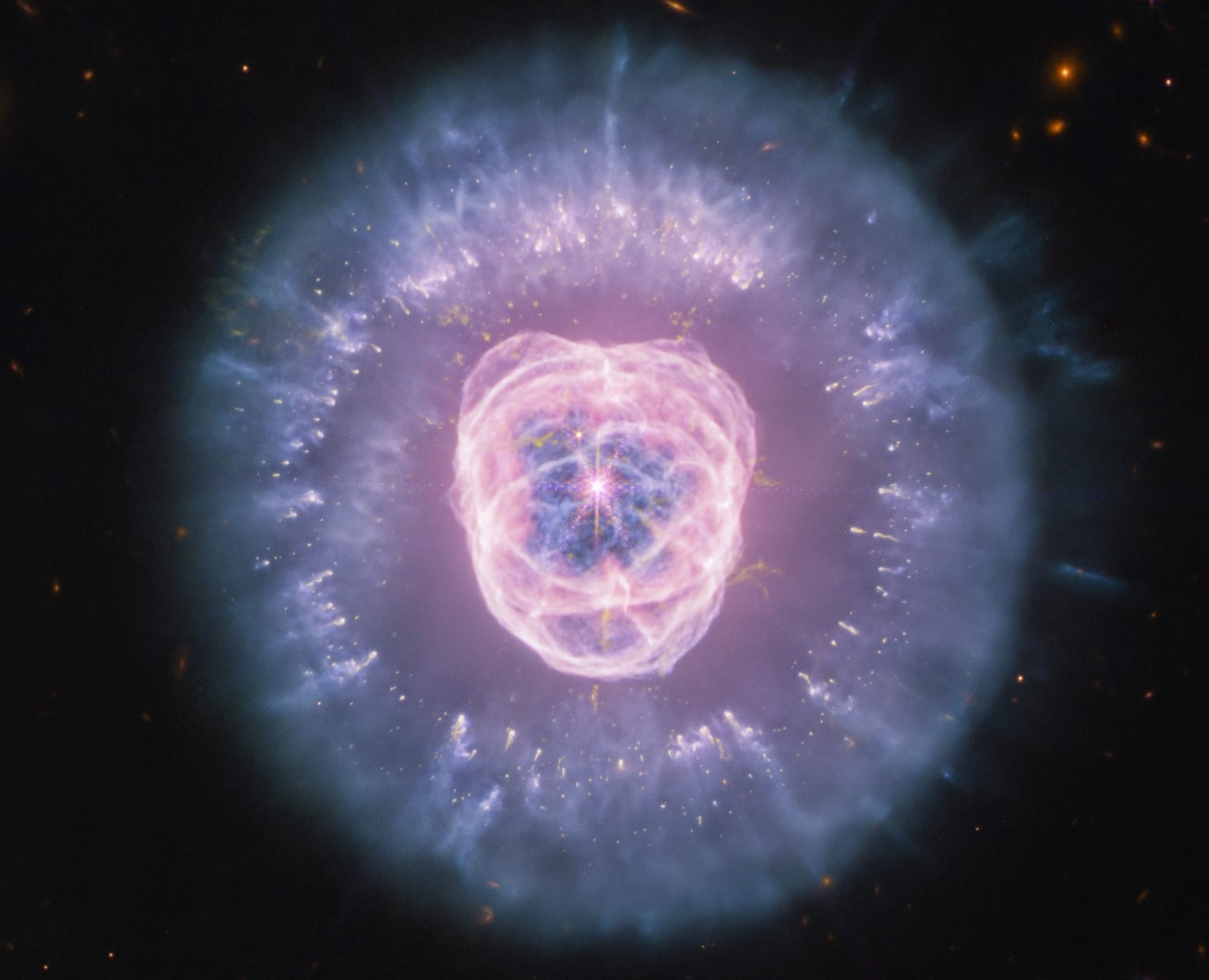
The mechanics driving the formation of the Lion Nebula are as violent as they are visually captivating. According to information released by NASA, the central dying star possesses temperatures so extreme that its intense radiation is effectively cooking everything in its immediate vicinity. This process generates an expanding bubble of ionized hydrogen gas that pushes outward into the surrounding space.
This resulting gas bubble forms what astronomers refer to as the lion’s face. Within this luminous region, advanced instruments reveal cavernous shells, intricate rings, and delicate tendrils of material that are actively expanding. As these structures push outward, they encounter and destroy surrounding cosmic dust in their path. Meanwhile, the feature known as the lion’s mane is actually the brightly illuminated interior of one of these expanding shells, cast into sharp relief by the blazing energy radiating from the stellar core at the heart of the system.
From the perspective of human history and our relatively brief lifespans, cosmic structures like planetary nebulae appear frozen in time, changing very little over the course of generations. NASA notes that it has taken several thousand years for the gas and dust to be sculpted into their current configuration, and the evolution continues unabated as the dying star relentlessly drives the remaining material outward into the void.
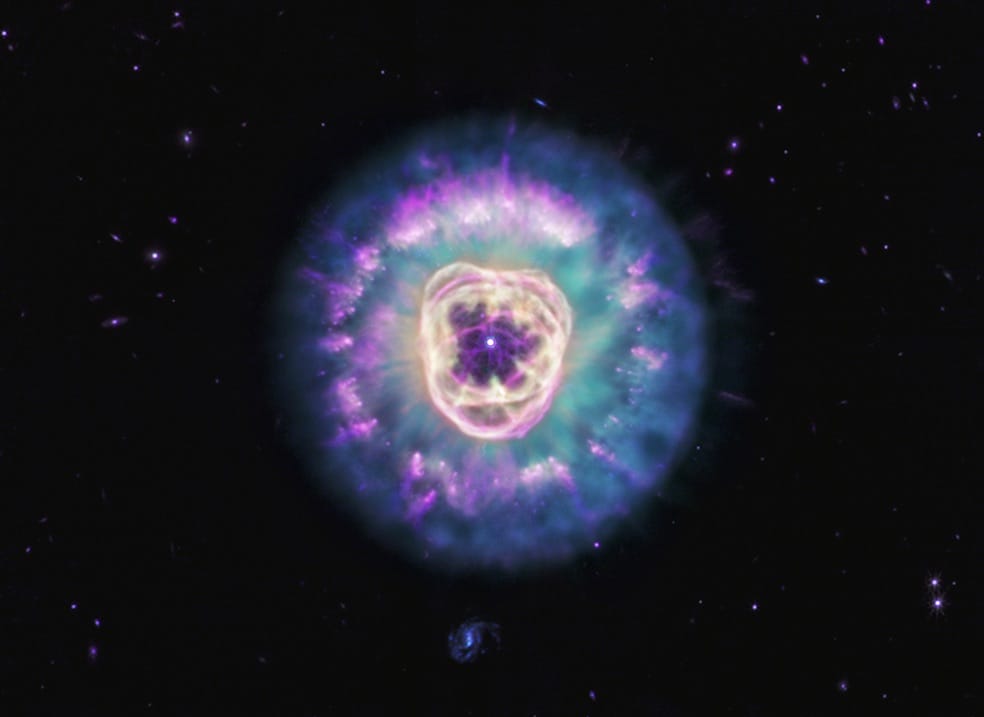
Despite the sluggish pace of change relative to human perception, the Lion Nebula is actually evolving quite rapidly in astronomical terms. Based on current observations and modeling of the expansion rates, astronomers estimate that the nebula is a transient cosmic phenomenon on a galactic scale, projecting that it will fully disperse and fade into the interstellar medium in approximately 10,000 years.