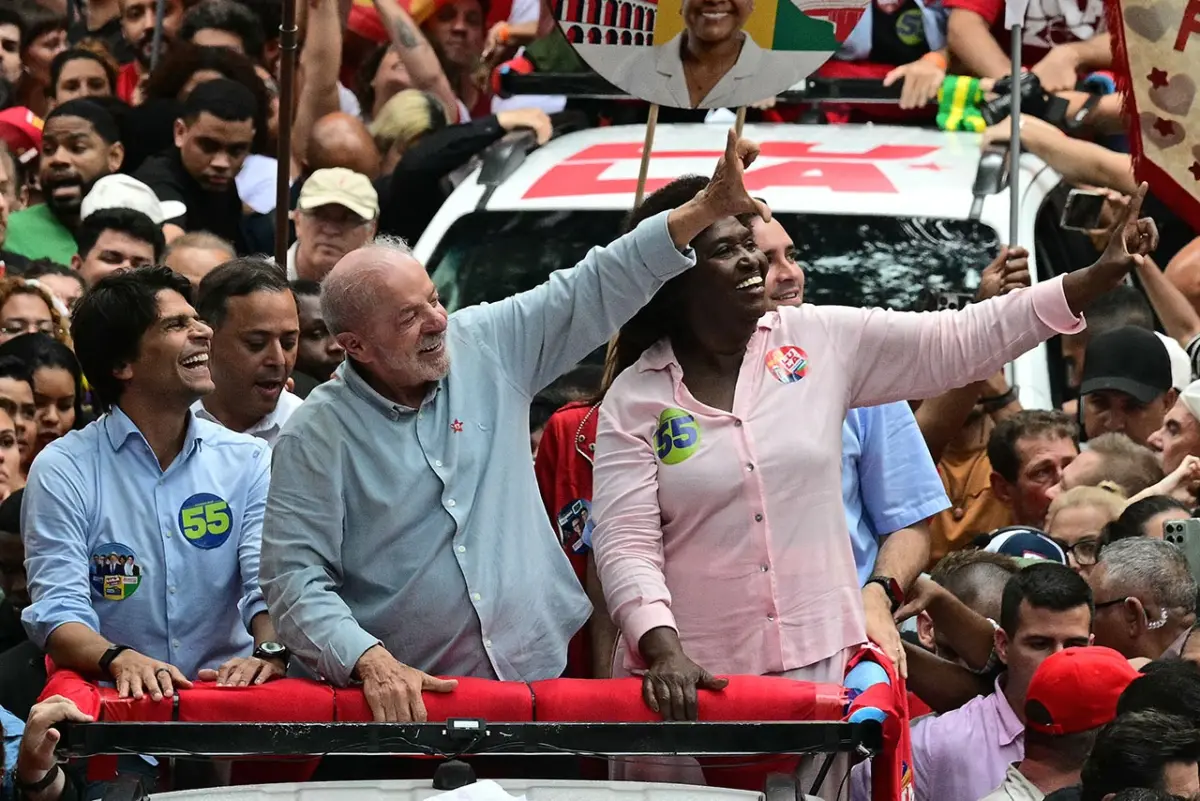
As Brazil prepares to hold its critical presidential run-off on Sunday, supporters of the left-wing incumbent, Luiz Inácio Lula da Silva, are campaigning with a renewed sense of urgency and determination. The atmosphere across the country has transformed dramatically over the past few weeks, shifting from a mood of profound shock and political disorientation into one of frantic, high-stakes mobilization as the nation’s political future hangs in the balance.
The political shockwaves were first felt on the morning after the initial round of the Brazilian elections, held on 4 October. Much of the country awoke in a state of disbelief, struggling to process the sweeping results. Liberals and left-wingers digested the scale of the right and far-right parties’ success, moving rapidly from a state of daze to outright outrage. Conservatives, meanwhile, watched in awe, as the magnitude of their achievement proved to be unprecedented and entirely unexpected by mainstream forecasters.
In congressional and gubernatorial races across the country, right-wing candidates chalked up resounding victories. These decisive legislative wins have paved the way for an utterly transformed political landscape when the winners take office early next year, ensuring that any administration will face a formidable conservative opposition in the legislature. However, it was the presidential race that truly confounded political observers, defying conventional wisdom and traditional polling models.
Despite trailing behind in most opinion polls for the duration of the official campaign, Flávio Bolsonaro—the eldest son of former far-right president Jair Bolsonaro—secured an almost two-point lead over the incumbent leader, Luiz Inácio Lula da Silva. This unexpected surge set up a fiercely contested run-off between the two men scheduled for this Sunday, forcing the political establishment to recalibrate its expectations.
The impact of the first-round results was immediate and far-reaching. Financial markets rallied swiftly on the expectation of a return to right-wing governance, pricing in business-friendly reforms and fiscal conservatism. Simultaneously, political opportunists, previously hedging politicians who had sat on the fence, and even some Supreme Court judges quickly moved to align themselves with Bolsonaro’s surging camp. For Lula, now 80 years old and serving his third non-consecutive term in office, it looked to many analysts as though the political game was up.
Then, the fightback began. In the weeks since the first-round results were tallied, the political left has been comprehensively galvanised. With a sense of urgency not seen earlier in the campaign, hundreds of thousands of Lula supporters rallied at massive events in São Paulo, Rio de Janeiro, and other major urban centers. Volunteers, spanning generations from eager first-time voters to seasoned political activists, have taken to the streets to reverse the momentum. Lula stickers have suddenly become ubiquitous, plastered on storefronts, cars, and lampposts across the nation.
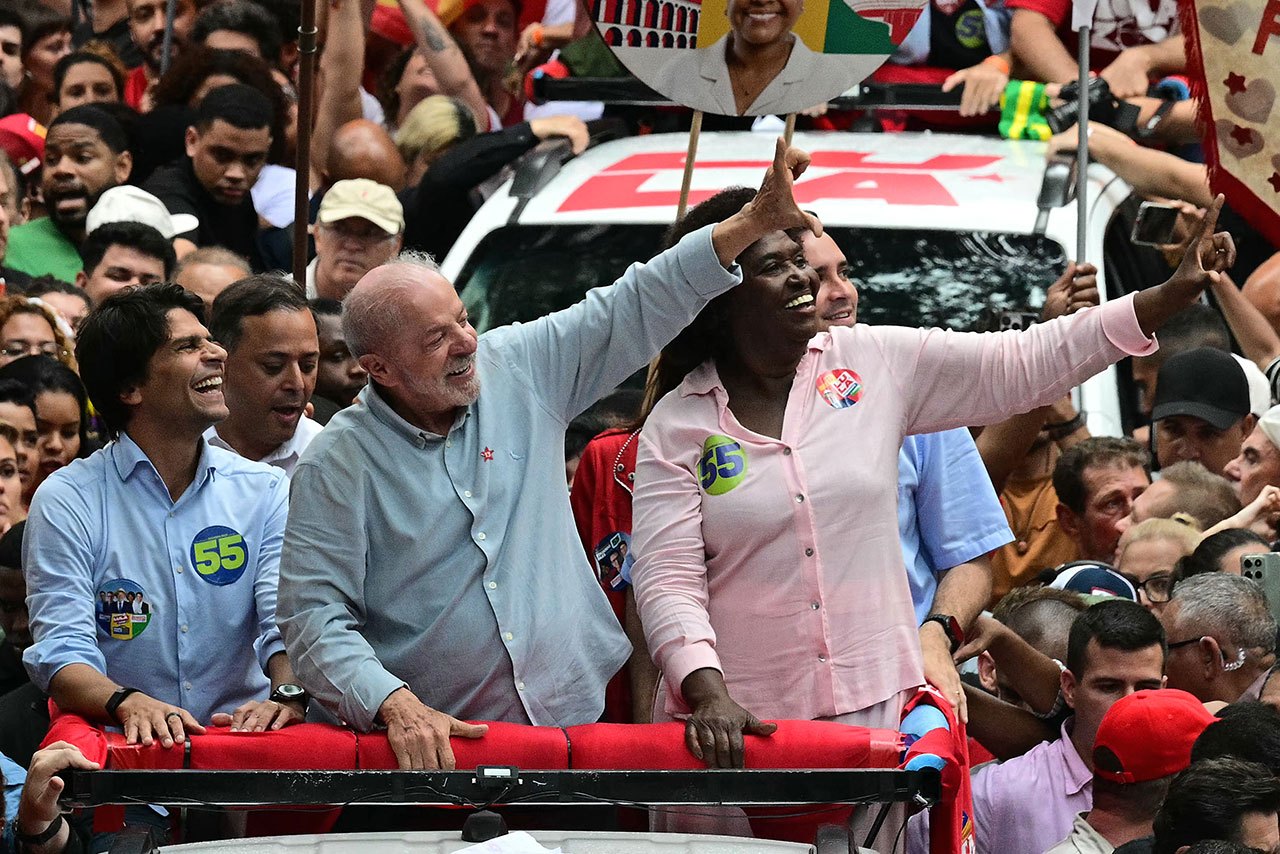
On social media, which has served as a key battlefield in modern Brazilian politics, Lula’s Partido dos Trabalhadores (Workers’ Party) has belatedly begun to get its act together. The party has aggressively pushed the octogenarian president to step out of traditional campaign formats and produce the kind of casual, direct-to-camera selfie videos that have long been an exceptionally effective tool of the Brazilian right.
This new style of grassroots and digital campaigning has been neatly complemented by a series of hurried, high-impact political manoeuvres designed to appeal directly to the working class. On 15 October—just in time for the run-off and following extensive persuasion and negotiation led by Lula himself—Congress took the historic step of abolishing the six-day working week for millions of formal workers in sectors such as retail and services. Under the new arrangement, these workers will soon be entitled to two days off per week with no reduction in their wages. Furthermore, Lula has promised targeted new cash-handout programmes and the introduction of free public transport during weekends to ease the daily financial burden on ordinary citizens.
The incumbent’s concerted efforts are undeniably having an effect on the ground. The latest opinion polls show the gap between the contenders narrowing significantly, with the two men now locked in a tense technical tie heading into the final weekend.
Bolsonaro, meanwhile, clearly recognises that the race is not yet run and has accordingly stepped up his public appearances, television interviews, and media engagements in the final stretch. It is likely, however, that the challenger—who has carefully marketed himself as a more polished, "vaccinated" version of his more radical father—harbours the greater level of confidence. After all, polling throughout the cycle has consistently underestimated his grassroots support. Moreover, in the modern era of Brazilian democracy, no presidential candidate who has led the first round of voting has ever gone on to lose the subsequent run-off.
At the same time, Lula continues to struggle against a broad and palpable current of anti-incumbency sentiment. Voters across the socio-economic spectrum are clearly looking for something fundamentally different, driven by widespread public concerns about the rising cost of living, persistent inflation, and public safety. The left-wing leader has been a dominant, inescapable fixture of Brazilian politics for almost half a century, guiding the country through periods of immense economic transformation and social reform. On Sunday, millions of Brazilian voters will step into the ballot booths to decide whether that half-century at the center of national life is long enough, or if the country is ready to turn the page to a new political dynasty.