For millions of daily commuters, the New York City subway system serves as the undisputed bloodstream of the metropolis. Yet, amidst the rush of morning commutes and the tired trudge of evening returns, very few riders ever pause to wonder where those giant metal cars actually originate, or where they retreat once their final passengers disembark and their service day comes to an end. Now, a groundbreaking new photography exhibition is transporting hurried passersby directly into the secret, cavernous spaces where the city’s subways and buses reside when they are off duty, while offering a rare glimpse into the remote factories where these transit workhorses are initially brought to life.
Commissioned by MTA Arts & Design, the new systemwide photography exhibition is titled In Service: MTA Photographs by Christopher Payne. It marks a historic milestone for the agency as its very first systemwide photography showcase dedicated entirely to capturing a behind-the-scenes look into the heavy machinery, specialized architecture, and human labor that keep New York City’s vast transit network moving.
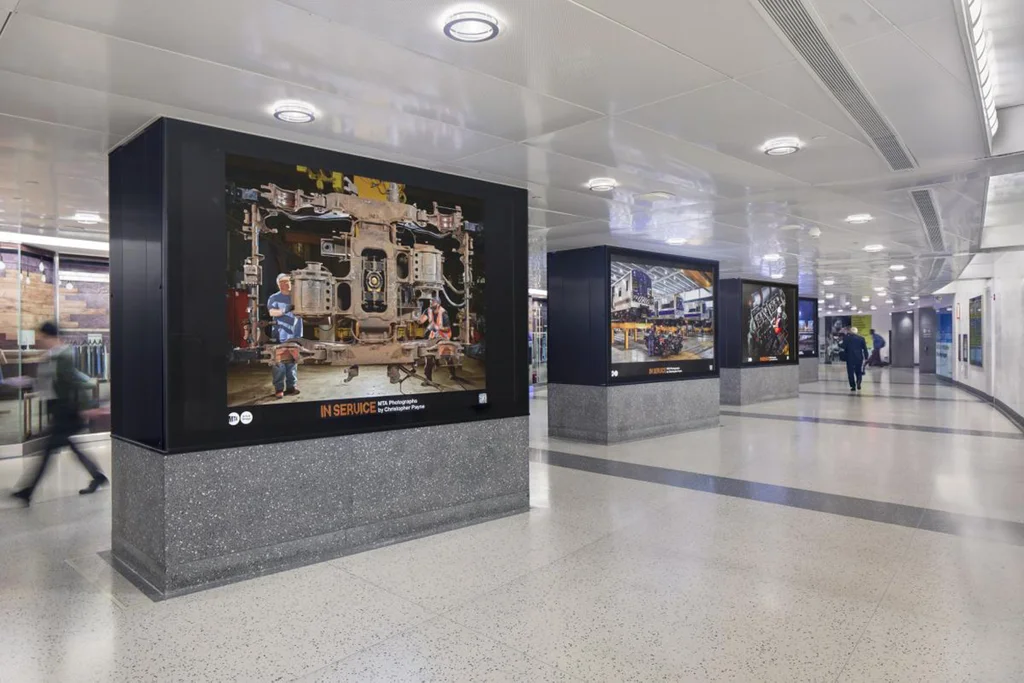
The scale of the exhibition matches the sprawling nature of the transit system itself. Presented across 52 massive light boxes, the large-scale photographs are strategically displayed in high-traffic hubs across five major locations in Manhattan and Brooklyn. Commuters passing through Grand Central Madison, the Grand Central Dining Concourse, 42nd Street-Bryant Park, Bowling Green, and the Atlantic Avenue-Barclays Center hub can now encounter these striking windows into the hidden infrastructure of the city. Rather than viewing traditional framed prints on a quiet gallery wall, straphangers are confronted with luminous, larger-than-life portraits of industrial spaces seamlessly integrated into the daily flow of transit life.
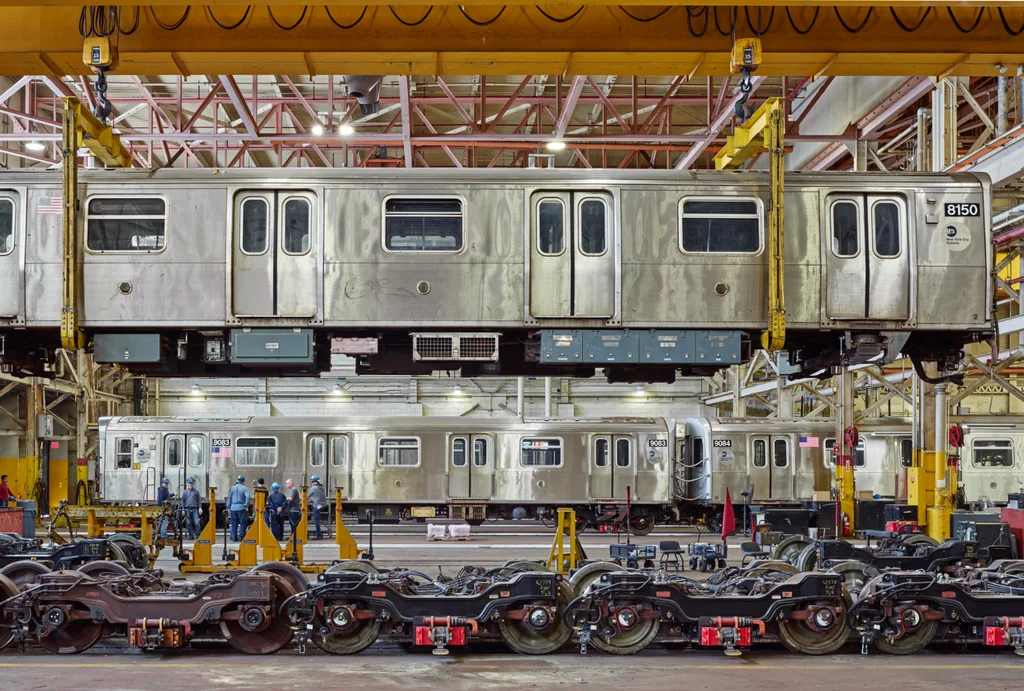
The genesis of the project lies in the localized curiosity of photographer Christopher Payne, a resident of the Inwood neighborhood in upper Manhattan. Payne found himself continually captivated by the 207th Street Overhaul Shop, a sprawling, 43-acre industrial complex situated right in his own backyard where subway cars are sent when they require heavy-duty repairs and rehabilitation. Originally constructed between the late 1920s and the early 1930s, this historic facility is responsible for servicing the iconic R62 trains—the recognizable stainless steel cars with bright orange seating that faithfully rumble along the city’s numbered subway lines. Over time, Payne’s local curiosity deepened into an artistic obsession. He became consumed by the desire to gain entry into the 207th Street yard and other heavy overhaul shops scattered throughout the five boroughs, eager to witness the subway cars completely stripped down to their bare metal skeletons, devoid of the graffiti, scuffs, and crowds that typically define the passenger experience.
What began as a quiet, intensely personal photographic endeavor eventually evolved into a broader journalistic assignment, forming the basis of a celebrated story for The New York Times. That visibility ultimately paved the way for an unprecedented partnership with the Metropolitan Transportation Authority (MTA). Through this collaboration, Payne secured extraordinary, high-level access to secure maintenance facilities across the city. His lens expanded beyond the local yards, reaching far outside of New York to document the specialized manufacturing plants and factories across the country that are tasked with building the city’s modern transit fleet.
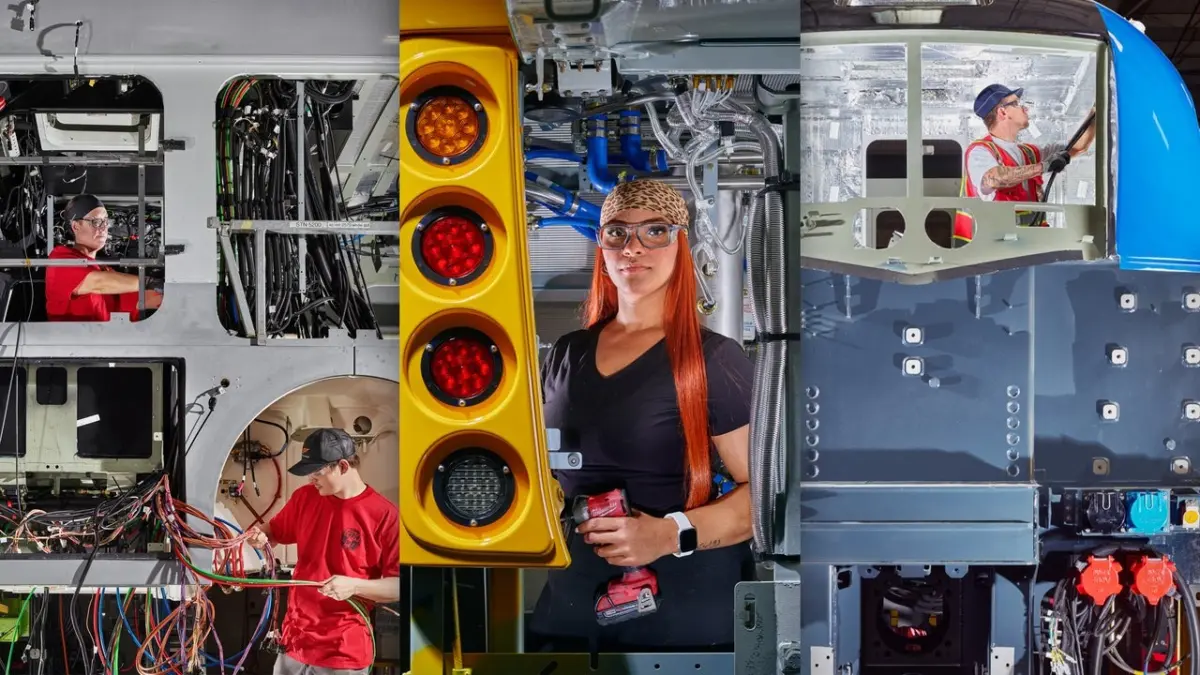
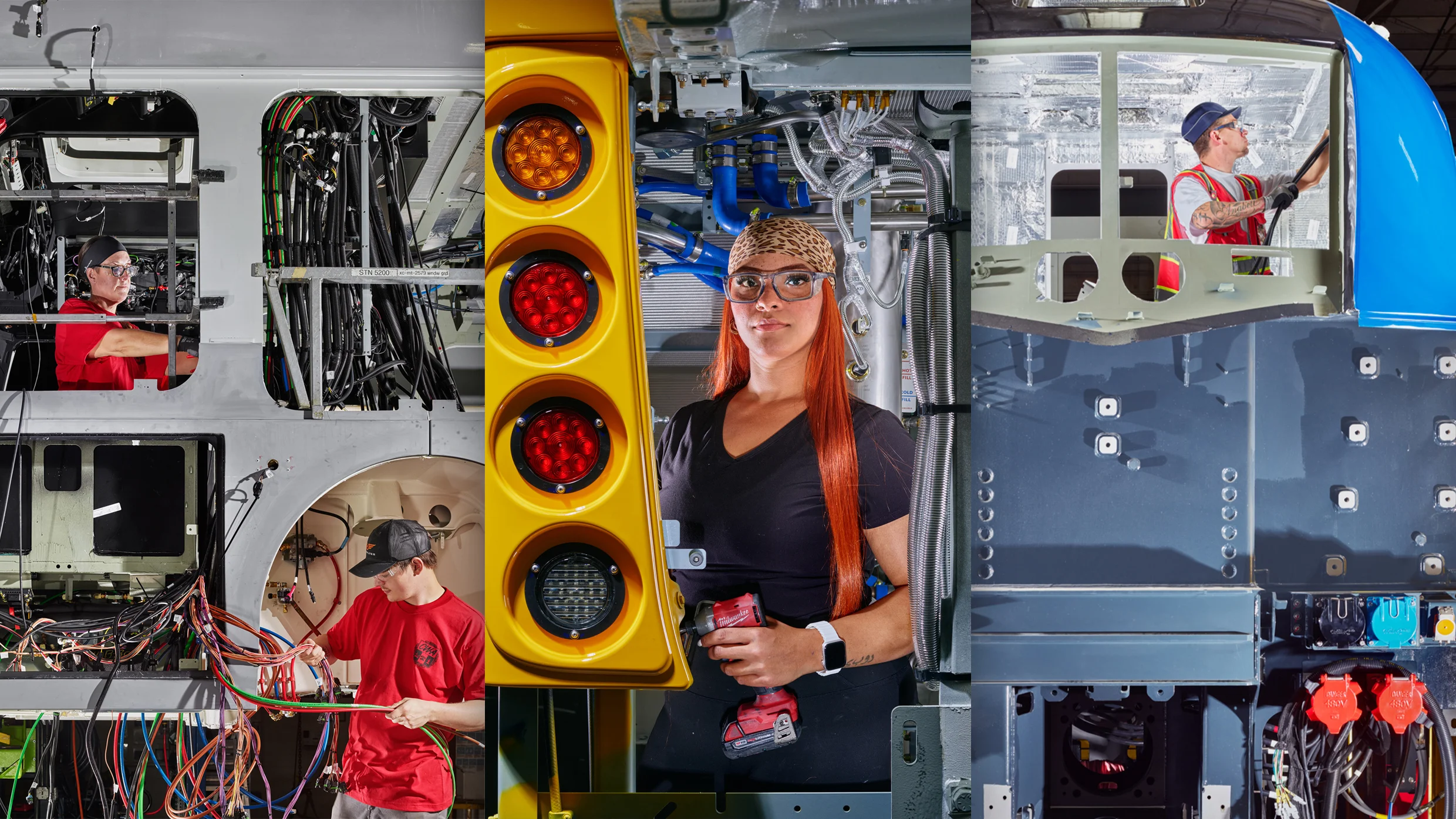
The resulting exhibition offers a panoramic look at an industrial ecosystem that most everyday riders never know exists. Among the featured images is a striking photograph of a partially assembled subway car resting quietly inside a manufacturing plant out in Nebraska. Another poignant frame captures a quiet moment of genuine camaraderie between manufacturing workers collaborating on the frame of a new bus inside a facility in Minnesota. The exhibition also features simpler, yet deeply atmospheric photographs captured inside a locomotive factory out in California, where specialized equipment is crafted for the Long Island Rail Road and Metro-North commuter lines.
For Payne, the project became much more than a documentation of heavy industry and urban infrastructure; it transformed into a personal bridge connecting the invisible makers with the millions of daily users. Reflecting on his travels to distant manufacturing towns, Payne shared his unique perspective with Fast Company, noting the profound sense of connection he felt while bridging these two worlds. He explained that he loved acting as an ambassador for New York City, taking pride in being able to look the people who spend their days building these vehicles in the eye and say, "I ride that every morning," and point out, "that’s where I sit."
Through these illuminated light boxes embedded deep within the transit hubs, In Service transforms the routine commute into a moment of unexpected discovery. It reminds millions of passengers that every smooth ride across the boroughs is supported by a massive network of dedicated mechanics, specialized engineers, distant factories, and cavernous repair shops operating entirely out of sight, ensuring the eternal pulse of New York City keeps beating.