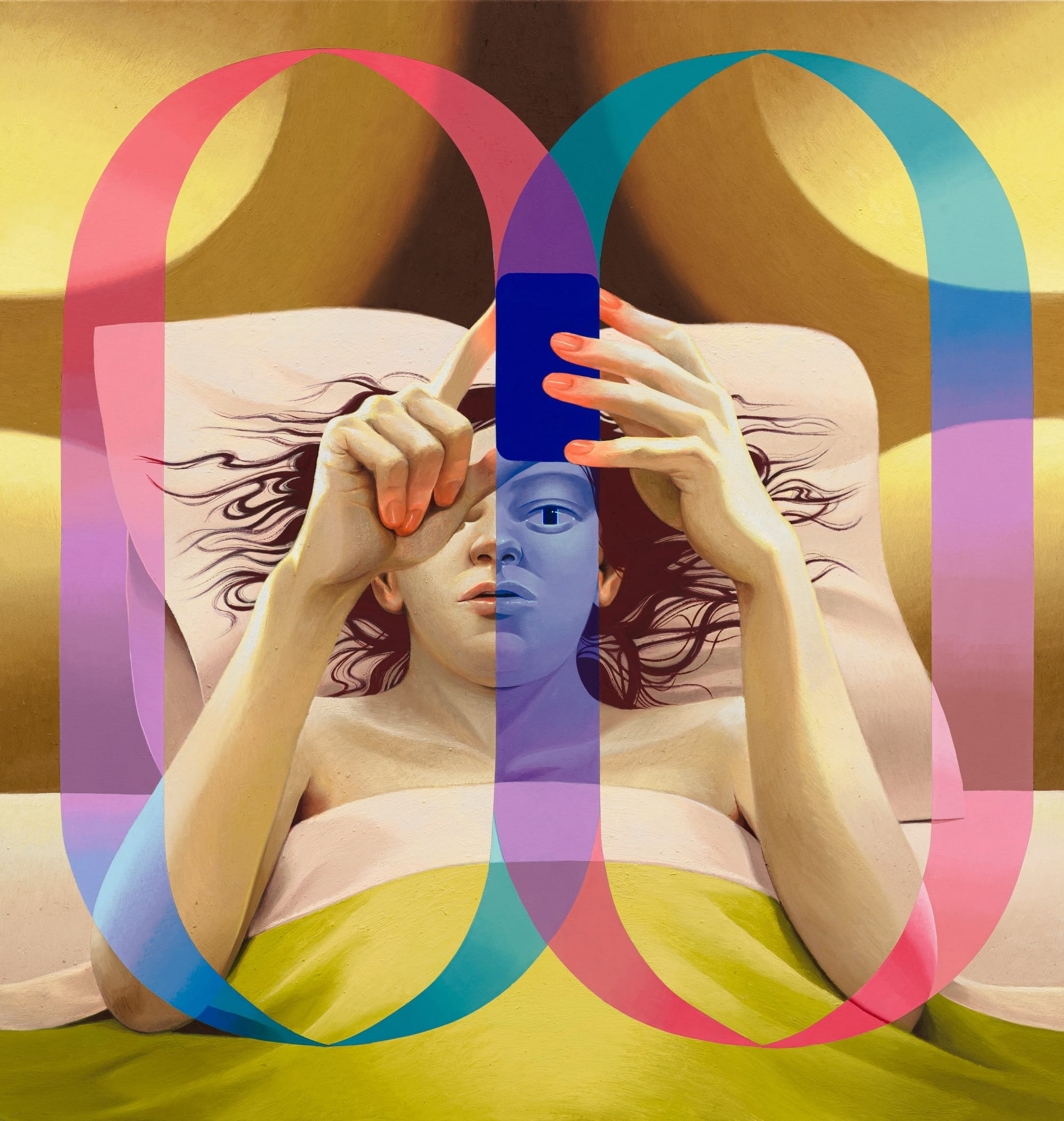
LONDON — In a dimly lit bedroom, a nude figure with frazzled hair lies beneath sickly colored linens draped across their upper body. With fingertips glowing an incandescent red as if inflamed, the character clutches a navy mobile phone, staring catatonically at the glowing screen. Bursting from the device, a vibrant infinity symbol emerges as endless, mesmerizing loops of digital energy.
This all-too-relatable portrait is more than a modern commentary on screen fatigue; it is part of a striking suite of new works by Brooklyn-based artist Robin F. Williams that captures the omnipotent techno-dystopia humanity appears to be collectively barreling toward. Extrapolating on the increasingly complex ways humanity and machines merge, the artist presents a mystical vision of an alternate world infused with the dual influences of contemporary pop culture and centuries-old art history.
The collection, titled Act Natural, plunges viewers headfirst into the uncanny without entirely settling into the bizarre, creating a space where the sleek, frictionless world portrayed by Williams exudes both the seductive allure of modern technology and the immense, quiet horror it elicits. Presented by P·P·O·W gallery, the exhibition has landed as a pop-up at Frieze’s No. 9 Cork Street space in London, where it remains open to the public through October 24.
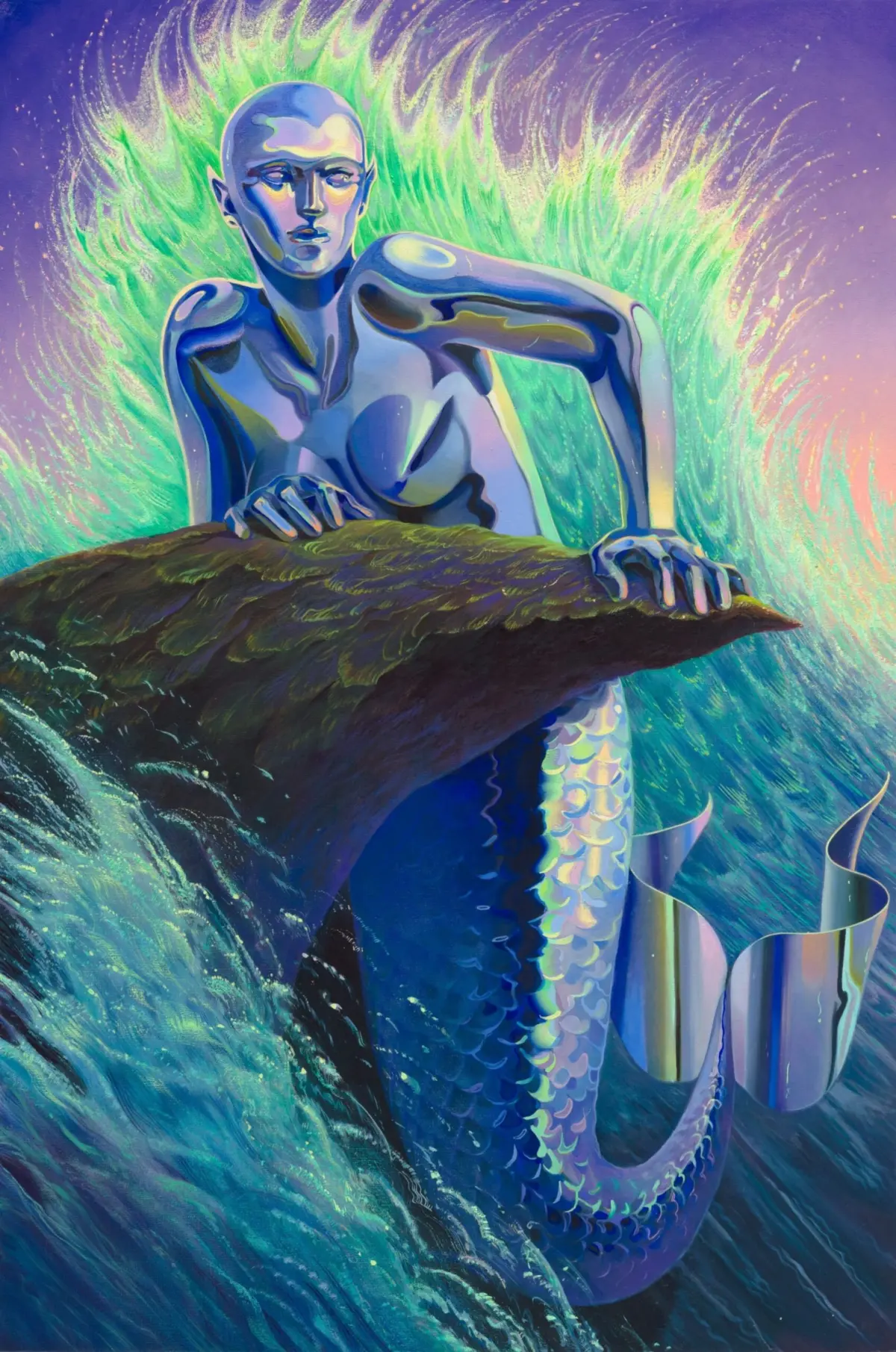
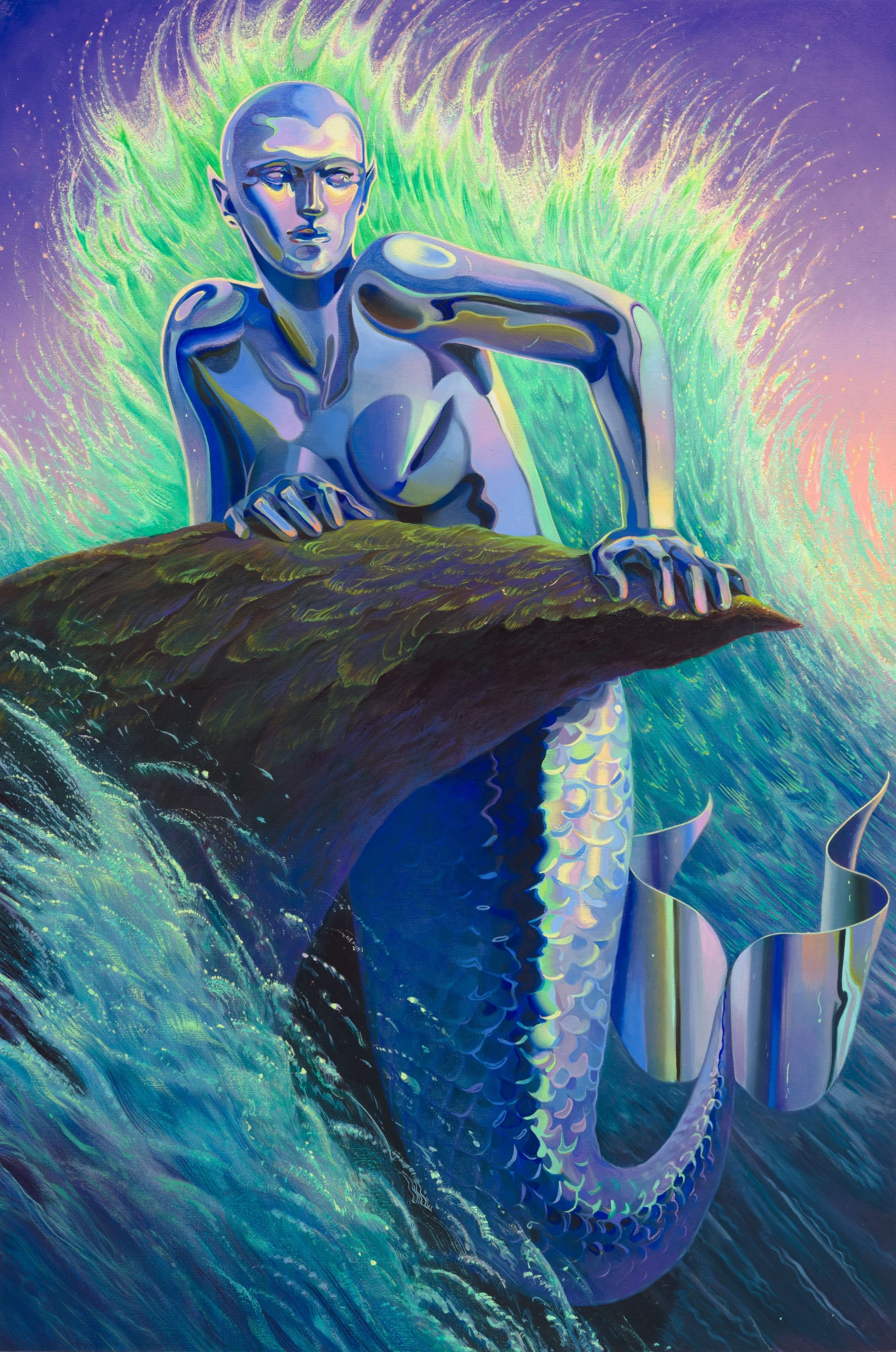
Throughout the exhibition, Williams uses familiar cultural archetypes and historical visual languages to dissect our digital dependency. In the oil-on-linen painting The Merminator (2026), measuring 60 by 40 inches, the artist combines two iconic characters from the 1980s and fairytale lore: a relentless cyborg assassin and a classic Disney princess. The resulting figure is a cold, metallic bot perched precariously on a stone. Much like Hans Christian Andersen’s and Disney’s Ariel, the robotic hybrid peers toward a world it presumably longs to be a part of, yet remains acutely aware it will never truly be accepted within.
This blending of historical fine art traditions with modern technological dread reaches another peak in I Am Not a Robot (2026), a 48-by-48-inch acrylic and oil painting on canvas. The symmetric piece takes direct compositional and color palette cues from the pioneering spiritualist abstractions of Hilma af Klint. At the same time, it draws heavily from Sandro Botticelli’s Renaissance masterpiece, Madonna of the Pomegranate, which traditionally presents the titular fruit as a rich visual metaphor for the human heart and divine love. In Williams’s contemporary iteration, however, the sacred source is replaced by the smartphone, which radiates a hypnotic, artificial light outward in place of a life-giving source.
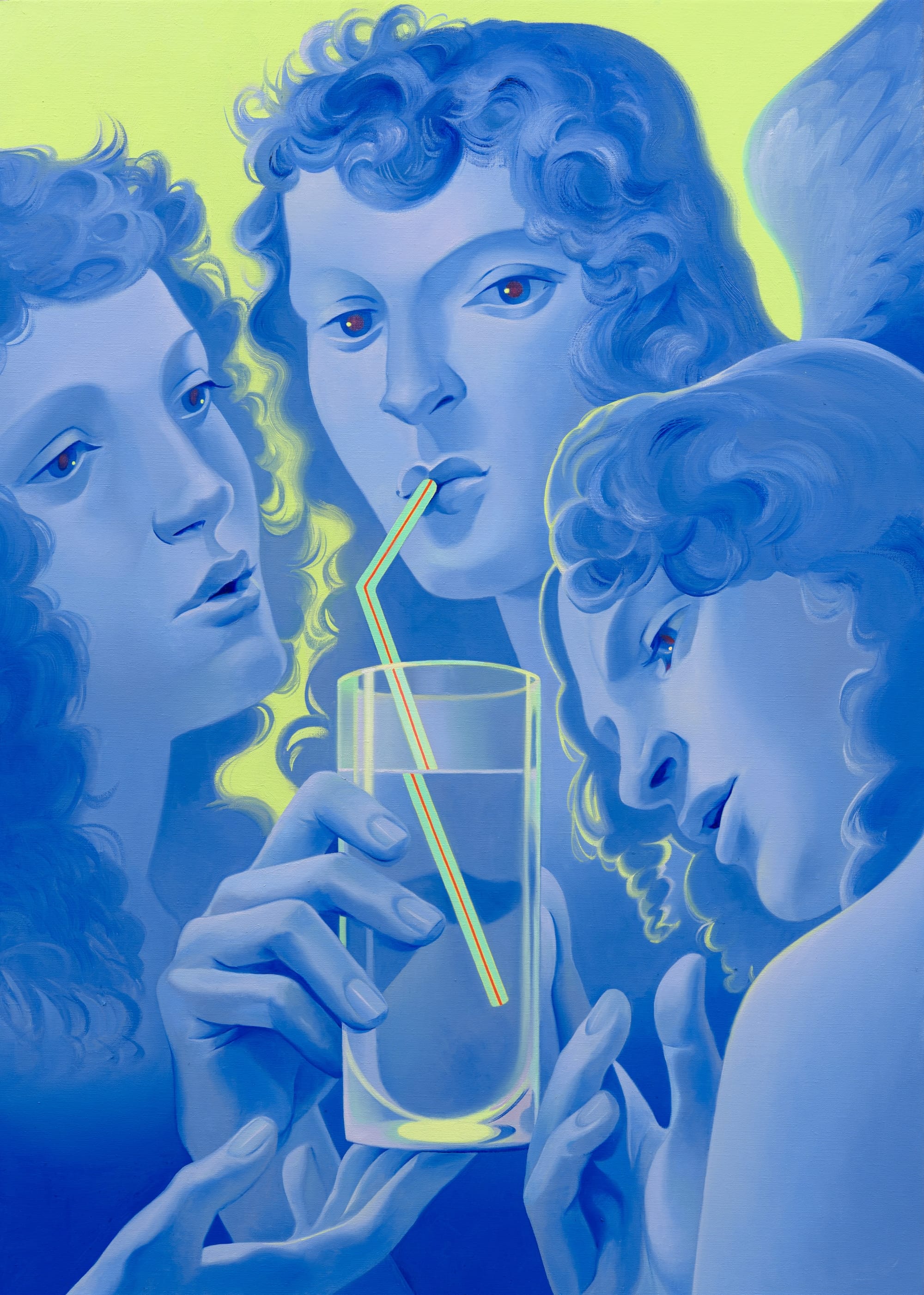
The exhibition also features other compelling works that expand on this thematic universe. Holy Thirst Trap (2026), rendered in oil on linen at 42 by 30 inches, depicts a trio of blue figures huddled tightly together to drink from a shared glass, evoking a ritualistic dependency. In Language Model (2026), a 60-by-54-inch oil painting on canvas, a nude figure on a beach poses by kneeling with an arched back against a striking palette of deep reds and purples. Spooky Action at a Distance (2026), executed in acrylic and oil on canvas at 60 by 44 inches, presents two overlapping nude figures in a natural setting, playfully alluding to quantum entanglement while grounding the phenomenon in human vulnerability. Meanwhile, the exhibition’s focal point on digital consumption is further explored through works like Infinite Scroll, capturing the hypnotic trances induced by endless digital feeds.
By marrying the aesthetic language of classical masterpieces with the iconography of contemporary digital culture, Williams crafts a mirror for a society tethered to screens. The works provoke uncomfortable questions about identity, isolation, and the gradual erosion of the boundary between organic life and machine intelligence.
Art enthusiasts and collectors interested in experiencing Act Natural can view the pop-up exhibition at No. 9 Cork Street in London through October 24. Further examples of Williams’s ongoing artistic output and studio practices can be explored online through the artist’s official channels and Instagram profile.