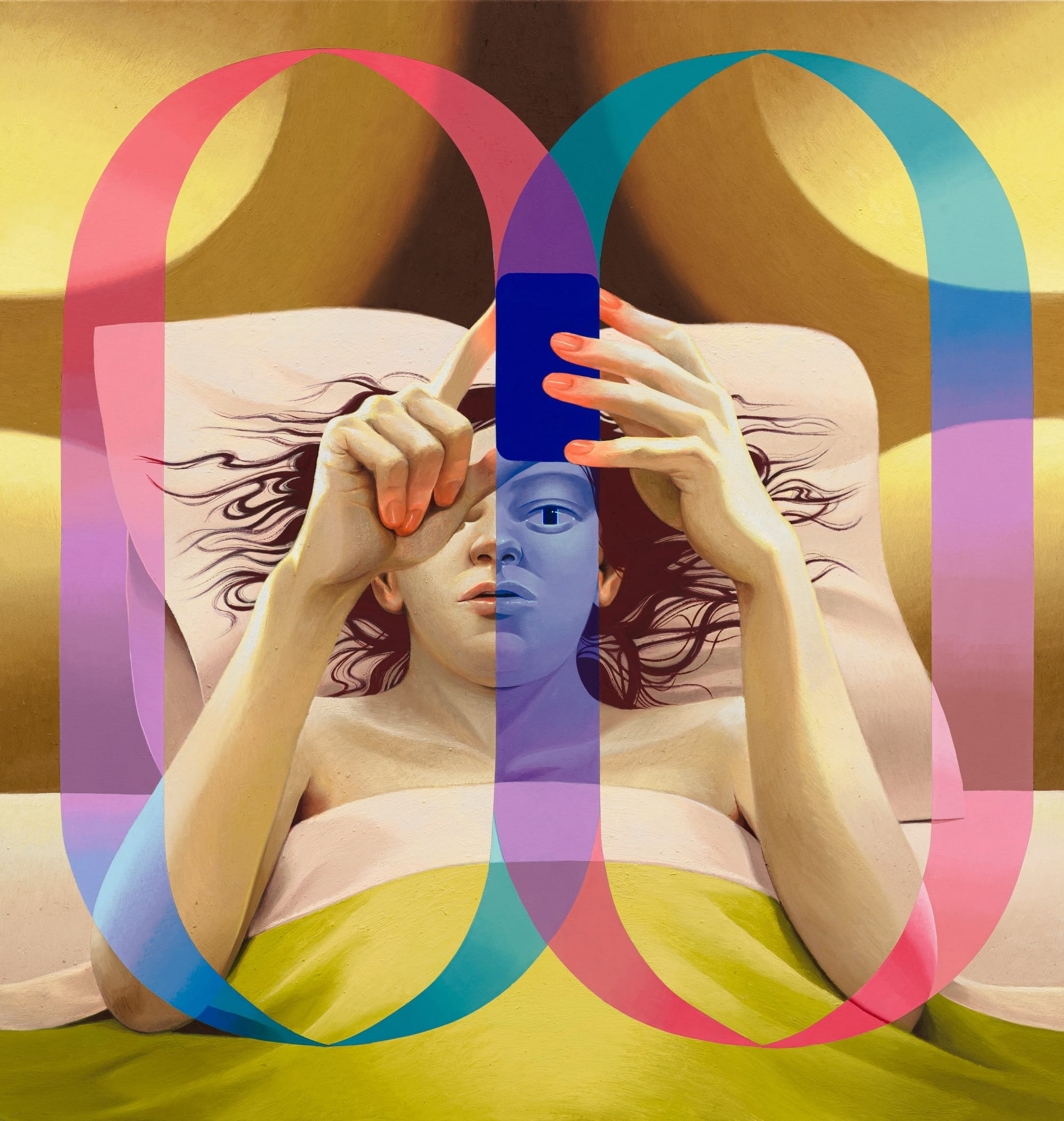
A nude figure with frazzled hair lies motionless in bed, draped in sickly colored linens that cling to their upper body. Their fingertips glow a striking, inflamed red as they clutch a navy-blue smartphone, staring catatonically at the illuminated screen. Rising from the device is a vibrant infinity symbol, rendered as endless loops of hypnotic energy and mesmerizing light that seem to pull the viewer directly into the digital abyss.
This all-too-relatable modern portrait serves as a centerpiece in a provocative suite of new works by Brooklyn-based artist Robin F. Williams. Known for her distinct visual vocabulary that bridges historical painting techniques with contemporary anxieties, Williams has turned her lens toward the omnipotent techno-dystopia that contemporary society collectively seems to be barreling toward. Extrapolating on the increasingly complex ways humanity and machines merge, the artist presents a mystical, unsettling vision of another world—one heavily infused with the saturated imagery of pop culture and the rich canon of art history.
Williams’ latest body of work, appropriately titled Act Natural, plunges headfirst into the uncanny without ever quite settling into a comfortable comprehension of our strange state of affairs. The too-sleek, frictionless digital world she portrays exudes both the mesmerizing allure of modern technology and the immense, quiet horror it elicits from those caught within its invisible currents.
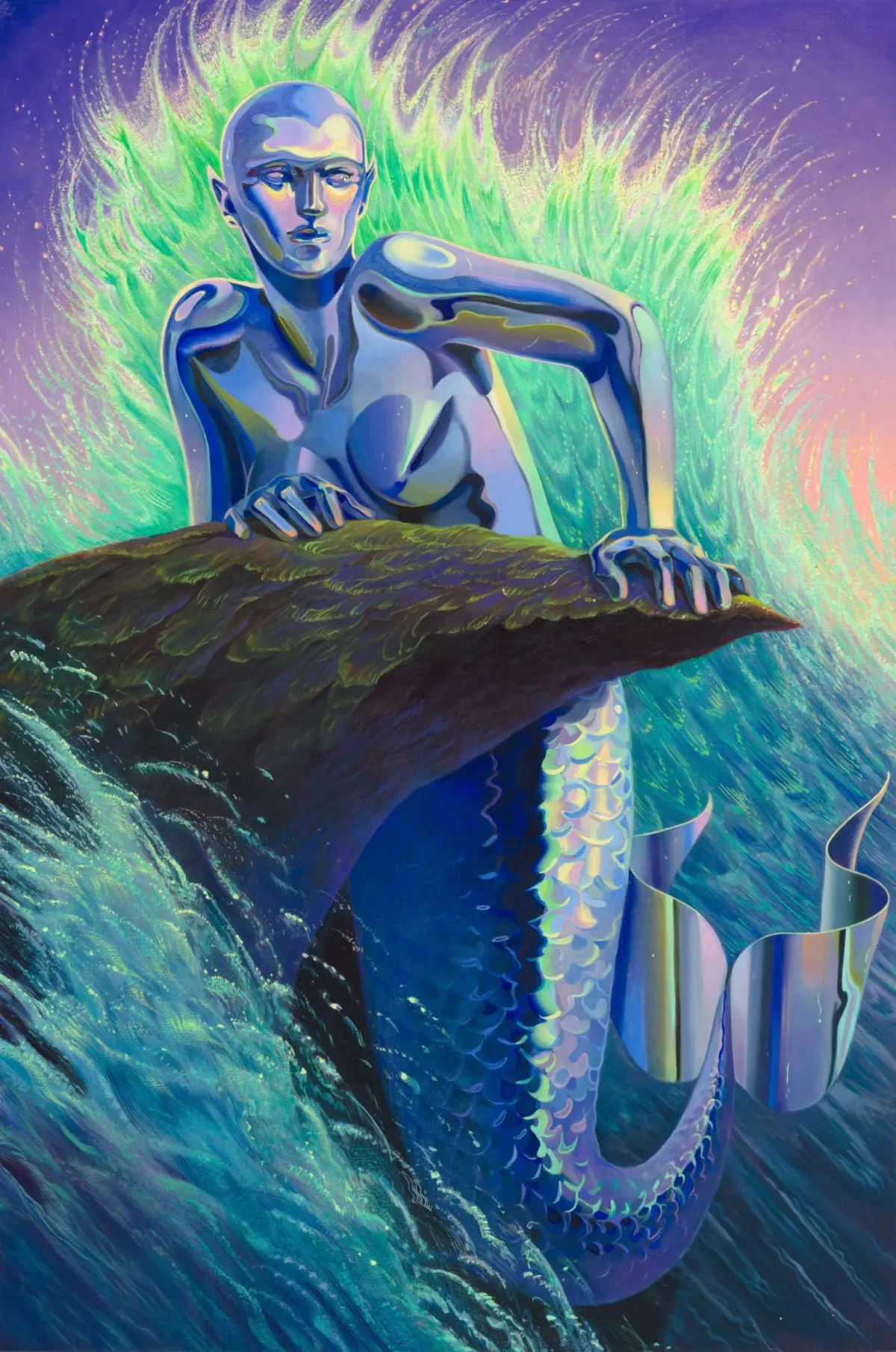
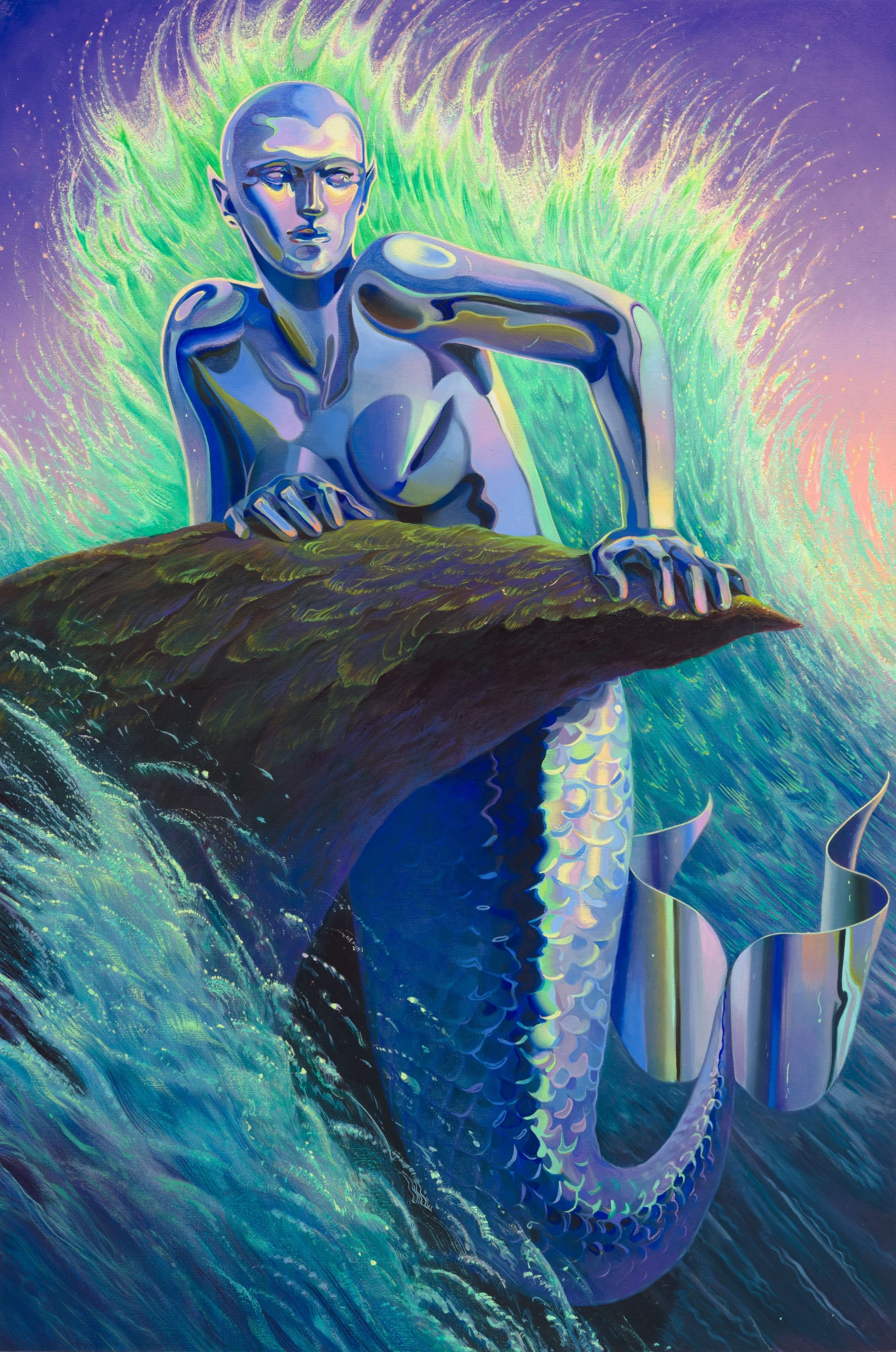
Among the standout pieces in the exhibition is "The Merminator," a striking oil-on-linen work measuring 60 by 40 inches. The painting brilliantly mashes up two iconic cultural archetypes from the 1980s: a cold, unrelenting cyborg assassin and a classic Disney princess. The resulting hybrid figure is a metallic, synthetic bot perched delicately on a stone. Like Hans Christian Andersen’s original tragic mermaid or her animated cinematic counterpart Ariel, the figure peers intently toward a world it presumably longs to be a part of, while simultaneously embodying the ultimate outsider who can never truly be accepted within it. It is a sharp, humorous, yet deeply melancholic commentary on identity, alienation, and the synthetic nature of modern longing.
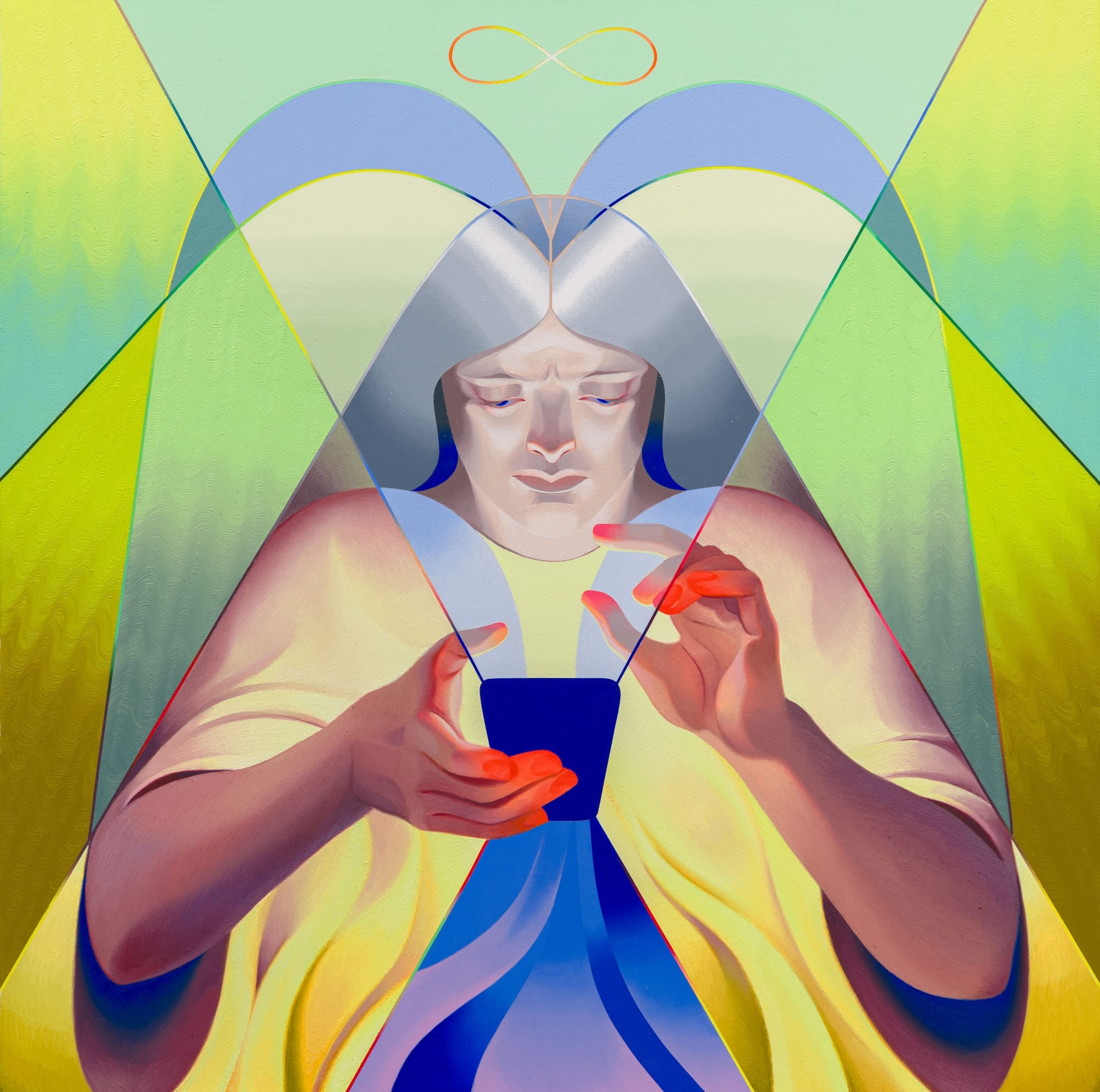
Another major work in the exhibition, "I Am Not a Robot," measures 48 by 48 inches and utilizes a combination of acrylic and oil on canvas. The piece is intensely symmetric, taking distinct compositional cues and color palettes from the pioneering spiritualist abstractions of Swedish artist Hilma af Klint. Simultaneously, Williams draws inspiration from Sandro Botticelli’s Renaissance masterpiece Madonna of the Pomegranate, a painting that famously uses the titular fruit as a rich visual metaphor for the human heart and divine sacrifice. In Williams’ striking iteration, however, the pomegranate is replaced by the smartphone. The device radiates an unnatural, captivating glow outward from the center, acting as the modern, digital equivalent of a life-giving—or life-sapping—source.
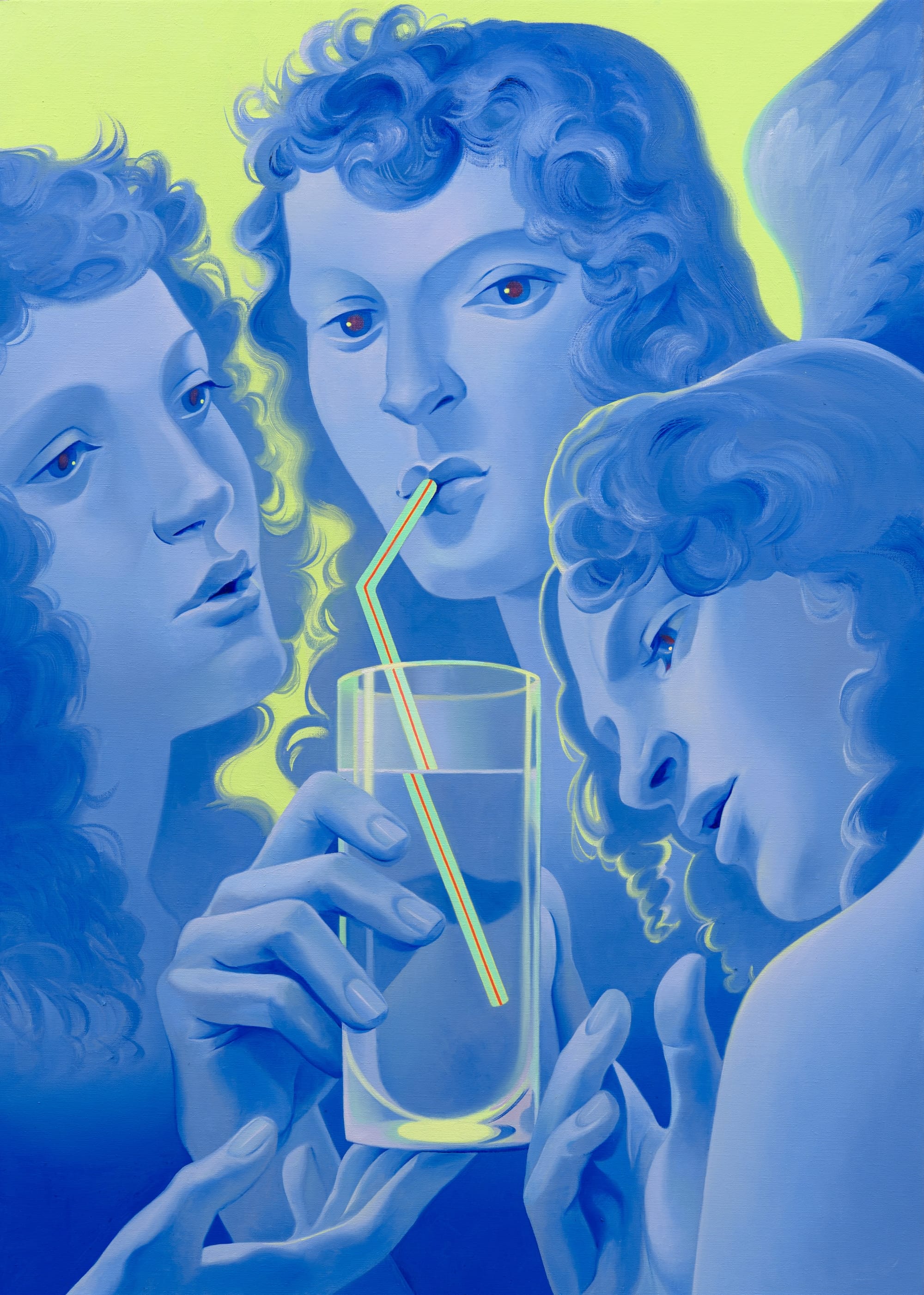
The thematic breadth of Act Natural continues across several other meticulously crafted canvases. In "Holy Thirst Trap," rendered in oil on linen at 42 by 30 inches, a trio of cool blue figures huddle closely together to drink from a shared glass, evoking a bizarre, cultish communion centered around digital validation and modern thirst culture. Meanwhile, "Language Model," a 60-by-54-inch oil on canvas, depicts a nude figure on a beach posing in a strained, kneeling position with an arched back, rendered in a striking, hot palette of reds and purples that evokes both biological warmth and digital fever.
Further expanding her exploration of physical separation and invisible connectivity, "Spooky Action at a Distance" presents two nude, overlapping figures caught in a surreal natural setting, its title nodding to the quantum entanglement phenomenon that mirrors the strange, invisible tethers holding modern human relationships together across digital networks.
The exhibition captures a paradoxical cultural moment where hyper-connectivity leaves individuals feeling profoundly isolated. Williams manages to render these intangible modern psychological states into tangible, visually arresting forms by anchoring her futuristic anxieties in centuries-old artistic traditions. The frictionless surfaces of her paintings reflect a society that has polished away its rough edges in pursuit of digital perfection, leaving behind something smooth, beautiful, and deeply unsettling.
Art lovers and collectors interested in experiencing the exhibition firsthand can view Act Natural as part of an exclusive pop-up presentation mounted by P·P·P·W Gallery. The exhibition is currently on view at Frieze’s No. 9 Cork Street location in London, where it remains open to the public through October 24. For those unable to make the trip to London, further examples and details of Williams’ ongoing artistic output can be explored on her official Instagram account.